reatementCastleman Disease is a rare condition that affects the lymph nodes and immune system. Although it is not officially classified as cancer, it can behave similarly to lymphoma in some cases because it causes abnormal growth of lymphatic tissue. The disease can range from mild and localized to severe and life-threatening depending on the type and extent of involvement.
Because Castleman Disease is uncommon, many people have never heard of it until they or a loved one receive a diagnosis. The symptoms are often vague at first, such as fatigue, fever, swollen lymph nodes, or unexplained weight loss, making it difficult to identify early. Awareness and timely medical evaluation play an important role in improving outcomes.
In this guide, we will explain everything you need to know about Castleman Disease, including its symptoms, causes, types, diagnosis, treatment options, complications, and frequently asked questions.
What Is Castleman Disease?
Castleman Disease (CD) is a group of rare disorders characterized by an overgrowth of cells in the body’s lymph nodes. Lymph nodes are small glands that help fight infections and are part of the immune system.
In Castleman Disease, immune cells become overactive and multiply excessively. This abnormal activity can lead to enlarged lymph nodes, inflammation, and organ-related complications.
The disease may affect:
- A single lymph node area
- Multiple lymph node regions
- Several organs throughout the body
Castleman Disease can occur in people of any age, though it is more commonly diagnosed in adults.
Understanding the Lymphatic System
The lymphatic system is an important part of the body’s defense mechanism. It includes:
- Lymph nodes
- Spleen
- Bone marrow
- Thymus gland
- Lymphatic vessels
These structures help filter harmful substances and support immune responses. When Castleman Disease develops, the immune system becomes dysregulated, causing inflammation and enlarged lymph nodes.
Types of Castleman Disease
Castleman Disease is broadly divided into two major categories.
1. Unicentric Castleman Disease (UCD)
Unicentric Castleman Disease affects only one group of lymph nodes or a single lymph node.
Common locations include:
- Chest
- Neck
- Abdomen
- Underarm
This form is generally less severe and often curable with surgery.
Symptoms of UCD
Many individuals may not experience symptoms initially. When symptoms do occur, they may include:
- A painless lump
- Pressure in the chest or abdomen
- Fatigue
- Weight loss
- Mild fever
Because only one lymph node region is affected, systemic symptoms are usually limited.
2. Multicentric Castleman Disease (MCD)
Multicentric Castleman Disease affects multiple lymph node regions and can involve organs throughout the body.
This type is more aggressive and can significantly affect overall health.
Symptoms of MCD
Symptoms may include:
- Fever
- Night sweats
- Extreme fatigue
- Enlarged lymph nodes
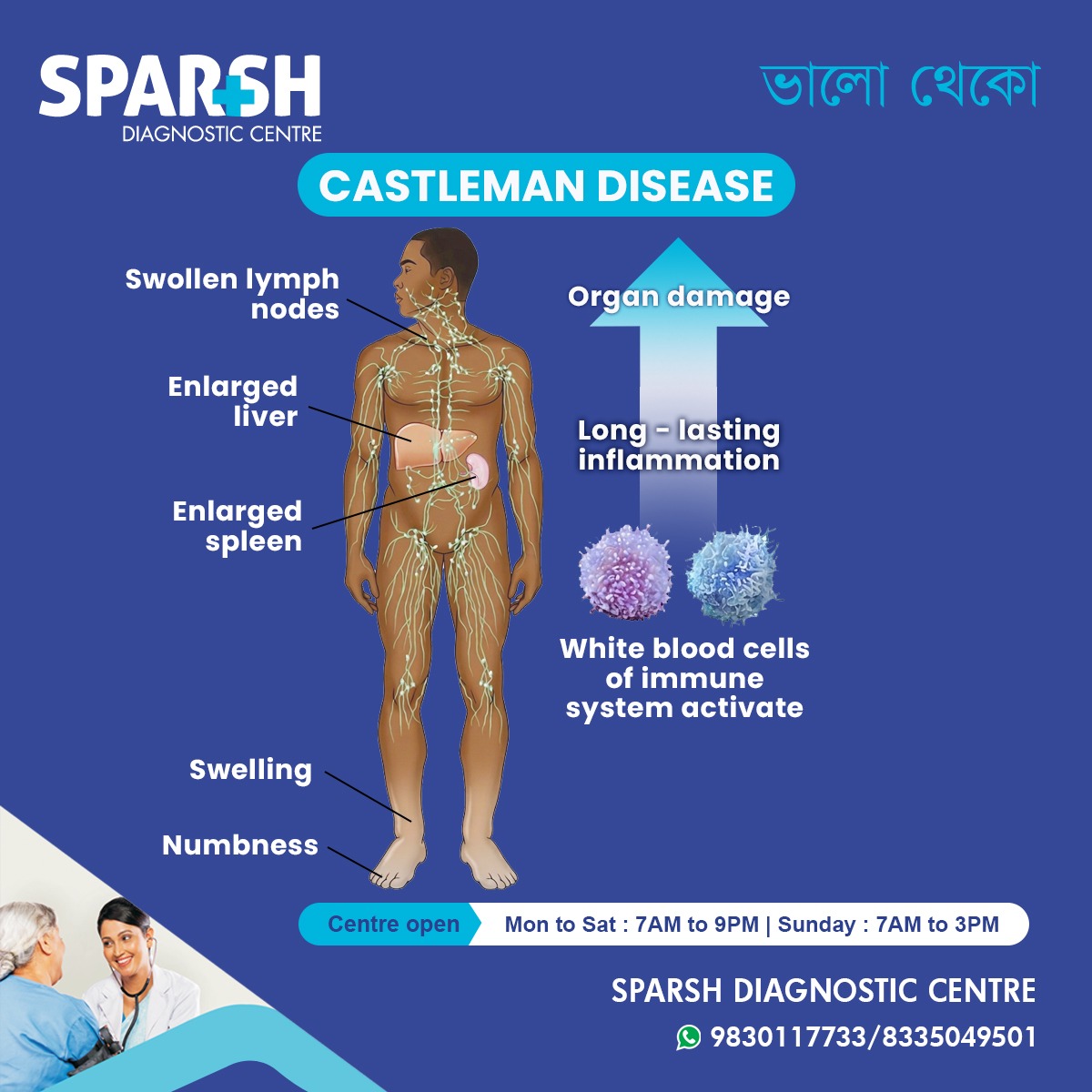
- Enlarged liver or spleen
- Unexplained weight loss
- Numbness
- Swelling in the legs
- Skin rashes
- Shortness of breath
MCD can sometimes become life-threatening if not treated promptly.
Causes of Castleman Disease
The exact cause of Castleman Disease is not fully understood. Researchers believe it is linked to abnormal immune system activity.
Several factors may contribute:
Immune System Dysfunction
The body may produce excessive inflammatory proteins, especially interleukin-6 (IL-6). High IL-6 levels can trigger abnormal lymph node growth and inflammation.
Viral Infections
Some cases of multicentric Castleman Disease are associated with Human Herpesvirus 8 (HHV-8), particularly in individuals with weakened immune systems.
HIV Infection
People living with HIV are at a higher risk of developing HHV-8-associated Castleman Disease.
Genetic Factors
Although not usually inherited, genetic or immune-related abnormalities may increase susceptibility in some individuals.
Risk Factors
Certain factors may increase the risk of developing Castleman Disease:
- HIV infection
- Weakened immune system
- HHV-8 infection
- Middle adulthood
- Immune disorders
However, the disease can also occur in otherwise healthy individuals.
Symptoms of Castleman Disease
Symptoms vary depending on the type and severity of the disease.
Common Symptoms
- Enlarged lymph nodes
- Persistent fatigue
- Fever
- Night sweats
- Loss of appetite
- Weight loss
- Weakness
Advanced Symptoms
In severe cases, additional symptoms may include:
- Enlarged liver
- Enlarged spleen
- Fluid accumulation
- Nerve damage
- Swelling in limbs
- Kidney dysfunction
- Breathing difficulties
Some people may experience symptoms for months before receiving a diagnosis.
How Castleman Disease Affects the Body
Castleman Disease can trigger widespread inflammation throughout the body.
This inflammation may lead to:
- Organ enlargement
- Immune system overactivation
- Blood abnormalities
- Reduced red blood cell production
- Fluid retention
Without treatment, long-term inflammation can damage vital organs such as the liver, kidneys, and lungs.
Complications of Castleman Disease
Potential complications include:
Organ Damage
Chronic inflammation may impair organ function over time.
Severe Infections
Immune system abnormalities may increase infection risk.
Blood Disorders
Anemia and low platelet counts are common in multicentric disease.
Cancer Risk
Some patients have an increased risk of developing lymphoma.
Kidney Failure
Severe inflammation can affect kidney function.
Early treatment greatly reduces the risk of complications.
Diagnosis of Castleman Disease
Because the symptoms overlap with many other illnesses, diagnosing Castleman Disease can be challenging.
Doctors usually use a combination of tests.
Physical Examination
A doctor checks for enlarged lymph nodes, liver enlargement, or spleen enlargement.
Blood Tests
Blood tests may reveal:
- Anemia
- Elevated inflammatory markers
- Abnormal immune proteins
- Kidney or liver dysfunction
Imaging Tests
Scans help locate enlarged lymph nodes and affected organs.
Common imaging studies include:
Lymph Node Biopsy
A biopsy is the most important diagnostic test. A small sample of lymph node tissue is examined under a microscope to confirm the diagnosis.
Viral Testing
Patients may also be tested for HIV and HHV-8.
Treatment for Castleman Disease
Treatment depends on the type, severity, and overall health of the patient.
Unicentric Castleman Disease treatment
Surgery
Surgical removal of the affected lymph node is often curative.
Most patients recover completely after surgery.
Radiation Therapy
If surgery is not possible, radiation may shrink the lymph node and relieve symptoms.
Multicentric Castleman Disease treatment
MCD usually requires ongoing medical treatment.
Immunotherapy
Drugs that block IL-6 activity help reduce inflammation and control symptoms.
These medications are often highly effective.
Corticosteroids
Steroids may help reduce inflammation quickly.
Antiviral Therapy
Patients with HHV-8 or HIV-associated disease may require antiviral treatment.
Chemotherapy
Severe or resistant cases may need chemotherapy to control abnormal immune cell growth.
Targeted Therapy
Newer targeted medications can improve outcomes and reduce complications.
Lifestyle and Supportive Care
Medical treatment is important, but supportive care also plays a major role.
Healthy Diet
Eating a balanced diet supports immune health and recovery.
Adequate Rest
Fatigue is common, so sufficient sleep and rest are essential.
Infection Prevention
Patients with weakened immunity should:
- Practice good hygiene
- Avoid exposure to infections
- Stay updated on vaccinations after medical consultation
Emotional Support
Living with a rare disease can feel overwhelming. Support groups and counseling may help patients cope emotionally.
Is Castleman Disease Cancer?
Castleman Disease is not technically cancer, but it shares certain features with cancers of the lymphatic system.
The disease involves abnormal cell growth and immune dysregulation. Some patients, especially those with multicentric disease, may later develop lymphoma.
That is why close medical monitoring is important.
Prognosis and Survival Rate
The outlook depends largely on the type of Castleman Disease.
Unicentric Castleman Disease
The prognosis is generally excellent. Surgery often cures the condition completely.
Multicentric Castleman Disease
The prognosis varies. Modern treatments have significantly improved survival rates, especially with early diagnosis and proper management.
Factors affecting prognosis include:
- Overall health
- HIV status
- Organ involvement
- Response to treatment
Regular follow-up care is essential.
Can Castleman Disease be prevented?
There is no guaranteed way to prevent the disease because the exact cause remains unclear.
However, reducing infection risks and maintaining immune health may help lower complications.
For individuals with HIV, proper antiviral treatment can reduce the likelihood of HHV-8-related disease.
When to See a Doctor
Seek medical attention if you experience:
- Persistent swollen lymph nodes
- Unexplained fever
- Sudden weight loss
- Severe fatigue
- Night sweats
- Ongoing swelling
- Enlarged abdomen
Early diagnosis can improve treatment success and prevent serious complications.
Living With Castleman Disease
Many people with Castleman Disease lead productive and fulfilling lives, especially with proper treatment and regular monitoring.
Key aspects of long-term management include:
- Following treatment plans carefully
- Attending routine medical checkups
- Monitoring symptoms
- Maintaining a healthy lifestyle
- Seeking emotional support when needed
Advances in medical research continue to improve outcomes for people living with this rare condition.
Frequently Asked Questions (FAQs) on Castleman Disease
What is it?
Castleman Disease is a rare disorder involving abnormal growth of lymph node tissue and immune system overactivity.
Is it contagious?
No, Castleman Disease is not contagious and cannot spread from person to person.
What causes Castleman Disease?
The exact cause is unknown, but immune system dysfunction, IL-6 overproduction, HHV-8 infection, and HIV are linked to the disease.
What are the first signs?
Early signs may include swollen lymph nodes, fatigue, fever, and unexplained weight loss.
Is it curable?
Unicentric Castleman Disease is often curable with surgery. Multicentric Castleman Disease usually requires long-term treatment and monitoring.
Can it become cancer?
Castleman Disease itself is not cancer, but some patients may develop lymphoma later.
How is it diagnosed?
Diagnosis typically involves blood tests, imaging scans, and lymph node biopsy.
Is it rare?
Yes, it is considered a rare disease.
Can children develop it?
Yes, although it is more common in adults, children can also develop the condition.
What is the survival rate?
The survival rate depends on the type and severity of the disease. Early diagnosis and modern treatments have improved outcomes significantly.
Castleman Disease is a rare but serious disorder that affects the lymphatic and immune systems. While the condition can appear frightening, advancements in diagnosis and treatment have dramatically improved patient outcomes in recent years.
Understanding the symptoms, causes, and available treatments can help individuals seek timely medical care and manage the disease more effectively. Unicentric Castleman Disease often responds well to surgery, while multicentric Castleman Disease requires a more comprehensive treatment approach.
If you or someone you know experiences persistent swollen lymph nodes, unexplained fever, fatigue, or weight loss, consulting a healthcare professional is important. Early intervention can make a significant difference in long-term health and quality of life.
To consult a Doctor at Sparsh Diagnostic Centre, call our helpline numbers 9830117733/ 8335049501.
#BhaloTheko
Disclaimer:
No content on this site, regardless of date, should ever be used as a substitute for direct medical advice from your doctor or other qualified clinician.