Micrographia is a neurological symptom that causes handwriting to become unusually small, cramped, and difficult to read. While many people may notice occasional changes in handwriting due to stress or fatigue, persistent shrinking handwriting can signal an underlying neurological condition, most commonly Parkinson’s disease.
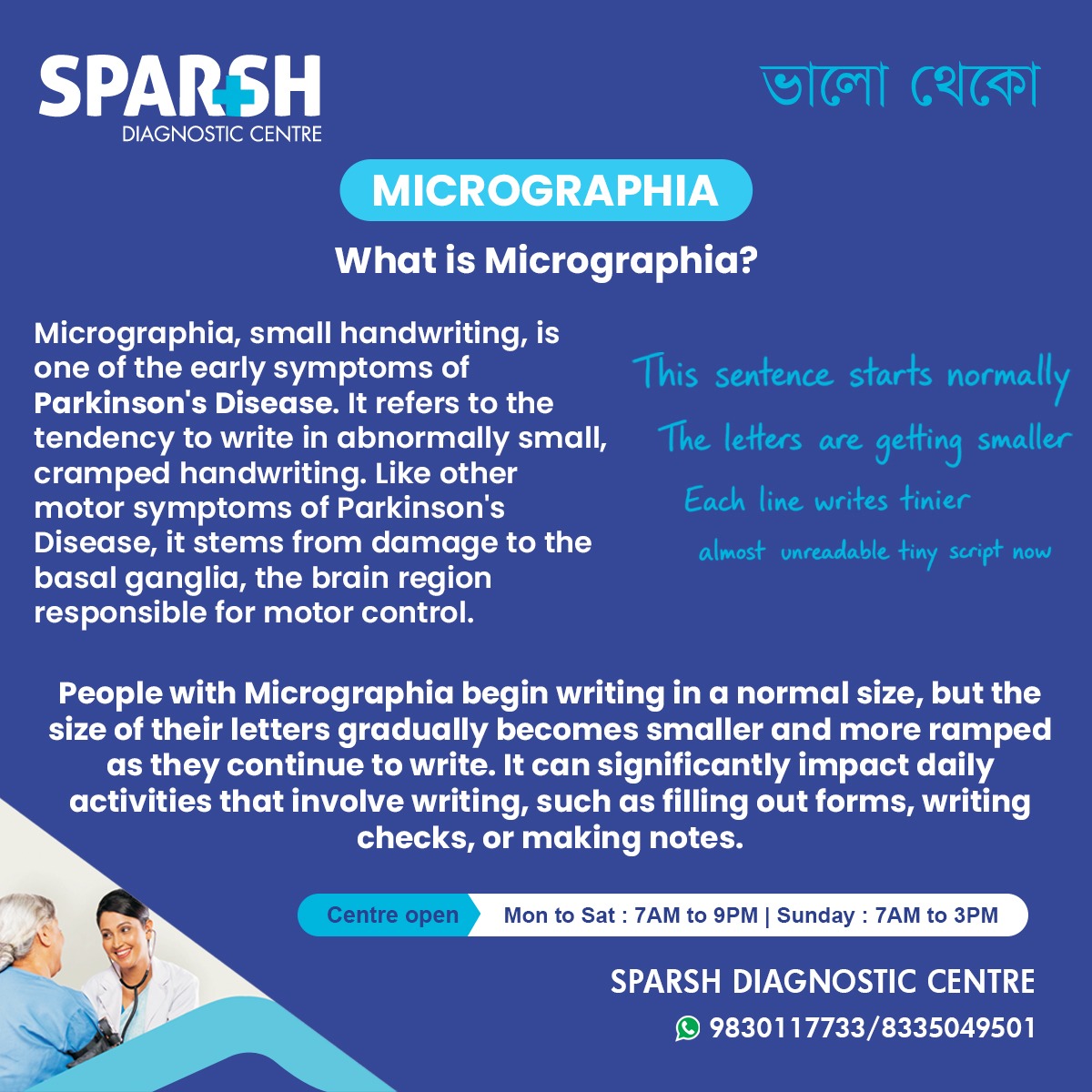
For some individuals, micrographia appears gradually. A person may begin writing normally, but as the sentence continues, the letters become progressively smaller and more crowded together. This change may seem minor at first, yet it can significantly affect daily activities like signing documents, writing notes, filling out forms, or even sending personal letters.
Although micrographia itself is not a disease, it is an important clinical sign that healthcare professionals use to identify movement disorders and neurological conditions. Understanding why it happens, what symptoms accompany it, and how it can be managed is essential for patients and caregivers alike.
In this detailed guide, we’ll explore everything you need to know about micrographia, including its causes, symptoms, diagnosis, treatment, and practical ways to improve handwriting and quality of life.
What Is Micrographia?
Micrographia refers to abnormally small handwriting. The term comes from the Greek words “micro,” meaning small, and “graphia,” meaning writing.
People with micrographia often notice that:
- Their handwriting becomes progressively smaller
- Letters appear cramped or crowded
- Writing becomes difficult to read
- Hand movements feel stiff or slow
- Maintaining consistent letter size becomes challenging
Micrographia is strongly associated with Parkinson’s disease, but it can also occur in other neurological disorders that affect motor control.
The condition develops because the brain struggles to properly coordinate the fine motor movements required for writing. Since handwriting depends on precise muscle control, even small disruptions in movement regulation can significantly affect writing ability.
Why Does Micrographia Happen?
Writing is actually a highly complex task involving several parts of the brain, muscles, nerves, and joints working together. The brain must coordinate movement, pressure, speed, and spacing all at once.
In micrographia, the basal ganglia — a group of brain structures involved in movement control — do not function properly. This leads to reduced movement amplitude, meaning motions become smaller than intended.
As a result:
- Finger movements shrink
- Hand motions become tighter
- Writing strokes shorten
- Letter size decreases
This problem is especially common in Parkinson’s disease because dopamine-producing brain cells gradually deteriorate. Dopamine helps regulate smooth, controlled movement, and low dopamine levels can cause stiffness, slowness, and reduced movement size.
Micrographia and Parkinson’s Disease
Micrographia is considered one of the early motor symptoms of Parkinson’s disease. In fact, some people notice handwriting changes years before receiving a formal diagnosis.
Common Parkinson’s symptoms associated with micrographia include:
- Tremors
- Muscle rigidity
- Slowed movement (bradykinesia)
- Balance problems
- Reduced facial expression
- Soft speech
- Difficulty walking
Many neurologists use handwriting samples as part of the clinical evaluation for Parkinson’s disease. A person may be asked to repeatedly write a sentence or draw spirals to assess motor control.
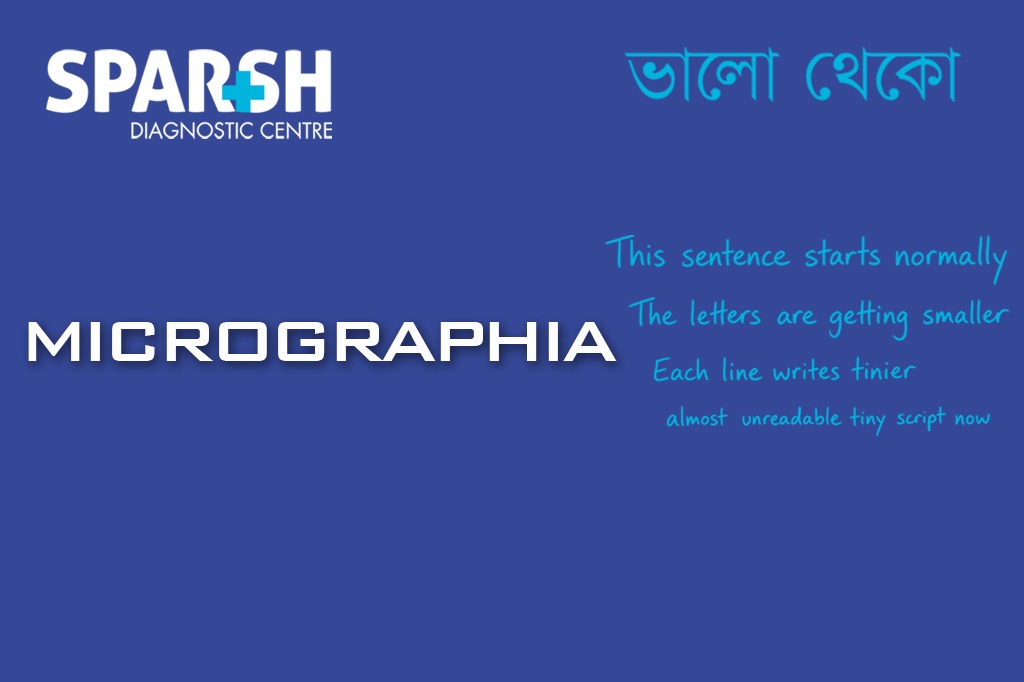
One classic sign is “progressive micrographia,” where the first few words appear normal but gradually shrink in size.
Other Causes of Micrographia
Although Parkinson’s disease is the most common cause, several other neurological conditions may also lead to micrographia.
Atypical Parkinsonism
Conditions similar to Parkinson’s disease can affect movement and handwriting, including:
- Multiple system atrophy (MSA)
- Progressive supranuclear palsy (PSP)
- Corticobasal degeneration
Stroke
A stroke affecting the motor regions of the brain may impair fine hand movements and cause writing difficulties.
Brain Injuries
Traumatic brain injuries can interfere with motor coordination and handwriting abilities.
Essential Tremor
People with essential tremor may develop abnormal handwriting due to shaky or uncoordinated hand movements.
Aging and Neurological Decline
Normal aging may slightly affect handwriting, but significant shrinking handwriting should always be medically evaluated.
Medication Side Effects
Some medications affecting the nervous system may temporarily alter handwriting patterns.
Symptoms of Micrographia
The hallmark symptom is unusually small handwriting, but people often experience several related issues.
Common Symptoms
- Letters become smaller while writing
- Cramped handwriting
- Difficulty spacing words
- Reduced writing speed
- Hand fatigue
- Stiffness in fingers or wrist
- Difficulty gripping a pen
- Trembling while writing
Progressive Changes
Many people notice that:
- The first line looks normal
- Later lines become tiny
- Words crowd together
- Writing drifts downward
- Hand control worsens with longer writing sessions
These changes can interfere with work, school, finances, and communication.
Types of Micrographia
Micrographia can present in different ways depending on the underlying neurological issue.
Consistent Micrographia
The handwriting remains uniformly small throughout writing.
Progressive Micrographia
The handwriting starts at a normal size but gradually becomes smaller.
Tremor-Associated Micrographia
Small handwriting accompanied by shakiness or irregular strokes.
Understanding the pattern may help doctors identify the underlying cause.
How do Doctors Diagnose Micrographia
Micrographia itself is not diagnosed as a separate disease. Instead, doctors identify it as a symptom of another neurological condition.
Medical History
The doctor may ask about:
- Changes in handwriting
- Tremors or stiffness
- Walking difficulties
- Family history
- Medication use
- Previous neurological problems
Physical Examination
Neurological exams help assess:
- Muscle tone
- Coordination
- Reflexes
- Hand strength
- Fine motor skills
Handwriting Tests
Patients may be asked to:
- Write sentences repeatedly
- Draw spirals
- Copy shapes
- Sign their name
Doctors look for shrinking letters, crowding, and movement abnormalities.
Brain Imaging
MRI or CT scans may be used to rule out strokes, tumors, or structural brain problems.
Parkinson’s Evaluation
If Parkinson’s disease is suspected, a neurologist may assess overall motor function and symptom progression.
How does Micrographia affect Daily Life
Handwriting is something most people take for granted until it becomes difficult.
Micrographia can affect:
- Taking notes
- Writing checks
- Completing paperwork
- Signing documents
- Keeping journals
- Writing shopping lists
- School or workplace performance
Some individuals feel embarrassed or frustrated by the change in handwriting, especially when others struggle to read it.
In severe cases, people may avoid writing altogether.
Treatment for Micrographia
Treatment depends largely on the underlying cause. Since Parkinson’s disease is the most common cause, many treatments focus on improving motor control.
Medications
Dopamine Replacement Therapy
For Parkinson’s disease, medications like levodopa can improve movement symptoms and may help handwriting.
These medications work by increasing dopamine activity in the brain.
Other Parkinson’s Medications
Doctors may prescribe:
- Dopamine agonists
- MAO-B inhibitors
- COMT inhibitors
These medications may improve motor coordination and reduce rigidity.
Occupational Therapy
Occupational therapy is one of the most effective non-drug treatments for micrographia.
Therapists help patients:
- Improve hand coordination
- Practice larger writing movements
- Use adaptive writing tools
- Develop daily coping strategies
Therapy often focuses on retraining the brain to produce larger movements.
Handwriting Exercises for Micrographia
Regular practice can improve writing control and readability.
Common Exercises Include:
Writing Large Letters
Patients intentionally write oversized letters to retrain motor amplitude.
Repetitive Stroke Practice
Repeating loops, circles, and lines improves coordination.
Visual Cue Training
Using lined or graph paper helps maintain letter size.
Finger Strengthening
Hand exercises improve grip and dexterity.
Slow Writing Practice
Writing slowly allows better movement control.
Consistency is important. Daily exercises often produce better results over time.
Assistive Devices and Tools
Several tools can make writing easier for people with micrographia.
Helpful Writing Aids
- Weighted pens
- Large-grip pens
- Pen stabilizers
- Writing guides
- Electronic tablets
- Voice-to-text software
Digital tools are especially useful for individuals with severe handwriting difficulty.
Lifestyle Changes That May Help
Although micrographia itself cannot always be fully reversed, certain lifestyle adjustments may help maintain motor function.
Stay Physically Active
Regular exercise supports brain health and movement control.
Practice Fine Motor Activities
Activities like drawing, knitting, or puzzles may improve hand coordination.
Manage Stress
Stress and anxiety can worsen muscle tension and tremors.
Prioritize Sleep
Poor sleep may worsen neurological symptoms.
Follow Medical Treatment Plans
Consistent medication use and therapy sessions often improve overall motor performance.
Can Micrographia Be Prevented?
Micrographia itself cannot always be prevented, especially when linked to degenerative neurological diseases.
However, early diagnosis and treatment of neurological conditions may slow symptom progression.
Seeking medical attention for:
- Tremors
- Hand stiffness
- Slowed movement
- Handwriting changes
can help identify neurological disorders earlier.
When to See a Doctor
Occasional handwriting variation is normal, but persistent changes should not be ignored.
You should see a healthcare provider if you notice:
- Sudden handwriting changes
- Progressively shrinking letters
- Tremors
- Hand stiffness
- Slowed movement
- Balance problems
- Difficulty performing fine motor tasks
Early evaluation can lead to earlier diagnosis and better symptom management.
Living With Micrographia
Living with micrographia can be frustrating, but many people adapt successfully with proper support and treatment.
Helpful strategies include:
- Using larger writing surfaces
- Writing slowly and deliberately
- Taking breaks during writing tasks
- Switching to digital communication
- Using adaptive devices
Support from family members, therapists, and healthcare professionals can greatly improve quality of life.
The Emotional Impact of Micrographia
Small handwriting may seem like a minor issue, but it can affect emotional well-being.
People may feel:
- Embarrassed
- Frustrated
- Self-conscious
- Dependent on others
- Anxious about worsening symptoms
Emotional support and counseling can help individuals cope with the challenges of living with neurological conditions.
Research and Future Treatments
Researchers continue exploring better treatments for Parkinson’s disease and related movement disorders.
Areas of ongoing research include:
- Advanced dopamine therapies
- Brain stimulation techniques
- Neuroprotective medications
- Digital handwriting analysis
- AI-assisted movement therapy
Technology is also improving rehabilitation methods through virtual reality and smart handwriting devices.
Frequently Asked Questions (FAQs)
What is micrographia?
Micrographia is a condition that causes abnormally small, cramped handwriting. It is commonly associated with Parkinson’s disease and other neurological disorders.
Is micrographia always caused by Parkinson’s disease?
No. Although Parkinson’s disease is the most common cause, micrographia may also occur due to stroke, brain injury, essential tremor, or other neurological conditions.
Can micrographia improve?
Yes. Treatment, medications, occupational therapy, and handwriting exercises may help improve handwriting size and control.
Is micrographia an early sign of Parkinson’s disease?
Yes. In many people, micrographia appears early and may even develop before other noticeable Parkinson’s symptoms.
How is micrographia diagnosed?
Doctors diagnose micrographia through neurological exams, handwriting analysis, medical history, and evaluation for underlying neurological conditions.
Can stress cause micrographia?
Stress may temporarily worsen handwriting problems, especially in people with existing neurological conditions, but it is usually not the sole cause.
What exercises help micrographia?
Large-letter writing practice, hand strengthening exercises, visual cue training, and occupational therapy exercises can help improve handwriting control.
Is micrographia permanent?
It depends on the underlying cause. In progressive neurological disorders, symptoms may persist, but treatment can often improve function and quality of life.
Are there devices that help with micrographia?
Yes. Weighted pens, large-grip pens, writing aids, and digital communication tools can make writing easier.
Should I worry if my handwriting suddenly changes?
Yes. Sudden or progressive handwriting changes should be evaluated by a healthcare professional, especially if accompanied by tremors, stiffness, or movement problems.
Micrographia is more than simply small handwriting. It is often an important neurological symptom that can provide valuable clues about underlying movement disorders, particularly Parkinson’s disease.
Because handwriting relies on delicate coordination between the brain and muscles, even subtle neurological changes can dramatically affect writing ability. Early recognition of micrographia may lead to earlier diagnosis, timely treatment, and improved management of neurological conditions.
While living with micrographia can be challenging, many people benefit from medications, occupational therapy, handwriting exercises, and adaptive tools that improve daily functioning and independence.
If you or someone you know experiences persistent handwriting changes, especially alongside tremors or slowed movement, seeking medical evaluation is an important step toward understanding the cause and receiving appropriate care.
To consult a Doctor at Sparsh Diagnostic Centre, call our helpline numbers 9830117733/ 8335049501.
#BhaloTheko
Disclaimer:
No content on this site, regardless of date, should ever be used as a substitute for direct medical advice from your doctor or other qualified clinician.