

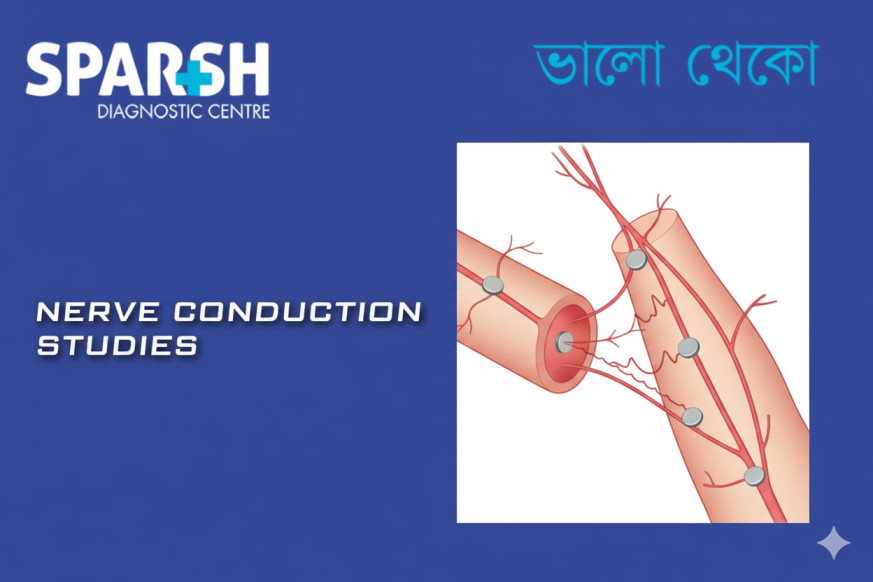
A nerve conduction study (NCS), also called a nerve conduction velocity (NCV) test, is a diagnostic test used to check how well electrical signals travel through the peripheral nerves. It can help doctors identify nerve damage, nerve compression and other problems affecting the nerves that control movement and sensation.
If you have persistent numbness, tingling, burning, weakness, unexplained nerve pain or reduced sensation in your hands, arms, feet or legs, your doctor may recommend an NCS. The test is also commonly performed along with electromyography (EMG) to understand whether symptoms are coming from a nerve, muscle or a combination of both.
For people searching for an NCV test in Kolkata, one of the most common questions is what the test involves, whether it hurts, how long it takes and how much it costs. This guide explains everything in straightforward language.
What is a nerve conduction study?
A nerve conduction study measures how quickly and effectively electrical signals travel along a peripheral nerve.
Think of your nerves as communication cables. They carry messages between your brain, spinal cord, muscles and sensory organs. When a nerve is compressed, injured or damaged, these signals may travel more slowly or become weaker.
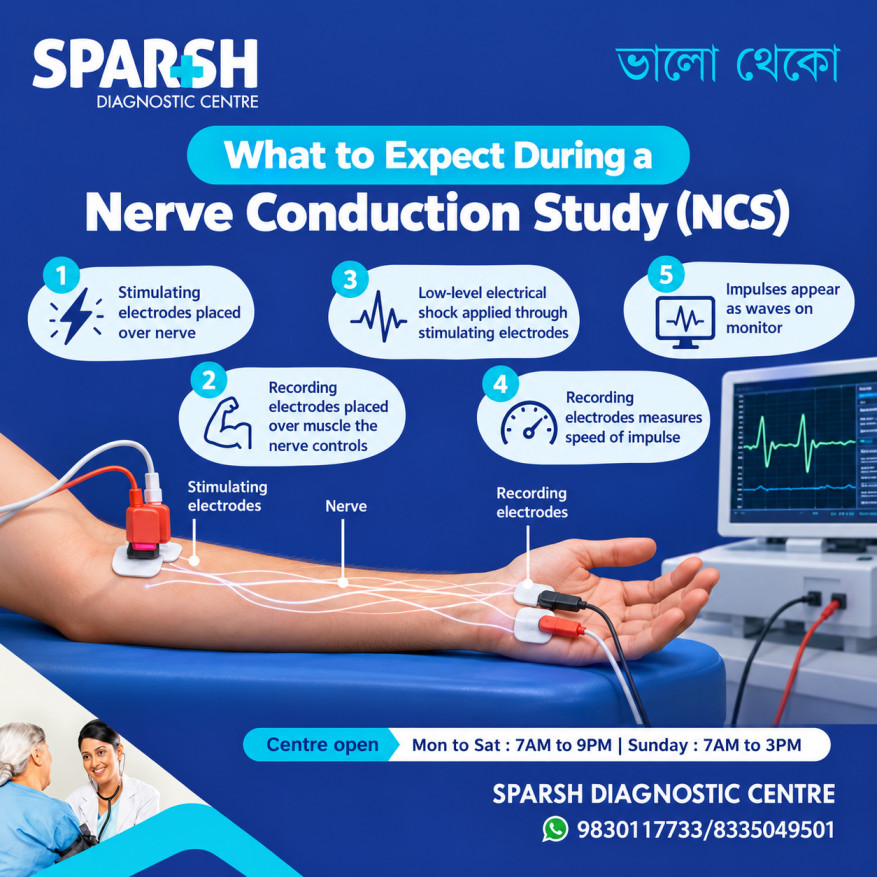
During an NCS, small electrodes are placed on the skin over the nerve being examined. A healthcare professional then delivers a brief, mild electrical impulse to stimulate the nerve. Other electrodes record the resulting response.
The test measures factors such as:
- How quickly the electrical signal travels
- How strong the nerve response is
- Whether the signal is being blocked or slowed
- Where along the nerve a problem may be occurring
This information can help a doctor understand whether a nerve is functioning normally and, when there is an abnormality, help identify its location and severity.
An NCS primarily evaluates peripheral nerves rather than the brain or spinal cord.
What is the difference between NCS, NCV and EMG?
These terms are often used together, which can understandably cause confusion.
NCS stands for nerve conduction study.
NCV stands for nerve conduction velocity. It describes the measurement of how quickly electrical signals travel through a nerve.
In everyday clinical use, NCS and NCV are often used interchangeably when referring to nerve conduction testing.
EMG, or electromyography, is different. It assesses the electrical activity of muscles and how muscles respond to nerve stimulation. An EMG involves a small needle electrode being inserted into selected muscles.
Doctors frequently recommend an EMG and NCS together because the two tests provide complementary information. NCS assesses nerve signal transmission, while EMG helps evaluate muscle activity and the nerve-muscle connection.
Why is a nerve conduction study done?
An NCS may be recommended when symptoms suggest that a nerve is not functioning properly.
Common reasons include:
- Numbness or reduced sensation
- Tingling or pins-and-needles sensations
- Burning sensations in the hands or feet
- Persistent nerve pain
- Muscle weakness
- Unexplained muscle wasting
- Pain or numbness caused by nerve compression
- Symptoms suggesting peripheral neuropathy
- Suspected carpal tunnel syndrome
- Suspected nerve injury
- Certain neurological disorders
For example, someone with persistent numbness in the thumb, index and middle fingers may be evaluated for carpal tunnel syndrome, where the median nerve is compressed at the wrist.
NCS may also be useful when a doctor needs to distinguish between a problem involving a peripheral nerve and a problem involving a muscle.
What are the symptoms of poor nerve conduction?
There isn’t one specific symptom called “poor nerve conduction.” Instead, abnormal nerve function can produce a variety of symptoms depending on which nerve is affected.
Common symptoms include:
Numbness
You may feel that part of your hand, foot, arm or leg has become less sensitive or “asleep.”
Tingling
Pins-and-needles sensations are a common sign of nerve irritation or dysfunction.
Burning sensations
Some people describe nerve-related symptoms as burning, electric-shock-like or crawling sensations.
Weakness
If motor nerves are affected, you may experience weakness or difficulty moving a particular body part.
Pain
Nerve-related pain can be sharp, shooting, burning or electric in nature.
Reduced sensation
You may have difficulty feeling temperature, touch or pressure normally.
Muscle changes
Long-standing nerve problems can sometimes be associated with muscle weakness or wasting.
Importantly, these symptoms do not automatically mean that you have permanent nerve damage. Several conditions can produce similar symptoms, which is why a medical evaluation is important.
Can NCV detect nerve damage?
Yes. An NCV or nerve conduction study can detect abnormalities associated with peripheral nerve damage.
The test measures how quickly and how strongly signals travel along nerves. Damaged or compressed nerves may conduct electrical signals more slowly or with reduced response amplitude, depending on the type and location of the nerve problem.
However, an NCS should not be viewed as a stand-alone diagnosis.
Your doctor interprets the findings alongside your symptoms, physical examination, medical history and, when appropriate, other investigations.
An NCS can be particularly helpful in assessing conditions such as:
- Peripheral neuropathy
- Carpal tunnel syndrome
- Certain nerve compression syndromes
- Some forms of nerve injury
- Certain inherited peripheral nerve disorders
- Other disorders affecting peripheral nerve function
The test can also help determine which nerves are affected and provide information about the extent and pattern of the abnormality.
What doctor to see for nerve conduction study?
A neurologist is one of the main specialists involved in evaluating nerve-related symptoms and interpreting NCS/EMG findings.
Depending on the symptoms, a patient may initially consult a:
- Neurologist
- Orthopaedic doctor
- Neurosurgeon
- Physical medicine and rehabilitation specialist
- Physician or general practitioner
For example, if you have persistent tingling and weakness in your hand, your physician may refer you to a neurologist for further evaluation and an NCS.
The NCS itself is generally performed by appropriately trained healthcare professionals, with the results interpreted in the context of the patient’s clinical findings. Johns Hopkins notes that NCS/EMG is commonly performed and interpreted by neurologists or physiatrists with specialised training.
If your symptoms are unexplained, it is usually better to discuss them with a doctor before independently deciding which nerves should be tested.
How is a nerve conduction study performed?
The procedure is relatively straightforward.
1. You will be positioned comfortably
You may sit or lie down depending on the nerves being examined.
2. Electrodes are placed on your skin
Small surface electrodes are placed over specific nerves and the muscles or sensory areas associated with them.
3. The nerve is stimulated
A small electrical impulse is delivered through a stimulating electrode.
4. The response is recorded
The recording electrodes detect the electrical response generated by the nerve.
5. Measurements are taken
The equipment measures parameters such as the time taken for the signal to travel and the strength of the response.
6. Several nerves may be tested
The number of nerves examined depends on your symptoms and what your doctor is trying to investigate.
The process may be repeated at different points along the same nerve to help identify where a problem may be occurring.
How painful is a nerve conduction test?
One of the biggest concerns patients have before an NCV test is pain.
A nerve conduction test is generally not considered painful, although you may experience brief discomfort.
The electrical stimulus can feel like a quick tingling sensation or a small electric shock. The sensation lasts only briefly and varies from person to person.
If an EMG is performed during the same appointment, that part of the examination is different because it uses a fine needle electrode inserted into selected muscles. Some people experience temporary discomfort during or after the EMG.
If you are particularly anxious about the test, tell the healthcare professional beforehand. They can explain each step and let you know what sensation to expect.
How much time does a nerve conduction study take?
A nerve conduction study can take approximately 15 minutes to an hour or longer, depending on how many nerves need to be examined and whether additional testing, such as EMG, is performed.
A simple study involving a small number of nerves may be relatively quick.
A more extensive examination involving multiple limbs or an NCS combined with EMG can take considerably longer.
It is therefore a good idea not to schedule the test too close to another important appointment.
How should you prepare for an NCS?
NCS usually requires little preparation.
However, a few simple steps can make the test easier and help obtain reliable measurements.
Keep your skin clean
Avoid applying lotions, oils, creams or similar products to the areas being tested because they can interfere with electrode contact.
Wear comfortable clothing
Wear loose-fitting clothes that allow easy access to the arms or legs being examined.
Keep yourself warm
Body temperature can affect nerve conduction measurements. Being unusually cold may slow nerve conduction and influence the results.
Tell the doctor about medical devices
Inform the healthcare professional if you have a pacemaker, defibrillator or another implanted electrical device.
Discuss your medicines
Tell the doctor about your medications and supplements, particularly if you take blood-thinning medicines or have other medical conditions.
You generally do not need sedation or fasting for a routine nerve conduction study.
What conditions can an NCS help detect?
A nerve conduction study can contribute to the diagnosis and assessment of several peripheral nerve disorders.
Carpal tunnel syndrome
Compression of the median nerve at the wrist can cause numbness, tingling and pain in the hand. NCS can help assess median nerve function.
Peripheral neuropathy
Peripheral neuropathy can have many causes, including diabetes, vitamin deficiencies, thyroid disorders, certain autoimmune diseases and other medical conditions.
Nerve compression
NCS can help evaluate whether a nerve is being compressed or affected along a particular section of its pathway.
Nerve injuries
Following an injury, nerve conduction testing may provide information about nerve function.
Certain neurological disorders
NCS can form part of the evaluation of some neurological disorders, including conditions affecting peripheral motor and sensory nerves.
The test is not designed to diagnose every neurological condition. Your doctor will determine whether NCS is appropriate based on your symptoms.
What happens after the test?
Most people can return to their usual activities after an NCS.
The electrodes are removed and any residue from the electrode adhesive is cleaned from the skin.
If an EMG was performed as well, you may have some temporary muscle soreness at the needle sites.
Your doctor will interpret the results in combination with your symptoms and examination findings.
An abnormal NCS does not necessarily tell you the complete cause of your symptoms. Conversely, a normal result may need to be considered alongside the clinical picture rather than viewed in isolation.
What do nerve conduction study results mean?
NCS results are based on measurements of nerve signal transmission.
Broadly, the doctor may look at:
- Conduction velocity
- Response amplitude
- Distal latency
- Differences between nerves
- Differences between the two sides of the body
- Patterns suggesting compression or peripheral nerve dysfunction
The interpretation is more complicated than simply asking whether the nerve is “fast” or “slow.”
Factors such as the nerve tested, the distance between electrodes, body temperature, age and other technical considerations can influence measurements.
For this reason, NCS results should be interpreted by a suitably trained clinician rather than judged from one number on a report.
How much does a NCV test cost?
The cost of an NCV test varies considerably depending on the diagnostic centre, the number of nerves or limbs examined, whether EMG is included and the complexity of the study.
Published Kolkata listings show a broad range. For example, one Kolkata diagnostic provider currently lists general NCV testing in the region of ₹1,500 to ₹3,500, while another Kolkata provider lists a facial NCV study at ₹2,000–₹2,500. Online test-booking platforms may show different promotional prices for specific tests and locations.
Therefore, there isn’t one universal “NCV test price.”
Before booking, ask whether the quoted price is for:
- One limb
- Both upper limbs
- Both lower limbs
- All four limbs
- A specific nerve
- NCS alone
- NCS combined with EMG
This can make a significant difference to the final cost.
What is the cost of NCV study in Kolkata?
In Kolkata, the cost of an NCV study can commonly fall within the ₹1,500–₹3,500 range, although the actual price can be lower or higher depending on the type and extent of testing. Published local pricing supports this broad range, while individual tests and packages may have different charges.
For example, online listings can show prices for individual limb studies that differ from four-limb or combined EMG-NCV examinations. A current Kolkata listing for both upper limbs shows a promotional price of ₹1,080 on one platform, illustrating why patients should check exactly what is included before comparing prices.
If you are looking for an NCV test in Kolkata, it is best to confirm the current price directly with the diagnostic centre because charges can change.
Sparsh Diagnostic Centre in Bansdroni, Kolkata, accepts test enquiries through its website and provides its current contact details there.
For current availability and pricing, patients can contact the centre directly rather than relying on an outdated online price.
When should you talk to a doctor about nerve symptoms?
Occasional tingling can happen for simple reasons, such as sitting or sleeping in an awkward position. But persistent or recurring symptoms deserve medical attention.
Consider consulting a doctor if you experience:
- Persistent numbness
- Recurrent tingling
- Burning pain in the hands or feet
- Unexplained muscle weakness
- Difficulty gripping objects
- Frequent dropping of objects
- Difficulty walking because of weakness or altered sensation
- Symptoms that progressively worsen
- Numbness associated with an underlying condition such as diabetes
Seek urgent medical attention if sudden weakness, numbness or other neurological symptoms develop rapidly, particularly when they affect one side of the body or occur with other concerning symptoms.
Frequently asked questions about nerve conduction studies
What doctor to see for nerve conduction study?
A neurologist is commonly involved in assessing patients who require an NCS or EMG. Depending on your symptoms, an orthopaedic doctor, neurosurgeon, physiatrist or physician may also recommend the test. The specialist involved depends on the suspected cause of your symptoms.
Can NCV detect nerve damage?
Yes. NCV testing can identify abnormalities in how electrical signals travel through peripheral nerves and can help detect or assess nerve damage, compression and other nerve disorders. However, the results need to be interpreted alongside your symptoms, medical history and examination.
How much time does a nerve conduction study take?
An NCS can take around 15 minutes to an hour or longer, depending on the number of nerves tested. If EMG is performed during the same appointment, the overall appointment may take longer.
How much does a NCV test cost?
The cost depends on the type and extent of testing. Published Kolkata prices currently show approximately ₹1,500–₹3,500 as a broad range, but individual tests can fall outside this range.
How painful is a nerve conduction test?
Most people experience brief tingling or a mild electric-shock sensation rather than significant pain. The discomfort lasts only a few seconds during stimulation.
What are the symptoms of poor nerve conduction?
Possible symptoms include numbness, tingling, burning sensations, nerve pain, weakness, reduced sensation and difficulty moving or controlling an affected body part. These symptoms can have many causes and do not by themselves confirm nerve damage.
What is the cost of NCV study in Kolkata?
A broad published range for NCV testing in Kolkata is approximately ₹1,500 to ₹3,500, although the actual cost depends on the nerves or limbs being examined and whether EMG is included.
Is an NCS the same as an NCV test?
In most patient-facing contexts, the terms are used interchangeably. NCS means nerve conduction study, while NCV refers specifically to nerve conduction velocity. Both describe testing that measures how electrical signals travel through peripheral nerves.
Is fasting required before an NCV test?
Usually, no. A routine NCS generally does not require fasting. Follow any specific instructions provided by your doctor or diagnostic centre.
Can I go back to work after an NCS?
Usually, yes. NCS is an outpatient diagnostic procedure and most people can resume their normal activities afterward. If an EMG is also performed, your doctor may give additional instructions depending on the examination.
Final thoughts
A nerve conduction study (NCS/NCV) is a useful diagnostic tool for understanding how well peripheral nerves are functioning. It can help investigate symptoms such as numbness, tingling, burning, weakness and nerve pain, and may identify patterns associated with nerve damage or compression.
The test itself is relatively quick, does not usually require special preparation and is generally well tolerated. You may feel brief electrical stimulation, but significant pain is not expected.
If you have persistent nerve-related symptoms, speak with a doctor about whether an NCS, EMG or another investigation is appropriate. The right test depends on your symptoms and suspected condition—not simply on the presence of tingling or numbness.
For patients looking for an NCV test in Kolkata, it is also important to confirm the exact test being offered and its current price, because the cost varies depending on the nerves examined and whether additional EMG testing is included. Sparsh Diagnostic Centre is located on NSC Bose Road in Bansdroni, Kolkata, and provides a facility for patients to enquire about diagnostic testing and appointments.
Medical disclaimer: This article is intended for general health information and does not replace consultation with a qualified medical professional. If you have persistent, worsening or sudden neurological symptoms, seek appropriate medical evaluation.
✅ Book your Nerve Conduction Study today at Sparsh Diagnostic Centre, Kolkata.
Visit: https://www.sparshdiagnostica.com
#BhaloTheko
Disclaimer:
No content on this site, regardless of date, should ever be used as a substitute for direct medical advice from your doctor or other qualified clinician.



[…] 3. Nerve Conduction Study […]
[…] 3. Nerve Conduction Studies (NCS) […]
[…] Nerve Conduction Study (NCS): Detects abnormalities in electrical activity of nerves. […]
[…] tests for acetylcholine receptor antibodies, electromyography (EMG), nerve conduction studies, and imaging of the thymus […]
[…] Nerve Conduction Studies: These tests measure the speed and strength of electrical signals traveling through nerves. They help rule out other conditions, such as peripheral neuropathy. […]
[…] 2. Nerve Conduction Study (NCS) […]