Shwachman-Diamond Syndrome (SDS) is a rare inherited genetic disorder that affects multiple organs in the body, particularly the bone marrow, pancreas, and skeletal system. Although it is uncommon, SDS can significantly impact a person’s health due to problems with blood cell production, digestion, growth, and immunity.
The condition is usually diagnosed during infancy or early childhood, but milder cases may remain unnoticed until adolescence or adulthood. Thanks to advances in genetic testing, supportive care, and bone marrow transplantation, people with SDS are now living longer and healthier lives than ever before.
If you or someone you love has been diagnosed with Shwachman-Diamond Syndrome, understanding the condition is the first step toward managing it effectively. This guide explains everything you need to know, from symptoms and causes to diagnosis, treatment, and long-term outlook.
What Is Shwachman-Diamond Syndrome (SDS)?
Shwachman-Diamond Syndrome is a rare autosomal recessive genetic disorder characterized by poor bone marrow function, pancreatic insufficiency, and skeletal abnormalities.
The disorder was first described in 1964 by pediatricians Harry Shwachman and Louis Diamond, who identified a pattern of pancreatic dysfunction and bone marrow failure in children.
Most cases are caused by mutations in the SBDS gene, which plays an important role in:
- Ribosome formation
- Cell growth
- Cell division
- Bone marrow development
- Normal functioning of the pancreas
Because the SBDS gene affects many tissues, SDS is considered a multisystem disorder.
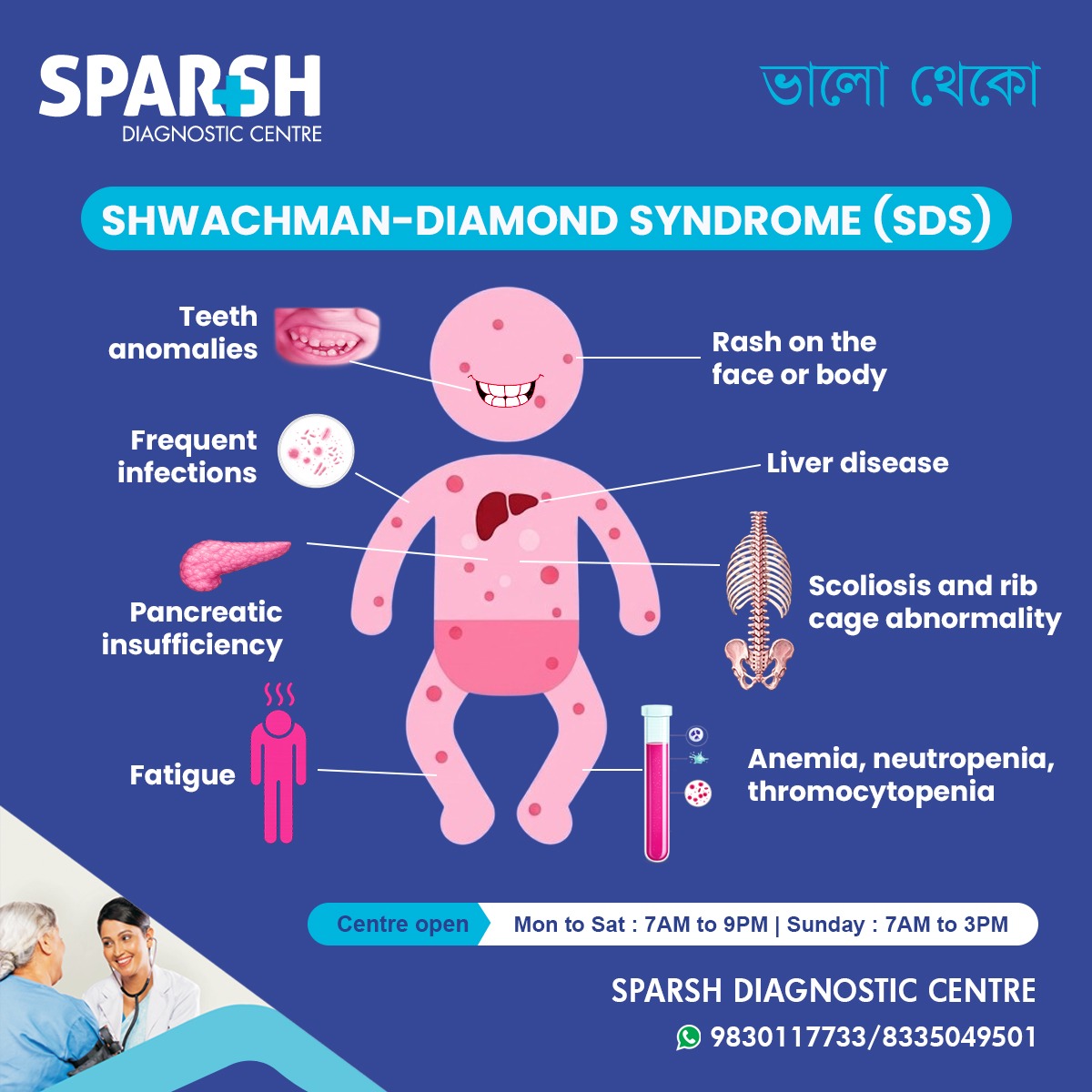
What Is the Triad of Shwachman-Diamond Syndrome?
The classic triad includes:
1. Bone Marrow Dysfunction
The bone marrow fails to produce healthy blood cells efficiently, leading to:
2. Exocrine Pancreatic Insufficiency
The pancreas cannot produce enough digestive enzymes, causing:
- Poor digestion
- Fat malabsorption
- Poor weight gain
- Vitamin deficiencies
3. Skeletal Abnormalities
Common bone problems include:
- Short stature
- Rib cage abnormalities
- Scoliosis
- Delayed bone development
Not every patient has all three features, especially early in life.
What Are the Symptoms of Shwachman-Diamond Syndrome?
Symptoms vary considerably from one individual to another.
Blood-related symptoms
- Frequent infections
- Fever
- Mouth ulcers
- Recurrent pneumonia
- Easy bruising
- Nosebleeds
- Fatigue
- Pale skin
Digestive symptoms
- Chronic diarrhea
- Greasy or foul-smelling stools
- Poor appetite
- Failure to thrive
- Slow growth
- Weight loss
- Vitamin deficiencies
Bone and growth problems
- Short height
- Delayed growth
- Scoliosis
- Rib abnormalities
- Hip abnormalities
- Osteoporosis later in life
Dental problems
- Delayed tooth eruption
- Small teeth
- Weak enamel
- Dental crowding
Liver involvement
Some children develop:
- Enlarged liver
- Elevated liver enzymes
- Fatty liver
- Mild liver dysfunction
These problems often improve with age.
Skin findings
Some patients may develop:
- Rashes
- Eczema-like skin changes
- Dry skin
What Causes Shwachman-Diamond Syndrome?
SDS results from mutations in the SBDS gene, located on chromosome 7.
The SBDS protein helps cells produce ribosomes, the structures responsible for making proteins. When the gene does not work properly, rapidly growing tissues such as:
- Bone marrow
- Pancreas
- Skeleton
- Immune cells
are particularly affected.
Around 90% of patients have mutations in the SBDS gene, while a smaller number have mutations in related genes such as DNAJC21, EFL1, or SRP54, which can cause SDS-like syndromes.
How Is SDS Inherited?
Shwachman-Diamond Syndrome follows an autosomal recessive inheritance pattern.
This means:
- A child inherits one abnormal gene from each parent.
- Parents are usually healthy carriers.
- Each pregnancy carries:
- 25% chance of an affected child
- 50% chance of a carrier child
- 25% chance of an unaffected child
Genetic counseling is strongly recommended for affected families.
How Common Is Shwachman-Diamond Syndrome?
SDS is considered extremely rare.
Current estimates suggest:
- Around 1 in 75,000 to 1 in 100,000 births
- Slightly more than 1,000–2,000 people have been identified worldwide, although the exact number is unknown because many mild cases may never be diagnosed.
Improved genetic testing is helping identify more patients every year.
Can Shwachman-Diamond Syndrome Go Undiagnosed?
Yes.
Mild cases may remain undiagnosed for years because symptoms overlap with more common conditions such as:
- Chronic diarrhea
- Recurrent infections
- Iron deficiency anemia
- Failure to thrive
- Immune disorders
Some adults are diagnosed only after:
- Persistent neutropenia
- Bone marrow failure
- Myelodysplastic syndrome (MDS)
- Acute myeloid leukemia (AML)
Can Adults Get Shwachman-Diamond Syndrome?
Adults do not suddenly develop SDS because it is a genetic condition present from birth.
However, adults can receive a diagnosis later in life if:
- Symptoms were mild during childhood
- The condition was overlooked
- Genetic testing becomes available
Many adults now live productive lives with appropriate medical care.
How Is Shwachman-Diamond Syndrome Diagnosed?
Diagnosis combines clinical findings, laboratory tests, imaging studies, and genetic testing.
Blood tests
Doctors may find:
- Low neutrophils
- Anemia
- Low platelets
- Elevated liver enzymes
Pancreatic function tests
These include:
- Fecal elastase
- Stool fat analysis
- Pancreatic enzyme measurements
Bone marrow examination
Bone marrow aspiration or biopsy may reveal:
- Reduced blood cell production
- Bone marrow abnormalities
- Early signs of leukemia
Imaging
Doctors may order:
- Skeletal X-rays
- Bone density scans
- Abdominal ultrasound
- MRI when needed
Genetic testing
Genetic analysis of the SBDS gene confirms the diagnosis in most patients and helps distinguish SDS from similar disorders.
How Is Shwachman-Diamond Syndrome Treated?
There is currently no single treatment that corrects the underlying genetic defect, but comprehensive medical care can effectively manage symptoms and complications.
Pancreatic enzyme replacement therapy (PERT)
This is the cornerstone of treatment for pancreatic insufficiency.
It helps:
- Improve digestion
- Promote weight gain
- Reduce diarrhea
- Enhance nutrient absorption
Nutritional support
Patients may require:
- High-calorie diets
- Vitamin A supplementation
- Vitamin D supplementation
- Vitamin E supplementation
- Vitamin K supplementation
- Zinc
- Calcium
- Regular nutritional monitoring
Infection prevention
Doctors may recommend:
- Prompt antibiotic treatment
- Vaccinations
- Good hygiene practices
- Monitoring for severe infections
Growth monitoring
Children require regular assessment of:
- Height
- Weight
- Puberty
- Bone health
Blood disorder management
Treatment may include:
- Blood transfusions
- Platelet transfusions
- Granulocyte colony-stimulating factor (G-CSF) in selected patients
Bone marrow transplantation
A hematopoietic stem cell transplant is currently the only potentially curative treatment for severe bone marrow failure or leukemia associated with SDS.
However, it does not reverse pancreatic or skeletal abnormalities.
What Medication Is Used for Shwachman-Diamond Syndrome?
There is no single medication that treats SDS itself.
Treatment may involve:
- Pancreatic enzyme replacement capsules
- Fat-soluble vitamin supplements
- Antibiotics
- Antifungal medications
- Growth factor injections (such as G-CSF)
- Blood transfusions when needed
Medications are tailored to each individual’s symptoms and complications.
Is Shwachman-Diamond Syndrome Curable?
At present, there is no cure for the underlying genetic disorder.
However:
- Pancreatic symptoms can often be managed very effectively.
- Nutritional problems can improve significantly.
- Bone marrow transplantation can cure severe bone marrow failure in selected patients.
Research into gene therapy and targeted treatments is ongoing and offers hope for the future.
Is SDS Curable?
The answer depends on which aspect of the disease is being considered.
- The genetic mutation cannot currently be reversed.
- Supportive treatments can successfully manage many symptoms.
- Bone marrow transplantation may cure bone marrow failure but does not correct the pancreatic or skeletal features of the syndrome.
For most people, lifelong follow-up with a multidisciplinary medical team remains essential.
What Is the Life Expectancy of a Person With Shwachman-Diamond Syndrome?
Life expectancy has improved dramatically over the past few decades.
Many individuals now survive well into adulthood.
The outlook depends on:
- Severity of bone marrow disease
- Frequency of infections
- Nutritional status
- Development of leukemia
- Access to specialized medical care
The greatest long-term risks include:
- Bone marrow failure
- Myelodysplastic syndrome (MDS)
- Acute myeloid leukemia (AML)
Regular monitoring helps detect complications early and improves outcomes.
What Is the Origin of Shwachman-Diamond Syndrome?
The syndrome was first described in 1964 by pediatricians Harry Shwachman and Louis Diamond.
The discovery of the SBDS gene in 2003 greatly improved diagnosis and expanded understanding of how the disease affects cell growth and protein production.
Today, SDS is recognized as one of the inherited bone marrow failure syndromes.
What Is SDS in Pregnancy?
The abbreviation SDS usually refers to Shwachman-Diamond Syndrome, not a pregnancy-specific condition.
Pregnancy considerations include:
- Women with SDS should receive care from both a high-risk obstetrician and a hematologist.
- Blood counts should be monitored closely throughout pregnancy.
- Nutritional deficiencies should be corrected before and during pregnancy.
- Because SDS is inherited in an autosomal recessive manner, genetic counseling is recommended for couples planning a family. Carrier testing for the partner and prenatal or preimplantation genetic testing may be discussed depending on the family’s circumstances.
Many women with mild SDS have had successful pregnancies with appropriate specialist care.
Difference Between Pearson Marrow-Pancreas Syndrome and Shwachman-Diamond Syndrome
Although both conditions affect the bone marrow and pancreas, they are distinct disorders.
| Feature | Pearson Marrow-Pancreas Syndrome | Shwachman-Diamond Syndrome |
|---|---|---|
| Cause | Mitochondrial DNA deletion | SBDS gene mutation |
| Inheritance | Usually sporadic | Autosomal recessive |
| Bone marrow | Severe sideroblastic anemia | Neutropenia more common |
| Pancreas | Exocrine insufficiency | Exocrine insufficiency |
| Other features | Lactic acidosis, metabolic disease | Skeletal abnormalities |
| Prognosis | Often more severe in infancy | Variable, many survive into adulthood |
Difference Between Diamond-Blackfan Anemia and Shwachman-Diamond Syndrome
These inherited bone marrow disorders have different underlying features.
| Feature | Diamond-Blackfan Anemia | Shwachman-Diamond Syndrome |
|---|---|---|
| Main blood problem | Red blood cell failure | Neutropenia predominates |
| Pancreatic disease | Absent | Present |
| Digestive symptoms | Rare | Common |
| Skeletal abnormalities | May occur | Common |
| Growth failure | Possible | Common |
| Leukemia risk | Lower | Increased risk of MDS and AML |
Living With Shwachman-Diamond Syndrome
Managing SDS requires coordinated, lifelong care. Regular follow-up with specialists—including pediatricians or internists, hematologists, gastroenterologists, endocrinologists, dietitians, and dentists—can help address the condition’s many aspects.
People with SDS benefit from:
- Regular blood count monitoring
- Nutritional assessments
- Bone health evaluations
- Prompt treatment of infections
- Routine dental care
- Screening for bone marrow complications
With early diagnosis and consistent medical support, many children grow into adulthood, attend school, work, and enjoy a good quality of life.
Frequently Asked Questions (FAQs)
1. What are the symptoms of Shwachman-Diamond syndrome?
Common symptoms include frequent infections, neutropenia, anemia, pancreatic insufficiency, poor growth, diarrhea, fatty stools, skeletal abnormalities, fatigue, dental problems, and delayed development.
2. What is the life expectancy of a person with Shwachman-Diamond syndrome?
Life expectancy varies depending on disease severity. Many people now live into adulthood with modern medical care, although complications such as bone marrow failure or leukemia can affect long-term outcomes.
3. What is the triad of Shwachman-Diamond syndrome?
The classic triad consists of:
- Bone marrow dysfunction
- Exocrine pancreatic insufficiency
- Skeletal abnormalities
4. Is Shwachman-Diamond syndrome curable?
There is no cure for the underlying genetic condition. However, symptoms can often be managed effectively, and bone marrow transplantation may cure severe bone marrow failure in selected patients.
5. Can adults get Shwachman-Diamond syndrome?
No. SDS is present from birth because it is genetic. However, some people are diagnosed only in adulthood due to mild or previously unrecognized symptoms.
6. What medication is used for Shwachman-Diamond syndrome?
Treatment may include pancreatic enzyme replacement therapy, vitamin supplements, antibiotics, blood transfusions, and granulocyte colony-stimulating factor (G-CSF) when appropriate.
7. Is SDS curable?
No. The genetic mutation cannot currently be cured, but supportive care can control many symptoms, and stem cell transplantation can treat severe bone marrow failure.
8. Can Shwachman-Diamond syndrome go undiagnosed?
Yes. Mild cases may remain undiagnosed until adolescence or adulthood because symptoms can resemble more common conditions.
9. What is the origin of Shwachman-Diamond syndrome?
The syndrome was first described in 1964 by Harry Shwachman and Louis Diamond. Most cases are caused by mutations in the SBDS gene.
10. How common is Shwachman-Diamond syndrome?
It is estimated to affect approximately 1 in 75,000 to 1 in 100,000 people and is considered a very rare genetic disorder.
11. What is the difference between Pearson marrow-pancreas syndrome and Shwachman-Diamond syndrome?
Pearson syndrome is caused by mitochondrial DNA deletions and typically presents with severe sideroblastic anemia and metabolic abnormalities. SDS is caused by SBDS gene mutations and is characterized by neutropenia, pancreatic insufficiency, and skeletal abnormalities.
12. How many people have SDS?
Only about 1,000 to 2,000 people have been identified worldwide, although the true number is likely higher because some cases remain undiagnosed.
13. How is SDS inherited?
SDS is inherited in an autosomal recessive pattern. A child must inherit one altered gene from each parent to develop the condition.
14. How is Shwachman-Diamond syndrome treated?
Treatment includes pancreatic enzyme replacement therapy, nutritional support, vitamin supplementation, infection prevention, blood disorder management, regular monitoring, and bone marrow transplantation for severe cases.
15. How do you diagnose Shwachman-Diamond syndrome (SDS)?
Diagnosis is based on clinical features, blood tests, pancreatic function tests, bone marrow evaluation, imaging studies, and confirmation with genetic testing, most commonly for mutations in the SBDS gene.
16. What is SDS in pregnancy?
In the context of this condition, SDS refers to Shwachman-Diamond Syndrome. Women with SDS who become pregnant require specialist obstetric and hematology care, along with genetic counseling because the condition is inherited.
17. What is the difference between Diamond-Blackfan anemia and Shwachman-Diamond syndrome?
Diamond-Blackfan anemia mainly affects red blood cell production, whereas Shwachman-Diamond syndrome primarily causes neutropenia along with pancreatic insufficiency, digestive symptoms, skeletal abnormalities, and an increased risk of bone marrow disorders.
Shwachman-Diamond Syndrome is a rare but complex inherited disorder that affects the bone marrow, pancreas, skeleton, and immune system. While there is no cure for the underlying genetic mutation, early diagnosis, pancreatic enzyme replacement, nutritional support, infection prevention, and regular monitoring have transformed outcomes for many patients. Advances in genetic testing and specialized care continue to improve quality of life, and ongoing research into targeted therapies offers hope for even better treatments in the future. If a child or adult has persistent infections, poor growth, digestive problems, or unexplained blood abnormalities, timely evaluation by a healthcare professional can make a significant difference in long-term health and well-being.
To consult a Doctor or get full body check-up done at Sparsh Diagnostic Centre, call our helpline numbers 9830117733/ 8335049501.
#BhaloTheko
Disclaimer:
No content on this site, regardless of date, should ever be used as a substitute for direct medical advice from your doctor or other qualified clinician.