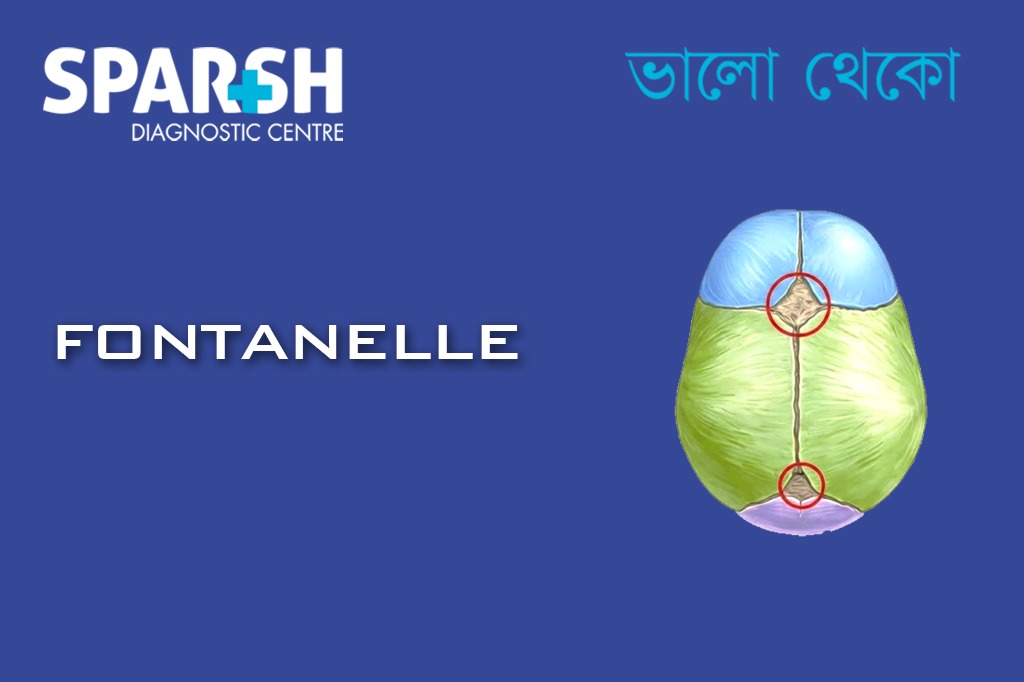
If you have ever gently touched the top of a newborn’s head and noticed a soft, slightly flexible area, you may have wondered whether something is wrong. This area is called a fontanelle, commonly known as a baby’s “soft spot.” Although it can feel surprisingly delicate, the fontanelle is a normal and important part of a baby’s development.
A newborn’s skull is not one solid piece of bone. Instead, it consists of several bones separated by flexible joints called sutures. The spaces where some of these bones meet are covered by strong membranes and are known as fontanelles. These spaces allow the skull to adapt during birth and provide room for the baby’s rapidly growing brain during the early months and years of life.
For many parents, the fontanelle can be a source of anxiety. Is it supposed to move? Should it feel soft? What if it looks sunken? Can touching it hurt the baby? Understanding what is normal can make this part of newborn care much less worrying.
What is a fontanelle?
A fontanelle is a membrane-covered gap between the bones of a baby’s skull. You may also hear it called a “soft spot.” Unlike what the name suggests, it is not an unprotected hole in the baby’s head. The area is covered by tough tissue and skin, which provides protection while allowing the skull to remain flexible.
Most babies have two easily noticeable fontanelles.
The anterior fontanelle is the larger one and is located near the top and front of the baby’s head, where the frontal and parietal bones meet. It is usually diamond-shaped and is the soft spot parents are most likely to notice.
The posterior fontanelle is smaller and located toward the back of the head, where the parietal and occipital bones meet. It generally closes much earlier than the anterior fontanelle.
There are also smaller fontanelles along the sides of the skull, although these are less obvious and are not usually what parents mean when they talk about a baby’s soft spot.

Why do babies have a soft spot?
The fontanelle serves several important purposes.
First, the flexible skull bones and sutures help the baby’s head change shape slightly during delivery. This flexibility allows the skull to accommodate the pressures involved in passing through the birth canal.
Second, the open areas between the skull bones allow the skull to expand as the baby’s brain grows rapidly after birth. The brain undergoes significant growth during infancy, so the skull needs to be able to expand rather than being completely rigid from birth.
This is why the fontanelle should not be thought of as a weakness. It is actually a normal feature of healthy skull development.
The skull bones gradually come closer together as the child grows. Importantly, when a fontanelle closes, this does not mean that all of the skull sutures have fused or that the brain has stopped growing. Head growth continues after the anterior fontanelle has closed.
What should a normal fontanelle look and feel like?
A normal fontanelle is generally soft and flat, although it may have a very slight inward curve. It should not feel excessively hard, tense or dramatically depressed.
You may occasionally notice a gentle pulsing movement in the fontanelle. This can occur because of normal blood flow in the blood vessels beneath the area and is not necessarily a sign of a problem.
The appearance can also change temporarily. For example, a fontanelle may appear more prominent when a baby is crying, vomiting or lying down. If it returns to its usual appearance once the baby is calm and upright, this is different from a persistently tense or bulging fontanelle.
Parents should therefore look at the overall picture rather than judging the fontanelle based on a single moment.
At what age does the fontanelle close?
One of the most common questions parents ask is: At what age does fontanelle close?
The answer depends on which fontanelle you are talking about.
The posterior fontanelle, located at the back of the baby’s head, usually closes within the first few months of life. Many sources place closure around 1 to 3 months, with some describing closure as early as 6 to 8 weeks.
The anterior fontanelle closes much later. It most commonly closes during the second year of life, although there is considerable normal variation. MedlinePlus reports a typical range of about 7 to 19 months, while other pediatric references describe closure anywhere from approximately 4 to 26 months.
So, there is no single exact age at which every baby’s fontanelle must close.
A fontanelle that remains open for longer does not automatically mean that something is wrong. Your pediatrician will consider the baby’s head growth, head shape, development and overall health when deciding whether further evaluation is necessary.
What does a dehydrated fontanelle look like?
A dehydrated fontanelle usually appears noticeably sunken or depressed compared with its usual position.
The soft spot may look as though it has dipped inward rather than remaining relatively flat. A sunken fontanelle can be associated with dehydration, particularly when the baby is losing fluids through vomiting or diarrhoea or is not feeding adequately.
However, it is important not to diagnose dehydration based on the fontanelle alone.
Other symptoms can provide important clues. Depending on the severity of dehydration, a baby may have fewer wet diapers, poor feeding, dry mouth, fewer tears when crying, unusual sleepiness, irritability or other changes in behaviour. Severe dehydration can become a medical emergency.
If your baby’s fontanelle suddenly appears significantly sunken, particularly if your baby is not feeding well, has repeated vomiting or diarrhoea, or is producing fewer wet diapers, contact a healthcare professional promptly.
When should I worry about my fontanelle?
Parents should seek medical advice if the fontanelle appears persistently bulging, tense or significantly sunken, particularly when the change is accompanied by other symptoms.
A bulging fontanelle can sometimes indicate increased pressure inside the skull. Potential causes include infections such as meningitis or encephalitis, hydrocephalus, bleeding or other conditions affecting the brain.
However, context matters. A fontanelle can temporarily look fuller when a baby is crying, vomiting or lying flat. It should generally return to its normal appearance after the baby settles and is positioned upright. A fontanelle that remains tense or bulging when the baby is calm deserves prompt medical assessment.
A sunken fontanelle can be a sign of dehydration and should also be assessed, particularly when there are other signs of fluid loss.
You should also discuss your baby’s fontanelle with a pediatrician if:
- You think it has closed unusually early.
- It remains open significantly longer than expected.
- You notice an unusual skull shape.
- You feel a prominent ridge along a skull suture.
- Your baby has poor feeding, unusual sleepiness, repeated vomiting or other concerning symptoms.
- You notice a sudden or significant change in how the fontanelle looks or feels.
Early closure of a fontanelle can sometimes be associated with conditions affecting skull development, including craniosynostosis. However, early fontanelle closure by itself does not necessarily mean that a baby has craniosynostosis. Doctors also assess skull shape and head growth before deciding whether further investigation is needed.
Is it safe to touch a baby’s fontanelle?
Yes. It is safe to gently touch a baby’s fontanelle.
This is one of the biggest misconceptions surrounding the soft spot. Because the area feels different from the rest of the skull, parents sometimes worry that even normal handling could damage the baby’s brain. That is not the case.
The fontanelle is covered by a strong membrane and skin. Healthcare professionals routinely examine it during newborn and pediatric check-ups by gently touching the area. Normal activities such as washing your baby’s hair, brushing the hair gently and carefully touching the head do not normally harm the fontanelle.
The important word is gently. There is no reason to press firmly, poke the soft spot or repeatedly manipulate it. Normal, careful handling is all that is required.
If you accidentally touch the fontanelle while bathing, dressing or cuddling your baby, there is generally no reason to panic.
What happens if the fontanelle closes early?
Parents sometimes become concerned when they can no longer clearly feel the soft spot.
The anterior fontanelle has a wide range of normal closure times. Some babies close earlier than others. The timing needs to be interpreted alongside the baby’s head circumference, skull shape and overall growth.
In some cases, early closure can be associated with craniosynostosis, a condition in which one or more skull sutures fuse earlier than they should. This can affect skull shape and, in some cases, restrict normal skull growth.
Early fontanelle closure can also occur in association with certain endocrine or metabolic conditions. However, it is important not to assume that an early-closing fontanelle automatically indicates disease.
If your baby’s soft spot appears to have disappeared earlier than expected, mention it to your pediatrician. They can assess the baby’s head growth and shape and determine whether any further evaluation is necessary.
What if the fontanelle doesn’t close?
A fontanelle that remains open beyond the usual timeframe may also require assessment, but there are several possible explanations.
Delayed closure can sometimes be associated with conditions such as hypothyroidism, rickets, Down syndrome, increased pressure within the skull or familial macrocephaly, in which a larger head size runs in the family.
Again, the timing alone does not establish a diagnosis.
A pediatrician will typically consider the baby’s growth pattern, head circumference, development, nutrition, physical examination and other symptoms. If needed, additional tests may be recommended.
How do doctors examine the fontanelle
Checking the fontanelle is a routine part of many infant examinations.
A doctor may gently feel the fontanelle to assess its size, firmness and position. They may also examine the skull sutures and measure the baby’s head circumference. Tracking head circumference over time can help doctors determine whether the skull and brain are growing appropriately.
The fontanelle is therefore more than an anatomical feature. It can provide useful information about a baby’s hydration status and, in some circumstances, pressure within the skull.
If something appears abnormal, the doctor will consider the baby’s entire clinical picture rather than relying on the fontanelle alone.
Common myths about the fontanelle
The soft spot has understandably generated a few myths among new parents.
One common myth is that touching the fontanelle will damage the baby’s brain. Gentle touching is safe because the area is protected by tissue and skin.
Another misconception is that every baby’s anterior fontanelle should close at exactly the same age. In reality, there is a broad range of normal closure times.
Some parents also believe that a visible pulse in the fontanelle is always abnormal. A mild pulsation can be normal and may reflect blood flow beneath the fontanelle.
Finally, a fontanelle that looks different for a short period does not necessarily indicate illness. Crying, vomiting and positioning can temporarily affect its appearance. Persistent changes, especially when accompanied by other symptoms, are more important.
When to contact a doctor urgently
If your baby’s fontanelle is persistently bulging or tense, seek urgent medical attention, particularly if your baby has fever, marked sleepiness, irritability, repeated vomiting, seizures, poor feeding or appears seriously unwell.
Similarly, a significantly sunken fontanelle may indicate dehydration and should be evaluated promptly, especially if your baby is feeding poorly or has fewer wet diapers.
Do not wait for the fontanelle to become dramatically abnormal if your baby otherwise appears seriously ill. Babies can become unwell quickly, and their overall symptoms are important.
Frequently asked questions about fontanelle
At what age does fontanelle close?
The posterior fontanelle generally closes within the first 1 to 3 months of life. The anterior fontanelle usually closes during the second year, although normal closure can occur over a much wider range, approximately 4 to 26 months.
When should I worry about my fontanelle?
You should seek medical advice if the fontanelle is persistently bulging, tense or noticeably sunken, particularly if your baby has other symptoms such as fever, poor feeding, vomiting, unusual sleepiness or fewer wet diapers. A change in skull shape or concern about unusually early or delayed closure should also be discussed with a pediatrician.
What does a dehydrated fontanelle look like?
A dehydrated fontanelle may appear noticeably sunken or depressed. It is usually considered alongside other signs of dehydration, such as fewer wet diapers, poor feeding, reduced tears, dry mouth or unusual sleepiness.
Is it safe to touch a baby’s fontanelle?
Yes. It is safe to gently touch the fontanelle during normal baby care. The soft spot is covered by protective tissue and skin. You should simply avoid pressing firmly or poking the area.
Why does my baby’s fontanelle pulse?
A gentle pulsing sensation can sometimes be felt at the fontanelle because of normal blood flow in the vessels beneath it. This can be normal, especially when the baby is otherwise well. A persistently tense or bulging fontanelle, however, requires medical assessment.
Can a fontanelle close too early?
Yes, the fontanelle can close earlier than average, but early closure does not automatically mean there is a problem. Doctors consider head growth, head shape and the status of the skull sutures when assessing whether further evaluation is needed.
Can a fontanelle stay open too long?
Yes. Some babies have a fontanelle that remains open longer than expected. Delayed closure can have several causes, including normal variation and certain medical conditions. If the anterior fontanelle remains open beyond the expected age or your baby’s head growth or shape seems unusual, discuss it with a pediatrician.
The bottom line
The fontanelle is a normal and necessary part of a baby’s developing skull. It gives the skull flexibility during birth and provides room for the rapidly growing brain during infancy.
The anterior fontanelle usually remains open well into the first year and commonly closes during the second year, while the smaller posterior fontanelle generally closes within the first few months. There is, however, considerable normal variation.
For parents, the most useful thing to remember is that a normal fontanelle is generally soft and relatively flat, and it is perfectly safe to touch gently. A noticeably sunken fontanelle can be a sign of dehydration, while a persistently tense or bulging fontanelle can indicate a more serious problem and needs prompt medical attention.
If you are concerned about how your baby’s fontanelle looks or feels, it is always reasonable to have it checked by a pediatrician. A simple examination can often provide reassurance and, when necessary, help identify a problem early.
To consult a Doctor or get full body check-up done at Sparsh Diagnostic Centre, call our helpline numbers 9830117733/ 8335049501.
#BhaloTheko
Disclaimer:
No content on this site, regardless of date, should ever be used as a substitute for direct medical advice from your doctor or other qualified clinician.