Menarche is the medical term for a girl’s first menstrual period. It marks an important milestone in puberty and signals that her reproductive system is beginning to mature.
For many girls, getting their first period can be an exciting experience. For others, it may bring confusion, anxiety or embarrassment, particularly if they do not know what to expect. Parents may also have questions about whether their daughter’s first period has arrived at the right age and how they should help her manage this change.
Menarche is a natural part of growing up. However, the age at which it occurs, the changes leading up to it and the experience of the first period can vary considerably from one girl to another.
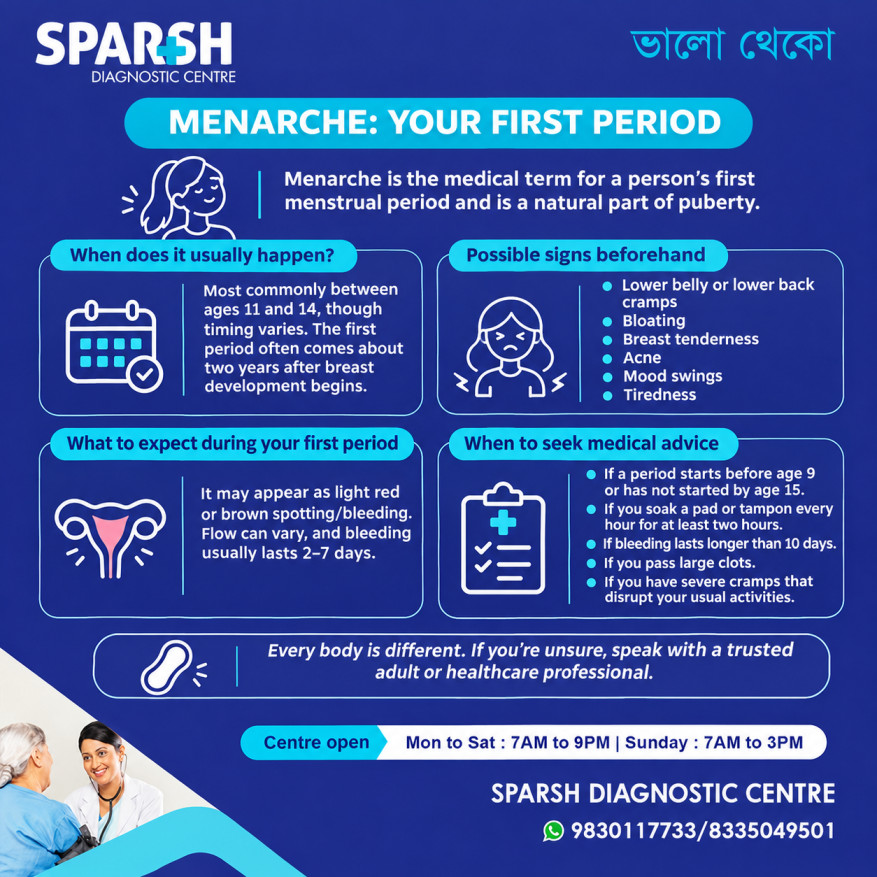
Most girls experience menarche between the ages of 11 and 14, although it can happen earlier or later. Understanding the signs of puberty, what happens during the first period and when medical advice may be necessary can help girls and their families approach this transition with confidence.
At what age does menarche usually occur?
The average age of menarche is approximately 12 years, although there is considerable natural variation.
Most girls get their first period between 11 and 14 years of age. Some may start menstruating as early as 9 or 10, while others may not experience their first period until they are 15.
There is no single age at which every girl must get her first period. Genetics, nutrition, overall health, body composition and environmental influences can all play a role in determining when puberty begins.
Menarche usually occurs around two years after breast development starts. This means that breast development is often one of the earliest visible signs that a girl’s body is preparing for menstruation.
A girl’s first period may also be preceded by other changes, such as:
Growth of pubic and underarm hair.
An increase in height.
Development of breasts.
Changes in body shape.
Vaginal discharge, which may appear white or clear.
Changes in emotions and mood.
These changes are part of normal puberty. However, if puberty begins unusually early or has not started by the expected age, a healthcare professional should evaluate the child.
What is the difference between menarche and menstruation?
Menarche and menstruation are closely related terms, but they do not mean exactly the same thing.
Menarche refers specifically to the first menstrual period a girl experiences. It is a one-time milestone that marks the beginning of menstrual life.
Menstruation, on the other hand, refers to the recurring monthly process in which the lining of the uterus sheds and leaves the body through the vagina when pregnancy has not occurred.
In simple terms:
| Menarche | Menstruation |
|---|---|
| The first-ever menstrual period. | The recurring process of monthly bleeding. |
| Happens once in a girl’s lifetime. | Continues through the reproductive years. |
| Marks an important milestone in puberty. | Forms part of the menstrual cycle. |
| Usually occurs around 11–14 years. | Typically occurs every 21–45 days in adolescents, although cycles may initially be irregular. |
After menarche, a girl begins experiencing menstrual cycles. However, these cycles may not be regular immediately. It can take a few years for the hormonal system to mature and establish a more predictable pattern.
What causes menarche?
Menarche occurs because of hormonal changes that take place during puberty.
The process begins in the brain, particularly in an area called the hypothalamus. It starts releasing gonadotropin-releasing hormone (GnRH), which stimulates the pituitary gland to release two important hormones:
Follicle-stimulating hormone (FSH): Helps ovarian follicles develop and mature.
Luteinising hormone (LH): Plays an important role in ovulation and ovarian hormone production.
These hormones stimulate the ovaries to produce oestrogen, which supports the development of female reproductive organs and secondary sexual characteristics.
As oestrogen levels increase, the lining of the uterus (endometrium) gradually thickens. Eventually, when the hormonal system is sufficiently developed, the uterine lining can shed, resulting in the first menstrual period.
This process is a natural part of reproductive development and involves the coordinated functioning of the brain, pituitary gland and ovaries.
Signs that your first period may be approaching
A girl’s body generally undergoes several physical and hormonal changes before menarche. These changes may begin months or even years before the first menstrual period.
Recognising them can help parents prepare their daughters for this important milestone.
1. Breast development
Breast development, also known as breast budding, is usually one of the earliest visible signs of puberty in girls.
It commonly begins around two years before menarche, although the timing varies. Initially, a small lump may develop beneath one or both nipples, followed by gradual breast growth.
2. Growth of pubic and underarm hair
The development of hair around the pubic region and underarms is another sign of puberty.
This happens because of increasing hormone activity during adolescence.
3. Vaginal discharge
Some girls notice a white or clear vaginal discharge before their first period.
This is generally a normal occurrence and is associated with hormonal changes, particularly increasing oestrogen levels.
It may appear several months before menarche and usually does not require treatment if there is no unpleasant smell, itching, irritation or pain.
4. Changes in body shape
During puberty, a girl’s body undergoes several physical changes.
The hips may become wider, body fat distribution changes and the body gradually develops a more mature shape.
5. Emotional and mood changes
Hormonal fluctuations during puberty can influence emotions.
Some girls may experience mood swings, irritability, increased sensitivity or changes in their sleep patterns. These experiences differ from person to person.
6. Mild abdominal discomfort
Some girls experience mild lower abdominal discomfort or cramps shortly before their first period.
Others may not experience any noticeable symptoms before menarche.
What should you expect during your first period?
A first period can be different from what a girl imagines. It does not necessarily begin with heavy bleeding.
Some girls notice a few reddish or brownish spots on their underwear. Others may experience light bleeding that gradually becomes heavier before reducing.
The blood may initially appear brown because it takes longer to leave the body and becomes darker as it is exposed to air.
A first menstrual period generally lasts between 2 and 7 days.
Here are some common experiences:
Light bleeding or spotting: The first period may begin with a few drops of blood or brownish discharge.
Changes in flow: Bleeding may be light initially, become heavier and then gradually decrease.
Mild cramps: Some girls experience discomfort in the lower abdomen or back.
Breast tenderness: Hormonal changes may cause temporary breast soreness.
Bloating: A feeling of fullness or swelling around the abdomen may occur.
Fatigue: Some girls may feel more tired than usual.
It is important to remember that every girl’s experience is different. A light first period is just as normal as one with slightly heavier bleeding, provided there are no warning signs.
Why did my 7-year-old get her period?
This is understandably one of the most concerning questions parents may have.
Menstruation at the age of seven is not considered typical. If a seven-year-old child experiences vaginal bleeding that appears to be her first period, she should be evaluated promptly by a paediatrician or paediatric endocrinologist.
One possible explanation is precocious puberty, which refers to the unusually early onset of puberty.
In girls, puberty beginning before the age of eight is generally considered early.
What is precocious puberty?
Precocious puberty occurs when the physical and hormonal changes associated with puberty begin earlier than expected.
In girls, these changes may include:
Breast development before eight years of age.
Early growth of pubic or underarm hair.
Rapid increase in height.
Acne or increased body odour.
Vaginal discharge or bleeding.
In central precocious puberty, the brain activates the hormonal system responsible for sexual development earlier than usual. This causes the ovaries to produce oestrogen and triggers the physical changes associated with puberty.
Another type, called peripheral precocious puberty, occurs when sex hormones increase independently of the normal hormonal signals from the brain.
What can cause early puberty in a seven-year-old?
There are several possible reasons why a young girl may experience early pubertal changes.
1. Genetic factors
Family history can influence the timing of puberty. Some girls may begin developing earlier because their biological relatives experienced early puberty.
2. Excess body weight
Childhood obesity has been associated with earlier pubertal development in girls. However, excess weight alone does not explain every case of early puberty.
3. Hormonal changes
Early activation of the hormonal system can stimulate ovarian activity and lead to breast development and other pubertal changes.
4. Exposure to external hormones
Exposure to products containing oestrogen or testosterone, including certain hormonal creams and medications used by family members, may sometimes contribute to early pubertal changes.
5. Medical conditions
In some cases, early puberty may be associated with abnormalities involving the brain, ovaries or adrenal glands. These are not the most common explanations, but they may need to be investigated depending on the child’s symptoms.
Does a seven-year-old having vaginal bleeding always mean menarche?
No. Vaginal bleeding in a seven-year-old does not automatically mean that the child has experienced menarche.
Other possible causes include:
Local irritation or injury.
Vulvovaginitis (inflammation or infection around the vaginal area).
Foreign bodies in the vagina.
Hormonal changes.
Certain medical conditions affecting the reproductive system.
A doctor needs to establish the actual cause rather than assuming that the bleeding is menstrual.
What should parents do?
If your seven-year-old daughter experiences vaginal bleeding, arrange a prompt medical assessment. Do not wait for the bleeding to happen again.
The doctor may recommend:
A detailed medical and developmental history.
A physical examination to assess signs of puberty.
Blood tests to evaluate hormone levels.
A bone age X-ray to assess skeletal maturity.
Pelvic ultrasonography, when clinically indicated.
Further investigations depending on the findings.
Not every child requires every test. The investigations are selected according to the child’s symptoms, examination and medical history.
Early evaluation is important because rapidly progressing puberty can affect a child’s growth, emotional well-being and eventual adult height.
If bleeding is heavy, the child appears unwell, has severe pain, dizziness or fainting, seek urgent medical care.
What factors influence the age of menarche?
The timing of a girl’s first period is influenced by several biological and environmental factors.
1. Genetics
Genetics plays an important role in determining when a girl begins menstruating. Girls may experience their first period at an age similar to that of their biological mother or other close female relatives.
2. Nutrition
Adequate nutrition is essential for normal growth and hormonal development.
Undernutrition and significant nutritional deficiencies may delay puberty, while nutritional status and body composition can influence its timing.
3. Body weight and composition
Research has identified an association between higher childhood body mass index and earlier pubertal development in some girls.
However, body weight is only one factor and should not be considered the sole cause of early menarche.
4. Physical activity
Regular physical activity supports healthy growth and development.
However, excessive exercise combined with inadequate calorie intake may delay puberty and menstruation in some girls.
5. Overall health
Certain chronic illnesses and hormonal conditions can influence the timing of puberty.
A child’s general health, growth pattern and nutritional status should therefore be considered when evaluating unusually early or delayed menarche.
How to manage your first period
Getting the first period can feel overwhelming, particularly when a girl is not prepared for it. A little knowledge and preparation can make the experience much easier.
Here are some practical tips.
Use sanitary pads: Sanitary pads are often the easiest menstrual product for beginners. Choose a comfortable product and change it regularly, generally every 4–6 hours or sooner if it becomes saturated.
Maintain personal hygiene: Wash the external genital area with clean water and change sanitary pads regularly. There is no need for vaginal douching or perfumed intimate washes.
Keep spare supplies: Carry a small pouch containing sanitary pads, spare underwear and tissues when going to school or travelling.
Track menstrual cycles: Note the first day of bleeding and how long the period lasts. Keeping a record helps identify patterns over time.
Manage cramps: A warm compress over the lower abdomen, gentle physical activity and adequate rest may help relieve mild menstrual discomfort.
Eat a balanced diet: Include iron-rich foods, vegetables, fruits, pulses, whole grains and adequate protein. This supports overall health and helps maintain good nutritional status.
Talk openly: Girls should feel comfortable discussing menstruation with their parents or another trusted adult. Menstruation is a normal biological process and should never be treated as something embarrassing.
When should you seek medical advice?
Although menarche is a natural milestone, certain situations require medical evaluation.
Consult a healthcare professional if:
A girl develops signs of puberty before eight years of age.
Menstruation begins before nine years of age.
A girl has not experienced her first period by 15 years.
Breast development has not started by 13 years.
Menstrual bleeding lasts longer than 10 days.
A sanitary pad becomes completely soaked every hour for at least two consecutive hours.
Large blood clots are repeatedly passed.
Severe menstrual cramps interfere with everyday activities.
Bleeding is accompanied by dizziness, fainting or unusual weakness.
Early or delayed menstruation does not always indicate an underlying medical problem. However, proper evaluation can help identify conditions that may require treatment.
The emotional side of menarche: How parents can support their daughters
Menarche is not just a physical milestone. It can also be an important emotional experience.
Some girls may feel proud or excited when they get their first period, while others may feel frightened, confused or embarrassed.
Parents play an important role in helping their daughters understand what is happening.
Here are a few ways to make the transition easier:
Start the conversation early: Explain menstruation before your daughter experiences her first period. This helps prevent unnecessary fear and confusion.
Use simple language: Explain what periods are and why they happen without making the discussion complicated.
Avoid embarrassment: Make it clear that menstruation is a natural bodily process.
Provide practical support: Show your daughter how to use sanitary pads and dispose of them hygienically.
Respect her feelings: Give her the opportunity to ask questions and express concerns without judgement.
Encourage confidence: Reassure her that having a period does not mean she needs to stop attending school, participating in sports or enjoying her usual activities.
A supportive environment can help girls develop a healthy understanding of their bodies and menstrual health.
Menarche, or the first menstrual period, is an important milestone in a girl’s journey through puberty. Most girls experience it between the ages of 11 and 14, although the timing can vary depending on genetics, nutrition, body composition and overall health.
Understanding the physical and emotional changes associated with the first period can help girls feel more confident and prepared. Parents should encourage open conversations about menstrual health and ensure that their daughters have access to accurate information.
While early or delayed menarche does not always indicate a medical condition, vaginal bleeding at a very young age, particularly around seven years, should never be ignored. Timely medical evaluation can help identify the cause and ensure appropriate care.
Remember, every girl develops at her own pace. What matters most is supporting healthy growth, understanding individual differences and seeking medical guidance whenever something seems unusual.
Frequently asked questions about menarche
1. What is the normal age range for menarche?
The normal age range for menarche is generally around 10–15 years, with most girls experiencing their first period between 11 and 14 years. The average age is approximately 12 years. Genetics, nutrition, body composition and overall health can influence the timing.
2. What is the difference between menarche and menstruation?
Menarche refers to a girl’s first-ever menstrual period. Menstruation is the recurring process in which the uterine lining sheds and leaves the body through the vagina. Menarche happens once, while menstruation continues as part of the menstrual cycle.
3. Why did my 7-year-old get her period?
A period-like episode of vaginal bleeding at seven years of age is unusual and requires medical evaluation. One possible cause is precocious puberty, which involves the early development of puberty-related hormonal changes. Other causes include local irritation, infection or injury. Consult a paediatrician or paediatric endocrinologist to establish the cause.
4. What are the first signs of menarche?
Common signs include breast development, pubic and underarm hair growth, vaginal discharge, a growth spurt and changes in body shape. Some girls may also experience mood swings, bloating, breast tenderness and mild abdominal cramps before their first period.
5. How long does the first period last?
A first menstrual period usually lasts between 2 and 7 days. Bleeding may initially be light, become slightly heavier and then gradually decrease. The duration and amount of bleeding vary between individuals.
6. Is it normal to have irregular periods after menarche?
Yes. Menstrual cycles are often irregular during the first one or two years after menarche because the hormonal system is still maturing. However, unusually heavy bleeding, prolonged bleeding or significant gaps between periods should be discussed with a healthcare professional.
7. Does getting the first period mean a girl has stopped growing?
No. Girls can continue growing in height after menarche. However, the rate of growth generally slows down following the first period. The amount of growth remaining varies from one individual to another.
8. Can a girl get pregnant after menarche?
Yes. Menarche indicates that the reproductive system has begun maturing, and pregnancy may become possible. Ovulation can occur even before the first menstrual period, and early menstrual cycles may not always follow a predictable pattern.
9. Should a girl exercise during her period?
Yes. Most girls can continue their usual physical activities during menstruation. Walking, swimming, cycling and gentle exercise may even help relieve menstrual cramps. Activity can be adjusted according to individual comfort.
10. When should parents worry about delayed menarche?
Parents should consult a healthcare professional if their daughter has not experienced her first period by 15 years of age or has not developed breasts by 13 years. Medical evaluation can help identify possible hormonal, nutritional or developmental causes.
To consult a Doctor at Sparsh Diagnostic Centre, call our helpline numbers +91 98301 17733 and +91 83350 49501.
#BhaloTheko
Disclaimer:
No content on this site, regardless of date, should ever be used as a substitute for direct medical advice from your doctor or other qualified clinician.
Sources and further reading
The following medical and educational resources were referred to while preparing this article:
1. Cleveland Clinic – Menarche (First Period): Overview, Age and What to Expect. An overview of the first menstrual period, its symptoms, typical age, menstrual changes and when to seek medical advice.
https://my.clevelandclinic.org/health/body/menarche
2. National Center for Biotechnology Information (NCBI) – Physiology, Menarche. A medical reference explaining the physiology, hormonal mechanisms and factors influencing the onset of menstruation.
https://www.ncbi.nlm.nih.gov/books/NBK470216/
3. ScienceDirect – Menarche: An Overview. A collection of medical literature discussing the physiological, genetic and environmental factors associated with menarche.
https://www.sciencedirect.com/topics/medicine-and-dentistry/menarche
4. Apollo Pharmacy – Menarche: A Parent and Teen Guide to the First Period. Practical information for parents and adolescents about first-period preparation, menstrual hygiene and common concerns.
https://www.apollopharmacy.in/momverse/a/menarche-a-parent-and-teen-guide-to-the-first-period
5. MyHealth Alberta – Menarche. Patient education covering the first menstrual period, menstrual cycle, symptoms and menstrual health.
https://myhealth.alberta.ca/health/Pages/conditions.aspx?hwid=aa52216spec
6. Endocrine Society – Central Precocious Puberty: Clinical Practice Guidelines. Clinical guidance on evaluating early pubertal development in girls.
https://www.endocrine.org/clinical-practice-guidelines/central-precocious-puberty
7. Pediatric Endocrine Society – Child with Suspected Sexual Precocity. Clinical referral guidance on recognising and assessing signs of unusually early puberty.
https://pedsendo.org/clinical-resource/child-with-suspected-sexual-precocity/
Medical note: This article is intended for general health education and should not replace consultation, diagnosis or treatment by a qualified healthcare professional.
Medical review
This blog has been medically reviewed and verified by Dr. Shubhayu Som to ensure the accuracy and reliability of the health information presented.
Medical reviewer: Dr. Shubhayu Som
Qualification: MBBS
Specialisation: General Physician
Medical registration: West Bengal Medical Council
WBMC Registration Number: 81060
Date reviewed on: 25th November 2026