Bright sunlight can make almost anyone squint. But if ordinary daylight, room lighting, phone screens or headlights cause significant discomfort or pain, you may be experiencing photophobia, also known as light sensitivity.
Photophobia is not simply a fear of light. It is an increased sensitivity or intolerance to light that can cause discomfort, eye pain, squinting, headaches or a strong urge to move into a darker environment. It can affect one or both eyes and may occur temporarily or persist for a long time, depending on its underlying cause.
Photophobia itself is usually a symptom rather than a disease. It can occur with common problems such as dry eyes and migraine, but it can also be associated with eye inflammation, corneal injuries, infections, neurological conditions and certain medications. This is why persistent or newly developing light sensitivity should not simply be ignored.
What does photophobia feel like?
People experience photophobia differently. For some, bright light simply feels unpleasant. For others, it can be genuinely painful.
You may notice:
- Squinting or closing your eyes when exposed to light
- Eye pain or aching in bright surroundings
- Burning, irritation or discomfort in the eyes
- Headaches triggered or worsened by light
- Difficulty keeping your eyes open outdoors
- A strong preference for dimly lit rooms
- Discomfort from computer screens or mobile phones
- Difficulty driving at night because of headlights
- Increased discomfort from fluorescent or flickering lights
- Needing sunglasses even when the light does not seem particularly bright to others
In migraine, photophobia can sometimes occur with ordinary bright light as well as flickering light, patterns and certain colours.
The important point is that photophobia is more than simply finding bright light annoying. The sensitivity is significant enough to interfere with normal activities or cause physical discomfort.
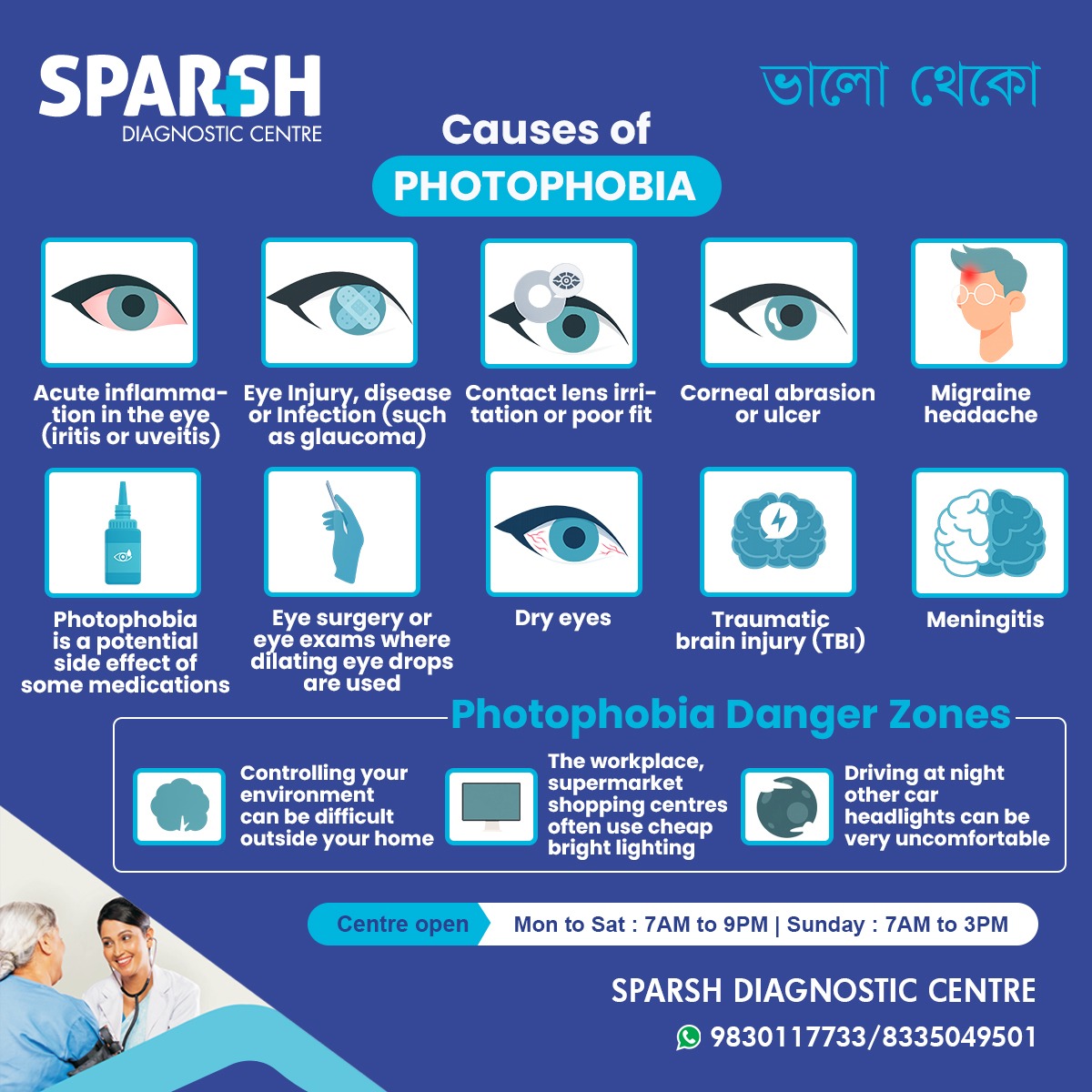
What are the causes of photophobia?
There is no single cause of photophobia. It can originate from the eyes, brain and nervous system, or occasionally be related to medications or other health conditions.
Eye conditions
Several eye problems can cause light sensitivity. These include:
- Dry eye disease
- Uveitis, or inflammation inside the eye
- Iritis
- Corneal abrasion
- Corneal ulcers and other corneal disorders
- Conjunctivitis
- Certain retinal disorders
- Optic neuritis
- Astigmatism
- Strabismus
- Glaucoma and other eye diseases
- Eye injuries
- Recent eye surgery
Dry eyes are among the common eye-related causes of photophobia. When the tear film is unstable, the surface of the eye can become irritated, making ordinary light feel uncomfortable.
Inflammation inside the eye, particularly uveitis or iritis, can cause pronounced light sensitivity and is often accompanied by eye pain or redness. Corneal abrasions and ulcers can also make exposure to light extremely uncomfortable.
Migraine
Migraine is one of the most common conditions associated with photophobia. In some people, light sensitivity occurs during a migraine attack; in others, sensitivity may continue between attacks.
Photophobia associated with migraine may occur alongside headache, nausea, vomiting and sensitivity to sound. Bright, flashing or visually complex environments may make symptoms worse.
Neurological conditions
Photophobia can also occur with certain neurological conditions, including traumatic brain injury, meningitis, blepharospasm and other neurological disorders.
This does not mean that photophobia automatically indicates a neurological disease. Most people with light sensitivity do not have a serious neurological disorder. However, sudden or severe photophobia accompanied by other concerning symptoms deserves prompt medical evaluation.
Contact lenses and eye irritation
Contact lenses that do not fit properly, are worn for too long or irritate the eye can contribute to light sensitivity. Eye irritation and dryness may also occur when contact lenses are not used correctly.
Eye examinations and surgery
Photophobia can temporarily occur after an eye examination involving pupil-dilating drops. Some people may also experience temporary light sensitivity following eye surgery.
Other conditions
Photophobia has also been reported in association with conditions such as anxiety and depression. However, this does not mean that the light sensitivity is imaginary or that it is simply “in your head.” The relationship between sensory sensitivity, pain processing and psychological health can be complex.
Why do I suddenly have photophobia?
Sudden photophobia can have many explanations, ranging from relatively minor problems to conditions that require urgent attention.
A new episode may occur because of:
- A migraine
- Dry or irritated eyes
- A corneal scratch or injury
- Eye inflammation
- An eye infection
- Recent eye surgery or pupil dilation
- A medication side effect
- A head injury
- A neurological condition
If sudden light sensitivity is accompanied by severe eye pain, a very red eye, sudden vision changes, severe headache, vomiting, confusion, weakness, fever, neck stiffness or recent significant head trauma, seek medical attention promptly.
Photophobia should not be assessed in isolation. The accompanying symptoms often provide important clues about its cause.
What medications cause photophobia?
Some medications can contribute to light sensitivity. The exact effect depends on the medication and whether it causes ocular light sensitivity or a photosensitivity reaction involving the skin.
Medications associated with photophobia or abnormal light sensitivity can include certain:
- Sedatives and barbiturates
- Benzodiazepines
- Antimalarial medicines such as chloroquine
- Antipsychotic medicines such as haloperidol
- Lithium
- Pupil-dilating medicines such as tropicamide
Cleveland Clinic also lists several medications that may be associated with photophobia.
It is important not to confuse photophobia with drug-induced skin photosensitivity. Some medications, including doxycycline, tetracyclines, hydrochlorothiazide, amiodarone, naproxen and certain other drugs, can make the skin unusually sensitive to ultraviolet light.
If you suspect that a medicine is causing your symptoms, do not stop a prescribed medication on your own. Speak with your doctor about whether the medicine could be responsible and whether an alternative is appropriate.
How is photophobia diagnosed?
There is no single test that confirms photophobia. Diagnosis generally begins with understanding the patient’s symptoms and looking for the condition causing the light sensitivity.
A doctor or eye specialist may ask:
- When did the sensitivity begin?
- Did it develop suddenly or gradually?
- Is one eye or both eyes affected?
- Is light painful or simply uncomfortable?
- Are there headaches or migraines?
- Do you have redness, discharge or blurred vision?
- Have you recently injured your eye?
- Have you had eye surgery?
- Do you wear contact lenses?
- What medications are you taking?
- Have you recently experienced a head injury?
- Does light sensitivity occur only during headaches or all the time?
A comprehensive eye examination may then be performed. Depending on the symptoms, additional neurological assessment or other investigations may be necessary.
The goal is not simply to confirm that someone has photophobia. The more important goal is to identify why the person has it.
Can photophobia be cured?
Sometimes, yes. But whether photophobia can be cured depends on its underlying cause.
If light sensitivity is caused by a temporary problem such as an eye injury, inflammation, infection or an episode of migraine, it may improve substantially once the underlying problem is treated.
If photophobia is associated with a chronic condition such as dry eye disease, migraine or a long-term neurological disorder, treatment may focus on controlling symptoms and reducing their impact rather than permanently eliminating them. Some congenital conditions associated with light sensitivity may also persist throughout life.
So, there is no universal “cure for photophobia.” Treating the cause is usually the most effective approach.
How to reduce photophobia?
There are several practical ways to make light sensitivity easier to manage while the underlying cause is being investigated or treated.
Reduce harsh lighting
Avoid unnecessarily bright indoor lighting. If fluorescent lights bother you, consider using softer lighting where possible.
Adjusting the brightness of computer monitors, televisions and smartphones may also help.
Wear appropriate sunglasses outdoors
Polarized sunglasses can reduce glare and may make outdoor environments more comfortable. A hat with a brim can provide additional protection from direct sunlight.
However, constantly wearing very dark sunglasses indoors is generally not the best long-term strategy unless advised by your eye specialist. Excessive avoidance of normal light may sometimes make ordinary environments feel even more difficult to tolerate.
Manage dry eyes
If dry eyes are contributing to photophobia, appropriate lubricating eye drops and treatment of the underlying dryness may help. Your eye specialist can recommend the right type of drops based on your symptoms.
Reduce screen-related discomfort
Try lowering screen brightness, increasing text size, reducing glare and taking regular breaks. Avoid staring continuously at a bright screen in a completely dark room.
Treat the underlying condition
This is often the most important step. Migraine treatment, management of dry eye disease, treatment of eye inflammation or correction of an eye problem can all reduce associated photophobia.
How to remove photophobia?
There is no single method that can “remove” photophobia in everyone.
The best approach is to determine what is causing it and treat that problem. For example, photophobia associated with migraine may improve when migraine attacks are controlled. Photophobia caused by an inflamed eye may improve when the inflammation is treated. If dry eyes are responsible, improving the tear film may reduce the sensitivity.
In some cases, the light sensitivity itself may need long-term management rather than complete elimination.
This is why repeatedly using sunglasses or avoiding light without finding the underlying cause may not solve the problem.
Is there a medicine for photophobia?
There is no single medication specifically designed to cure all forms of photophobia.
Treatment depends on the cause. A doctor may recommend medications for migraine, eye inflammation, infection or another underlying condition. In some situations, eye drops, glasses, contact lenses or surgery may be appropriate.
For migraine-related photophobia, treating the migraine itself can reduce light sensitivity. Research has also found that certain migraine treatments can improve associated symptoms such as photophobia.
The correct medication therefore depends on the diagnosis rather than the symptom alone.
How long does photophobia last?
There is no fixed duration.
Photophobia may last:
- Minutes or hours during a migraine
- Several days after an eye injury or procedure
- As long as an eye infection or inflammation remains active
- For weeks or longer following some neurological problems
- Indefinitely when associated with certain chronic or congenital conditions
For example, Cleveland Clinic notes that photophobia may clear when its underlying condition can be treated, while light sensitivity associated with certain congenital conditions or chronic dry eye may persist.
If your photophobia is new, persistent or progressively worsening, an eye examination can help determine why it is lasting.
Can photophobia get worse with age?
Photophobia does not necessarily get worse simply because someone is getting older.
However, some conditions that become more common with age may affect eye comfort, vision or light tolerance. Changes in the eyes, medications, dry eye disease and other health conditions can all influence how comfortable a person feels in bright environments.
Therefore, increasing light sensitivity should not automatically be dismissed as a normal part of ageing. If you notice a significant change, especially if it develops suddenly, it is worth discussing with an eye specialist.
Is photophobia linked to anxiety?
There can be an association between photophobia and anxiety.
People living with chronic photophobia may become anxious about situations in which they expect bright or uncomfortable lighting, particularly if the symptom interferes with work, driving, social activities or leaving the house.
Research has also found increased anxiety and depression scores in some people with chronic photophobia and migraine.
However, this does not mean anxiety is always the cause of photophobia. The relationship can work in both directions: an underlying medical condition may cause photophobia, while persistent symptoms may contribute to anxiety.
Is photophobia a mental illness?
No. Photophobia itself is not a mental illness.
The word can be confusing because “phobia” usually refers to an intense fear. In medicine, however, photophobia refers to abnormal sensitivity or intolerance to light. It is generally considered a symptom rather than a psychiatric disorder.
Psychological conditions such as anxiety may occur alongside photophobia, but that does not make the photophobia itself a mental illness.
Is photophobia a disability?
Photophobia is not automatically considered a disability.
Whether a person qualifies for disability support depends on the severity of the symptoms, how significantly they limit everyday functioning, the underlying medical condition and the legal or administrative criteria applicable in their country.
Severe photophobia can, however, be disabling in practical terms. Someone who cannot tolerate normal workplace lighting, drive safely, use screens or function outdoors may experience significant limitations.
If photophobia is seriously interfering with your ability to work or perform daily activities, medical documentation of the underlying condition and its functional impact may be important.
Is photophobia a serious condition?
Photophobia itself is usually a symptom, not a disease, so its seriousness depends largely on what is causing it.
In many cases, the cause is manageable, such as migraine or dry eye. However, photophobia can occasionally accompany more serious eye or neurological conditions.
Seek prompt medical attention if light sensitivity is accompanied by:
- Severe or rapidly worsening eye pain
- Significant eye redness
- Sudden loss or change of vision
- Severe headache unlike your usual headaches
- Fever or neck stiffness
- Vomiting with severe headache or eye pain
- Confusion, weakness or other neurological symptoms
- A recent significant head injury
A new symptom does not necessarily mean something serious is happening, but these warning signs should not be ignored.
When should you see an eye specialist?
Consider an eye examination if your sensitivity to light is new, persistent, worsening or interfering with normal activities.
You should also seek medical assessment if you have photophobia together with eye pain, redness, blurred vision, discharge, headaches or other unusual symptoms.
The sooner the underlying cause is identified, the sooner appropriate treatment can begin.
Frequently asked questions about photophobia
Can photophobia be cured?
Photophobia can sometimes resolve completely when its underlying cause is treated. However, chronic migraine, dry eye disease, congenital eye conditions and some neurological disorders may cause longer-lasting sensitivity. Treatment is therefore focused on the specific cause.
What are the main causes of photophobia?
Common causes include migraine, dry eyes, eye inflammation, corneal injury, eye infections, certain eye conditions, recent eye procedures, neurological disorders and some medications.
How can I reduce photophobia naturally?
Reducing glare, adjusting indoor and screen lighting, wearing appropriate sunglasses outdoors, using a hat in strong sunlight and managing dry eyes may help. However, persistent photophobia should be evaluated rather than managed only by avoiding light.
What does photophobia feel like?
It may feel like eye pain, burning, discomfort or an overwhelming need to close or shield the eyes. Some people develop headaches or nausea when exposed to bright or flickering light.
How do you get rid of photophobia?
There is no universal treatment. Identifying and treating the underlying cause is the most effective way to reduce or eliminate photophobia.
How long can photophobia last?
It may last minutes or hours, several days, weeks or much longer depending on its cause. Persistent symptoms should be assessed by a healthcare professional.
Can photophobia get worse with age?
Age alone does not necessarily make photophobia worse. However, age-related changes, dry eyes, medications and other health conditions may affect light tolerance.
Is photophobia linked to anxiety?
Yes, anxiety and photophobia can occur together. Chronic light sensitivity may also contribute to anxiety, particularly when it interferes with daily life.
Is photophobia a mental illness?
No. Photophobia is generally a symptom of an eye, neurological or other medical condition. It is not itself a mental illness.
How is photophobia diagnosed?
Diagnosis usually involves a detailed medical and eye history followed by a comprehensive eye examination. Additional neurological tests or investigations may be needed depending on the symptoms.
What medications can cause photophobia?
Some medications, including certain sedatives, benzodiazepines, antimalarials, antipsychotics, lithium and pupil-dilating medicines, have been associated with photophobia. Some other drugs can cause photosensitivity of the skin rather than ocular photophobia.
Is there a medicine specifically for photophobia?
There is no single medicine that treats every type of photophobia. Treatment is directed at the underlying cause, such as migraine, inflammation, infection or dry eye.
Why do I suddenly have photophobia?
Sudden photophobia may result from migraine, dry eye, eye irritation, corneal injury, inflammation, infection, medication effects or, less commonly, a neurological problem. Sudden symptoms accompanied by severe headache, eye pain, vision changes, fever, neck stiffness or neurological symptoms require prompt medical attention.
Final thoughts
Photophobia can be frustrating, particularly when ordinary sunlight, office lighting or a phone screen becomes uncomfortable. But light sensitivity is not something that should automatically be accepted as a permanent problem.
The key is to understand why it is happening.
Migraine, dry eyes, eye inflammation, corneal problems, medications and neurological conditions can all produce photophobia, and the appropriate treatment differs for each one.
If your light sensitivity is new, persistent or getting worse, an eye examination can help identify the underlying cause and guide appropriate treatment. In many cases, addressing that underlying problem can significantly reduce photophobia and make everyday activities much more comfortable.
#BhaloTheko
Disclaimer:
No content on this site, regardless of date, should ever be used as a substitute for direct medical advice from your doctor or other qualified clinician.