Akathisia is a condition that can be difficult to describe because it involves both the body and the mind. A person may feel an overwhelming need to move, pace, shift position or keep their legs moving, while also experiencing intense inner restlessness, tension or distress.
It is particularly associated with certain medicines, especially antipsychotic drugs, but it can also occur with some antidepressants and other medications. Akathisia can sometimes be mistaken for anxiety, agitation or a worsening psychiatric condition, which is one reason it is important to recognise the characteristic pattern.
The good news is that many people recover from akathisia, particularly when it is identified early and the underlying cause is addressed. Treatment depends on what triggered it, how severe it is and the person’s overall health.
What is akathisia?
Akathisia is a movement-related and neuropsychiatric syndrome characterised by inner restlessness and an almost irresistible urge to move. The movements are often repetitive and may involve the legs, feet or entire body.
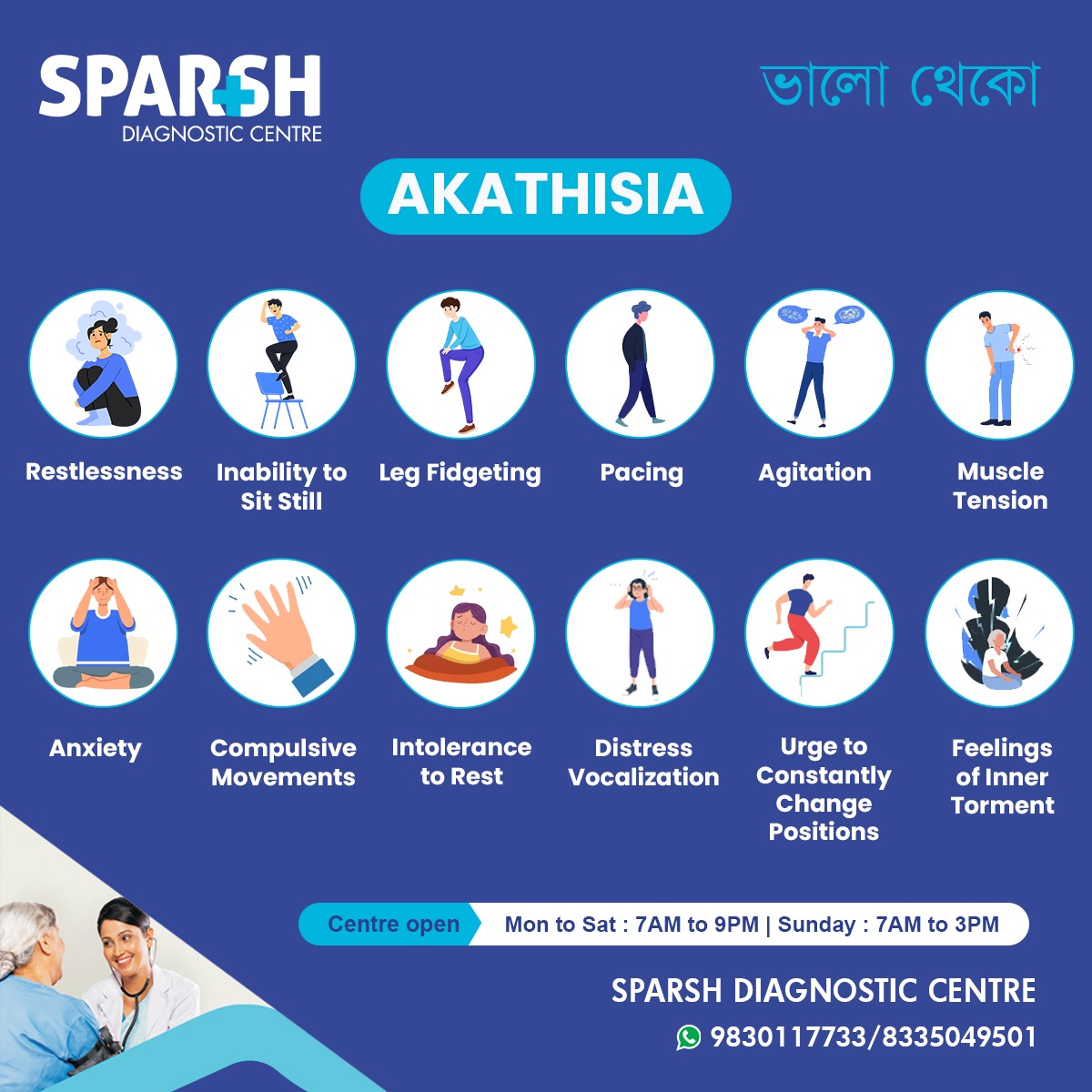
Someone with akathisia may repeatedly cross and uncross their legs, rock while sitting, shift from one foot to another, pace around a room or repeatedly change positions because remaining still feels extremely uncomfortable.
The word “akathisia” comes from Greek roots meaning an inability to sit. However, it is more than simply being fidgety or unable to sit through a long meeting. The defining feature is usually the subjective feeling of inner restlessness accompanied by a compelling need to move.
Akathisia is most commonly medication-related. Antipsychotic medicines are a major cause, although some antidepressants, anti-nausea medicines and other drugs have also been associated with it.
What does akathisia feel like?
People often describe akathisia as an extremely uncomfortable feeling of being unable to settle.
It may feel like:
- An intense urge to keep moving
- Restlessness deep inside the body
- Jitteriness or agitation
- Tension in the legs
- An inability to relax
- Feeling trapped when sitting or lying down
- A need to pace or walk around
- A sense that no position is comfortable
- Irritability or mounting distress
- Difficulty switching off mentally
The mental experience can be particularly distressing. A person may think, “I have to move,” even when they consciously want to sit down and rest. The discomfort can become worse the longer they try to remain still.
Severe akathisia can cause significant emotional distress and has been associated with suicidal thoughts in some patients. Anyone experiencing suicidal thoughts or feeling unable to remain safe should seek urgent medical help.
What are the first signs of akathisia?
The first signs are often subtle. A person may initially notice that they cannot relax in a chair or feel unusually restless after starting or increasing a medication.
Early signs can include:
- Frequent leg movement
- Repeatedly changing sitting positions
- Tapping the feet
- Rocking back and forth
- Standing up and sitting down repeatedly
- Walking around without a clear reason
- Feeling unusually tense or agitated
- Difficulty relaxing at bedtime
- A strong internal feeling of “I need to move”
Akathisia can develop within hours or days after starting certain medicines or increasing their dose, although the timing varies depending on the type of akathisia and the medication involved.
What does akathisia look like?
From the outside, akathisia can look like extreme fidgeting or agitation.
A person may:
- Pace continuously
- March in place
- Rock while sitting
- Swing or shake their legs
- Cross and uncross their legs
- Shift repeatedly from one foot to another
- Stand up and sit down frequently
- Move their arms or trunk repeatedly
- Appear unable to stay in one position
However, the visible movements are only part of the condition. Someone can have substantial subjective akathisia even when their movements are not dramatic. Conversely, pseudoakathisia describes objective restless movements without the typical inner feeling of restlessness.
What causes akathisia?
The most common cause is medication exposure, particularly medicines that affect dopamine signalling.
Antipsychotic medications are strongly associated with akathisia. Both first-generation and second-generation antipsychotics can cause it, although the risk differs between individual medicines and tends to be greater with many high-potency drugs. Risk can also increase with higher doses and rapid dose escalation.
Other medicines associated with akathisia can include some:
- Antidepressants
- Anti-nausea medicines such as metoclopramide
- Medicines affecting dopamine pathways
- Certain cardiovascular medicines
- Other neurological or psychiatric medicines
Akathisia can also occur after reducing or stopping certain medicines. This is known as withdrawal akathisia. Less commonly, it may occur as part of neurological or other medical conditions.
When does akathisia start?
Medication-induced akathisia can start surprisingly quickly. Acute akathisia may appear within hours or days after starting a medication or increasing its dose. In some cases, symptoms develop more gradually over several weeks.
There are several forms:
Acute akathisia: Usually develops soon after starting or increasing a medication.
Withdrawal akathisia: Can occur after reducing or stopping a medicine associated with akathisia.
Chronic akathisia: Symptoms continue for a prolonged period.
Tardive akathisia: Develops later during treatment and can sometimes persist after the medication has been reduced or stopped.
Because timing provides important diagnostic clues, it is useful to tell your doctor exactly when the restlessness began and whether a medication was recently started, stopped or changed.
Do I have akathisia or anxiety?
Akathisia and anxiety can feel similar, and the two can occur together. The difference is that akathisia is primarily characterised by an inner urge to move, whereas anxiety is generally dominated by fear, worry, apprehension or excessive concern.
For example, someone with anxiety may feel nervous about an upcoming event but still be physically capable of sitting comfortably. Someone with akathisia may desperately want to sit still but find the physical sensation of remaining still almost unbearable.
Akathisia itself can also cause anxiety. This makes the distinction even more difficult.
Doctors may mistakenly interpret akathisia as anxiety, agitation, mania or worsening psychiatric symptoms, particularly when the medication causing the problem is not considered.
What can be mistaken for akathisia?
Several conditions can resemble akathisia, including:
- Anxiety disorders
- Panic attacks
- Agitated depression
- Mania
- ADHD-related restlessness
- Psychosis or psychiatric agitation
- Restless legs syndrome
- Parkinsonism
- Tardive dyskinesia
- Dystonia
- Medication withdrawal
- Insomnia
- Some neurological disorders
The timing of symptoms, medication history, subjective sensation and physical movements all help distinguish these conditions.
Doctors may use the Barnes Akathisia Rating Scale (BARS) or another validated assessment tool to evaluate severity.
Is akathisia a mental health condition?
Akathisia is best understood as a neuropsychiatric syndrome and movement disorder, rather than simply a mental health condition.
It can have a major psychological impact. Persistent physical restlessness may cause anxiety, irritability, insomnia, emotional distress and difficulty functioning normally. This is why treating the underlying akathisia is important rather than assuming that the person simply needs to “calm down.”
Is akathisia a brain injury?
No. Akathisia is not itself considered a brain injury.
It is usually related to changes in neurotransmitter signalling, particularly dopamine pathways, and is frequently triggered by medications. However, some neurological conditions and brain injuries have been reported as potential associations with akathisia. That does not mean that experiencing akathisia automatically indicates that the brain has been damaged.
How common is akathisia?
Akathisia is relatively common among people taking medications that can cause it, particularly antipsychotic medications. Estimates vary considerably because studies use different definitions, medications and assessment methods.
A systematic review of newer antipsychotic medicines found weighted mean akathisia incidence of about 7.7%, with considerable variation between individual medicines. Other reviews have reported substantially wider prevalence ranges in people receiving antipsychotic treatment.
So there is no single percentage that applies to everyone. The risk depends heavily on the medication, dose, treatment duration and individual factors.
What are the risk factors for akathisia?
Risk can increase with:
- Higher antipsychotic doses
- Rapid increases in medication dose
- First exposure to dopamine-receptor-blocking medication
- High-potency antipsychotic medicines
- Taking more than one antipsychotic
- Certain individual psychiatric or neurological conditions
- Previous akathisia
- Parkinsonism
- Some forms of brain damage
- Abrupt reduction or discontinuation of certain medicines
The evidence for individual patient risk factors is less consistent than the evidence for medication-related factors such as dose and rapid dose escalation.
Does akathisia affect sleep?
Yes. Akathisia can significantly interfere with sleep.
When someone feels an overwhelming need to move, lying quietly in bed can become extremely uncomfortable. They may repeatedly get up, walk around the room, change positions or feel unable to settle.
Poor sleep can then make the distress, irritability and physical discomfort feel even worse, creating a difficult cycle.
Can akathisia come and go?
Yes. Akathisia can fluctuate.
Symptoms may become more noticeable at certain times of the day, when the person is trying to rest, after a medication dose or when they attempt to remain still. Symptoms can also improve temporarily and then return.
This does not necessarily mean that the condition is permanent. Fluctuation is possible, particularly when medication levels, treatment schedules or withdrawal effects are involved.
How long does akathisia last?
There is no universal recovery time.
Some cases improve relatively quickly after the causative medication is adjusted. Acute medication-induced akathisia may improve over days or weeks once the underlying trigger is addressed. Withdrawal akathisia is often self-limited and may resolve within several weeks. Tardive or chronic akathisia can last considerably longer and may persist for months or, in some cases, years.
This is why asking “How long does akathisia last?” does not have one simple answer. The cause and type of akathisia matter enormously.
How long does it take to recover from akathisia?
Recovery depends on whether the akathisia is acute, withdrawal-related, chronic or tardive, as well as whether the causative medication can be safely changed.
People with acute medication-induced akathisia often have a better outlook when the problem is recognised early. Adjusting the offending medication can lead to significant improvement. More persistent forms may require longer-term management.
Importantly, having akathisia does not mean that you will have it forever.
How to make akathisia go away?
The first step is to identify the cause.
If a medication is responsible, a doctor may consider:
- Reducing the dose.
- Slowing the rate of dose escalation.
- Switching to another medicine with a lower risk of akathisia.
- Treating the akathisia directly with an appropriate medication.
Clinical guidance supports reviewing the causative antipsychotic before simply adding another medicine. Dose reduction or switching may be appropriate when clinically safe, but these decisions should be made by the prescribing doctor because suddenly stopping psychiatric medication can cause withdrawal or relapse.
What is the best treatment for akathisia?
There is no single treatment that is best for every patient.
For medication-induced akathisia, treatment generally begins with reviewing the causative medicine. Depending on the situation, clinicians may reduce its dose or switch to another medication.
Additional medicines may be considered when symptoms persist. Beta-blockers such as propranolol, certain 5-HT2A antagonists such as mirtazapine, benzodiazepines and, in selected circumstances, other medicines may be used. Evidence for these add-on treatments varies. Recent reviews suggest beta-blockers, benzodiazepines and some noradrenergic/serotonergic medicines can help, but the certainty of evidence is not uniformly high.
Anticholinergic medicines are not automatically appropriate for akathisia and may be more useful when other extrapyramidal symptoms, such as parkinsonism or dystonia, are also present.
What is the best medicine for akathisia?
Propranolol is commonly considered one of the principal medication options for antipsychotic-induced akathisia, but it is not suitable for everyone.
Beta-blockers can cause problems such as low blood pressure and slow heart rate and may not be appropriate for people with certain cardiovascular or respiratory conditions. Other options, including mirtazapine or short-term benzodiazepines, may be considered depending on the individual situation.
There is therefore no universally “best” medicine. The safest choice depends on the person’s existing medicines, medical conditions and the cause of the akathisia.
How to stop akathisia immediately?
Unfortunately, there is no guaranteed home method that can immediately stop akathisia.
If symptoms are severe, particularly if they started soon after a medication change, contact the prescribing doctor promptly. Do not abruptly stop an antipsychotic or other prescribed medicine without medical guidance.
While waiting for medical advice, some people find temporary relief from gentle walking, changing positions, a calm environment, hydration and avoiding excessive stimulants such as caffeine. These measures may make symptoms more tolerable, but they do not treat the underlying cause.
If severe restlessness is accompanied by suicidal thoughts, confusion, high fever, severe muscle rigidity, fainting or other alarming symptoms, urgent medical assessment is appropriate.
How do I cure my akathisia?
The word “cure” can be misleading because akathisia is usually a symptom or medication-related syndrome rather than a single disease with one definitive cure.
The goal is to identify and remove or reduce the trigger when possible and control the symptoms safely.
For many people, especially those with acute medication-induced akathisia, symptoms improve substantially after appropriate medication adjustment. Persistent or tardive akathisia may require specialist management and a longer treatment period.
How to help akathisia naturally?
Natural measures cannot replace medical treatment when medication is causing akathisia, but they may help with comfort.
Possible supportive measures include:
- Gentle walking rather than forcing yourself to remain still
- Stretching the legs and changing positions
- Maintaining a regular sleep schedule
- Staying adequately hydrated
- Limiting caffeine and other stimulants
- Avoiding recreational drugs
- Practising slow breathing or relaxation techniques
- Keeping the environment quiet and low-stimulation
- Recording when symptoms appear in relation to medication doses
These approaches are best viewed as supportive strategies, not cures.
What worsens akathisia?
Several factors can make symptoms feel worse, including:
- Remaining still for long periods
- Sleep deprivation
- Excessive caffeine or other stimulants
- Stress
- Anxiety caused by the symptoms themselves
- Increasing the dose of a causative medication
- Rapid medication changes
- Abruptly stopping certain medicines
The most important factor to address is the underlying medication or medical trigger.
Is akathisia a permanent condition?
Usually, no.
Many cases are temporary and improve once the underlying cause is addressed. However, chronic or tardive akathisia can persist for a long time and may occasionally continue after the causative medication has been reduced or discontinued.
Early recognition is therefore important. Persistent unexplained restlessness should not simply be dismissed as anxiety or a personality trait.
Do people recover from akathisia?
Yes. Many people recover from akathisia, particularly when the condition is recognised early and the triggering medication can be safely adjusted.
Recovery may be quick in some acute cases and much slower in chronic or tardive cases. The important point is that akathisia should be taken seriously and actively assessed rather than simply endured.
What are the long-term effects of akathisia?
Persistent akathisia can significantly affect quality of life.
Long-term symptoms may contribute to:
- Chronic sleep disruption
- Anxiety and emotional distress
- Difficulty working or studying
- Problems with social activities
- Reduced medication adherence
- Persistent physical discomfort
- Depression or worsening psychological distress
Severe untreated akathisia can be particularly distressing and has been associated with suicidal thoughts, making prompt recognition and treatment important.
What are the treatment guidelines for akathisia?
Current clinical guidance generally follows a stepwise approach:
First, identify and assess the condition. A validated tool such as the Barnes Akathisia Rating Scale can help document severity.
Second, review the causative medication. The doctor should consider whether the dose can safely be reduced or whether another medication would be more appropriate.
Third, avoid unnecessary polypharmacy and rapid dose increases. These can increase the risk of akathisia.
Fourth, consider additional treatment if symptoms remain significant. Beta-blockers, 5-HT2A antagonists, benzodiazepines and other options may be considered based on the individual patient.
The 2018 Canadian guideline recommends systematic assessment, avoiding rapid dose escalation, considering dose reduction and switching medications when appropriate, and using adjunctive treatments when necessary. More recent systematic reviews continue to support some of these approaches while emphasising that evidence for several add-on medicines remains limited.
Frequently asked questions about akathisia
Can akathisia come and go?
Yes. Symptoms can fluctuate during the day and may become more noticeable when trying to rest. Medication timing, stress, sleep and the underlying cause can all influence symptom severity.
Is akathisia a brain injury?
No. Akathisia itself is not a brain injury. It is a movement and neuropsychiatric syndrome, most often related to medication effects on neurotransmitter pathways. Some neurological conditions, including brain injury, may be associated with akathisia, but the two are not synonymous.
Does akathisia affect sleep?
Yes. The inability to remain still and the intense inner restlessness can make it difficult to fall asleep or remain asleep.
What does akathisia feel like mentally?
Mentally, people may experience intense uneasiness, agitation, irritability and a feeling that they must move. It can also produce secondary anxiety because the physical sensation is so difficult to tolerate.
Is there a permanent cure for akathisia?
There is no single cure that works for every form. Many acute cases resolve when the underlying medication problem is corrected, while chronic and tardive cases may require prolonged treatment.
How should I know if my restlessness is akathisia?
A strong internal urge to move, repetitive leg movements or pacing, and symptoms that began after starting, increasing, reducing or stopping a medication are important clues. However, a healthcare professional should make the diagnosis because several other conditions can look similar.
When should you see a doctor?
Speak to a healthcare professional if you develop persistent restlessness, pacing, an inability to sit still or an uncontrollable urge to move, especially after starting or changing a medication.
Seek urgent medical attention if severe restlessness is accompanied by suicidal thoughts, inability to remain safe, confusion, high fever, severe muscle stiffness, fainting or rapidly worsening symptoms.
Akathisia is treatable, and recognising it early can make a significant difference. If you suspect a medication is responsible, don’t stop or change the dose on your own. Instead, contact the doctor who prescribed it and explain exactly when the symptoms started, what movements you are experiencing and whether they change after each dose.
Medical disclaimer: This article is intended for general health education and does not replace an examination or personalised medical advice. Akathisia can have several causes, and treatment—particularly changes to psychiatric medication—should be supervised by a qualified healthcare professional.
To consult a Doctor or get full body check-up done at Sparsh Diagnostic Centre, call our helpline numbers 9830117733/ 8335049501.
#BhaloTheko
Disclaimer:
No content on this site, regardless of date, should ever be used as a substitute for direct medical advice from your doctor or other qualified clinician.