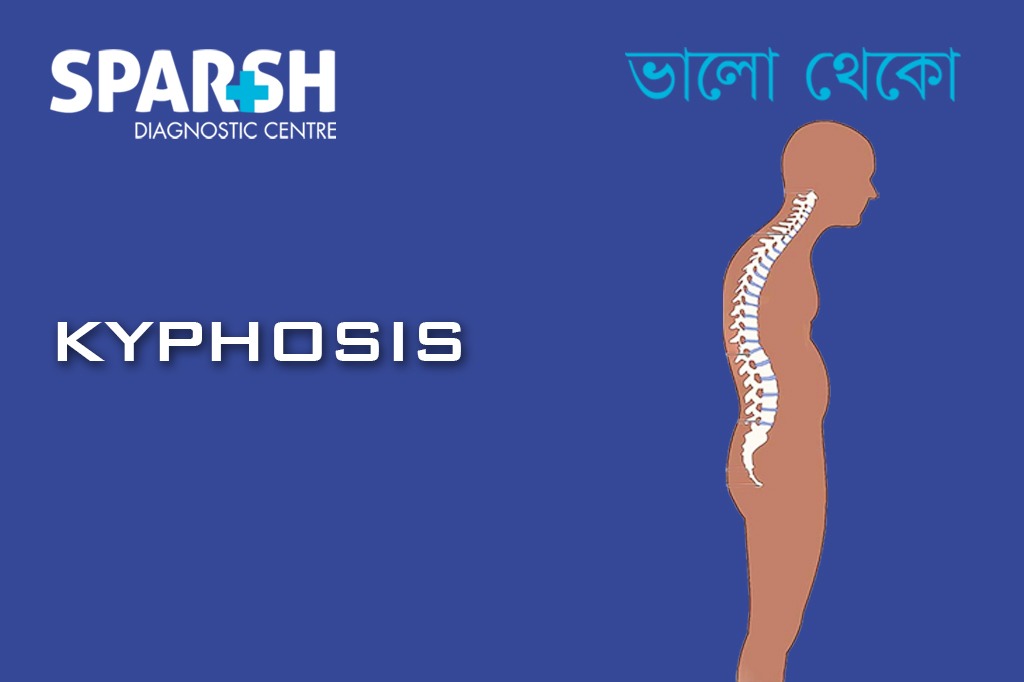
A little rounding in the upper back is normal. In fact, the thoracic spine naturally has a gentle forward curve that helps the body maintain balance and absorb movement. The problem arises when this curve becomes excessive, making the upper back look noticeably rounded or hunched. This condition is known as kyphosis, or hyperkyphosis when the curvature is excessive.
Kyphosis can develop at almost any age. In teenagers, it may be related to posture or a condition called Scheuermann’s kyphosis. In older adults, spinal fractures related to osteoporosis and age-related changes in the discs and vertebrae are important causes. Some people are born with structural abnormalities that cause kyphosis, while others develop it following an injury or another spinal condition.
The good news is that not every case of kyphosis needs aggressive treatment. Many people can manage their symptoms with posture correction, exercise, physiotherapy and treatment of the underlying cause. More severe or progressive cases may require specialist evaluation and, occasionally, surgery.
What Is Kyphosis?
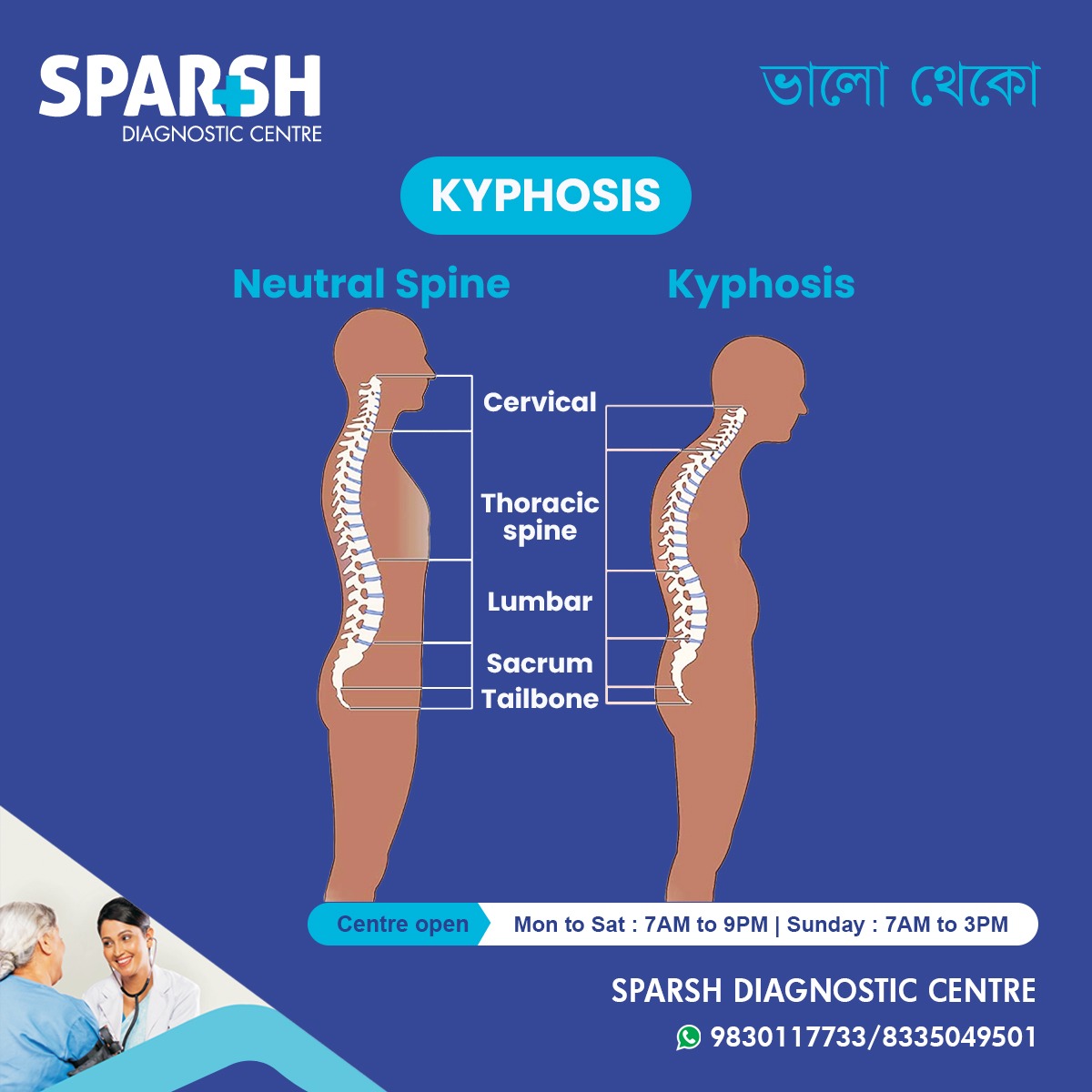
Kyphosis is an excessive forward curvature of the spine, usually affecting the thoracic or upper-back region. Viewed from the side, a normal spine has several natural curves. The thoracic spine curves gently outward, while the cervical and lumbar regions curve in the opposite direction.
When the thoracic curve becomes significantly exaggerated, the upper back may appear rounded or hunched. Mild kyphosis may cause no symptoms at all, whereas more pronounced kyphosis can cause back pain, stiffness, fatigue and difficulty maintaining an upright posture. Severe cases can sometimes affect physical function and breathing.
A thoracic kyphosis of roughly 20 to 45 degrees is generally considered within the normal range. A curve above about 50 degrees is commonly described as hyperkyphosis, although the clinical significance depends on the individual’s age, cause, symptoms and overall spinal alignment.
What Causes Kyphosis?
There isn’t one single cause of kyphosis. The cause often depends on the person’s age and the type of kyphosis.
Postural kyphosis
Postural kyphosis is particularly common in teenagers. Poor posture, prolonged slouching and weak postural muscles can make the upper back appear rounded. Unlike structural kyphosis, postural kyphosis is generally flexible and may improve when the person consciously stands upright.
Scheuermann’s kyphosis
Scheuermann’s kyphosis is a structural condition that usually develops during adolescence. Instead of being perfectly rectangular, some vertebrae become wedge-shaped because the front portions do not grow at the same rate as the back portions. This creates a more rigid curve that cannot simply be corrected by standing straight. It typically becomes noticeable during periods of rapid growth, often around ages 12 to 15.
Osteoporosis and spinal fractures
In older adults, weakened bones can lead to compression fractures of the vertebrae. These fractures may cause the vertebrae to become wedge-shaped and gradually increase the forward curvature of the spine. Osteoporosis is therefore an important cause of kyphosis in later life.
Age-related spinal changes
As people age, spinal discs can become thinner and lose some of their cushioning ability. Degenerative changes in the spine can contribute to increasing kyphosis.
Other causes
Kyphosis can also result from congenital spinal abnormalities, spinal injuries, previous spinal surgery and certain medical or genetic conditions.
What is the most common cause of kyphosis?
It depends on age. Postural kyphosis is commonly identified in teenagers, while osteoporosis-related vertebral compression fractures and degenerative spinal changes are important causes of kyphosis in older adults. There is therefore no single cause that applies to every age group.
What Are the First Signs of Kyphosis?
The first sign is often a gradually increasing rounding of the upper back. You may notice that the shoulders appear rounded forward or that you tend to slouch more than before.
Other early symptoms can include:
- Back stiffness
- Mild upper-back discomfort
- Fatigue after sitting or standing for long periods
- Difficulty maintaining an upright posture
- A visible hump or rounded appearance
- Reduced flexibility of the upper back
Mild kyphosis may produce no symptoms at all. If the curvature becomes more pronounced, pain and stiffness may become more noticeable.
What Does a Person With Kyphosis Look Like?
Someone with kyphosis may have a visibly rounded upper back, forward-positioned shoulders and a tendency to appear hunched. In more pronounced cases, there may be a noticeable hump in the upper or middle back.
However, appearance alone cannot tell you how severe the condition is. Some people have a visible curve with little or no pain, while others may have significant symptoms despite a relatively subtle external appearance.
Which Part of the Body Is Affected by Kyphosis?
Kyphosis most commonly affects the thoracic spine, which is the middle and upper portion of the back where the ribs attach. However, kyphotic deformity can occur in other parts of the spine depending on its cause.
Because the spine affects posture, movement and the surrounding muscles, kyphosis can also influence the shoulders, neck, hips and lower back through compensatory changes in alignment.
What Is the Difference Between Kyphosis and Scoliosis?
The main difference is the direction of the spinal curvature.
Kyphosis refers primarily to excessive forward curvature when the spine is viewed from the side. It usually produces a rounded upper-back appearance.
Scoliosis, on the other hand, is an abnormal sideways curvature of the spine when viewed from behind. It may also involve rotation of the vertebrae.
A person can have both conditions at the same time. When significant sideways and forward curvature occur together, the condition may be described as kyphoscoliosis.
Is It Bad to Have Kyphosis?
Not necessarily. A small degree of kyphosis is normal and helps the spine function properly. Mild excessive kyphosis may also cause few or no problems.
It becomes more concerning when the curve is progressive, rigid, painful or associated with functional problems. Severe kyphosis can affect mobility and, in some cases, breathing or nerve function.
The important point is that the degree of curvature is only one part of the assessment. Your symptoms, age, cause of kyphosis, spinal flexibility and overall health also matter.
Can Kyphosis Be Corrected?
Yes, but the amount of correction possible depends heavily on the type of kyphosis.
Postural kyphosis is often flexible and may improve substantially with posture awareness, targeted strengthening, stretching and physiotherapy.
Structural kyphosis caused by wedge-shaped vertebrae cannot usually be completely straightened through exercise alone. Treatment can nevertheless improve strength, mobility, posture and pain. In severe cases, surgery may be considered to correct the deformity.
So, “corrected” does not always mean completely straightened. In many cases, successful treatment means reducing symptoms, preventing progression and improving function.
How Can I Fix Kyphosis Naturally?
There is no single natural remedy that can straighten every type of kyphosis. However, healthy lifestyle habits can be extremely useful, particularly when the problem is postural or mild.
Helpful measures include:
- Regular back and core strengthening
- Improving sitting and standing posture
- Stretching tight muscles
- Maintaining a healthy body weight
- Staying physically active
- Avoiding prolonged slouching
- Maintaining adequate calcium and vitamin D intake as appropriate
- Addressing osteoporosis when present
- Working with a physiotherapist when necessary
Exercise can improve strength, flexibility and symptoms, but it should not be presented as a guaranteed way to reverse structural changes in the vertebrae. The NHS specifically notes that exercise may help pain and stiffness but does not necessarily change the spinal curve itself.
What Is the Best Exercise for Kyphosis?
There isn’t one exercise that is best for everyone. A physiotherapist can select exercises according to whether the kyphosis is flexible, structural, painful or associated with another spinal condition.
For many people with postural kyphosis, exercises that encourage thoracic extension and strengthen the muscles responsible for maintaining an upright posture are useful.
Three commonly used exercise categories are:
1. Thoracic extension
Gentle thoracic extension exercises can improve mobility in the upper back and counter excessive flexion. These should be performed comfortably rather than forced.
2. Rowing and scapular strengthening
Rows strengthen muscles around the shoulder blades and upper back. Better scapular control can make it easier to maintain an upright posture.
3. Chin tucks
Chin tucks strengthen the deep neck muscles and help counter the forward-head posture that can accompany upper-back rounding.
Other exercises may include core strengthening, hamstring stretching and chest-opening exercises. AAOS notes that physical therapy can strengthen the abdomen and back and improve posture and flexibility.
What Muscles Are Weak if You Have Kyphosis?
Kyphosis does not automatically mean that specific muscles are weak in every person. However, people with postural kyphosis may have reduced strength or endurance in muscles that help maintain an upright posture.
These may include:
- Thoracic spinal extensors
- Rhomboids
- Middle and lower trapezius
- Deep neck flexors
- Core muscles
At the same time, some people develop tightness in the chest and other muscles that pull the shoulders forward. A proper assessment is more useful than assuming every person with kyphosis has the same muscle imbalance.
What Not to Do With Kyphosis?
If you have diagnosed or suspected kyphosis, avoid repeatedly forcing your spine into painful positions or beginning an aggressive exercise programme without understanding the cause of the curvature.
It is also sensible to avoid:
- Ignoring persistent or worsening back pain
- Prolonged slouching
- High-impact activity if it causes symptoms
- Heavy lifting with poor technique
- Self-prescribing a rigid back brace
- Aggressive spinal manipulation without professional assessment
- Assuming all kyphosis is caused by poor posture
If kyphosis develops suddenly, particularly in an older adult with osteoporosis or after a fall, medical evaluation is important because a vertebral compression fracture may be involved.
At What Age Does Kyphosis Usually Start?
Kyphosis can occur at any age.
Postural kyphosis is commonly seen during adolescence. Scheuermann’s kyphosis also usually becomes apparent during the teenage growth spurt, often around 12 to 15 years of age.
In adults, kyphosis becomes more common with increasing age because osteoporosis, vertebral compression fractures and degenerative spinal changes become more prevalent.
Congenital kyphosis, meanwhile, is present because of abnormal spinal development before birth.
Is Kyphosis Hereditary?
Kyphosis is not usually inherited in a simple, predictable way. However, some genetic conditions can increase the risk of developing spinal deformities. Certain congenital and metabolic disorders associated with spinal development or bone strength can also contribute to kyphosis.
Scheuermann’s kyphosis may also have a familial component, although having a family member with the condition does not mean that you will definitely develop it.
Does Kyphosis Ever Go Away?
Postural kyphosis can improve considerably, particularly when it is identified early and addressed with appropriate exercise and posture correction.
Structural kyphosis caused by changes in the vertebrae generally does not simply disappear. However, its symptoms can often be managed, and progression may sometimes be controlled.
In children who are still growing, treatment such as observation, physiotherapy or bracing may help depending on the type and severity of kyphosis.
How Long Does It Take to Fix Kyphosis?
There is no standard timeline.
Someone with mild postural kyphosis may notice improvements in posture and comfort within several weeks to a few months of consistent exercise. Structural kyphosis takes a different approach because the underlying bone shape cannot generally be changed through exercise alone.
The goal should therefore be measured in terms of improved posture, strength, flexibility, pain and function rather than expecting a specific number of weeks to “cure” the curve.
Is Kyphosis Fully Reversible?
Flexible postural kyphosis may be substantially reversible. Structural kyphosis usually is not fully reversible without corrective treatment.
This distinction is important. If the spine itself has developed wedge-shaped vertebrae, exercises may improve the way the body functions around that curve but cannot reshape mature vertebrae.
That does not mean treatment is pointless. Many people can remain active and comfortable with appropriate conservative management.
How Is Kyphosis Diagnosed?
A healthcare professional will usually begin with a physical examination, including assessment of posture and spinal flexibility. You may be asked to bend forward so the curvature can be evaluated.
An X-ray is commonly used to measure the degree of spinal curvature and examine the shape of the vertebrae. MRI or CT may be recommended in selected cases, particularly when there are concerns about neurological symptoms, fractures or other structural abnormalities. Bone-density testing may also be appropriate when osteoporosis is suspected.
How Can Kyphosis Be Managed?
Management depends on the cause and severity.
For mild or postural kyphosis, management may include:
- Physiotherapy
- Back and core strengthening
- Posture training
- Flexibility exercises
- Pain management
- Regular physical activity
For adolescents with Scheuermann’s kyphosis, monitoring and sometimes bracing may be recommended while the child is still growing.
For older adults, treating osteoporosis and reducing the risk of vertebral fractures can be an important part of preventing further progression.
Can You Cure Kyphosis Without Surgery?
Many cases can be managed successfully without surgery. In particular, postural kyphosis and less severe forms of Scheuermann’s kyphosis are commonly treated conservatively.
Non-surgical treatment may include observation, physiotherapy, exercise, pain relief and, in selected growing children, bracing.
The word “cure” should be used carefully. Conservative treatment may improve symptoms and function without completely eliminating a structural curve.
What Is the Best Treatment for Kyphosis?
The best treatment is the one that addresses the cause and severity of the curve.
For postural kyphosis, exercise, posture correction and physiotherapy are often central. For Scheuermann’s kyphosis in a growing child, monitoring and bracing may be appropriate. For osteoporosis-related kyphosis, treating bone weakness and preventing additional fractures are important. Severe, painful or progressive deformities may require surgical assessment.
What Degree of Kyphosis Needs Surgery?
There is no single degree that automatically means a person needs surgery.
For example, AAOS notes that surgery may be considered in Scheuermann’s kyphosis when curves exceed approximately 70 to 75 degrees, particularly when accompanied by severe pain. Other spinal conditions may require surgery at different degrees.
The Scoliosis Research Society notes that surgery for Scheuermann’s kyphosis may be considered for very severe curves, particularly when there is frequent back pain.
Therefore, the decision should never be based on the Cobb angle alone. Symptoms, progression, spinal flexibility, neurological findings, age and quality of life all matter.
Is Surgery for Kyphosis Worth It?
For carefully selected patients with severe, painful or progressive kyphosis, surgery can provide meaningful correction and improve symptoms and function.
But kyphosis surgery is major spinal surgery and should not be considered simply because a person dislikes the appearance of a mild curve. The potential benefits need to be weighed against recovery time and surgical risks.
A specialist may recommend surgery when conservative treatment has failed, the deformity is severe or progressive, pain is significant, or the curve is creating functional or neurological problems.
What Type of Surgery Is Used to Correct Kyphosis?
The most common operation used to correct significant kyphosis is spinal fusion. During fusion, the surgeon uses instruments such as screws and rods to realign and stabilize the spine while bone graft material allows the involved vertebrae to fuse into a solid segment.
Some rigid deformities require an osteotomy, in which carefully selected portions of bone are removed or reshaped to allow greater correction. The exact procedure depends on the cause, flexibility and severity of the deformity.
What Are the Risks of Kyphosis Surgery?
Kyphosis surgery carries risks because it involves the spine and, in some cases, extensive reconstruction.
Potential complications include:
- Infection
- Blood loss
- Blood clots
- Nerve or spinal cord injury
- Failure of the bones to fuse
- Implant problems
- Persistent or recurrent pain
- Junctional kyphosis
- Need for additional surgery
The risk varies substantially according to age, bone quality, the complexity of the deformity and the surgical technique. A systematic review of adult spinal deformity surgery found that complications were relatively frequent, highlighting why major corrective spinal surgery requires careful patient selection and planning.
What Is the Success Rate of the surgery?
There is no single universal success rate for kyphosis surgery because studies define success differently. Some measure the degree of curve correction, while others focus on pain, function, complications, quality of life or the need for additional surgery.
Research on Scheuermann’s kyphosis has demonstrated substantial radiographic correction after surgery. One meta-analysis found average corrections of roughly 31 to 33 degrees depending on the surgical approach studied.
However, surgery for Scheuermann’s kyphosis has also been associated with meaningful complication and reoperation risks, so the decision needs to be individualized rather than based on a headline “success rate.”
How long is recovery from the surgery?
Recovery depends on the type and extent of surgery, the number of vertebrae fused, the patient’s age and overall health.
After major spinal correction, the initial recovery may take several weeks, while bone fusion and full functional recovery can take several months. The Scoliosis Research Society notes that patients undergoing surgery for Scheuermann’s kyphosis are commonly able to return to normal daily activities within approximately four to six months, although individual recovery varies.
A gradual rehabilitation programme is usually more appropriate than trying to return to strenuous activity quickly.
What happens if you don’t treat Kyphosis?
Untreated mild kyphosis may never cause major problems. However, progressive or severe kyphosis can lead to increasing back pain, stiffness, reduced mobility and difficulty maintaining an upright posture. In severe cases, the curvature may contribute to breathing difficulties or other physical limitations.
The risk of progression also depends on the cause. A growing child with Scheuermann’s kyphosis, for example, may need monitoring because the curve can worsen before skeletal maturity.
Is Kyphosis normal with aging?
A small increase in spinal rounding can occur with aging, but significant or rapidly increasing kyphosis should not simply be dismissed as a normal part of getting older.
Age-related kyphosis may be associated with osteoporosis, vertebral compression fractures, disc degeneration and weakening of the muscles that support posture. Identifying and treating these factors can help reduce further problems.
When should you see a doctor?
Consider medical evaluation if you notice a new or worsening rounded back, persistent back pain or stiffness, significant changes in posture, or difficulty standing upright.
Prompt assessment is particularly important if the curvature develops after a fall or injury, or if you experience numbness, weakness, difficulty walking or breathing problems.
A physical examination and appropriate imaging can determine whether the curve is flexible or structural and help identify the underlying cause.
Frequently Asked Questions
What causes kyphosis?
Common causes include poor posture, Scheuermann’s disease, osteoporosis-related compression fractures, degenerative spinal changes, congenital abnormalities and spinal injuries. The most likely cause varies with age.
Can kyphosis be corrected?
Flexible postural kyphosis can often be improved considerably with exercise, posture correction and physiotherapy. Structural kyphosis may not be completely reversible without corrective surgery, although symptoms and function can often be improved.
What is the best exercise for kyphosis?
There is no single best exercise. Thoracic extension, upper-back strengthening, scapular exercises, chin tucks and core strengthening are commonly useful, depending on the individual. A physiotherapist can create a programme suited to the type of kyphosis.
How can I fix kyphosis naturally?
Focus on regular strengthening, posture awareness, flexibility, physical activity and good bone health. Natural approaches can improve function and symptoms but cannot necessarily reshape structurally abnormal vertebrae.
At what age does kyphosis usually start?
Postural and Scheuermann’s kyphosis commonly become apparent during adolescence. Adult kyphosis is more often associated with aging, osteoporosis, fractures and degenerative changes.
What not to do with kyphosis?
Do not ignore worsening symptoms, repeatedly perform painful movements, or start aggressive spinal exercises without knowing the cause of the curvature. Avoid assuming that every case is simply a posture problem.
How long does it take to fix kyphosis?
Postural improvements may occur over weeks to months with consistent exercise, but structural kyphosis is different. Treatment timelines depend on the underlying cause and severity.
Is kyphosis fully reversible?
Postural kyphosis may be highly correctable. Structural kyphosis caused by vertebral changes generally cannot be completely reversed through exercise alone.
How can kyphosis be managed?
Management can include observation, physiotherapy, exercise, posture training, pain relief, bracing in selected growing children and treatment of underlying conditions such as osteoporosis. Severe cases may require surgery.
Is surgery for kyphosis worth it?
It can be worthwhile for selected patients with severe, painful or progressive deformity, but it is major surgery with significant risks. The decision should be made with a spine specialist after discussing both surgical and non-surgical options.
What is the success rate of kyphosis surgery?
There is no single success rate. Outcomes vary according to the type of kyphosis, surgical technique, age, severity and how success is measured. Studies show that significant curve correction is achievable, but complications and reoperations remain possible.
What muscles are weak with kyphosis?
Postural kyphosis may be associated with reduced strength or endurance of the spinal extensors, rhomboids, middle and lower trapezius, deep neck flexors and core muscles. However, individual muscle imbalances vary.
What are the top 3 exercises for kyphosis?
Thoracic extension, rowing/scapular strengthening and chin tucks are useful starting categories for many people with postural kyphosis. They should be modified according to individual symptoms and diagnosis.
Which part of the body is affected by kyphosis?
Kyphosis most commonly affects the thoracic or upper-middle spine. It can influence the shoulders, neck, lower back and overall posture through compensatory changes.
What are the risks of kyphosis surgery?
Risks include infection, bleeding, nerve or spinal cord injury, implant problems, failure of fusion, persistent pain, junctional deformity and possible additional surgery. Risk varies considerably between patients.
How long is recovery from kyphosis surgery?
Major spinal correction can require several months of recovery. For Scheuermann’s kyphosis, the Scoliosis Research Society reports that many patients return to normal daily activities in approximately four to six months, although recovery is individual.
Can you cure kyphosis without surgery?
Many cases can be managed without surgery, particularly mild and postural kyphosis. Structural curves may not disappear completely, but symptoms and function can often be improved with appropriate conservative treatment.
What degree of kyphosis needs surgery?
There is no universal surgical cutoff. In Scheuermann’s kyphosis, surgery may be considered around 70 to 75 degrees or more when symptoms are significant, while some guidelines describe surgery for very severe curves. Symptoms, progression and function are also important.
What is the best treatment for kyphosis?
The best treatment depends on its cause. Physiotherapy and exercise are often useful for postural kyphosis, bracing may be appropriate for selected growing children, and severe or progressive deformities may require surgery.
What type of surgery is used to correct kyphosis?
Spinal fusion is the most common corrective operation. Some rigid or severe deformities may also require an osteotomy to allow additional correction.
What is the most common cause of kyphosis?
Postural kyphosis is commonly seen in teenagers, while osteoporosis-related vertebral fractures and degenerative changes are important causes in older adults.
Is it bad to have kyphosis?
Mild kyphosis may cause no problems. Severe or progressive kyphosis can cause pain, stiffness, physical limitations and, in some cases, breathing difficulties.
What does a person with kyphosis look like?
A person with noticeable kyphosis may have a rounded upper back, forward shoulders and a hunched appearance. The severity of the visible curve varies considerably.
Is kyphosis hereditary?
Kyphosis is not usually inherited in a straightforward manner, although some genetic conditions can increase the risk of spinal deformity or weakened bones.
At what age do you get kyphosis?
Kyphosis can occur in childhood, adolescence or adulthood. Scheuermann’s kyphosis typically develops during adolescence, while age-related kyphosis becomes more common later in life.
Does kyphosis ever go away?
Flexible postural kyphosis can improve significantly. Structural kyphosis generally does not disappear on its own, although appropriate treatment can reduce symptoms and prevent or slow progression.
Is kyphosis normal with aging?
Some increase in spinal curvature can occur with aging, but significant or rapidly worsening kyphosis should not automatically be considered normal. Osteoporosis, fractures and degenerative changes should be evaluated when appropriate.
Final Thoughts
Kyphosis is more than simply “bad posture.” Sometimes it is a flexible postural issue that responds well to exercise and physiotherapy. In other cases, it reflects changes in the vertebrae caused by growth-related conditions, osteoporosis, degeneration, injury or congenital abnormalities.
The most important step is identifying what is causing the curvature. An examination and, when appropriate, spinal imaging can determine the type and severity of kyphosis and help guide treatment.
For many people, conservative care is enough. Surgery is reserved for selected severe, progressive or highly symptomatic cases. If you notice a new or worsening rounded back, persistent pain or stiffness, or neurological symptoms, seek professional medical assessment rather than assuming the problem will correct itself.
To consult a Doctor or get full body check-up done at Sparsh Diagnostic Centre, call our helpline numbers 9830117733/ 8335049501.
#BhaloTheko
Disclaimer:
No content on this site, regardless of date, should ever be used as a substitute for direct medical advice from your doctor or other qualified clinician.