Pain when moving your thumb, wrist, fingers, ankle, or foot may seem like a minor inconvenience at first. However, when that discomfort persists or worsens, it could be tenosynovitis—a condition that causes inflammation of the protective sheath surrounding a tendon. Left untreated, tenosynovitis can interfere with everyday activities such as writing, typing, gripping objects, walking, or even lifting a cup of tea.
The good news is that most people recover completely with early diagnosis and the right treatment. Understanding the symptoms, causes, and available treatment options can help prevent long-term complications.
At Sparsh Diagnostic Centre, Kolkata, advanced diagnostic services and specialist consultations help identify musculoskeletal conditions early, allowing patients to receive timely and effective care.
What Is Tenosynovitis?
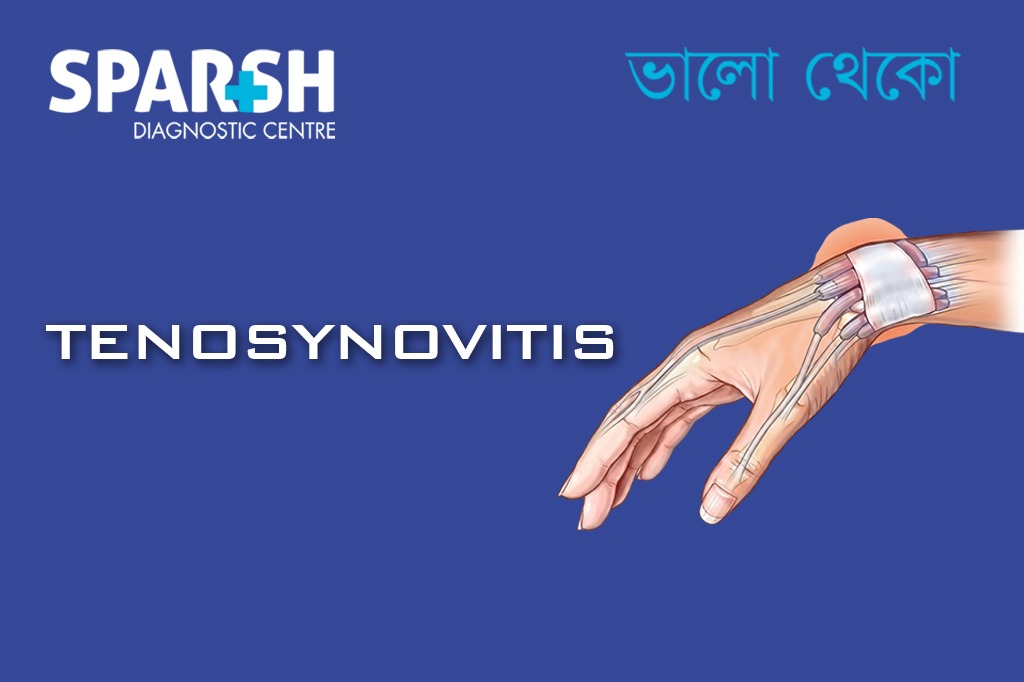
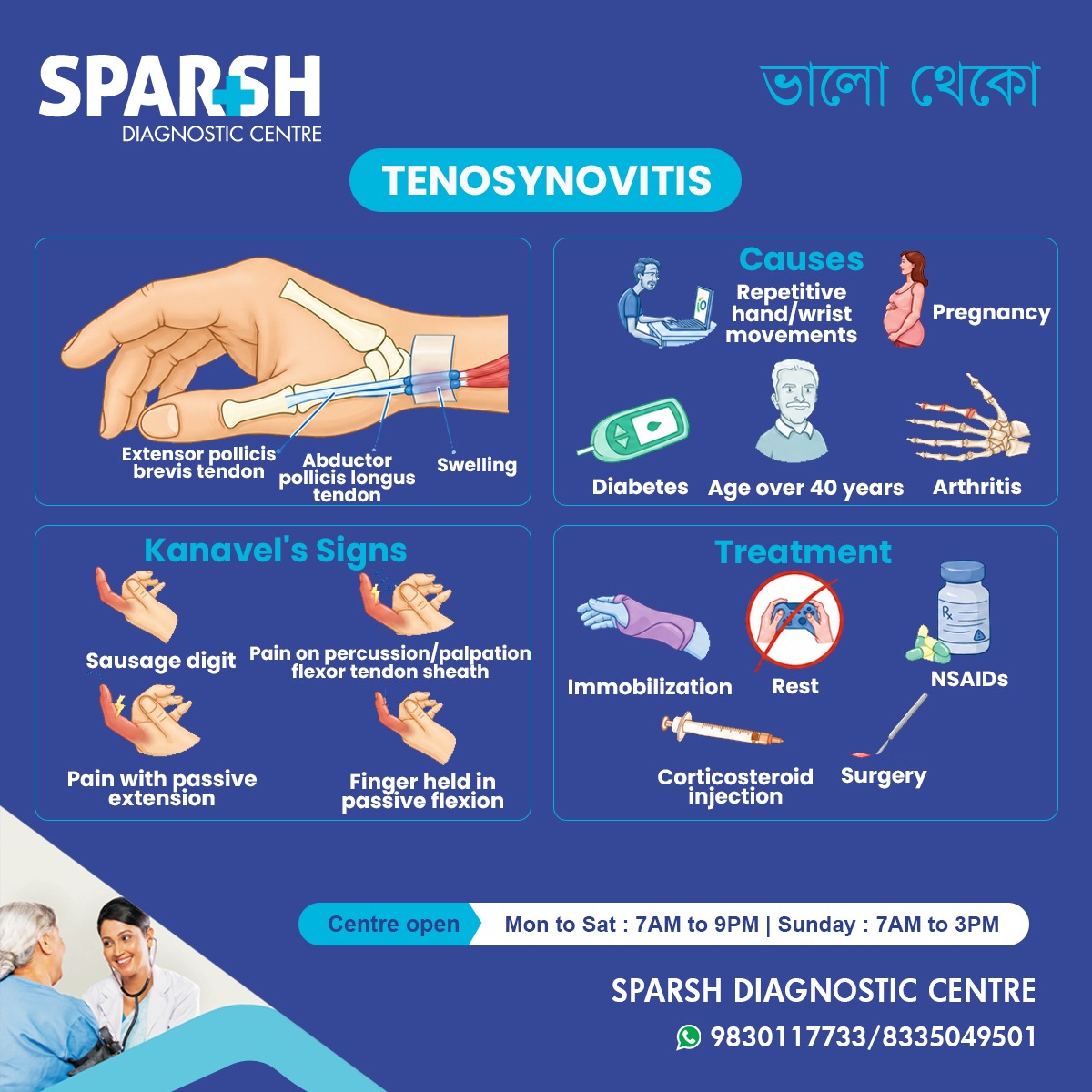
Tenosynovitis is the inflammation of the synovial sheath that surrounds a tendon. Tendons connect muscles to bones, while the synovial sheath produces lubricating fluid that allows tendons to glide smoothly during movement.
When this sheath becomes inflamed, movement becomes painful, restricted, and sometimes accompanied by swelling or a grinding sensation.
The condition commonly affects the:
- Thumb
- Wrist
- Fingers
- Hand
- Shoulder
- Ankle
- Foot
- Achilles tendon
One of the most common forms is De Quervain’s tenosynovitis, which affects the tendons on the thumb side of the wrist.
What Is Tenosynovitis Also Known As?
Tenosynovitis may also be referred to as:
- Tendon sheath inflammation
- Tendon sheath synovitis
- Flexor tenosynovitis
- Extensor tenosynovitis
- De Quervain’s disease (when affecting the thumb)
- Trigger finger (when involving the finger flexor tendon)
Although these terms are related, they describe different locations or specific types of tendon sheath inflammation.
How Common Is Tenosynovitis?
Tenosynovitis is extremely common among:
- Office workers
- Computer users
- Mobile phone users
- Musicians
- Athletes
- Factory workers
- Healthcare professionals
- New mothers lifting babies repeatedly
- Older adults
People with diabetes, rheumatoid arthritis, or repetitive occupational strain are at higher risk.
What Is the Main Cause of Tenosynovitis?
The most common cause is repetitive overuse.
Repeated movements create tiny injuries that gradually inflame the tendon sheath.
Common causes include:
- Repetitive typing
- Writing for long hours
- Using hand tools
- Gardening
- Sports such as tennis, golf, badminton, and cricket
- Weightlifting
- Repetitive lifting
- Poor workplace ergonomics
Other causes include:
- Rheumatoid arthritis
- Gout
- Diabetes
- Pregnancy
- Injury or trauma
- Infection (infectious tenosynovitis)
- Autoimmune diseases
Is Tenosynovitis Traumatic?
Sometimes.
Tenosynovitis may develop after:
- A fall
- Direct injury
- Sudden twisting
- Sports injury
- Heavy lifting accident
However, most cases develop gradually from repetitive strain rather than a single traumatic event.
Risk Factors
You may be more likely to develop tenosynovitis if you:
- Are over 40 years old
- Perform repetitive hand movements
- Work on computers daily
- Play musical instruments
- Have rheumatoid arthritis
- Have diabetes
- Are pregnant
- Have inflammatory arthritis
- Participate in repetitive sports
Symptoms of Tenosynovitis
Symptoms often begin gradually.
Common signs include:
- Pain along the tendon
- Swelling
- Warmth around the joint
- Stiffness
- Tenderness
- Difficulty gripping objects
- Clicking sensation
- Crepitus (grinding feeling)
- Reduced range of motion
- Weakness
In infectious tenosynovitis, symptoms may include:
- Fever
- Severe swelling
- Redness
- Pus formation
- Intense pain
How Do I Know If I Have Tenosynovitis?
You may have tenosynovitis if you notice:
- Pain that worsens with movement
- Swelling over a tendon
- Tenderness when touching the area
- Difficulty moving a finger or thumb
- Pain while gripping objects
- Morning stiffness
- Clicking or snapping during movement
A medical evaluation is necessary to confirm the diagnosis and rule out fractures, arthritis, or nerve compression.
How Is Tenosynovitis Diagnosed?
Diagnosis usually involves:
Medical history
Your doctor will ask about:
- Occupation
- Recent injuries
- Sports participation
- Medical conditions
- Symptoms
Physical examination
The affected tendon is examined for:
- Swelling
- Tenderness
- Range of motion
- Pain during movement
Specific tests such as the Finkelstein test help diagnose De Quervain’s tenosynovitis.
Imaging tests
Depending on the case, your doctor may recommend:
These tests help evaluate tendon inflammation and exclude fractures or arthritis.
What Can Be Mistaken for Tenosynovitis?
Several conditions have similar symptoms:
- Tendinitis
- Arthritis
- Carpal tunnel syndrome
- Trigger finger
- Ganglion cyst
- Ligament injuries
- Fractures
- Gout
- Cellulitis
- Nerve compression
Proper imaging and clinical examination help distinguish these conditions.
Does Tenosynovitis Cause Nerve Pain?
Yes.
Inflamed tissues may compress nearby nerves, causing:
For example, wrist tenosynovitis may contribute to symptoms similar to carpal tunnel syndrome.
Is Tenosynovitis an Autoimmune Disease?
No.
Tenosynovitis itself is not an autoimmune disease.
However, autoimmune conditions such as:
can trigger inflammation of tendon sheaths.
Is Tenosynovitis a Form of Arthritis?
Not exactly.
Arthritis affects the joints, while tenosynovitis affects the tendon sheath.
However, inflammatory arthritis often causes tenosynovitis as one of its complications.
Is Tenosynovitis a Muscular Disorder?
No.
It affects tendons and their protective sheath rather than muscles.
Is Tenosynovitis Permanent?
In most cases, no.
With appropriate treatment:
- Pain improves
- Swelling subsides
- Normal movement returns
Delayed treatment may lead to:
- Chronic pain
- Tendon damage
- Scar tissue formation
- Reduced mobility
How Long Does It Take for Tenosynovitis to Heal?
Recovery depends on severity.
Typical healing times:
- Mild cases: 2–4 weeks
- Moderate cases: 4–8 weeks
- Severe inflammation: 2–3 months
- After surgery: 6–12 weeks
Following medical advice and avoiding repetitive strain can speed recovery.
How Do You Treat Synovitis and Tenosynovitis?
Treatment focuses on reducing inflammation and restoring normal movement.
Options include:
Rest
Avoid activities that worsen symptoms.
Splinting
Immobilising the affected joint reduces tendon irritation.
Ice Therapy
Apply ice for 15–20 minutes several times daily.
Anti-inflammatory Medications
NSAIDs help relieve pain and swelling.
Physiotherapy
Exercises improve flexibility and strength.
Corticosteroid Injection
For persistent inflammation, steroid injections may provide significant relief.
Treating Underlying Disease
Managing diabetes, rheumatoid arthritis, or gout helps prevent recurrence.
What Is the Best Treatment for Tenosynovitis?
The most effective treatment usually combines:
- Early diagnosis
- Activity modification
- Splinting
- Ice therapy
- NSAIDs
- Physiotherapy
- Corticosteroid injections when necessary
Surgery is reserved for severe or persistent cases.
How to Heal Tenosynovitis Fast
Recovery is quicker when you:
- Stop repetitive movements immediately
- Wear a splint consistently
- Apply ice regularly
- Take medications as prescribed
- Begin physiotherapy once pain decreases
- Maintain good posture while working
- Improve workstation ergonomics
- Follow your doctor’s advice
Ignoring symptoms usually delays healing.
Do You Need Surgery for Tenosynovitis?
Most people do not require surgery.
Surgery is considered only when:
- Conservative treatment fails
- Symptoms last several months
- Tendons become trapped
- Recurrent inflammation develops
- Infection requires surgical drainage
Surgical release allows the tendon to glide normally again.
What Kind of Doctor Treats Tenosynovitis?
Depending on severity, you may see:
- Orthopaedic surgeon
- Hand surgeon
- Sports medicine specialist
- Rheumatologist
- Physiotherapist
For infectious tenosynovitis, emergency treatment may involve both an orthopaedic surgeon and an infectious disease specialist.
What Are the Best Exercises for Tenosynovitis?
Exercises should only begin after the acute pain improves.
Examples include:
Tendon Gliding Exercises
Improve tendon mobility.
Wrist Flexor Stretch
Gently stretches forearm muscles.
Wrist Extensor Stretch
Improves flexibility.
Thumb Stretch
Especially useful in De Quervain’s tenosynovitis.
Finger Extension Exercises
Help restore movement.
Grip Strengthening
Performed gradually using soft therapy balls.
Exercises should never increase pain significantly.
What Vitamin Deficiency Can Cause Tendonitis?
Although vitamin deficiency does not directly cause tenosynovitis, low levels of certain nutrients may impair tendon health.
Important nutrients include:
Maintaining a balanced diet supports recovery.
Is Tenosynovitis a Disability?
Most cases are temporary.
However, severe chronic tenosynovitis may temporarily limit:
- Work
- Sports
- Driving
- Household activities
Permanent disability is uncommon with timely treatment.
What Are the Red Flags for Tenosynovitis?
Seek immediate medical attention if you experience:
- Fever
- Rapidly worsening swelling
- Severe redness
- Finger held in a bent position
- Inability to move the finger
- Intense pain
- Pus or drainage
- Severe hand swelling after injury
These symptoms may indicate infectious flexor tenosynovitis, which is a medical emergency.
Preventing Tenosynovitis
You can reduce your risk by:
- Taking frequent breaks while typing
- Using ergonomic keyboards
- Stretching regularly
- Warming up before sports
- Maintaining proper lifting technique
- Avoiding repetitive strain
- Managing diabetes
- Treating inflammatory arthritis early
When Should You See a Doctor?
Consult a healthcare professional if:
- Pain lasts longer than one week
- Swelling increases
- You cannot grip objects
- Movement becomes restricted
- Symptoms interfere with work
- Home treatment does not help
- Fever or redness develops
Early diagnosis prevents complications and speeds recovery.
Diagnosis and Care at Sparsh Diagnostic Centre
Early and accurate diagnosis is the key to effective treatment of tenosynovitis. At Sparsh Diagnostic Centre, Kolkata, patients have access to advanced imaging, experienced specialists, and comprehensive diagnostic services under one roof.
Depending on your symptoms, your doctor may recommend imaging studies such as musculoskeletal ultrasound, Digital X-ray, or MRI to assess tendon inflammation and rule out fractures, arthritis, or nerve compression. If an underlying inflammatory condition is suspected, blood tests such as ESR, CRP, Rheumatoid Factor (RF), Anti-CCP antibodies, Complete Blood Count (CBC), and Blood Sugar (HbA1c) may also be advised.
Our experienced orthopaedic specialists and rheumatologists work together to ensure accurate diagnosis and personalised treatment planning.
Frequently Asked Questions (FAQs)
1. How long does it take for tenosynovitis to heal?
Most mild cases improve within 2 to 4 weeks with rest, splinting, and anti-inflammatory treatment. Moderate to severe cases may take 6 to 12 weeks or longer, particularly if surgery is required.
2. How do you treat synovitis and tenosynovitis?
Treatment includes rest, splinting, ice therapy, NSAIDs, physiotherapy, corticosteroid injections when appropriate, and managing any underlying conditions such as diabetes or rheumatoid arthritis. Surgery is considered only when conservative treatment fails.
3. What is the main cause of tenosynovitis?
The leading cause is repetitive overuse, such as frequent typing, tool use, sports, or repetitive hand and wrist movements. Trauma, infection, diabetes, and inflammatory diseases can also contribute.
4. Is tenosynovitis traumatic?
It can be. While many cases develop gradually from repetitive strain, some occur after direct injury, a fall, or sudden overuse during sports or heavy lifting.
5. Is tenosynovitis a permanent condition?
No. Most people recover completely with timely treatment. Delayed care or untreated inflammation can increase the risk of chronic pain or reduced mobility.
6. What kind of doctor treats tenosynovitis?
Orthopaedic surgeons, hand surgeons, sports medicine specialists, rheumatologists, and physiotherapists commonly diagnose and treat tenosynovitis.
7. How to heal tenosynovitis fast?
Stop the aggravating activity, use a splint, apply ice, take prescribed medications, begin physiotherapy when advised, and avoid repetitive strain until healing is complete.
8. Do you need surgery for tenosynovitis?
Most patients do not. Surgery is recommended only when symptoms persist despite conservative treatment, tendons become trapped, or infection requires urgent drainage.
9. What can be mistaken for tenosynovitis?
Conditions such as tendinitis, arthritis, carpal tunnel syndrome, trigger finger, ganglion cysts, ligament injuries, fractures, gout, and nerve compression can mimic tenosynovitis.
10. How do I know if I have tenosynovitis?
Typical signs include pain along a tendon, swelling, tenderness, stiffness, difficulty moving the affected joint, and discomfort that worsens with movement. A clinical examination and imaging may be needed for confirmation.
11. What are the red flags for tenosynovitis?
Seek urgent medical care if you have fever, severe swelling, redness, pus, rapidly worsening pain, inability to move a finger, or a finger held in a bent position. These symptoms may indicate infectious flexor tenosynovitis.
12. Is tenosynovitis an autoimmune disease?
No. However, autoimmune disorders such as rheumatoid arthritis, lupus, and psoriatic arthritis can cause or contribute to tenosynovitis.
13. What vitamin deficiency can cause tendonitis?
Low levels of vitamin D, vitamin C, magnesium, and other nutrients may impair tendon health and healing, although they are not direct causes of tenosynovitis.
14. Does tenosynovitis cause nerve pain?
Yes. Swelling around the tendon can compress nearby nerves, leading to tingling, numbness, burning pain, or weakness in the affected area.
15. Is tenosynovitis a disability?
Usually not. Most people recover fully. Temporary disability may occur if pain and reduced movement interfere with work or daily activities.
16. What are the best exercises for tenosynovitis?
Once pain improves, gentle tendon gliding exercises, wrist stretches, thumb stretches, finger extension exercises, and gradual grip strengthening are commonly recommended under professional guidance.
17. Is tenosynovitis a form of arthritis?
No. Tenosynovitis affects the tendon sheath, whereas arthritis affects the joints. However, inflammatory arthritis can cause tenosynovitis.
18. Is tenosynovitis a muscular disorder?
No. It is a disorder of the tendons and their surrounding synovial sheath, not the muscles themselves.
19. What is the best treatment for tenosynovitis?
The best approach combines early diagnosis, rest, splinting, ice therapy, anti-inflammatory medication, physiotherapy, ergonomic modifications, and corticosteroid injections if needed. Surgery is reserved for persistent or severe cases.
20. What is tenosynovitis also known as?
Tenosynovitis is also called tendon sheath inflammation, tendon sheath synovitis, flexor tenosynovitis, extensor tenosynovitis, or, depending on the location, De Quervain’s disease or trigger finger.
Tenosynovitis is a common yet highly treatable condition that can affect people of all ages, particularly those whose daily activities involve repetitive hand, wrist, or foot movements. Recognising the symptoms early and seeking appropriate medical care can prevent complications and speed recovery. Most patients improve with conservative treatment, while only a small percentage require surgery.
If you are experiencing persistent tendon pain, swelling, or difficulty moving a joint, don’t ignore the symptoms. Early evaluation can make a significant difference. At Sparsh Diagnostic Centre, Kolkata, our advanced diagnostic facilities and experienced specialists are committed to helping you receive an accurate diagnosis and the right treatment plan, so you can return to your daily activities with confidence.