Ankle pain is something many people experience at least once in life, whether after a sudden twist while walking, a sports injury, or simply from long-term wear and tear. Because the ankle supports the body’s weight and helps maintain balance with every step, even mild discomfort in this joint can quickly interfere with daily life. Walking, climbing stairs, exercising, and sometimes even standing still can become uncomfortable when the ankle is painful.
The ankle is a complex joint made up of bones, ligaments, tendons, cartilage, and muscles working together. Pain can develop when any of these structures are injured, inflamed, overused, or affected by disease. Sometimes ankle pain appears suddenly after trauma, while in other cases it builds gradually over time.
Some people ignore ankle pain, assuming it will settle on its own, but persistent discomfort should not be overlooked. In certain situations, ankle pain can signal fractures, ligament tears, arthritis, tendon injuries, or circulation-related problems that require proper evaluation.
Understanding why ankle pain happens, what symptoms to watch for, and which treatments are available can help prevent long-term complications and improve recovery. This guide explains the most common causes of ankle pain, treatment options, home care strategies, and frequently asked questions in a clear and practical way.
What Is Ankle Pain?
Ankle pain refers to discomfort, soreness, stiffness, swelling, or tenderness around the ankle joint. It may affect the front, back, sides, or deeper structures of the ankle and can vary from mild aching to severe pain that limits movement.
Pain may occur suddenly after an injury or gradually because of inflammation, repetitive strain, or joint degeneration.
The ankle joint connects three important bones:
- Tibia (shin bone)
- Fibula (outer lower leg bone)
- Talus (foot bone connecting with the leg bones)
Ligaments stabilize the joint, tendons connect muscles to bone, and cartilage cushions movement.
Common Causes of Ankle Pain
Ankle pain can happen for many reasons. Some causes are temporary and mild, while others need medical attention.
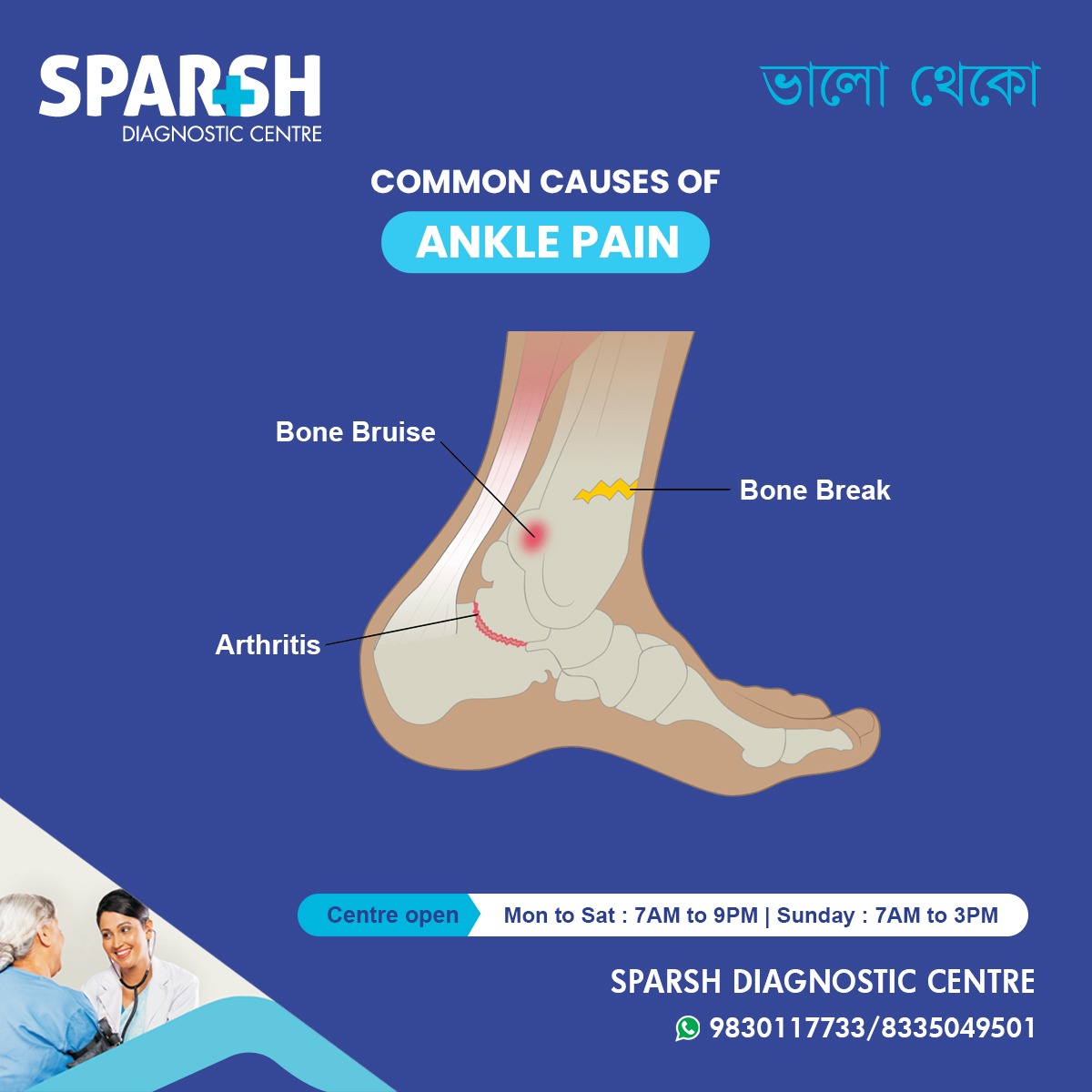
Ankle Sprain
An ankle sprain is one of the most common causes of ankle pain. It happens when ligaments stretch or tear, usually after twisting the foot inward or outward.
Symptoms include:
- Sudden pain
- Swelling
- Bruising
- Difficulty walking
- Tenderness
Mild sprains may heal in a few weeks, while severe sprains take longer.
Bone Fracture
A fracture occurs when one of the ankle bones breaks after trauma, falls, sports injuries, or accidents.
Signs may include:
- Severe pain
- Rapid swelling
- Inability to bear weight
- Deformity
- Bruising
Fractures need prompt medical evaluation and imaging.
Bone Bruise
A bone bruise causes deep pain beneath the surface, often after impact or repetitive stress.
Unlike fractures, bone bruises may not show dramatic deformity but can still cause prolonged discomfort.
Symptoms include:
- Deep aching pain
- Swelling
- Tenderness
- Pain during movement
Healing may take several weeks.
Arthritis
Arthritis is a common long-term cause of ankle pain, especially in older adults.
Types affecting the ankle include:
Osteoarthritis
Cartilage gradually wears down over time.
Rheumatoid Arthritis
An autoimmune condition causing joint inflammation.
Post-Traumatic Arthritis
Develops after previous injury or fracture.
Symptoms often include:
- Morning stiffness
- Swelling
- Reduced movement
- Pain with walking
Tendonitis
Tendons around the ankle can become inflamed from overuse.
Common tendon problems include:
Achilles Tendonitis
Pain at the back of the ankle or heel.
Peroneal Tendonitis
Pain along the outer ankle.
Symptoms include:
- Pain during walking
- Tightness
- Tenderness
- Swelling
Ligament Injury
More severe ligament tears can occur in sports injuries or major twisting accidents.
Ligament injuries may cause:
- Instability
- Repeated ankle giving way
- Swelling
- Sharp pain
Gout
Gout is caused by uric acid crystal buildup in joints.
The ankle may become:
- Extremely painful
- Red
- Warm
- Swollen
Pain often starts suddenly, especially at night.
Infection
Though less common, infection can affect ankle joints or surrounding tissues.
Warning signs include:
- Fever
- Severe swelling
- Redness
- Heat
- Rapid worsening pain
This requires urgent medical attention.
Flat Feet and Biomechanical Problems
Foot alignment issues may place abnormal stress on the ankle.
This can lead to:
- Chronic ankle discomfort
- Fatigue while walking
- Repeated strain injuries
Overuse Injuries
Athletes and active individuals often develop ankle pain from repetitive movement.
Common activities include:
- Running
- Jumping
- Dancing
- Long walking
Overuse gradually irritates tendons and soft tissues.
Symptoms That Often Accompany Ankle Pain
Symptoms vary depending on the cause.
Common associated symptoms include:
- Swelling
- Bruising
- Stiffness
- Redness
- Tenderness
- Warmth
- Limited movement
- Instability
- Difficulty bearing weight
When is Ankle Pain an Emergency
Some situations need immediate medical care.
Seek urgent attention if:
- You cannot walk
- The ankle looks deformed
- Severe swelling appears quickly
- Pain follows major injury
- Fever occurs with swelling
- Numbness develops
These may suggest fracture, major ligament injury, or infection.
How is Ankle Pain Diagnosed
A doctor usually begins with a physical examination.
Questions may include:
- When did pain start?
- Was there injury?
- Is swelling present?
- Which movement worsens pain?
Imaging Tests for Ankle Pain
Depending on symptoms, tests may include:
X-ray
Useful for fractures and arthritis.
MRI
Shows ligaments, tendons, cartilage, and hidden injuries.
CT Scan
Used in complex fractures.
Ultrasound
Useful for tendon assessment.
Home Treatment for Mild Ankle Pain
Many mild ankle problems improve with early care.
RICE Method
Rest
Avoid activities that worsen pain.
Ice
Apply for 15 to 20 minutes several times daily.
Compression
Use elastic bandage if recommended.
Elevation
Keep ankle raised above heart level.
Pain Relief Medicines
Over-the-counter medicines may help reduce pain and swelling.
Examples include:
Ibuprofen or Paracetamol
Use only as directed.
Medical Treatment for Ankle Pain
Treatment depends on the cause.
Physiotherapy
Physical therapy helps:
- Restore strength
- Improve flexibility
- Prevent stiffness
- Improve balance
Bracing or Support
An ankle brace may stabilize healing injuries.
Immobilization
Severe sprains or fractures may require a cast or boot.
Injection Therapy
In some arthritis cases, steroid injections may reduce inflammation.
Surgery
Surgery may be needed for:
- Severe fractures
- Torn ligaments
- Chronic instability
- Advanced arthritis
Recovery Time for Ankle Pain
Recovery varies widely.
Mild Sprain
1 to 3 weeks
Moderate Sprain
3 to 6 weeks
Severe Sprain
Several months
Fracture
6 to 12 weeks or longer
Arthritis
Requires long-term management
Why can ignoring Ankle Pain cause Long-Term Problems
Untreated ankle pain may lead to:
- Chronic instability
- Weakness
- Recurrent sprains
- Joint stiffness
- Arthritis progression
Early treatment improves long-term outcomes.
Ankle Pain in Athletes
Athletes commonly develop ankle pain because of repetitive strain and sudden movement.
Sports frequently linked to ankle injury:
- Football
- Running
- Basketball
- Tennis
- Dance
Proper footwear and strengthening exercises help prevention.
Ankle Pain in Older Adults
Older adults often experience ankle pain because of:
- Arthritis
- Bone weakness
- Reduced balance
- Previous injuries
Falls can also increase fracture risk.
Exercises That Help Prevent Ankle Pain
Once pain improves, strengthening is useful.
Simple exercises include:
- Heel raises
- Ankle circles
- Calf stretches
- Toe lifts
These should be done carefully and only after acute pain settles.
Footwear and Ankle Health
Poor footwear often contributes to ankle strain.
Choose shoes that provide:
- Good arch support
- Stable heel support
- Cushioning
- Proper fit
Worn-out shoes increase injury risk.
Can Weight Affect Ankle Pain?
Yes. Excess body weight increases ankle joint pressure.
Even moderate weight reduction may improve symptoms in chronic pain cases.
Ankle Pain and Diabetes
People with diabetes should never ignore ankle pain because circulation and nerve problems may complicate healing.
Foot and ankle injuries may progress more quickly if untreated.
When to See a Doctor for Persistent Ankle Pain
Consult a healthcare professional if:
- Pain lasts more than a few days
- Swelling continues
- Walking remains difficult
- Pain returns repeatedly
- Joint stiffness increases
Preventing Future Ankle Pain
Good habits reduce risk.
- Warm up before exercise
- Strengthen lower leg muscles
- Wear proper shoes
- Avoid uneven surfaces
- Treat minor injuries early
Frequently Asked Questions (FAQ)
What is the most common cause of ankle pain?
Ankle sprain is the most common cause, especially after twisting injuries.
Can ankle pain go away without treatment?
Mild strains may improve with rest, but persistent pain needs evaluation.
Is walking good for ankle pain?
Gentle walking may help mild stiffness, but pain after injury often requires temporary rest.
How do I know if ankle pain is serious?
If swelling is severe, walking is difficult, or pain follows trauma, medical evaluation is important.
Can arthritis cause ankle pain?
Yes, osteoarthritis and rheumatoid arthritis commonly affect ankle joints.
How long does ankle swelling last after injury?
Mild swelling may improve in a few days, while severe injuries may take weeks.
Should I use heat or ice for ankle pain?
Ice is usually better during the first 48 hours after injury.
Can ankle pain happen without injury?
Yes, arthritis, gout, tendonitis, and circulation issues can cause pain without trauma.
To consult an Orthopedic Surgeon at Sparsh Diagnostic Centre, call our helpline numbers 9830117733/ 8335049501.
#BhaloTheko
Disclaimer:
No content on this site, regardless of date, should ever be used as a substitute for direct medical advice from your doctor or other qualified clinician.