Leishmaniasis is a parasitic disease that remains a significant public health challenge in many parts of the world, including India. Caused by Leishmania parasites and transmitted through the bite of infected female sandflies, the disease presents in multiple forms ranging from self-healing skin ulcers to life-threatening systemic illness.
Despite being preventable and treatable, it continues to affect millions due to factors such as poverty, poor housing, malnutrition, population migration, and climate change. Early diagnosis and appropriate treatment are crucial to reduce complications, disability, and mortality.
This comprehensive guide explains leishmaniasis in detail—covering its causes, types, symptoms, diagnostic methods, treatment options, and preventive strategies.
What is Leishmaniasis?
It is an infectious disease caused by protozoan parasites of the genus Leishmania. The parasites are transmitted to humans through the bite of infected phlebotomine sandflies, which are tiny insects commonly found in tropical and subtropical regions.
Once inside the human body, the parasite invades immune cells and multiplies, leading to a range of clinical manifestations depending on the species involved and the host’s immune response.
Epidemiology and Global Burden
Leishmaniasis is endemic in more than 90 countries, with the highest burden seen in:
India
Bangladesh
Sudan
Brazil
Ethiopia
Nepal
India accounts for a significant proportion of visceral leishmaniasis (kala-azar) cases worldwide, particularly in states such as Bihar, Jharkhand, Uttar Pradesh, and West Bengal.
Causes and Transmission
Causative Organism
Leishmaniasis is caused by different species of Leishmania, including:
Leishmania donovani
Leishmania tropica
Leishmania major
Leishmania braziliensis
Mode of Transmission
Bite of an infected female sandfly
Rarely through:
Blood transfusion
Organ transplantation
Congenital transmission (mother to baby)
Sandflies typically bite from dusk to dawn and breed in warm, humid environments with organic matter.
Types of Leishmaniasis
Leishmaniasis is broadly classified into three main clinical forms:
1. Cutaneous Leishmaniasis (CL)
This is the most common form and primarily affects the skin.
Key features:
Painless skin sores at the site of the sandfly bite
Lesions may start as papules and progress to ulcers
Healing may take months and often leaves scars
Though not life-threatening, it can cause significant cosmetic and psychological distress.
2. Mucocutaneous Leishmaniasis (MCL)
This form affects the mucous membranes of the nose, mouth, and throat.
Key features:
Destruction of nasal septum
Difficulty breathing or swallowing
Facial deformities if untreated
It is more common in parts of South America but can occur elsewhere.
3. Visceral Leishmaniasis (VL) – Kala-azar
This is the most severe and potentially fatal form.
Key features:
Affects internal organs such as the spleen, liver, and bone marrow
If untreated, it is usually fatal
India bears a high burden of this variant, making awareness and early detection essential.
Signs and Symptoms of Leishmaniasis
Cutaneous (CL)
Raised skin lesions or nodules
Ulcers with raised edges
Painless or mildly painful sores
Secondary bacterial infections
Mucocutaneous (MCL)
Nasal congestion or bleeding
Mouth or throat ulcers
Hoarseness
Progressive tissue damage
Visceral (VL)
Significant weight loss
Anemia, low white blood cell count, low platelets
Risk Factors
Several factors increase the risk of leishmaniasis:
Living in or traveling to endemic areas
Poor housing and sanitation
Weakened immune system (HIV/AIDS, cancer, transplant patients)
Occupational exposure (farmers, construction workers)
Environmental changes and deforestation
Diagnosis of Leishmaniasis
Accurate diagnosis is critical for appropriate treatment.
Laboratory Tests
Microscopic examination of tissue samples
Rapid diagnostic tests (rK39 test) – commonly used for visceral leishmaniasis
Serological tests to detect antibodies
PCR (Polymerase Chain Reaction) for parasite DNA detection
Imaging Studies
Ultrasound or CT scan to assess organ enlargement in visceral leishmaniasis
A combination of clinical findings and laboratory confirmation ensures diagnostic accuracy.
Treatment of Leishmaniasis
Treatment depends on the type of leishmaniasis, parasite species, geographic region, and patient factors such as age and immune status.
Commonly Used Medications
Liposomal Amphotericin B
Amphotericin B deoxycholate
Miltefosine
Sodium stibogluconate
Paromomycin
Treatment Considerations
Early treatment improves outcomes
Full course completion is essential
Monitoring for drug side effects is required
Relapses can occur, especially in immunocompromised patients
With timely therapy, most patients recover completely.
Post-Kala-azar Dermal Leishmaniasis (PKDL)
Some patients develop PKDL months or years after treatment for visceral leishmaniasis.
Features include:
Hypopigmented patches
Nodules or papules on the skin
Acts as a reservoir for disease transmission
Early detection and treatment of PKDL are important for disease control programs.
Prevention of Leishmaniasis
Currently, no effective vaccine is widely available, making prevention strategies crucial.
Personal Protective Measures
Use insecticide-treated bed nets
Apply insect repellents
Wear long-sleeved clothing, especially at night
Environmental Control
Improved housing and sanitation
Vector control measures
Waste management and removal of breeding sites
Public Health Measures
Early case detection and treatment
Surveillance in endemic areas
Health education and community awareness
Prognosis
Cutaneous leishmaniasis: Generally good, though scarring may occur
Visceral leishmaniasis: Excellent prognosis with early treatment; fatal if untreated
Relapse risk: Higher in HIV-infected individuals
Timely diagnosis and adherence to treatment significantly improve survival and quality of life.
When to See a Doctor
Seek medical attention if you experience:
Persistent fever lasting more than two weeks
Unexplained weight loss
Non-healing skin ulcers
Enlarged abdomen due to spleen or liver swelling
History of travel to or residence in endemic areas
Early evaluation can be life-saving, especially in visceral leishmaniasis.
Frequently Asked Questions (FAQ)
1. Is it contagious from person to person?
No, leishmaniasis does not spread through direct contact. It is transmitted through the bite of infected sandflies.
2. Is it curable?
Yes, leishmaniasis is curable with appropriate and timely treatment.
3. How long does treatment take?
Treatment duration varies from a few days to several weeks, depending on the medication and disease type.
4. Can it recur?
Yes, relapse can occur, especially in people with weakened immune systems.
5. Is VL fatal?
If left untreated, VL can be fatal. With proper treatment, survival rates are high.
6. Who is most at risk of leishmaniasis?
People living in endemic areas, malnourished individuals, and those with compromised immunity are at higher risk.
7. Can it be prevented?
Yes, preventive measures such as vector control, personal protection, and early treatment reduce risk significantly.
8. Does it leave scars?
CL often heals with permanent scars, especially if lesions are large or infected.
Leishmaniasis remains a major yet often overlooked parasitic disease, particularly in developing countries. Its diverse clinical presentations—from mild skin lesions to fatal systemic illness—make awareness, early diagnosis, and prompt treatment essential.
Strengthening public health measures, improving living conditions, and ensuring access to reliable diagnostic facilities can significantly reduce the burden of leishmaniasis. If you or someone you know has symptoms suggestive of this disease, timely medical evaluation is crucial.
#BhaloTheko
Disclaimer:
No content on this site, regardless of date, should ever be used as a substitute for direct medical advice from your doctor or other qualified clinician.
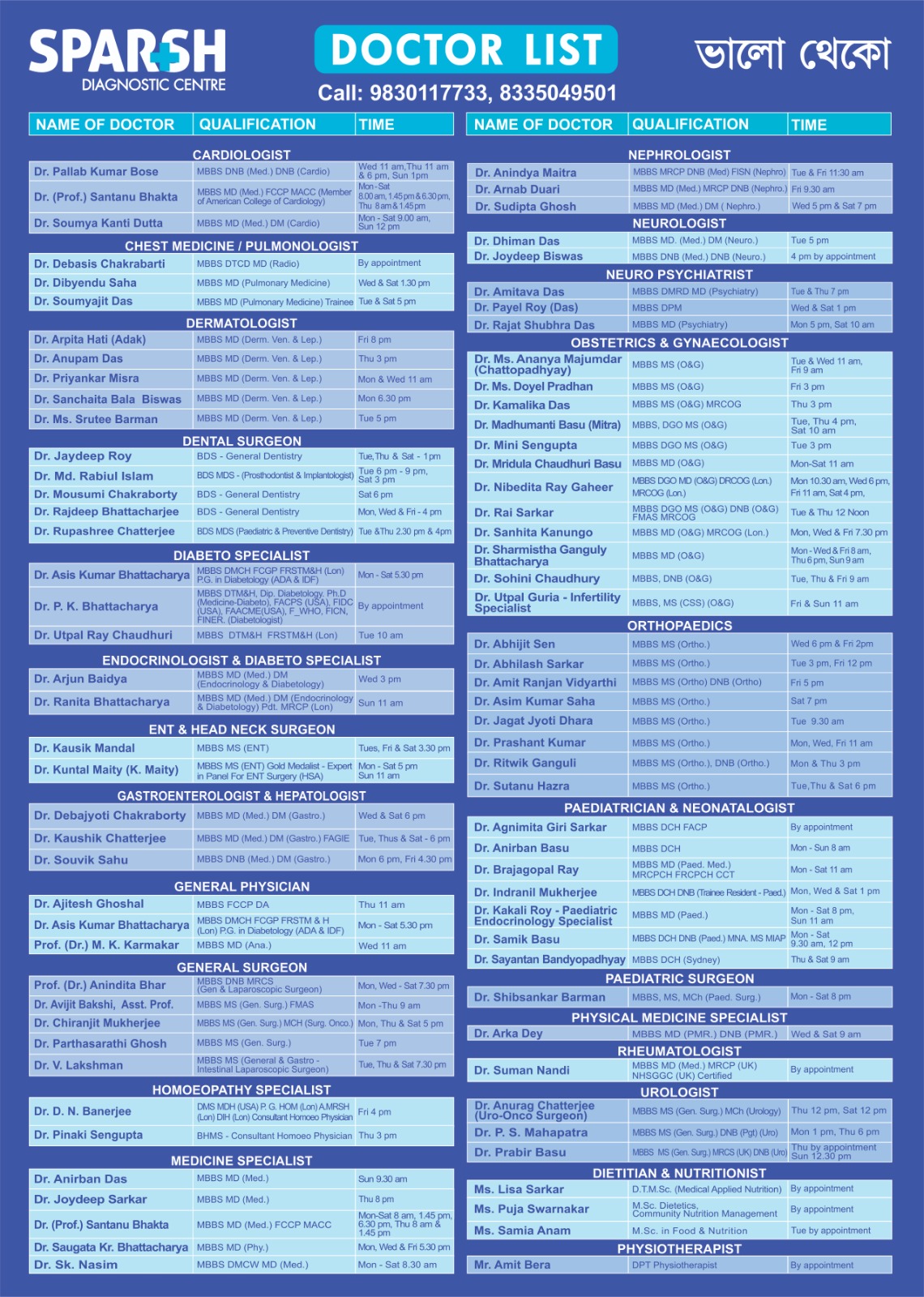
Sparsh Doctor List