


Dizziness is a common and often unsettling symptom that affects people of all ages. It can be described as a feeling of unsteadiness, lightheadedness, vertigo (a spinning sensation), or a sense of floating. Although dizziness itself is not a disease, it is usually a symptom of an underlying health issue—ranging from mild dehydration to life-threatening conditions such as stroke.
In this comprehensive guide, we’ll explore what dizziness is, its potential causes, associated symptoms, diagnostic methods, treatment options, and when to seek immediate medical care.
What Is Dizziness?
Dizziness is a broad term used to describe various sensations, including:
Vertigo: A spinning or whirling sensation, either of yourself or your surroundings.
Lightheadedness: A feeling of faintness or being about to pass out.
Imbalance: Difficulty in maintaining stability or coordination.
Presyncope: The sensation of almost fainting, often accompanied by blurred vision or nausea.
Understanding the type of dizziness a patient is experiencing helps doctors narrow down the underlying cause.
Common Causes of Dizziness
There are several potential causes of dizziness. Let’s delve deeper into each of them.
1. Dehydration or Electrolyte Imbalance
When your body loses more fluid than it takes in—due to excessive sweating, diarrhea, vomiting, or not drinking enough water—you can become dehydrated. Dehydration can cause a drop in blood pressure, leading to reduced blood flow to the brain, resulting in dizziness. Electrolyte imbalances, especially involving sodium or potassium, can also interfere with nerve and muscle function, causing dizziness or confusion.
Key Symptoms:
2. Hypoglycemia (Low Blood Sugar)
Hypoglycemia occurs when your blood glucose levels fall below normal. It can occur in diabetics due to insulin or medication but may also happen in people who skip meals or engage in intense physical activity.
Key Symptoms:
Shakiness
Sweating
Faintness
Confusion
3. Vertigo or Ménière’s Disease
Vertigo is often caused by inner ear disorders that affect balance. One such condition is Ménière’s disease, characterized by fluid buildup in the inner ear.
Key Symptoms:
A spinning sensation
Hearing loss
Ear fullness
Vertigo may also be caused by benign paroxysmal positional vertigo (BPPV), vestibular neuritis, or labyrinthitis.
4. TIA or Stroke
A Transient Ischemic Attack (TIA) or a stroke can cause dizziness due to reduced blood supply to the brain. This is a medical emergency and needs immediate intervention.
Key Symptoms:
Sudden dizziness
Slurred speech
Facial drooping
Weakness or numbness (especially on one side)
Vision problems
5. Viral Infections
Some viral infections, such as the flu or viral labyrinthitis, can affect the inner ear and lead to dizziness or vertigo. Post-viral fatigue and inflammation can also affect brain function.
Key Symptoms:
Headache
Nausea
Balance issues
Ear pain (if inner ear is involved)
6. Post-Concussion Syndrome
This occurs after a traumatic brain injury (TBI) or concussion. It can last for weeks or even months after the initial injury.
Key Symptoms:
Dizziness
Headache
Difficulty concentrating
Memory issues
Sleep disturbances
7. Anxiety or PTSD
Emotional disorders like generalized anxiety disorder (GAD) or post-traumatic stress disorder (PTSD) can manifest physically, with dizziness being a prominent symptom. Anxiety-related hyperventilation or panic attacks can also cause faintness or lightheadedness.
Key Symptoms:
Racing heart
Breathlessness
Chest tightness
Sense of impending doom
Sweating
8. Low Blood Pressure (Hypotension)
When blood pressure drops significantly, there’s inadequate blood flow to the brain, causing dizziness or fainting spells. This can be triggered by standing up too quickly (orthostatic hypotension), medications, or cardiac issues.
Key Symptoms:
Blurred vision
Nausea
Fatigue
Fainting
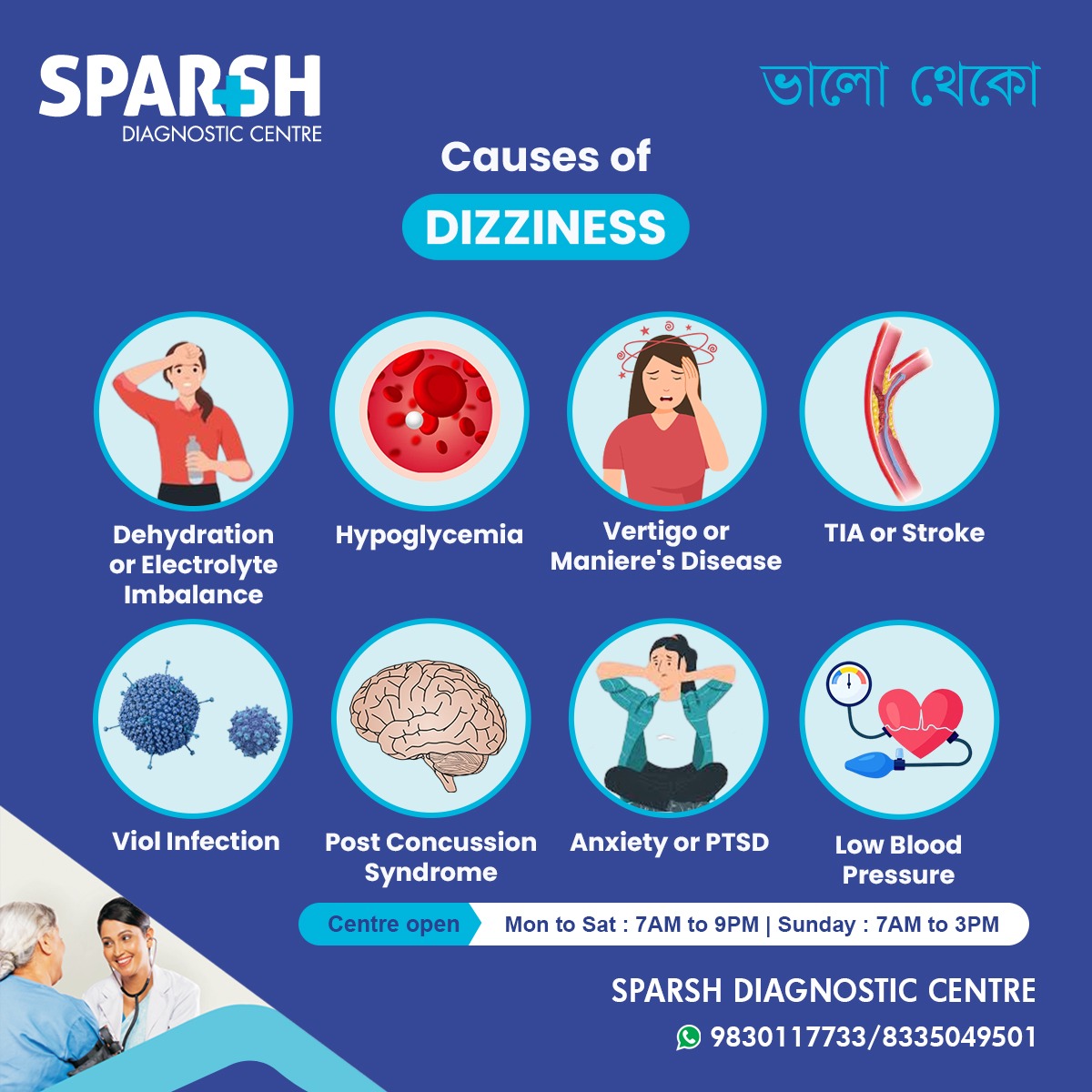
Other Potential Causes of Dizziness
Beyond the causes listed in the infographic, other potential triggers include:
Medications: Sedatives, antidepressants, antihypertensives, and anti-seizure drugs.
Anemia: Reduced oxygen-carrying capacity can cause fatigue and dizziness.
Heart conditions: Arrhythmias or heart failure can reduce brain perfusion.
Migraines: Vestibular migraines can cause vertigo without headache.
Carbon monoxide poisoning
Symptoms Associated with Dizziness
Depending on the underlying cause, dizziness may be accompanied by:
Nausea or vomiting
Sweating
Ringing in the ears
Unsteady gait
Vision disturbances
Confusion or disorientation
How Is Dizziness Diagnosed?
A proper diagnosis begins with a detailed medical history and physical examination. Based on the findings, the doctor may order several tests, including:
1. Blood Tests
To check for anemia, infection, glucose levels, or electrolyte imbalances.
2. Hearing and Balance Tests
Audiometry or videonystagmography (VNG) can assess inner ear function.
3. Imaging Studies
MRI or CT Scan: To check for stroke, tumor, or inner ear abnormalities.
Carotid Doppler: To assess blood flow to the brain.
4. ECG or Echocardiogram
To identify heart-related causes.
5. Tilt Table Test
Helps diagnose orthostatic hypotension or vasovagal syncope.
Treatment Options for Dizziness
Treatment depends on identifying and addressing the root cause.
1. Lifestyle and Dietary Changes
Drink plenty of fluids
Avoid skipping meals
Limit caffeine and alcohol
Manage stress and anxiety
2. Medications
Antihistamines
Anti-nausea drugs (e.g., promethazine)
Anti-anxiety medications
Antibiotics or antivirals (if infections are present)
Corticosteroids for inner ear inflammation
3. Vestibular Rehabilitation Therapy (VRT)
Physical therapy that helps retrain the brain to process signals from the vestibular system more accurately.
4. Psychotherapy or Cognitive Behavioral Therapy (CBT)
For anxiety-related dizziness or PTSD.
5. Surgical Interventions
In rare cases, such as severe Ménière’s disease or tumors, surgery may be considered.
When Should You See a Doctor?
Dizziness becomes a medical emergency if accompanied by:
Sudden severe headache
Double vision or vision loss
Chest pain or palpitations
Sudden hearing loss
Fainting or seizures
Inability to walk or speak
Seek immediate medical help if you suspect a stroke, TIA, or cardiac issue.
How to Prevent Dizziness
While some causes of dizziness are unavoidable, others can be minimized with preventive strategies:
Stay well-hydrated
Eat regular, balanced meals
Manage chronic conditions like diabetes or hypertension
Use medications as prescribed
Avoid sudden changes in position
Wear proper protective gear during physical activity to prevent head injuries
Dizziness is a symptom that should never be ignored, especially when it interferes with your daily activities or quality of life. While it may often be due to minor issues like dehydration or anxiety, it can also signal a more serious medical problem such as a stroke or heart disease.
Timely diagnosis and management are crucial. At centers like Sparsh Diagnostic Centre, advanced diagnostic tools and experienced professionals can help uncover the root cause of dizziness and offer appropriate treatment pathways.
If you or a loved one are frequently experiencing dizziness, consult a healthcare professional. Don’t self-diagnose. Your health deserves expert care.
For appointments and evaluations, contact:
Sparsh Diagnostic Centre
📞 9830117733 / 8335049501
🕒 Mon to Sat: 7 AM – 9 PM | Sunday: 7 AM – 3 PM
#BhaloTheko
Disclaimer:
No content on this site, regardless of date, should ever be used as a substitute for direct medical advice from your doctor or other qualified clinician.


[…] Dizziness […]
[…] Dizziness […]
[…] Dizziness or lightheadedness […]
[…] with WPW syndrome may remain asymptomatic throughout life, others can experience palpitations, dizziness, chest discomfort, or even life-threatening […]
[…] Dizziness […]
[…] dehydration (dry mouth, dizziness, decreased […]
[…] Dizziness […]
[…] Dizziness or lightheadedness […]
[…] of shock (rapid heartbeat, dizziness, […]
[…] Dizziness or fainting […]
[…] of dehydration (dry mouth, dizziness, low urine […]
[…] (dry mouth, dizziness, […]
[…] Dizziness […]
[…] Dizziness […]
[…] disrupting the balance of oxygen and carbon dioxide in your blood. This can lead to symptoms like dizziness, shortness of breath, and rapid heartbeat—often mistaken for cardiac or neurological […]
[…] Dizziness or loss of balance […]
[…] Dizziness or fainting […]
[…] of impending faintingA feeling of dizziness, tunnel vision, or “blacking out” is […]
[…] Fatigue or dizziness […]
[…] Dizziness: Feeling lightheaded or faint upon standing (orthostatic intolerance). […]
[…] Dizziness or fainting spells […]
[…] Dizziness or lightheadedness […]
[…] Dizziness and Headaches: Resulting from low oxygen levels in the brain. […]
[…] Dizziness or lightheadedness […]
[…] A sudden drop in blood pressure when standing up from a sitting or lying position. This can cause dizziness or […]
[…] attacks often occur without warning and can cause severe physical symptoms such as chest pain, dizziness, shortness of breath, and a racing heart. Many people who experience panic attacks believe they are […]
[…] Disorders of the inner ear, such as Meniere’s disease or vestibular neuritis, can cause dizziness, nausea, and vomiting due to imbalance […]
[…] blood sugar drops during sleep. Other symptoms of nocturnal hypoglycemia may include shakiness, dizziness, and confusion upon […]
[…] Emotional responses such as stress, anxiety, fear, or excitement can trigger the fight-or-flight response, which results in the release of adrenaline. Adrenaline speeds up the heart rate as part of the body’s preparation to handle a perceived threat. People with anxiety disorders, such as panic disorder, may experience episodes of rapid heartbeat (often described as heart palpitations), accompanied by symptoms like chest tightness, shortness of breath, and dizziness. […]
[…] Dizziness […]
[…] Dizziness […]
[…] with typhoid fever often experience severe headaches, which can be accompanied by dizziness and general […]
[…] related to stress and anxiety include rapid heartbeat, shortness of breath, chest tightness, dizziness, and feelings of impending […]
[…] Arrhythmias: Abnormal heart rhythms, such as atrial fibrillation, can affect the heart’s ability to pump blood effectively, leading to shortness of breath, palpitations, and dizziness. […]
[…] blood pressure: Particularly noticeable when standing up, causing dizziness or […]
[…] meals, or exercising excessively without proper food intake. Symptoms include shakiness, confusion, dizziness, and […]
[…] might be more than just lightheadedness—it could be vertigo. While many associate vertigo with dizziness, it is a specific medical condition that can severely impact daily life. From balance problems to […]
[…] mood. When you’re dehydrated, your brain functions at a suboptimal level, leading to fatigue, dizziness, and difficulty concentrating. By drinking enough water, you can stay mentally sharp and fully […]
[…] of Breath and Dizziness: As the body struggles to produce enough red blood cells due to B12 deficiency, oxygen levels in […]
[…] who experience symptoms like dizziness, fainting, palpitations, or shortness of breath, but have normal ECG results, may benefit from […]
[…] Onset: This symptom may appear suddenly or develop gradually and can be accompanied by a feeling of lightheadedness or dizziness. […]
[…] Severe diarrhea can result in dehydration, which may cause dizziness, dry mouth, and decreased urine […]
[…] Dizziness […]
[…] lower heart rates, bradycardia can also result from underlying health issues and may cause fatigue, dizziness, or […]
[…] and older adults. The term “presyncope” refers to the sensation of lightheadedness or dizziness that may occur before fainting but without complete loss of […]
[…] or Dizziness: Often caused by elevated carbon dioxide […]
[…] Dizziness […]
[…] Syncope – Temporary loss of consciousness or dizziness due to […]