Have you ever met someone who seems unusually flexible, bruises easily, or struggles with frequent joint dislocations? While these signs may appear unrelated, they can sometimes point to a rare group of inherited connective tissue disorders known as Ehlers-Danlos Syndromes (EDS).
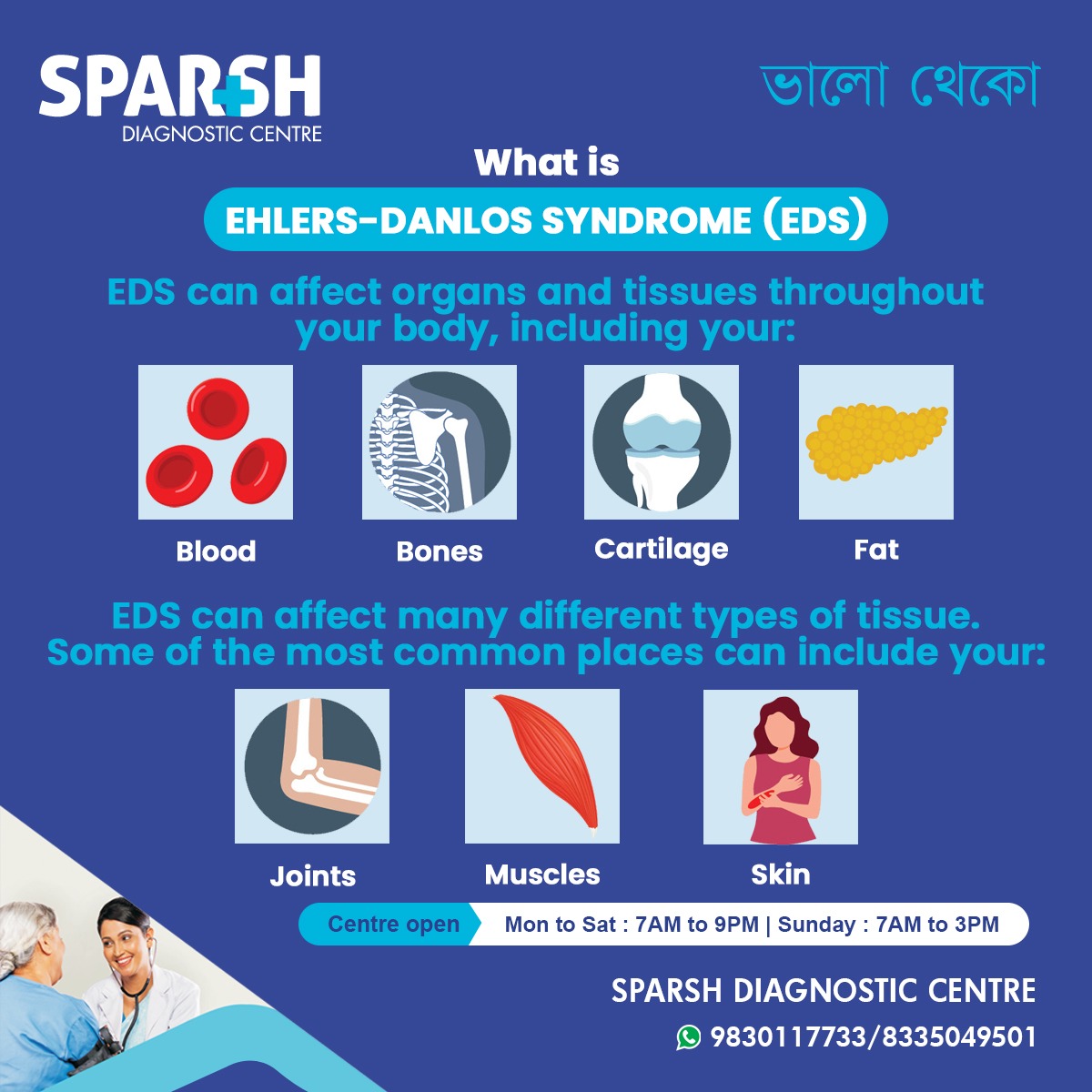
Connective tissue acts as the body’s natural support system. It provides strength and structure to your skin, joints, blood vessels, muscles, tendons, ligaments, and many internal organs. In people with EDS, genetic changes affect the production or function of collagen and other connective tissue proteins, making these tissues weaker and more fragile than normal.
Because EDS can affect multiple organs and systems, it is often misunderstood or diagnosed years after symptoms first appear. Some people experience only mild joint hypermobility, while others may develop severe complications involving the heart, blood vessels, or internal organs.
Early recognition and proper diagnosis are essential. At Sparsh Diagnostic Centre, patients can access specialist consultations, imaging, pathology services, and comprehensive diagnostic support to evaluate symptoms that may suggest EDS.
What is Ehlers-Danlos Syndrome?
Ehlers-Danlos Syndromes (EDS) are a group of inherited disorders that primarily affect connective tissue. Most forms occur because of mutations in genes responsible for collagen formation.
Collagen is one of the body’s most abundant proteins. It provides strength and flexibility to:
- Skin
- Ligaments
- Tendons
- Blood vessels
- Bones
- Cartilage
- Muscles
- Internal organs
When collagen is abnormal or insufficient, tissues become fragile, leading to many of the characteristic features of EDS.
Currently, experts recognize 13 different subtypes of EDS, each caused by different genetic mutations and presenting with varying symptoms.
What Causes Ehlers-Danlos Syndrome?
The root cause of EDS is an inherited genetic mutation affecting connective tissue proteins.
These mutations may:
- Reduce collagen production
- Produce defective collagen
- Affect collagen processing
- Alter connective tissue strength
Depending on the subtype, EDS may be inherited through:
- Autosomal dominant inheritance
- Autosomal recessive inheritance
- Rare spontaneous genetic mutations
Since collagen is found throughout the body, nearly every organ system can be affected.
Which Parent Passes Down EDS?
The answer depends on the subtype.
Many common forms, including Hypermobile EDS (hEDS) and Classical EDS, follow an autosomal dominant inheritance pattern. This means either the mother or father can pass the altered gene to their child, with a 50% chance in each pregnancy.
Some rare forms follow an autosomal recessive pattern, meaning a child must inherit the altered gene from both parents.
Types of Ehlers-Danlos Syndromes
The major subtypes include:
Hypermobile EDS (hEDS)
The most common form.
Features include:
- Joint hypermobility
- Chronic pain
- Frequent joint dislocations
- Soft skin
- Fatigue
Interestingly, the exact genetic cause of hEDS remains unknown.
Classical EDS (cEDS)
Usually caused by mutations in COL5A1 or COL5A2 genes.
Symptoms include:
- Stretchy skin
- Poor wound healing
- Wide scars
- Joint hypermobility
Vascular EDS (vEDS)
One of the most serious forms.
Usually caused by mutations in the COL3A1 gene.
This subtype increases the risk of:
- Blood vessel rupture
- Organ rupture
- Life-threatening bleeding
Kyphoscoliotic EDS
Characterized by:
- Severe scoliosis
- Muscle weakness
- Eye problems
Arthrochalasia EDS
Marked by:
- Severe joint instability
- Hip dislocation at birth
- Extreme hypermobility
What is Type 4 Ehlers-Danlos Syndrome?
Type 4 EDS refers to Vascular Ehlers-Danlos Syndrome (vEDS).
It is among the rarest but most dangerous forms because the connective tissue in arteries and organs is unusually fragile.
Complications may include:
- Arterial rupture
- Intestinal perforation
- Uterine rupture during pregnancy
- Internal bleeding
Early diagnosis and regular medical monitoring are extremely important.
What Are Four Symptoms of Ehlers-Danlos Syndrome?
Although symptoms vary between individuals, four of the most common signs are:
1. Joint Hypermobility
Joints move beyond the normal range.
People often describe themselves as “double-jointed.”
2. Stretchy Skin
Skin may feel:
- Velvety
- Soft
- Highly elastic
3. Easy Bruising
Minor injuries may produce significant bruising because blood vessels are fragile.
4. Chronic Joint Pain
Pain often develops because unstable joints repeatedly strain surrounding muscles and ligaments.
What is the Triad of Ehlers-Danlos Syndrome?
Doctors often refer to the classic triad consisting of:
- Joint hypermobility
- Skin hyperextensibility
- Tissue fragility
These three features strongly suggest an underlying connective tissue disorder.
Hallmarks of Ehlers-Danlos Syndrome
Common hallmark features include:
- Frequent joint dislocations
- Loose joints
- Chronic pain
- Soft, stretchy skin
- Poor wound healing
- Thin scars
- Easy bruising
- Fatigue
- Muscle weakness
- Digestive problems
- Autonomic dysfunction
- Headaches
Not everyone experiences all symptoms.
Does EDS Affect the Whole Body?
Yes.
EDS may involve:
- Heart
- Blood vessels
- Gastrointestinal tract
- Nervous system
- Muscles
- Bones
- Eyes
- Skin
- Teeth
- Pelvic organs
Because connective tissue exists throughout the body, symptoms can be widespread.
Does EDS Affect Breasts?
Yes.
Some individuals notice:
- Softer breast tissue
- Increased breast sagging
- Stretch marks
- Skin fragility
- Pain due to poor connective tissue support
Pregnancy and breastfeeding may also produce greater changes in breast appearance because of weaker connective tissue.
Facial Signs of Ehlers-Danlos Syndrome
Facial features differ by subtype.
Possible signs include:
- Thin nose
- Prominent eyes
- Small chin
- Thin lips
- Delicate facial skin
- Premature wrinkles
- Hollow cheeks (particularly in vascular EDS)
Most people with EDS do not have a distinctive facial appearance.
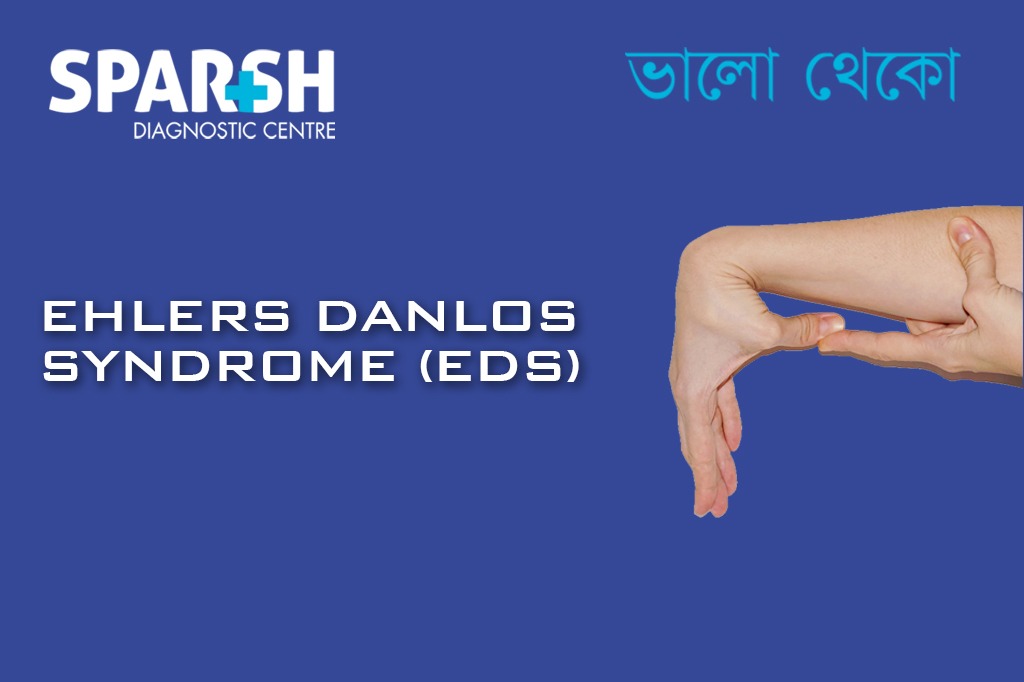
What is an EDS Finger?
Many individuals can perform unusual finger movements because of hypermobile joints.
Examples include:
- Bending fingers backwards
- Touching the thumb to the forearm
- Finger joint instability
- Frequent finger dislocations
These findings contribute to assessing generalized joint hypermobility.
The Beighton Score
Doctors commonly assess joint flexibility using the Beighton Score.
The examination looks at:
- Thumb flexibility
- Little finger extension
- Elbow extension
- Knee extension
- Ability to place palms flat on the floor
Higher scores suggest generalized joint hypermobility.
What is the Pinch Test for EDS?
The skin pinch test helps evaluate skin hyperextensibility.
During the examination, a doctor gently lifts the skin on the forearm or back of the hand.
In EDS, the skin often stretches much farther than expected before returning to its original position.
The test alone cannot diagnose EDS but supports the overall clinical assessment.
Diagnostic Criteria for Ehlers-Danlos Syndrome
Diagnosis depends on the subtype.
Evaluation usually includes:
Medical history
Including:
- Joint problems
- Family history
- Skin symptoms
- Pain history
Physical examination
Doctors assess:
- Joint hypermobility
- Skin elasticity
- Bruising
- Scars
Beighton Score
Measures generalized hypermobility.
Genetic Testing
Many EDS subtypes can be confirmed through molecular genetic testing.
Hypermobile EDS currently has no confirmed genetic test, making diagnosis entirely clinical.
Imaging Studies
Depending on symptoms, doctors may recommend:
These help evaluate joints, heart, blood vessels, and internal organs.
At What Age is EDS Usually Diagnosed?
Diagnosis varies widely.
Some people are diagnosed:
- During infancy
- In childhood
- During adolescence
- In adulthood
Hypermobile EDS is frequently diagnosed between 20 and 40 years of age, although symptoms often begin much earlier.
Many patients spend years seeking an explanation for their symptoms before receiving the correct diagnosis.
Why Don’t Doctors Want to Diagnose EDS?
It is not that doctors avoid diagnosing EDS. Rather, diagnosis can be challenging for several reasons:
- Symptoms overlap with many other conditions.
- Hypermobile EDS has no definitive laboratory test.
- Symptoms vary greatly from one person to another.
- Many patients appear healthy despite chronic pain.
- Awareness of EDS is still improving among healthcare professionals.
As a result, diagnosis may require evaluation by specialists such as rheumatologists, geneticists, orthopaedic surgeons, cardiologists, or neurologists.
What Autoimmune Disease is Linked to EDS?
EDS itself is not an autoimmune disease.
However, some people with EDS may also have autoimmune conditions, including:
- Rheumatoid arthritis
- Sjögren syndrome
- Autoimmune thyroid disease
- Lupus (less commonly)
Researchers continue to study whether these associations occur more frequently than expected.
How Do You Treat Ehlers-Danlos Syndrome?
There is currently no cure for EDS.
Treatment focuses on reducing symptoms, preventing complications, and improving quality of life.
Physiotherapy
One of the most important treatments.
Exercises strengthen muscles that support unstable joints.
Pain Management
May include:
- Pain medications
- Heat therapy
- Activity modification
- Occupational therapy
Joint Protection
Doctors often recommend:
- Braces
- Splints
- Supportive footwear
- Avoiding high-impact sports
Cardiac Monitoring
Patients with vascular EDS require regular monitoring of blood vessels and the heart.
Lifestyle Changes
Helpful measures include:
- Low-impact exercise
- Swimming
- Pilates
- Adequate hydration
- Healthy nutrition
- Good sleep habits
Surgery
Reserved for selected cases because fragile tissues heal less predictably.
Can EDS Cause Sudden Death?
Most people with Hypermobile EDS have a normal life expectancy.
However, Vascular EDS (Type 4) carries an increased risk of life-threatening complications such as arterial rupture or organ rupture, which can rarely lead to sudden death.
Early diagnosis, regular monitoring, blood pressure control, and specialist care can significantly reduce the risk of severe complications.
What is the Life Expectancy of Someone with Ehlers-Danlos Syndrome?
Life expectancy depends on the subtype.
- Hypermobile EDS: Usually normal life expectancy.
- Classical EDS: Often near normal with proper care.
- Vascular EDS: Life expectancy may be reduced because of the risk of arterial or organ rupture, though outcomes have improved with earlier diagnosis and specialized management.
Regular medical follow-up plays a key role in improving long-term health.
Do People with EDS Look Younger or Older?
Many individuals with EDS appear younger than their actual age because their skin can remain soft and wrinkle less in certain subtypes.
However, others may develop:
- Thin skin
- Premature bruising
- Fragile skin
- Visible veins
Appearance varies considerably depending on the subtype and the individual.
Living Well with Ehlers-Danlos Syndrome
Although EDS is lifelong, many people lead active, fulfilling lives by managing symptoms and protecting their joints.
Helpful strategies include:
- Maintaining a healthy weight
- Regular physiotherapy
- Gentle strengthening exercises
- Avoiding joint overextension
- Wearing supportive footwear
- Staying hydrated
- Managing stress
- Seeking mental health support when needed
- Attending regular medical check-ups
Early intervention helps prevent complications and maintain independence.
When Should You See a Doctor?
Consult a healthcare professional if you experience:
- Frequent joint dislocations
- Unexplained chronic pain
- Extremely flexible joints
- Easy bruising
- Stretchy skin
- Poor wound healing
- Family history of EDS
- Recurrent sprains without significant injury
Early evaluation allows appropriate management and screening for potential complications.
At Sparsh Diagnostic Centre, experienced specialists and advanced diagnostic facilities—including imaging, pathology, and cardiac evaluations—can help identify underlying causes of symptoms and guide appropriate referrals when Ehlers-Danlos Syndrome is suspected.
Frequently Asked Questions (FAQs)
1. What are four symptoms of Ehlers-Danlos syndrome?
The four common symptoms are joint hypermobility, stretchy skin, easy bruising, and chronic joint pain.
2. What is the life expectancy of someone with Ehlers-Danlos syndrome?
Most people with hypermobile or classical EDS have a normal life expectancy. Vascular EDS may reduce life expectancy because of the risk of arterial or organ rupture.
3. How do you treat Ehlers-Danlos syndrome?
Treatment includes physiotherapy, pain management, joint protection, lifestyle modifications, regular monitoring, and specialist care. There is currently no cure.
4. What is the triad of Ehlers-Danlos syndrome?
The classic triad consists of joint hypermobility, skin hyperextensibility, and tissue fragility.
5. What is type 4 Ehlers-Danlos syndrome?
Type 4 is Vascular Ehlers-Danlos Syndrome (vEDS), a rare subtype associated with fragile arteries and internal organs.
6. What are the hallmarks of Ehlers-Danlos syndrome?
Hallmarks include loose joints, stretchy skin, chronic pain, easy bruising, fragile tissues, and poor wound healing.
7. What are the diagnostic criteria for Ehlers-Danlos syndrome?
Diagnosis involves a medical history, physical examination, Beighton score, assessment of skin and joints, family history, and genetic testing for many EDS subtypes.
8. What is the pinch test for EDS?
The pinch test evaluates skin hyperextensibility by gently lifting the skin to assess how far it stretches. It is supportive but not diagnostic on its own.
9. What are the facial signs of EDS?
Some individuals may have thin skin, prominent eyes, a narrow nose, or delicate facial features, especially in vascular EDS, although many have no distinctive facial appearance.
10. Does EDS affect breasts?
Yes. EDS may affect breast tissue, leading to increased skin laxity, sagging, stretch marks, and discomfort due to weaker connective tissue support.
11. What autoimmune disease is linked to EDS?
EDS is not an autoimmune disease, but some people also have autoimmune conditions such as rheumatoid arthritis, Sjögren syndrome, autoimmune thyroid disease, or, less commonly, lupus.
12. At what age is Ehlers-Danlos usually diagnosed?
Diagnosis may occur in childhood or adulthood. Hypermobile EDS is often diagnosed between 20 and 40 years of age, although symptoms frequently begin earlier.
13. Why don’t doctors want to diagnose EDS?
Doctors do not generally avoid diagnosing EDS. Diagnosis can be difficult because symptoms overlap with other conditions, vary widely, and hypermobile EDS lacks a definitive laboratory test.
14. Do people with Ehlers-Danlos look younger or older?
Some individuals appear younger because of soft, smooth skin, while others may have thin, fragile skin or visible veins. Appearance varies by subtype.
15. Which parent passes down EDS?
Either parent can pass on many forms of EDS through an autosomal dominant inheritance pattern. Some rare forms require both parents to carry the altered gene.
16. What is an EDS finger?
An EDS finger refers to unusually flexible or hypermobile finger joints that can bend beyond the normal range or dislocate easily.
17. What is the root cause of Ehlers-Danlos syndrome?
The underlying cause is inherited genetic mutations affecting collagen or connective tissue proteins, resulting in weakened connective tissues.
18. Can EDS cause sudden death?
Most forms of EDS do not. However, vascular EDS carries a higher risk of sudden, life-threatening complications such as arterial or organ rupture, making regular specialist monitoring essential.
Ehlers-Danlos Syndromes are complex connective tissue disorders that can affect nearly every part of the body. While there is no cure, early diagnosis, appropriate medical care, physiotherapy, and lifestyle modifications can greatly improve quality of life and reduce complications.
If you or a loved one experiences unusually flexible joints, frequent dislocations, easy bruising, chronic pain, or a family history of connective tissue disorders, don’t ignore these symptoms. Seeking timely medical evaluation can make a significant difference.
At Sparsh Diagnostic Centre, our multidisciplinary approach, advanced diagnostic technology, and access to experienced specialists help ensure patients receive the comprehensive assessment and ongoing care they need for conditions such as Ehlers-Danlos Syndrome.
To consult a Doctor or get full body check-up done at Sparsh Diagnostic Centre, call our helpline numbers 9830117733/ 8335049501.
#BhaloTheko
Disclaimer:
No content on this site, regardless of date, should ever be used as a substitute for direct medical advice from your doctor or other qualified clinician.