An osteoma is a slow-growing, benign bone tumour that most commonly develops in the skull, forehead, facial bones, or paranasal sinuses. Although the word “tumour” often sounds alarming, an osteoma is not cancer, and in most cases, it does not pose a serious health risk. Many people discover they have an osteoma by accident during a CT scan or X-ray performed for an unrelated reason.
Despite being harmless in many individuals, osteomas can occasionally cause symptoms depending on their size and location. They may lead to headaches, facial pain, sinus blockage, cosmetic concerns, or pressure on nearby structures. Fortunately, modern imaging techniques make diagnosis straightforward, and treatment is highly effective when needed.
This guide explains everything you need to know about osteomas, including their causes, symptoms, diagnosis, treatment options, surgery, recovery, and answers to the most common questions patients ask.
What Is an Osteoma?
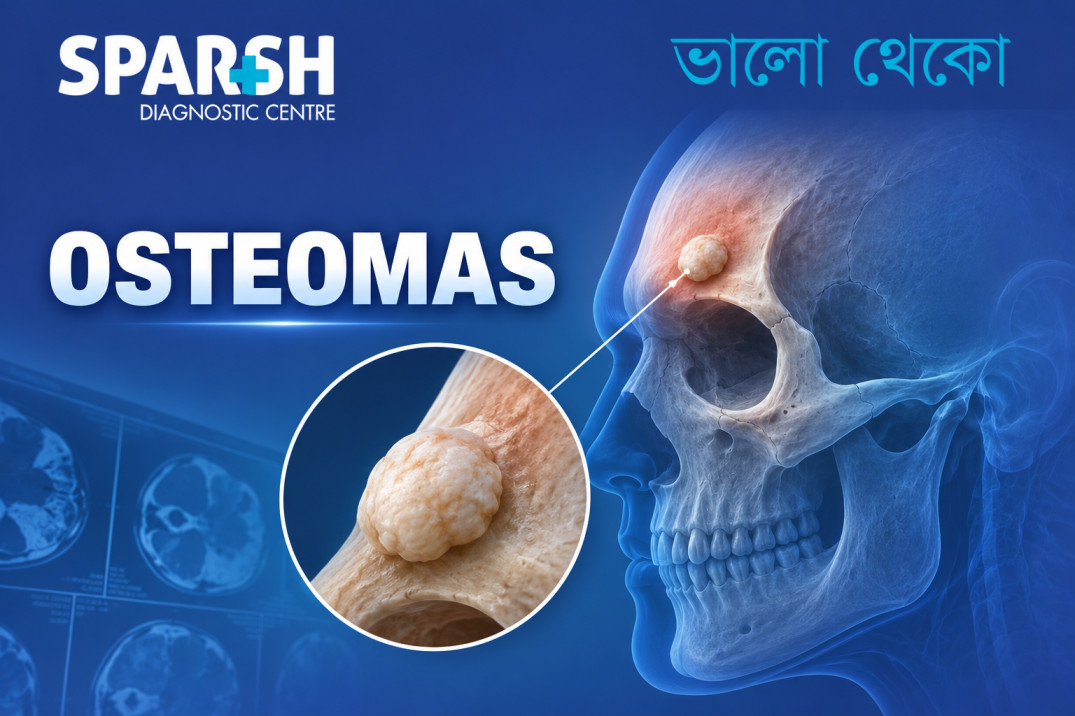
An osteoma is a benign (non-cancerous) growth of mature bone tissue. Unlike malignant bone tumours, osteomas grow very slowly and almost never spread to other parts of the body.
They usually develop on:
- Forehead (frontal bone)
- Skull
- Facial bones
- Jaw
- Paranasal sinuses
- Nose
Less commonly, osteomas can develop in other bones of the body.
Most osteomas measure only a few millimetres to a couple of centimetres and remain stable for years.
Types of Osteomas
Doctors classify osteomas into different types depending on where they originate.
Compact Osteoma
Made of dense, hard bone similar to the outer layer of normal bone.
Cancellous Osteoma
Contains spongy bone with bone marrow spaces.
Extraskeletal Osteoma
Develops within soft tissues rather than directly from bone, although this is rare.
What Is the Cause of Osteomas?
The exact cause of osteomas remains unknown. However, researchers believe several factors may contribute to their development.
Possible causes include:
- Genetic predisposition
- Previous injury or trauma
- Chronic inflammation
- Developmental abnormalities
- Infection (rarely)
In many patients, no clear cause is identified.
Certain inherited conditions, especially Gardner syndrome, significantly increase the risk of developing multiple osteomas.
Are Osteomas Genetic?
Most osteomas occur randomly and are not inherited.
However, multiple osteomas may be associated with Gardner syndrome, a rare inherited disorder caused by mutations in the APC gene.
People with Gardner syndrome may develop:
- Multiple osteomas
- Colon polyps
- Dental abnormalities
- Skin cysts
Because colon polyps associated with Gardner syndrome can become cancerous, patients with multiple osteomas—particularly at a young age—may require further evaluation.
Who Is Most Affected by Osteomas?
Osteomas can occur at almost any age but are most commonly diagnosed in:
- Adults between 20 and 50 years
- Young adults
- Middle-aged individuals
They are slightly more common in men than women.
Many osteomas begin growing silently during early adulthood and remain unnoticed for years.
How Quickly Do Osteomas Grow?
One of the defining features of an osteoma is its extremely slow growth.
Most osteomas:
- Grow over many years
- Increase only a few millimetres annually
- May remain unchanged for decades
- Sometimes stop growing completely
Because of their slow progression, many patients never require treatment.
Common Symptoms of Osteoma
Many osteomas produce no symptoms whatsoever.
When symptoms do occur, they depend largely on location.
Forehead Osteoma
The most common symptom is:
- Hard, painless lump on the forehead
Some people seek treatment primarily for cosmetic reasons.
Sinus Osteoma
Symptoms may include:
- Recurrent sinus infections
- Nasal blockage
- Headaches
- Facial pressure
- Reduced sense of smell
- Postnasal drip
Skull Osteoma
Large osteomas may cause:
- Headache
- Pressure sensation
- Local tenderness
Very rarely, extremely large osteomas may compress nearby nerves or surrounding structures.
Is Osteoma Harmful?
In most cases, no.
An osteoma is generally considered harmless because it:
- Does not spread
- Does not become cancer
- Usually grows very slowly
- Often causes no symptoms
However, an osteoma can become problematic if it:
- Blocks the sinuses
- Compresses nerves
- Affects vision
- Causes chronic headaches
- Produces facial deformity
- Continues enlarging significantly
Therefore, whether an osteoma is harmful depends mainly on its location and size.
Is Osteoma a Cancerous Disease?
No.
Osteomas are benign bone tumours.
Unlike bone cancers:
- They do not invade surrounding tissues aggressively.
- They do not metastasise (spread).
- They have an excellent long-term prognosis.
Cancerous bone tumours such as osteosarcoma are entirely different conditions.
How Is Osteoma Confirmed?
Doctors diagnose osteoma through a combination of:
Medical History
The doctor asks about:
- Symptoms
- Duration
- Growth rate
- Headaches
- Sinus problems
- Previous trauma
Physical Examination
The lump is examined for:
- Hardness
- Mobility
- Tenderness
- Size
CT Scan
A CT scan is considered the gold standard for diagnosing osteomas.
It clearly shows:
- Bone density
- Exact location
- Size
- Relationship to nearby structures
X-ray
Some osteomas are visible on standard X-rays.
MRI
MRI may be performed if doctors need to evaluate nearby soft tissues or nerves.
Biopsy
Biopsy is rarely necessary because imaging usually provides a clear diagnosis.
How Big Can Osteomas Get?
Most osteomas remain relatively small.
Typical size:
- Less than 2 cm
Larger osteomas may grow to:
- 3–5 cm
- Occasionally even larger
Very large osteomas are uncommon and may require surgical removal because of symptoms or cosmetic concerns.
What Happens If an Osteoma Is Left Untreated?
Many untreated osteomas never cause any problems.
However, depending on location, untreated osteomas may eventually lead to:
- Increasing size
- Cosmetic deformity
- Persistent headaches
- Chronic sinus blockage
- Recurrent sinus infections
- Facial pain
- Pressure on nearby structures
Doctors often recommend periodic imaging to monitor growth if surgery is not immediately required.
Does Osteoma Stop Growing?
Yes, many osteomas eventually stop growing or grow so slowly that they remain unchanged for years.
Some patients never notice any increase in size after diagnosis.
Regular follow-up helps determine whether the lesion remains stable.
Can an Osteoma Come and Go?
No.
Unlike cysts or inflammatory swellings, osteomas do not disappear on their own.
Once formed, they usually remain present.
Although growth may stop, the existing bone growth generally does not regress naturally.
How to Stop Osteoma from Growing
Unfortunately, there are no medications, diets, supplements, or lifestyle changes proven to stop osteoma growth.
Doctors usually recommend:
- Regular monitoring
- CT scans when necessary
- Surgical removal if growth causes symptoms
Avoiding unnecessary trauma to the area is sensible, but there is no proven preventive strategy.
Treatment for Osteoma
Treatment depends on:
- Symptoms
- Location
- Size
- Cosmetic concerns
- Rate of growth
Observation
Most osteomas require no treatment.
Doctors may recommend:
- Regular examinations
- Repeat CT scans
- Symptom monitoring
Medications
Medicines cannot remove an osteoma.
Painkillers may temporarily relieve headaches or discomfort if present.
Surgical Removal
Surgery is recommended when the osteoma:
- Causes pain
- Obstructs sinuses
- Affects vision
- Compresses nerves
- Continues growing
- Causes cosmetic concerns
Is Osteoma Curable?
Yes.
An osteoma can usually be completely cured through surgical removal when surgery is indicated.
Even patients managed without surgery often live normal, healthy lives because the tumour remains stable.
Recurrence after complete removal is uncommon.
How to Remove Osteoma Without Surgery
There is currently no scientifically proven non-surgical method to remove an osteoma.
Treatments such as:
- Herbal remedies
- Homeopathy
- Massage
- Supplements
- Injections
have not been shown to eliminate the bony growth.
Small, symptom-free osteomas are usually managed through observation rather than non-surgical removal.
How Do They Remove an Osteoma from the Forehead?
Forehead osteoma removal is one of the most common procedures.
The operation generally involves:
- Administering anaesthesia.
- Making an incision either directly over the lump or behind the hairline to minimise visible scarring.
- Exposing the osteoma.
- Carefully removing the bony growth using specialised surgical instruments.
- Smoothing the surrounding bone.
- Closing the incision with fine sutures.
Many plastic surgeons use hidden hairline incisions for excellent cosmetic results.
How Long Does Osteoma Removal Take?
The duration depends on:
- Size
- Location
- Surgical complexity
Typical surgery takes:
- 30 minutes to 2 hours
More complex sinus osteomas may require longer procedures.
Is Osteoma Removal Outpatient?
Yes.
Most forehead osteoma surgeries are performed as day-care (outpatient) procedures.
Patients typically:
- Arrive the same day
- Undergo surgery
- Recover for a few hours
- Return home later that day
More extensive skull or sinus surgeries may occasionally require an overnight hospital stay.
Is It Safe to Remove an Osteoma?
Yes.
When performed by an experienced surgeon, osteoma removal is considered a safe procedure.
Complications are uncommon.
The benefits often include:
- Improved appearance
- Relief from pain
- Better sinus drainage
- Reduced headaches
- Improved quality of life
What Are the Side Effects of Osteoma Surgery?
Like any surgical procedure, osteoma removal carries some risks.
Possible side effects include:
- Swelling
- Bruising
- Mild pain
- Temporary numbness
- Scar formation
- Infection
- Bleeding
- Delayed wound healing
Rare complications depend on the osteoma’s location.
Most patients recover without significant problems.
What Kind of Doctor Treats Osteoma?
Several specialists may be involved.
These include:
- Orthopaedic surgeons
- ENT (Ear, Nose and Throat) specialists
- Maxillofacial surgeons
- Neurosurgeons
- Plastic surgeons
The appropriate specialist depends on where the osteoma is located.
Recovery After Osteoma Surgery
Recovery is generally straightforward.
Most patients:
- Resume light activities within a few days
- Return to work in 1–2 weeks
- Experience gradual reduction in swelling over several weeks
Doctors usually recommend:
- Keeping the incision clean
- Avoiding strenuous exercise initially
- Attending follow-up appointments
- Reporting fever, increasing redness, or persistent pain
Can Osteomas Be Prevented?
There is no proven way to prevent osteomas because their exact cause remains uncertain.
Maintaining good overall health is always beneficial, but no specific lifestyle measure has been shown to prevent their development.
If multiple osteomas occur or there is a family history of Gardner syndrome, genetic counselling may be recommended.
Prognosis
The outlook for patients with osteoma is excellent.
Most people:
- Never develop serious complications
- Require little or no treatment
- Maintain normal life expectancy
- Recover well after surgery if removal becomes necessary
Because osteomas are benign and slow growing, long-term outcomes are overwhelmingly positive.
Frequently Asked Questions (FAQs)
1. What is the cause of osteomas?
The exact cause is unknown. Genetics, previous injury, chronic inflammation, and developmental factors may contribute.
2. Is osteoma harmful?
Most osteomas are harmless. Problems occur only if they grow large enough to cause pain, sinus blockage, cosmetic concerns, or pressure on nearby structures.
3. What is the treatment for osteoma?
Treatment ranges from observation for symptom-free osteomas to surgical removal if symptoms, growth, or cosmetic concerns develop.
4. What happens if osteoma is left untreated?
Many remain stable without causing problems. Larger osteomas may gradually lead to headaches, facial deformity, or sinus obstruction.
5. How to stop osteoma from growing?
There is no proven medication or lifestyle change that stops osteoma growth. Doctors monitor growth and recommend surgery if necessary.
6. Is osteoma a cancerous disease?
No. Osteomas are benign bone tumours and are not considered cancer.
7. How is osteoma confirmed?
Diagnosis is usually confirmed with a CT scan, along with a physical examination and medical history.
8. How quickly do osteomas grow?
They grow very slowly, often over many years, and may eventually stop growing.
9. What kind of doctor treats osteoma?
Depending on the location, treatment may be provided by an orthopaedic surgeon, ENT specialist, plastic surgeon, maxillofacial surgeon, or neurosurgeon.
10. What age group is most affected by osteomas?
They are most commonly diagnosed in adults between 20 and 50 years of age.
11. Are osteomas genetic?
Most are not. However, multiple osteomas may occur as part of Gardner syndrome, an inherited genetic condition.
12. Is it safe to remove osteoma?
Yes. Osteoma removal is generally safe when performed by an experienced surgeon.
13. Is osteoma something to worry about?
Usually not. Most osteomas are harmless and only require monitoring unless they cause symptoms or continue to grow.
14. How to remove osteoma without surgery?
There is no proven non-surgical treatment that removes an osteoma. Observation is appropriate for many asymptomatic cases.
15. How do they remove osteoma from the forehead?
The surgeon makes an incision, removes the bony growth, smooths the surrounding bone, and closes the incision, often using a hidden hairline approach to minimise visible scarring.
16. How long does osteoma removal take?
Most procedures take between 30 minutes and 2 hours, depending on the size and location of the osteoma.
17. Is osteoma curable?
Yes. Complete surgical removal is usually curative when treatment is needed.
18. Does osteoma stop growing?
Yes. Many osteomas eventually stop growing or enlarge so slowly that they remain unchanged for years.
19. What are the side effects of osteoma surgery?
Possible side effects include swelling, bruising, pain, infection, bleeding, scarring, temporary numbness, and delayed wound healing. Serious complications are uncommon.
20. Is osteoma removal outpatient?
Yes. Most forehead osteoma removals are performed as outpatient procedures, allowing patients to return home the same day.
21. Is osteoma genetic?
Most osteomas are sporadic, but multiple osteomas can be associated with inherited conditions such as Gardner syndrome.
22. How big can osteomas get?
Most remain under 2 cm, although some may grow larger over time, particularly if left untreated.
23. Can an osteoma come and go?
No. Osteomas do not disappear spontaneously. While they may stop growing, the existing bony growth generally remains unless surgically removed.
An osteoma is a benign, slow-growing bone tumour that is often discovered incidentally and rarely poses a serious health threat. Most osteomas require only observation, while surgery is reserved for cases involving symptoms, cosmetic concerns, or pressure on nearby structures. With accurate diagnosis through imaging, regular follow-up, and timely treatment when needed, the outlook for people with osteomas is excellent. If you notice a persistent hard lump on your forehead or experience unexplained sinus symptoms, consult a healthcare professional for a proper evaluation and personalised advice.
To consult a Doctor or get full body check-up done at Sparsh Diagnostic Centre, call our helpline numbers 9830117733/ 8335049501.
#BhaloTheko
Disclaimer:
No content on this site, regardless of date, should ever be used as a substitute for direct medical advice from your doctor or other qualified clinician.