Pregnancy is an exciting journey filled with anticipation, questions, and important milestones. One of the most common questions many women ask after receiving a positive pregnancy test is: “Is 3 weeks pregnant too early for an ultrasound?” The simple answer is yes, in most cases, 3 weeks pregnant is too early for an ultrasound to detect a pregnancy reliably.
At this stage, the pregnancy is still in its earliest phases of development, and even advanced ultrasound technology may not be able to visualize the gestational sac or embryo. Understanding what happens during the third week of pregnancy, when an ultrasound becomes effective, and what you can expect from early pregnancy scans can help ease concerns and set realistic expectations.
If you’re looking for the Best Pregnancy USG in Kolkata, it’s important to know the right timing for your first scan so that you receive accurate and meaningful results.
In this guide, we’ll explore everything you need to know about ultrasounds at 3 weeks pregnant, including what doctors can and cannot see, the best time for an early pregnancy scan, and answers to frequently asked questions.
Understanding Pregnancy Dating
Before discussing ultrasounds, it’s important to understand how pregnancy is calculated.
Healthcare providers typically measure pregnancy from the first day of your last menstrual period (LMP) rather than the day of conception. This means that when you’re considered 3 weeks pregnant, conception may have occurred only recently—or may be about to occur, depending on your cycle.
A typical timeline looks like this:
- Week 1: Menstrual period begins
- Week 2: Ovulation approaches
- Week 3: Fertilization may occur
- Week 4: Implantation often begins
- Week 5+: Pregnancy may become visible on ultrasound
At 3 weeks pregnant, the fertilized egg is often still traveling through the fallopian tube or has just reached the uterus.
What Happens at 3 Weeks Pregnant?
The third week of pregnancy is a critical stage in fetal development.
During this time:
- A sperm fertilizes an egg.
- The resulting zygote begins dividing into multiple cells.
- The cluster of cells, known as a blastocyst, travels toward the uterus.
- Implantation may begin toward the end of the week.
The developing pregnancy is microscopic. It is far too small to be seen with standard ultrasound imaging.
In fact, the embryo itself will not become visible until several weeks later.
Can an Ultrasound Detect Pregnancy at 3 Weeks?
In most situations, an ultrasound cannot confirm a pregnancy at 3 weeks.
Even a highly sensitive transvaginal ultrasound is unlikely to detect any visible signs because:
- The gestational sac has not yet developed enough to be seen.
- The embryo is extremely small.
- Implantation may not have occurred fully.
- Hormone levels are often still low.
An ultrasound performed this early will usually show a normal uterus without visible evidence of pregnancy.
This does not mean there is a problem. It simply means the pregnancy is too early to be visualized.
Why Ultrasounds Are Limited at 3 Weeks
Ultrasound technology works by creating images of structures inside the body. To be visible, a pregnancy must reach a certain size.
At 3 weeks pregnant:
- The fertilized egg measures less than a millimeter.
- There is no visible gestational sac.
- There is no fetal pole.
- There is no heartbeat.
Because these structures have not yet formed or become large enough, the scan cannot provide meaningful information about the pregnancy.
What Can Be Seen on Ultrasound at Different Stages?
Understanding the typical ultrasound timeline can help explain why 3 weeks is too early.
3 Weeks
- Pregnancy usually not visible
- No gestational sac seen
- No embryo visible
4 Weeks
- Sometimes a thickened uterine lining is seen
- Gestational sac may still be absent
5 Weeks
- Small gestational sac may become visible
- Early signs of pregnancy may be detected
5.5 to 6 Weeks
- Yolk sac often visible
- Gestational sac becomes clearer
6 to 7 Weeks
- Embryo usually visible
- Fetal heartbeat often detected
8 Weeks and Beyond
- Developing fetus clearly identifiable
- More accurate dating measurements possible
Which Ultrasound Is Better in Early Pregnancy?
There are two main types of pregnancy ultrasounds:
Transabdominal Ultrasound
This scan is performed over the abdomen.
While it is commonly used later in pregnancy, it is generally less sensitive during the earliest weeks.
Transvaginal Ultrasound
A transvaginal ultrasound involves inserting a small probe into the vagina.
This method:
- Provides clearer images
- Detects pregnancy earlier
- Offers better visualization of early structures
Even with a transvaginal ultrasound, however, 3 weeks is generally too early for pregnancy confirmation.
Can Blood Tests Detect Pregnancy Earlier Than Ultrasound?
Yes.
Blood tests are significantly more sensitive than ultrasounds during the earliest stages of pregnancy.
hCG Blood Test
Human Chorionic Gonadotropin (hCG) is the hormone produced after implantation.
A blood test can:
- Detect pregnancy earlier than ultrasound
- Measure hormone levels accurately
- Help monitor pregnancy progression
Many women receive a positive blood pregnancy test before any ultrasound findings are visible.
What If You Have Symptoms at 3 Weeks?
Some women begin experiencing very early pregnancy symptoms around 3 weeks.
These may include:
However, symptoms vary widely.
Some women experience multiple symptoms, while others notice none at all.
An ultrasound is usually not helpful in explaining these symptoms this early because visible pregnancy signs have not yet developed.
When Should You Schedule Your First Pregnancy Ultrasound?
For most women, the ideal time for the first ultrasound is between 6 and 8 weeks of pregnancy.
At this stage, healthcare providers can often:
- Confirm the pregnancy
- Verify that it is located inside the uterus
- Detect a heartbeat
- Estimate gestational age
- Determine the expected due date
Scheduling an ultrasound too early may lead to inconclusive results and unnecessary anxiety.
Reasons a Doctor May Order an Early Ultrasound
Although routine ultrasounds at 3 weeks are uncommon, there are situations where an early scan may be recommended.
These include:
Suspected Ectopic Pregnancy
An ectopic pregnancy occurs when the fertilized egg implants outside the uterus, often in the fallopian tube.
Symptoms may include:
- Severe pelvic pain
- Vaginal bleeding
- Dizziness
- Shoulder pain
Early evaluation is important because ectopic pregnancy can become a medical emergency.
Fertility Treatment Monitoring
Women who undergo fertility treatments may receive earlier ultrasounds as part of monitoring protocols.
Previous Pregnancy Complications
Healthcare providers may recommend earlier assessment if there is a history of:
- Miscarriage
- Ectopic pregnancy
- Recurrent pregnancy loss
Even in these situations, a pregnancy may still not be visible at 3 weeks.
What Happens If Nothing Is Seen on the Ultrasound?
If an ultrasound is performed at 3 weeks and nothing is visible, it is usually completely normal.
Possible explanations include:
- Pregnancy is too early.
- Ovulation occurred later than expected.
- Implantation has not occurred yet.
- hCG levels are not high enough.
Doctors often recommend:
- Repeat blood tests
- Monitoring hCG levels
- Follow-up ultrasound in one to two weeks
Most healthy pregnancies become visible with time.
Understanding hCG Levels and Ultrasound Findings
There is a relationship between hCG levels and ultrasound visibility.
Generally:
- Gestational sac becomes visible when hCG reaches approximately 1,500–2,000 mIU/mL on transvaginal ultrasound.
- Heartbeat is usually visible at higher hormone levels and later gestational ages.
At 3 weeks pregnant, many women have hCG levels below the threshold needed for ultrasound detection.
This is one reason blood tests are often preferred during the earliest stages.
Emotional Impact of an Early Ultrasound
Many expectant parents seek an ultrasound for reassurance.
However, having a scan too early can sometimes create unnecessary worry.
When no gestational sac is visible, people may fear:
- Miscarriage
- Ectopic pregnancy
- Pregnancy complications
In reality, the pregnancy may simply be too early to detect.
Waiting until the appropriate gestational age often provides clearer answers and reduces uncertainty.
How Accurate Is Ultrasound in Early Pregnancy?
Ultrasound is highly accurate when performed at the right time.
By 6–8 weeks, ultrasound can:
- Confirm pregnancy location
- Detect fetal heartbeat
- Assess viability
- Estimate gestational age
The earlier the scan is performed, the higher the likelihood of inconclusive findings.
This is why experienced radiologists and specialists providing the Best Ultrasonography in Kolkata emphasize appropriate timing for early pregnancy scans.
Tips for Women Waiting for Their First Ultrasound
Waiting for an ultrasound can feel challenging, especially after a positive pregnancy test.
Here are a few helpful tips:
Follow Prenatal Care Recommendations
Begin prenatal vitamins containing folic acid as recommended by your healthcare provider.
Maintain a Healthy Lifestyle
Focus on:
- Nutritious foods
- Adequate hydration
- Regular rest
- Avoiding alcohol and smoking
Track Symptoms
Keeping a symptom journal may help you discuss any concerns with your doctor.
Be Patient With Timing
Remember that fetal development follows a natural timeline. An ultrasound performed later is more likely to provide useful information.
Common Myths About Early Pregnancy Ultrasounds
Myth 1: Ultrasound Can Detect Pregnancy Immediately After Conception
Reality: Pregnancy cannot be seen immediately after fertilization because the embryo is microscopic.
Myth 2: A Negative Ultrasound Means You Are Not Pregnant
Reality: At 3 weeks, pregnancy may simply be too early to visualize.
Myth 3: More Ultrasounds Are Always Better
Reality: Timing is important. Early scans may produce unclear results and additional stress.
Myth 4: A Positive Pregnancy Test Guarantees Ultrasound Visibility
Reality: Pregnancy tests detect hormones, while ultrasounds detect physical structures. Hormones often become detectable before ultrasound findings appear.
The Bottom Line
So, is 3 weeks pregnant too early for an ultrasound? In most cases, yes.
At 3 weeks pregnant, the developing pregnancy is still too small to be seen on ultrasound. Even advanced transvaginal imaging typically cannot detect a gestational sac, embryo, or heartbeat at this stage. Blood tests measuring hCG levels are usually more effective for confirming pregnancy this early.
If you are looking for the Best USG in Kolkata, Best Ultrasonography in Kolkata, or Best Pregnancy USG in Kolkata, choosing an experienced diagnostic center and scheduling your scan at the appropriate stage can help ensure reliable results and a reassuring experience.
If you’re concerned about symptoms, pregnancy progression, or timing, consult your healthcare provider for personalized guidance and follow-up care.
Frequently Asked Questions (FAQs)
Can an ultrasound detect pregnancy at exactly 3 weeks?
In most cases, no. The pregnancy is usually too small to be visualized, even with a transvaginal ultrasound.
What is the earliest week an ultrasound can confirm pregnancy?
A gestational sac may sometimes be visible around 4.5 to 5 weeks, but most pregnancies are more clearly confirmed around 5 to 6 weeks.
Is a transvaginal ultrasound better than an abdominal ultrasound at 3 weeks?
Yes. A transvaginal ultrasound is more sensitive in early pregnancy, although 3 weeks is generally still too early for detection.
Can hCG blood tests confirm pregnancy before ultrasound?
Yes. Blood tests can detect pregnancy earlier because they measure pregnancy hormone levels before visible structures develop.
Why did my ultrasound show nothing despite a positive pregnancy test?
The pregnancy may simply be too early to visualize. Repeat testing and follow-up scans are often recommended.
Can a heartbeat be seen at 3 weeks pregnant?
No. The fetal heartbeat typically becomes detectable around 6 to 7 weeks of pregnancy.
Should I worry if my doctor cannot see a pregnancy at 3 weeks?
Not usually. This is expected because pregnancy structures are generally not visible at this stage.
When should I schedule my first ultrasound after a positive pregnancy test?
Most healthcare providers recommend scheduling the first ultrasound between 6 and 8 weeks of pregnancy for the most reliable results.
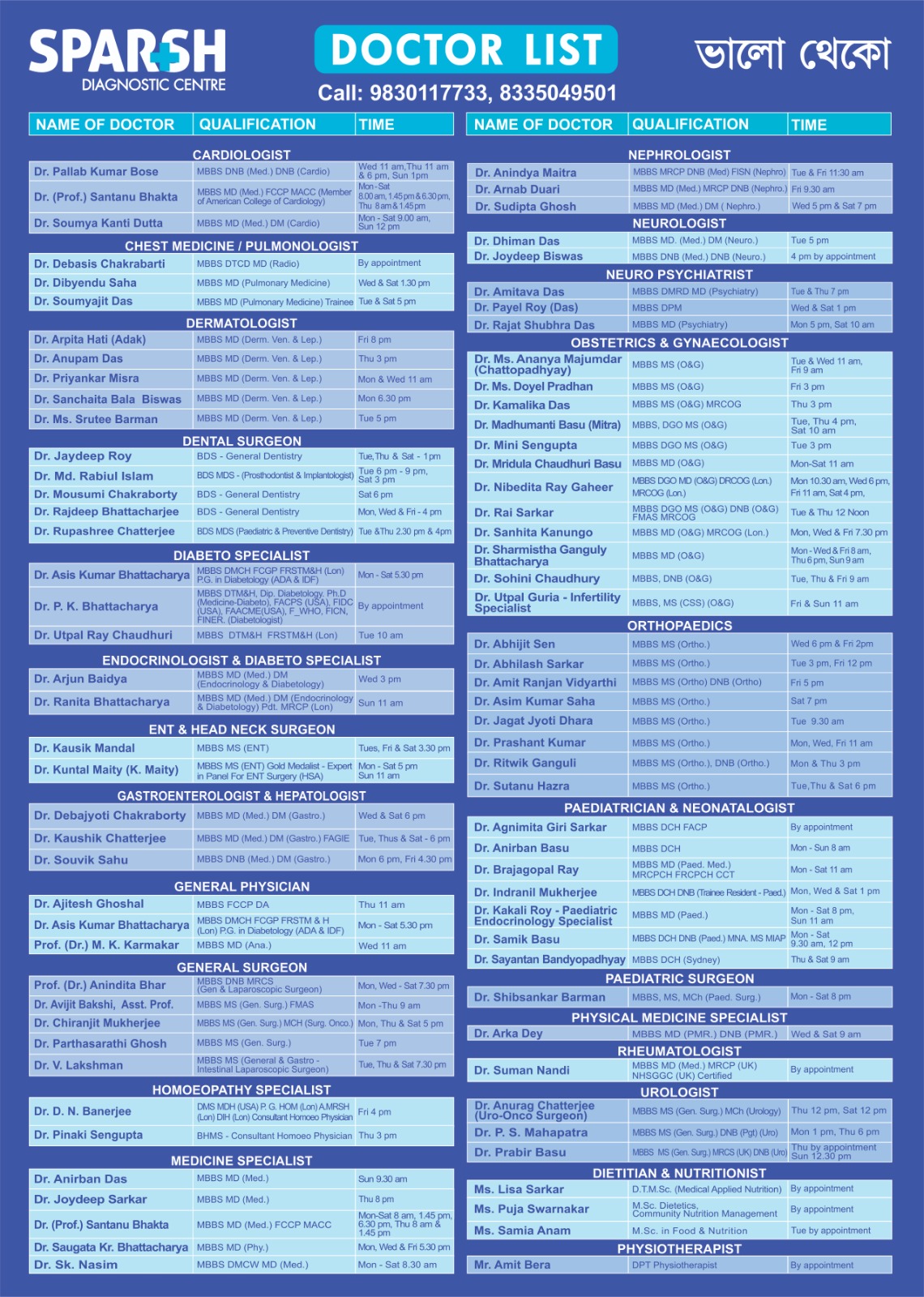
To consult a Doctor at Sparsh Diagnostic Centre, call our helpline numbers 9830117733/ 8335049501.
#BhaloTheko
Disclaimer:
No content on this site, regardless of date, should ever be used as a substitute for direct medical advice from your doctor or other qualified clinician.