


Lewy Body Dementia (LBD) is a progressive brain disorder that affects thinking, movement, mood, behavior, and sleep. It is one of the most common types of dementia after Alzheimer’s disease and vascular dementia, yet it remains widely misunderstood and frequently misdiagnosed.
LBD is characterized by abnormal protein deposits called Lewy bodies in the brain. These deposits disrupt normal brain function, leading to cognitive decline, movement problems similar to Parkinson’s disease, psychiatric symptoms, and disturbances in the nervous system.
In this comprehensive guide, we will explore:
What Lewy Body Dementia is
Causes and risk factors
Early and advanced symptoms
Diagnosis methods
Treatment options
Life expectancy and prognosis
Frequently asked questions
What is Lewy Body Dementia?
Lewy Body Dementia is a type of progressive dementia caused by the buildup of abnormal protein clumps known as alpha-synuclein in brain cells. These clumps are called Lewy bodies.
LBD affects multiple brain regions responsible for:
Memory and thinking
Movement and coordination
Behavior and mood
Autonomic body functions
Sleep regulation
There are two related diagnoses under the LBD umbrella:
Dementia with Lewy Bodies (DLB) – Cognitive symptoms appear first.
Parkinson’s Disease Dementia (PDD) – Movement symptoms appear first, followed by dementia.
Both conditions share similar pathology and symptoms.
Causes of Lewy Body Dementia
The exact cause of Lewy Body Dementia is still unknown. However, research shows that it involves:
Abnormal accumulation of alpha-synuclein protein
Damage to nerve cells in brain areas controlling cognition and movement
Reduced levels of neurotransmitters like dopamine and acetylcholine
Risk Factors for LBD
Certain factors increase the risk of developing LBD:
Age over 60
Family history of Parkinson’s disease or LBD
REM sleep behavior disorder
Parkinson’s disease history
Unlike Alzheimer’s disease, LBD does not have a strong genetic link in most cases.
Symptoms of Lewy Body Dementia
Lewy Body Dementia symptoms often fluctuate and may overlap with Alzheimer’s disease and Parkinson’s disease, making diagnosis challenging.
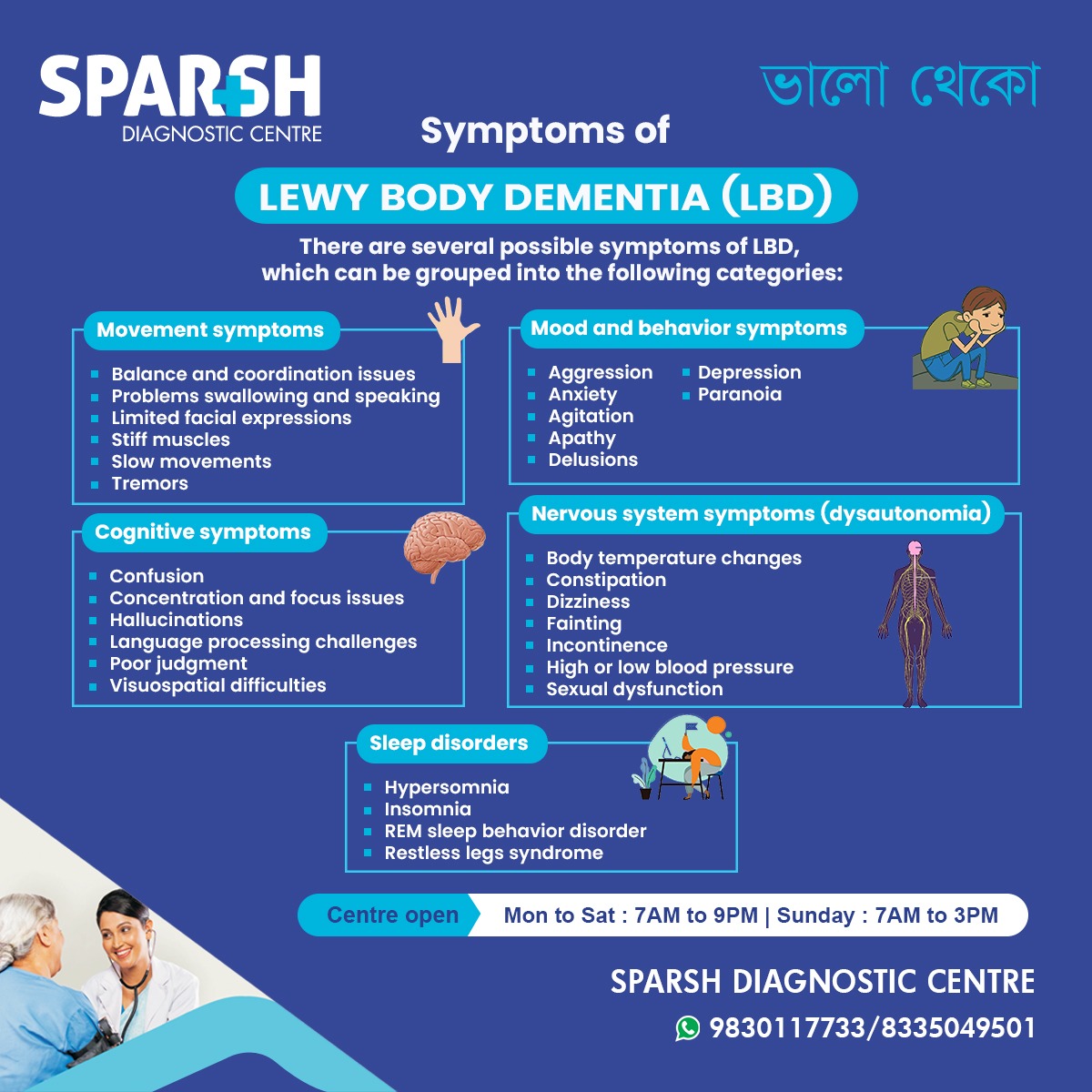
Symptoms can be grouped into five major categories:
1. Cognitive Symptoms
Cognitive changes are a core feature of LBD.
Common cognitive symptoms include:
Confusion
Poor concentration and focus
Fluctuating alertness
Hallucinations (especially visual)
Poor judgment
Language processing challenges
Visuospatial difficulties (difficulty judging distances)
Memory problems (less severe initially than Alzheimer’s)
One hallmark feature of LBD is fluctuating cognition — patients may appear alert and coherent one day and confused the next.
2. Movement Symptoms (Parkinsonism)
Many individuals with LBD develop movement-related symptoms similar to Parkinson’s disease.
These include:
Stiff muscles
Tremors
Balance and coordination problems
Frequent falls
Reduced facial expressions (masked face)
Difficulty swallowing or speaking
Movement symptoms may appear early or later depending on the subtype of LBD.
3. Mood and Behavioral Symptoms
Psychiatric symptoms are extremely common in Lewy Body Dementia.
These may include:
Agitation
Aggression
Apathy
Delusions
Paranoia
Visual hallucinations are especially characteristic of LBD. Patients may see people, animals, or objects that are not there.
4. Nervous System Symptoms (Dysautonomia)
Lewy Body Dementia often affects the autonomic nervous system, which controls automatic body functions.
Symptoms include:
Fainting
Incontinence
Body temperature fluctuations
Sexual dysfunction
These symptoms occur due to damage in areas regulating automatic body processes.
5. Sleep Disorders
Sleep disturbances are common and may even appear years before cognitive symptoms.
Sleep-related issues include:
REM Sleep Behavior Disorder (acting out dreams)
Excessive daytime sleepiness (hypersomnia)
REM sleep behavior disorder is considered an early warning sign of LBD.
Early Signs of Lewy Body Dementia
Early symptoms often include:
Mild confusion
Visual hallucinations
Changes in sleep patterns
Subtle movement stiffness
Mood changes
Unlike Alzheimer’s disease, memory loss may not be the first noticeable symptom.
How is Lewy Body Dementia Diagnosed?
There is no single test to diagnose LBD. Diagnosis is based on clinical evaluation.
Diagnostic Process Includes:
Detailed medical history
Neurological examination
Cognitive testing
Sleep studies (if REM disorder suspected)
Blood tests to rule out other causes
Doctors look for key features:
Fluctuating cognition
Recurrent visual hallucinations
Parkinsonism
REM sleep behavior disorder
Early diagnosis is crucial because certain medications used for other dementias can worsen LBD symptoms.
Treatment of Lewy Body Dementia
There is currently no cure for Lewy Body Dementia. Treatment focuses on managing symptoms and improving quality of life.
1. Medications for Cognitive Symptoms
Cholinesterase inhibitors (e.g., donepezil, rivastigmine)
May improve memory and reduce hallucinations
2. Medications for Movement Symptoms
Levodopa may help stiffness and slow movement
However, it may worsen hallucinations in some cases
3. Managing Psychiatric Symptoms
Extreme caution is required with antipsychotics.
People with LBD are highly sensitive to traditional antipsychotic medications, which can cause:
Severe rigidity
Confusion
Life-threatening reactions
Safer alternatives may be used under specialist supervision.
4. Treating Sleep Disorders
Melatonin
Low-dose clonazepam
Sleep hygiene improvements
5. Lifestyle and Supportive Therapy
Non-drug interventions play a critical role:
Physical therapy
Occupational therapy
Speech therapy
Cognitive stimulation
Structured routines
Caregiver education
Life Expectancy and Prognosis
Lewy Body Dementia is progressive and currently incurable.
Average life expectancy after diagnosis ranges from:
5 to 8 years, though some individuals may live longer.
Complications often include:
Falls
Infections
Early diagnosis and comprehensive care can significantly improve quality of life.
Lewy Body Dementia vs Alzheimer’s Disease
| Feature | Lewy Body Dementia | Alzheimer’s Disease |
|---|---|---|
| Memory Loss | Mild early | Severe early |
| Hallucinations | Common early | Rare early |
| Movement Issues | Common | Rare early |
| Fluctuating cognition | Very common | Less common |
| REM sleep disorder | Common | Rare |
Correct differentiation is important for proper treatment.
Caring for Someone with Lewy Body Dementia
Caregiving can be challenging due to unpredictable symptoms.
Helpful strategies include:
Maintaining consistent routines
Reducing clutter to prevent falls
Monitoring blood pressure changes
Avoiding overstimulation
Joining support groups
Seeking professional home care when needed
Caregiver burnout is common — emotional and community support is essential.
When to See a Doctor
Seek medical evaluation if someone experiences:
Persistent hallucinations
Sudden confusion episodes
Parkinson-like symptoms
Severe sleep disturbances
Repeated fainting spells
Early intervention can slow progression and improve symptom management.
Frequently Asked Questions (FAQ)
1. Is Lewy Body Dementia hereditary?
Most cases are not strongly hereditary, though a family history of Parkinson’s disease may slightly increase risk.
2. What is the first symptom of Lewy Body Dementia?
Visual hallucinations, REM sleep behavior disorder, or fluctuating cognition are often early signs.
3. Can LBD be cured?
No. There is currently no cure, but treatments can manage symptoms.
4. How is LBD different from Parkinson’s disease?
In Parkinson’s disease, movement problems appear first. In Dementia with Lewy Bodies, cognitive symptoms appear first.
5. Do patients with LBD know they are hallucinating?
Some individuals retain insight early on and recognize hallucinations are not real, but this may diminish over time.
6. Why are antipsychotics dangerous in LBD?
Many LBD patients are highly sensitive to antipsychotic medications, which can cause severe worsening of symptoms or life-threatening reactions.
7. What triggers worsening symptoms?
Infections, dehydration, stress, sleep deprivation, and certain medications can worsen symptoms.
8. How common is LBD?
It accounts for approximately 10–15% of all dementia cases.
Lewy Body Dementia is a complex and often misunderstood neurological disorder that affects cognition, movement, mood, and sleep. Because symptoms overlap with Alzheimer’s disease and Parkinson’s disease, accurate diagnosis is essential for effective treatment.
While there is no cure yet, early detection, appropriate medication management, supportive therapies, and caregiver education can significantly improve quality of life.
If you or a loved one notice symptoms suggestive of LBD, consult a neurologist or dementia specialist for proper evaluation.
#BhaloTheko
Disclaimer:
No content on this site, regardless of date, should ever be used as a substitute for direct medical advice from your doctor or other qualified clinician.

Sparsh Diagnostic Centre Doctor List


[…] around 30–40% of PAF patients may later develop Parkinson’s disease, Lewy body dementia, or multiple system atrophy, indicating shared underlying […]