Every child learns at their own pace, but when persistent struggles with reading, writing, math, or understanding instructions go beyond typical learning difficulties, they may be signs of Specific Learning Disabilities (SLDs). These are neurological conditions that affect how the brain processes information, making it challenging to acquire certain academic skills despite normal intelligence and effort.
Specific Learning Disabilities are not a reflection of a child’s intelligence or motivation. In fact, many individuals with learning disabilities are highly creative, intelligent, and capable — they simply process information differently. Early recognition, proper diagnosis, and tailored interventions can make a significant difference in helping children and adults with learning disabilities thrive.
This article explores the types, symptoms, causes, diagnosis, and management strategies for specific learning disabilities, along with frequently asked questions to guide parents, teachers, and caregivers.
What Are Specific Learning Disabilities?
A Specific Learning Disability (SLD) is a neurodevelopmental disorder that affects one or more basic psychological processes involved in understanding or using spoken or written language. This can impact reading, writing, spelling, math, and comprehension skills.
According to the Individuals with Disabilities Education Act (IDEA), SLD is among the most commonly identified categories of disability in children. Importantly, SLDs are not caused by low intelligence, poor teaching, or lack of effort, but rather differences in how the brain processes information.
Types of Specific Learning Disabilities
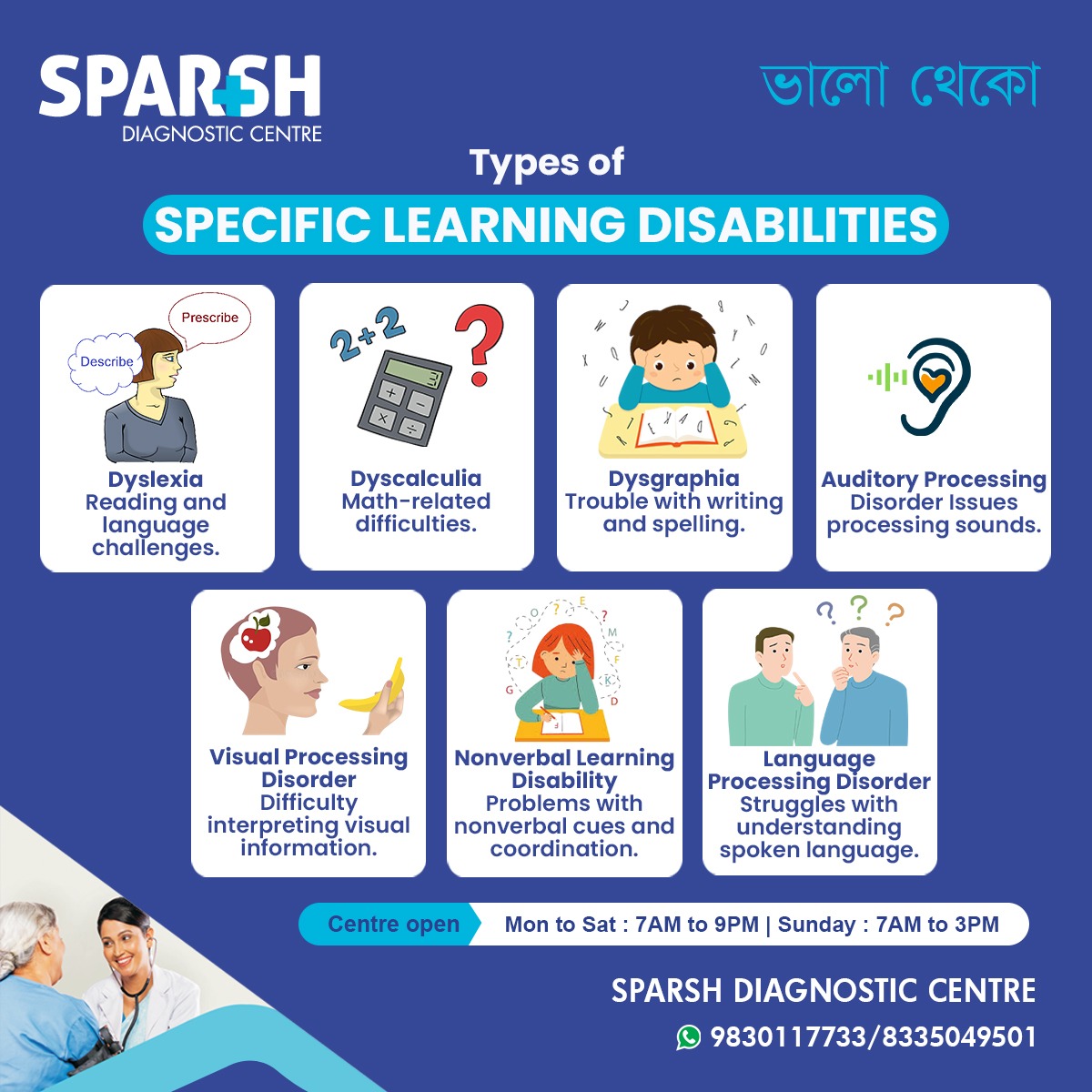
There are several types of SLDs, each affecting a different aspect of learning.
1. Dyslexia
Definition: A reading disorder that makes it difficult to recognize words, spell correctly, and decode language.
Symptoms:
Slow reading speed
Difficulty recognizing sight words
Trouble with spelling and phonics
Poor comprehension despite effort
Impact: Students with dyslexia often find reading stressful, which can affect self-esteem and academic performance.
2. Dyscalculia
Definition: A math-related learning disability that affects a child’s ability to understand numbers and mathematical concepts.
Symptoms:
Difficulty understanding number sense
Trouble memorizing math facts
Struggles with sequencing steps in math problems
Poor spatial reasoning with shapes and patterns
Impact: Dyscalculia can make everyday tasks like handling money or telling time challenging.
3. Dysgraphia
Definition: A writing disorder that affects handwriting, spelling, and organizing written thoughts.
Symptoms:
Poor handwriting and letter spacing
Frequent spelling errors
Difficulty expressing thoughts on paper
Trouble organizing written work
Impact: Dysgraphia often leads to frustration, as students may know the answers but struggle to write them down clearly.
4. Auditory Processing Disorder (APD)
Definition: A condition where the brain struggles to interpret and process sounds, even though hearing is normal.
Symptoms:
Difficulty distinguishing between similar sounds
Trouble following verbal instructions
Struggles in noisy environments
Misunderstanding spoken language
Impact: APD can lead to communication difficulties and affect reading and spelling.
5. Visual Processing Disorder
Definition: Difficulty interpreting visual information, such as letters, numbers, and shapes.
Symptoms:
Confusing similar-looking letters or words
Trouble with reading comprehension
Difficulty copying from a board
Poor hand-eye coordination
Impact: Visual processing problems make reading and writing harder, affecting school performance.
6. Nonverbal Learning Disability (NVLD)
Definition: A disorder affecting nonverbal skills such as body language, spatial awareness, and coordination.
Symptoms:
Difficulty interpreting facial expressions and tone of voice
Trouble with motor coordination
Weak organizational and problem-solving skills
Strong verbal abilities but weak nonverbal understanding
Impact: NVLD often affects social interactions and adaptability in daily life.
7. Language Processing Disorder (LPD)
Definition: A type of auditory processing disorder that specifically impacts the ability to understand and use language.
Symptoms:
Difficulty comprehending spoken language
Trouble finding the right words
Struggles with sequencing thoughts verbally
Misinterpreting questions or instructions
Impact: LPD can affect both academic performance and communication skills.
Causes and Risk Factors
The exact causes of Specific Learning Disabilities are not fully understood, but several factors may contribute:
Genetics: Learning disabilities often run in families.
Neurological Differences: Structural and functional variations in the brain affect how information is processed.
Prenatal and Perinatal Factors: Premature birth, low birth weight, maternal infections, or substance exposure during pregnancy.
Environmental Factors: Early childhood trauma, malnutrition, or exposure to toxins.
Signs and Symptoms of Specific Learning Disabilities
While symptoms vary depending on the type of SLD, some general warning signs include:
Delayed speech and language development
Difficulty learning letters, numbers, and sounds
Poor memory and concentration
Trouble following multi-step directions
Frequent spelling or calculation errors
Avoidance of reading, writing, or math tasks
Behavioral changes such as frustration, withdrawal, or low self-esteem
Diagnosis of Specific Learning Disabilities
Diagnosis involves a comprehensive evaluation conducted by professionals such as psychologists, special educators, or neurologists.
Key Steps in Diagnosis:
Developmental and Educational History: Understanding milestones, school performance, and family history.
Standardized Tests: Assessments in reading, writing, math, and cognitive processing.
Observation: Monitoring classroom behavior and learning styles.
Exclusion of Other Factors: Ruling out vision, hearing, or emotional issues.
Early diagnosis is crucial, as timely intervention helps children develop coping strategies and achieve success.
Management and Support Strategies
While there is no cure for Specific Learning Disabilities, various interventions and strategies can help children and adults manage challenges effectively.
1. Educational Interventions
Individualized Education Programs (IEPs): Customized learning plans tailored to each child’s needs.
Specialized Instruction: Multisensory teaching methods for reading, writing, and math.
Assistive Technology: Tools like speech-to-text software, audiobooks, and calculators.
2. Therapies
Speech and Language Therapy: For communication and comprehension difficulties.
Occupational Therapy: Helps improve handwriting, motor coordination, and organizational skills.
Behavioral Therapy: Supports emotional well-being and coping mechanisms.
3. Home and School Support
Encouraging a positive learning environment
Breaking tasks into smaller, manageable steps
Providing consistent routines and schedules
Fostering open communication between teachers, parents, and students
4. Lifestyle and Emotional Support
Building self-esteem through praise and encouragement
Stress management through mindfulness and relaxation techniques
Encouraging hobbies and talents beyond academics
Long-Term Outlook
With proper support, individuals with Specific Learning Disabilities can achieve academic success, build strong careers, and lead fulfilling lives. Many well-known personalities — from entrepreneurs to artists — have learning disabilities, yet their unique strengths allowed them to excel.
The key lies in early intervention, tailored education, and emotional support to help individuals unlock their true potential.
Frequently Asked Questions (FAQ)
1. Are Specific Learning Disabilities the same as intellectual disabilities?
No. Specific Learning Disabilities affect particular skills such as reading, writing, or math, while overall intelligence remains average or above average.
2. Can learning disabilities be cured?
There is no cure, but with early intervention, proper teaching methods, and supportive environments, children can overcome challenges and succeed academically and socially.
3. At what age can learning disabilities be diagnosed?
SLDs are often identified once formal schooling begins, typically between ages 5 and 7, but early signs may appear in preschool years.
4. Do children outgrow learning disabilities?
Learning disabilities persist into adulthood, but many individuals learn strategies and use tools that help them manage effectively.
5. Can adults have undiagnosed learning disabilities?
Yes. Many adults discover their SLDs later in life when persistent academic or workplace struggles lead them to seek evaluation.
6. What role do parents play in managing SLDs?
Parents play a crucial role by supporting learning at home, collaborating with teachers, and fostering self-confidence in their child.
7. Are SLDs linked to ADHD?
Yes. Learning disabilities often co-occur with conditions like ADHD, anxiety, or speech-language disorders, requiring comprehensive management.
8. How can teachers support students with learning disabilities?
Teachers can use multisensory teaching methods, provide extra time for assignments, break instructions into simpler steps, and encourage peer support.
Specific Learning Disabilities are not limitations but differences in how the brain processes information. With the right diagnosis, tailored educational strategies, and emotional support, children and adults with SLDs can thrive academically, socially, and professionally.
Awareness and early intervention are essential to ensure that every child gets the opportunity to shine, regardless of learning challenges. At Sparsh Diagnostic Centre, we emphasize the importance of timely evaluation and support to help children achieve their fullest potential.
#BhaloTheko
Disclaimer:
No content on this site, regardless of date, should ever be used as a substitute for direct medical advice from your doctor or other qualified clinician.