

Life-changing events such as accidents, abuse, disasters, or violence can leave invisible scars that extend beyond physical wounds. For many, the psychological impact of trauma lingers, leading to a mental health condition known as Post-Traumatic Stress Disorder (PTSD).
PTSD is more than just stress after a traumatic experience. It can disrupt sleep, cause intense flashbacks, trigger emotional numbness, and interfere with daily life and relationships. While commonly associated with soldiers and combat veterans, PTSD affects people from all walks of life — including children, adults, and the elderly.
This detailed guide explores PTSD in depth, covering its causes, symptoms, risk factors, complications, diagnosis, treatment, and coping strategies.
What is PTSD?
Post-Traumatic Stress Disorder (PTSD) is a mental health condition that develops after experiencing or witnessing a traumatic event. Unlike normal stress reactions that fade over time, PTSD symptoms last for weeks, months, or even years, often intensifying if left untreated.
According to the American Psychiatric Association (APA), PTSD is classified as a trauma- and stressor-related disorder. Its symptoms interfere with work, relationships, and overall well-being, making early recognition and treatment essential.
Causes of PTSD
PTSD arises due to an interaction between trauma exposure, brain function, and individual vulnerability.
Common Causes:
Combat and War: Exposure to violence, injury, or death in military service.
Accidents: Serious car crashes, workplace injuries, or medical emergencies.
Abuse: Physical, sexual, or emotional abuse, especially repeated trauma.
Natural Disasters: Earthquakes, floods, hurricanes, or fires.
Violence or Crime: Assaults, robberies, shootings, or witnessing violence.
Medical Trauma: Intensive care stays, surgeries, or life-threatening illnesses.
Risk Factors for PTSD
Not everyone exposed to trauma develops PTSD. Certain factors increase vulnerability:
Biological Factors: Family history of anxiety, depression, or PTSD.
Gender: Women are more likely than men to develop PTSD.
Childhood Trauma: Neglect, abuse, or unstable environments increase long-term risk.
Severity of Trauma: The more severe or prolonged the event, the higher the risk.
Lack of Support: Absence of friends, family, or community after trauma.
Occupational Hazards: First responders, soldiers, and healthcare workers face higher risks.
Symptoms of PTSD
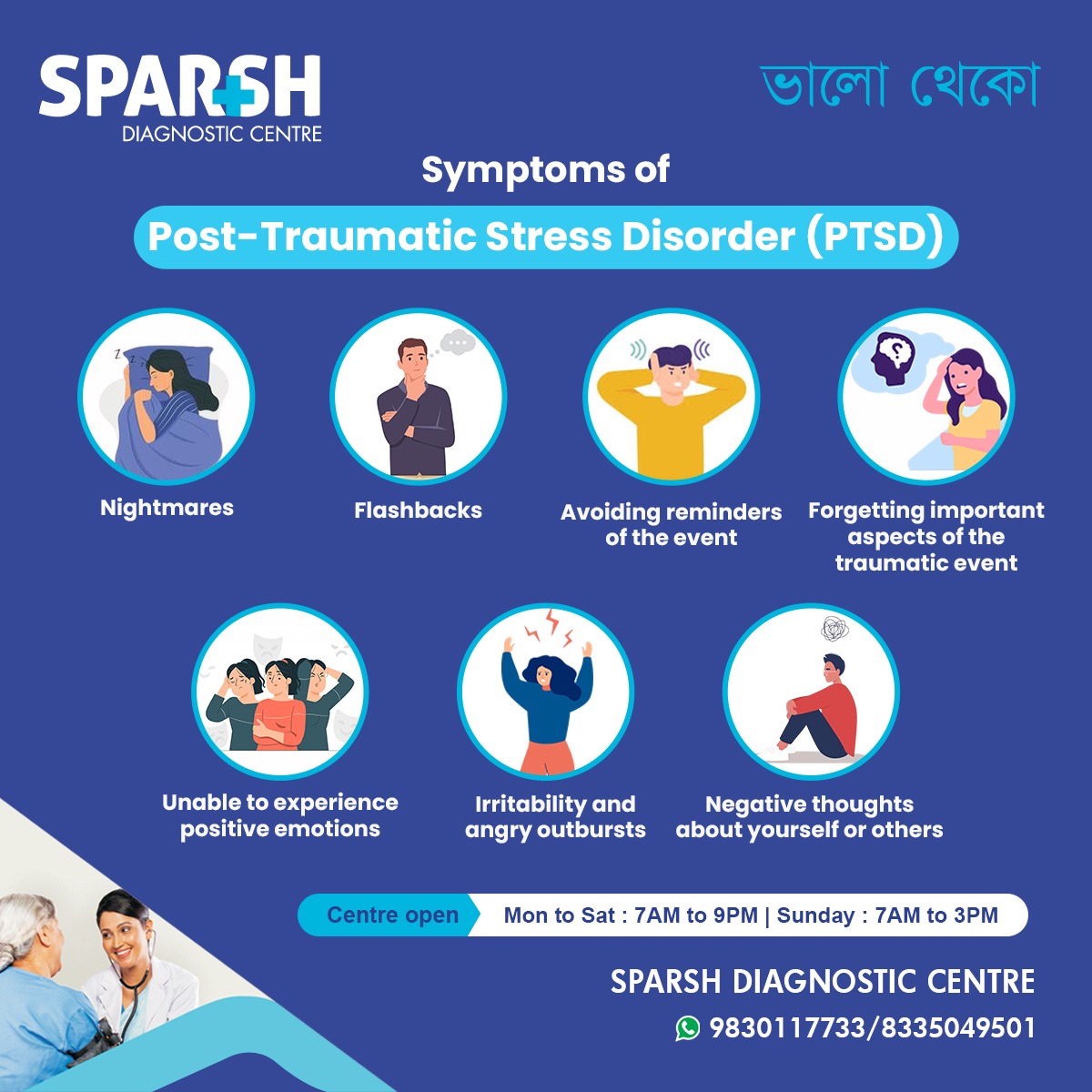
PTSD symptoms typically fall into four main categories, but the Sparsh Diagnostic Centre infographic highlights some of the most common ones:
1. Intrusive Symptoms
Nightmares → Disturbing dreams related to trauma.
Flashbacks → Reliving the event as if it’s happening again.
Intense distress when reminded of the trauma.
2. Avoidance Symptoms
Avoiding reminders → Staying away from places, people, or activities linked to trauma.
Refusing to talk or think about the traumatic event.
3. Cognitive and Emotional Symptoms
Forgetting aspects of the trauma → Memory gaps about the event.
Negative thoughts about yourself or others → Feelings of guilt, blame, or mistrust.
Unable to experience positive emotions → Feeling emotionally numb or detached.
4. Hyperarousal Symptoms
Irritability and angry outbursts → Frequent mood swings.
Difficulty sleeping or concentrating.
Feeling “on edge” (hypervigilance).
Children with PTSD may show different symptoms such as bedwetting, clinginess, or reenacting trauma in play.
Complications of PTSD
If left untreated, PTSD can lead to:
Chronic depression or anxiety
Substance abuse (alcohol, drugs, medications)
Strained relationships and social isolation
Physical health problems like high blood pressure or chronic pain
Suicidal thoughts or behaviors
Diagnosis of PTSD
A mental health professional diagnoses PTSD through interviews, questionnaires, and DSM-5 criteria.
Diagnostic Criteria:
Exposure to trauma (direct or indirect)
At least one intrusive symptom
Persistent avoidance of trauma triggers
Negative changes in mood or cognition
Increased arousal or reactivity
Symptoms lasting more than one month
Significant distress or impaired functioning
Common Screening Tools:
PTSD Checklist for DSM-5 (PCL-5)
Clinician-Administered PTSD Scale (CAPS-5)
Treatment of PTSD
Treatment combines therapy, medication, and lifestyle changes.
1. Psychotherapy
Cognitive Behavioral Therapy (CBT): Helps challenge negative thinking.
Exposure Therapy: Safely confronts trauma-related cues.
Eye Movement Desensitization and Reprocessing (EMDR): Uses eye movements with trauma recall to reduce distress.
Group Therapy: Provides shared healing experiences.
Family Therapy: Strengthens family understanding and support.
2. Medications
Antidepressants (SSRIs & SNRIs): Sertraline, paroxetine, fluoxetine, venlafaxine.
Anti-anxiety medications: For severe anxiety or sleep problems (short-term use).
Prazosin: May help reduce nightmares.
3. Lifestyle and Self-Care
Regular exercise to reduce stress hormones.
Avoiding alcohol, caffeine, and substance use.
Building a strong support network.
Coping Strategies for Living with PTSD
Grounding Techniques: Focus on present reality during flashbacks.
Journaling: Helps identify triggers and emotions.
Relaxation Practices: Yoga, meditation, or art therapy.
Social Connections: Support groups and trusted relationships.
Professional Guidance: Early treatment reduces severity.
Prevention of PTSD
Not all trauma leads to PTSD, but prevention strategies help reduce risk:
Early psychological support after trauma
Encouraging open discussions about mental health
Building emotional resilience and coping skills
Trauma-informed care in hospitals and workplaces
Living with PTSD
PTSD can be overwhelming, but recovery is possible. With early diagnosis, proper treatment, and consistent support, individuals can regain control over their lives. Awareness campaigns, like those from Sparsh Diagnostic Centre, play a vital role in educating the public and reducing stigma around mental health conditions.
Frequently Asked Questions (FAQ) about PTSD
1. What are the early symptoms of PTSD?
Nightmares, flashbacks, irritability, and avoiding trauma reminders are some of the first warning signs.
2. Can PTSD be cured completely?
PTSD may not disappear entirely for everyone, but with therapy and treatment, symptoms can be managed effectively. Many people recover and lead fulfilling lives.
3. Who is at higher risk for PTSD?
Individuals exposed to severe or repeated trauma, women, people with childhood trauma, and those lacking social support are at higher risk.
4. Can children have PTSD?
Yes, children can develop PTSD. Symptoms may include clinginess, nightmares, or reenacting trauma in play.
5. How long does PTSD last?
The duration varies. Some recover in months, while others may struggle for years without treatment.
6. What is the best treatment for PTSD?
A combination of psychotherapy (such as CBT or EMDR), medications, and lifestyle changes provides the best results.
7. Can lifestyle changes help manage PTSD?
Yes, regular exercise, mindfulness, and strong social support can improve recovery, though professional treatment is often necessary.
Post-Traumatic Stress Disorder (PTSD) is a serious but treatable mental health condition. Its symptoms — nightmares, flashbacks, avoidance, irritability, and negative thoughts — can disrupt daily life if ignored. With timely diagnosis, therapy, medication, and healthy coping strategies, individuals can manage PTSD and reclaim a sense of balance.
Raising awareness and reducing stigma are crucial in encouraging people to seek help. If you or someone you know shows symptoms of PTSD, don’t hesitate to reach out for professional support.
To consult a psychiatrist at Sparsh Diagnostic Centre, call our helpline number 9830117733.
#BhaloTheko
Disclaimer:
No content on this site, regardless of date, should ever be used as a substitute for direct medical advice from your doctor or other qualified clinician.



[…] PTSD […]
[…] Health Conditions: Depression, anxiety, and post-traumatic stress disorder (PTSD) are closely linked to sleep disturbances, including insomnia. The emotional and psychological toll […]
[…] affects women and has long-term effects on physical and mental health, including chronic pain, PTSD, and […]
[…] Emotional Distress: Survivors may experience anxiety, depression, and post-traumatic stress disorder (PTSD). […]
[…] May help manage anxiety, depression, and post-traumatic stress disorder (PTSD). […]
[…] 5. Post-Traumatic Stress Disorder (PTSD) […]