


Pregnancy brings excitement, but it also brings a long list of questions. What should you eat? Which vitamins do you need? When should you see an obstetrician? Which scans and blood tests are important? Is abdominal pain at 6 weeks normal? How many prenatal visits will you need?
This is where prenatal counselling can make pregnancy much easier to understand and manage.
Prenatal counselling, also called antenatal counselling, is more than simply checking whether the baby is growing normally. It gives the mother and family an opportunity to discuss nutrition, supplements, medications, medical conditions, vaccinations, screening tests, lifestyle, emotional well-being, warning symptoms and preparation for childbirth.
The American College of Obstetricians and Gynecologists (ACOG) describes prenatal care as evidence-based care involving screening, medical care, anticipatory guidance and support. Its newer 2025 guidance also emphasizes that prenatal care should be tailored to each person’s medical and social needs rather than following exactly the same schedule for everyone.
What is prenatal counselling and what does it do?
Prenatal counselling is the process of providing medical information, practical guidance and emotional support during pregnancy. It can begin as soon as pregnancy is confirmed and continues throughout the pregnancy.
Ideally, some aspects of pregnancy counselling can even begin before conception. Preconception counselling allows couples to address existing medical conditions, medications, nutritional deficiencies, vaccinations and lifestyle factors before pregnancy begins.
Once pregnancy occurs, prenatal counselling generally covers:
- Confirmation and dating of pregnancy
- Medical, surgical and family history
- Previous pregnancy and childbirth history
- Current medications and supplements
- Nutrition and healthy weight gain
- Folic acid and other prenatal supplements
- Thyroid and other relevant health conditions
- Blood pressure and other routine assessments
- Recommended blood and urine tests
- Ultrasound and pregnancy screening
- Vaccinations
- Exercise and physical activity
- Food and medication safety
- Mental health and emotional well-being
- Warning signs that require urgent medical attention
- Preparation for labour and delivery
- Breastfeeding and postpartum planning
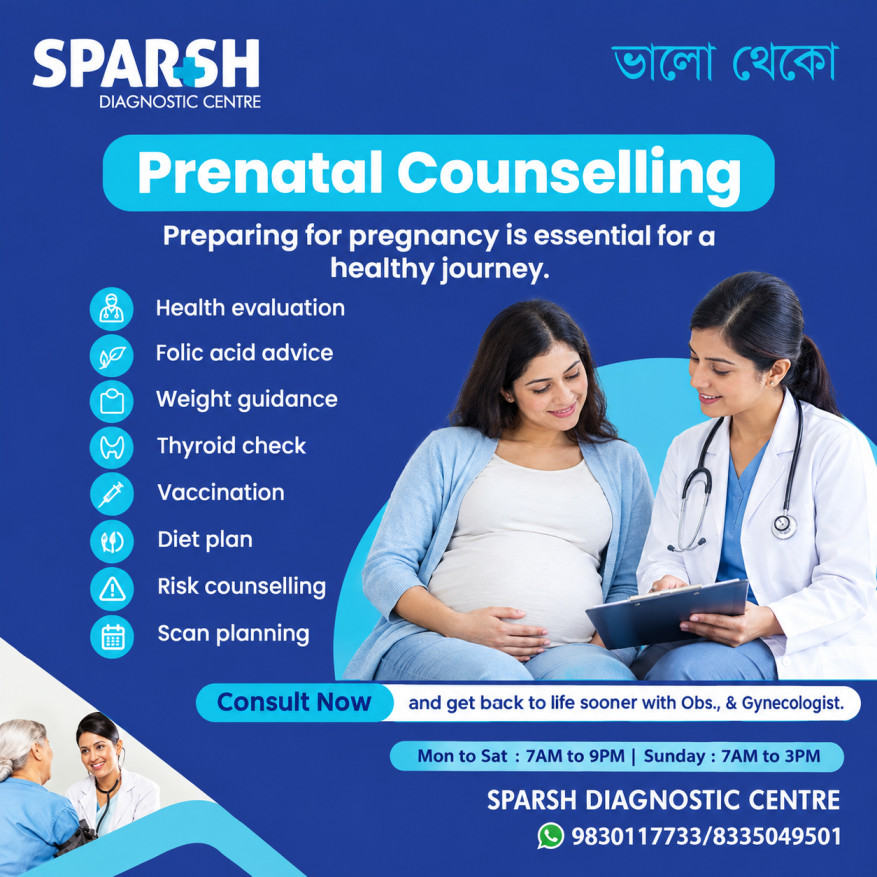
ACOG’s 2025 guidance recommends a comprehensive prenatal needs assessment, ideally before 10 weeks of pregnancy or when the pregnant person first presents for care, followed by a care plan based on individual needs.
Prenatal counselling is therefore not simply about “checking the baby”. It is about looking after the mother and baby as a unit and identifying potential problems early.
Why is prenatal counselling important?
Many pregnancy-related problems can be managed more effectively when they are identified early.
For example, an initial assessment may identify anaemia, thyroid disease, diabetes, high blood pressure, infections, medication-related concerns or nutritional deficiencies. Routine prenatal testing can also identify conditions that may affect the pregnancy and allow appropriate treatment or follow-up.
Counselling also helps parents understand what is normal.
Mild nausea, tiredness, breast tenderness, increased urination and some mild abdominal discomfort can occur during early pregnancy. At the same time, significant bleeding, severe abdominal pain, fainting or severe vomiting require medical assessment.
Knowing the difference can prevent unnecessary anxiety while ensuring that genuine warning signs are not ignored.
What happens during the first prenatal counselling visit?
The first appointment is usually more detailed than a routine follow-up visit.
Your obstetrician-gynaecologist may ask about:
- The first day of your last menstrual period
- Previous pregnancies and deliveries
- Previous miscarriages or pregnancy complications
- Existing medical conditions
- Previous surgeries
- Family history
- Current medications
- Allergies
- Lifestyle habits
- Diet and nutritional intake
- Previous investigations
- Symptoms you are experiencing
Depending on your circumstances, your doctor may recommend blood pressure measurement, physical examination, blood and urine tests and an ultrasound.
Routine early pregnancy investigations may include a complete blood count, blood group and Rh factor, urinalysis and urine culture. Screening for infections such as hepatitis B, hepatitis C, HIV and other sexually transmitted infections is also part of routine pregnancy care.
The exact tests, however, depend on your health history, symptoms, age, previous pregnancy history and your doctor’s assessment.
What are the potential complications at 6 weeks of pregnancy?
Six weeks is still very early in pregnancy. Many women have completely normal pregnancies at this stage, but it is also a period when certain early pregnancy complications can occur.
Early pregnancy loss
Miscarriage, also called early pregnancy loss, means loss of pregnancy before 13 completed weeks. ACOG states that early pregnancy loss occurs in about 10% of known pregnancies.
Possible symptoms include:
- Vaginal spotting or bleeding
- Cramping
- Passage of tissue
- Fluid coming from the vagina
Importantly, light bleeding in early pregnancy does not automatically mean miscarriage. Bleeding can occur for several reasons, and evaluation may be required to determine the cause.
Ectopic pregnancy
An ectopic pregnancy occurs when the pregnancy implants outside the uterus, most commonly in a fallopian tube.
Symptoms can include:
- Abnormal vaginal bleeding
- Pelvic or abdominal pain
- One-sided pelvic cramping
- Lower back pain
More serious symptoms can include sudden severe abdominal or pelvic pain, shoulder pain, weakness, dizziness or fainting. These symptoms can indicate internal bleeding from a ruptured ectopic pregnancy and require emergency medical attention.
Severe nausea and vomiting
Nausea and vomiting are common during early pregnancy and often begin before 9 weeks. However, severe vomiting can sometimes develop into hyperemesis gravidarum, which may cause dehydration and weight loss.
Seek medical advice if you cannot keep fluids down, are passing very little urine, have dark urine, feel dizzy or faint, or are losing weight.
Other concerns
Depending on the individual, doctors may also evaluate for infections, thyroid problems, abnormal blood sugar, anaemia or other medical conditions that could affect pregnancy.
The important point is that not every symptom at 6 weeks represents a complication. A prenatal consultation helps determine which symptoms are expected and which need investigation.
What are the ACOG prenatal care guidelines?
ACOG’s prenatal care recommendations have evolved.
In 2025, ACOG published its Clinical Consensus on Tailored Prenatal Care Delivery, emphasizing individualized, patient-centred care. Instead of assuming that every pregnancy requires exactly the same number and type of appointments, clinicians can consider medical risk, social circumstances, patient preferences and the services that need to be completed.
The guidance recommends:
- An early comprehensive prenatal assessment.
- Identification of medical, social and structural factors affecting pregnancy.
- Shared decision-making between the patient and healthcare professional.
- Individualized visit frequency where appropriate.
- Use of telemedicine or other care modalities when they can safely provide required services.
- Continued completion of evidence-based screening, monitoring and treatment.
For average-risk pregnancies, ACOG notes that evidence supports targeted schedules involving approximately 6–10 visits, with its provider FAQ specifically noting support for 8–9 visits in people without chronic or pregnancy-related conditions. Higher-risk pregnancies may require substantially more frequent monitoring.
This is an important update because an older model commonly used 12–14 in-person visits for everyone. ACOG’s newer approach does not mean receiving less care; rather, it means tailoring the way care is delivered to the individual’s needs.
How many prenatal visits are recommended?
There is no single number that applies to every pregnant woman.
The number of visits depends on factors such as:
- Age
- Previous pregnancy history
- Blood pressure
- Diabetes
- Thyroid disease
- Anaemia
- Multiple pregnancy
- Previous pregnancy complications
- Current pregnancy complications
- Fetal growth
- Other medical conditions
For an uncomplicated, average-risk pregnancy, ACOG’s current guidance supports an individualized schedule, with evidence supporting approximately 6–10 targeted visits and its FAQ identifying 8–9 visits as a supported schedule.
WHO has a different global antenatal-care framework and recommends at least eight contacts during pregnancy, beginning in the first trimester.
Therefore, rather than counting appointments, the focus should be on receiving the right care at the right time.
What prenatal vitamins do OB/GYNs recommend?
There is no single prenatal vitamin brand that every obstetrician-gynaecologist recommends.
Instead, doctors generally look at whether the prenatal supplement provides appropriate amounts of important nutrients and whether the formulation suits the individual’s needs.
Folic acid
Folic acid is particularly important before conception and during early pregnancy because it helps reduce the risk of neural tube defects.
ACOG recommends a daily prenatal vitamin containing at least 400 micrograms of folic acid, beginning at least one month before pregnancy when possible and continuing during the first 12 weeks. Total folate needs during pregnancy are higher, at about 600 micrograms per day. Some women at increased risk of neural tube defects may be prescribed a higher dose under medical supervision.
Iron
Pregnancy increases the body’s need for iron because more blood is produced to support the mother and developing baby.
The recommended dietary intake for pregnancy is approximately 27 mg of iron per day, although supplementation may need to be adjusted if a woman has iron deficiency or anaemia.
Iodine
Iodine is important for thyroid function and fetal brain development. ACOG lists a pregnancy requirement of approximately 220 micrograms per day.
Vitamin D
Vitamin D contributes to healthy bone development and other functions during pregnancy. ACOG lists 600 IU (15 micrograms) per day as the recommended dietary intake.
Vitamin B12
Vitamin B12 is particularly important for people who consume little or no animal-derived food. ACOG lists a pregnancy requirement of 2.6 micrograms per day.
What are the top 5 prenatal vitamins?
If by “top 5 prenatal vitamins” you mean the five most important nutrients to look for in a prenatal supplement, they include:
- Folic acid – important for neural tube development.
- Iron – supports increased blood production.
- Iodine – supports thyroid function and fetal brain development.
- Vitamin D – supports fetal bones and overall health.
- Vitamin B12 – important for the nervous system and red blood-cell formation.
Choline is another important nutrient during pregnancy, with ACOG listing a requirement of 450 mg per day. However, many prenatal products do not contain the full amount, so dietary intake may also matter.
There is no universally established “top five” list of prenatal brands. The appropriate supplement depends on the mother’s diet, blood tests, medical history and pregnancy needs.
What should you avoid in prenatal vitamins?
More is not necessarily better when it comes to supplements during pregnancy.
Avoid taking multiple prenatal products or doubling the recommended dose unless your doctor specifically tells you to do so. Excessive amounts of certain nutrients, including vitamin A, can be harmful during pregnancy.
You should also be cautious about:
- High-dose vitamin A, particularly preformed vitamin A
- Unnecessary megadoses of individual vitamins
- Herbal blends without established pregnancy safety
- Duplicate supplements taken alongside a prenatal vitamin
- Unverified “natural” pregnancy supplements
- Products that do not clearly list their ingredients and doses
Gummy prenatal vitamins can also have an important limitation: some do not contain enough iron compared with standard prenatal tablets. ACOG advises discussing whether additional iron is needed with your ob-gyn.
Always tell your doctor about every vitamin, supplement, herbal product and medication you are taking.
What should you avoid during pregnancy?
Prenatal counselling also covers substances, foods and activities that may pose risks.
Alcohol, tobacco and recreational drugs
ACOG recommends avoiding alcohol, nicotine products, marijuana and illegal drugs during pregnancy because they can adversely affect pregnancy and fetal development.
Excess caffeine
ACOG recommends limiting caffeine to less than 200 mg per day during pregnancy. Remember that caffeine can come from coffee, tea, chocolate, energy drinks and some soft drinks.
Raw and undercooked foods
Raw or undercooked meat, eggs, poultry and seafood can increase the risk of foodborne infections. Pregnant women should also avoid unpasteurized milk and certain unpasteurized dairy products.
High-mercury fish
Some fish contain high levels of mercury. ACOG advises avoiding fish such as shark, swordfish, king mackerel, marlin, orange roughy, tilefish and bigeye tuna during pregnancy.
This does not mean that all fish should be avoided. Fish can provide valuable nutrients during pregnancy, and many varieties are considered safe when properly cooked.
Medicines without medical advice
Do not start, stop or change prescription or over-the-counter medication simply because you are pregnant. Some medicines are safe, some require dose adjustments and others should be avoided.
Discuss medications with your obstetrician, including medicines you were taking before pregnancy.
Which trimester are prenatals most important?
Prenatal care is important during all three trimesters. There isn’t one trimester in which prenatal care suddenly becomes unnecessary or dramatically more important than the others.
However, the first trimester is particularly important for early assessment and planning because major developmental processes are taking place and some pregnancy complications need to be identified early.
An early prenatal assessment can help with:
- Confirming and dating the pregnancy
- Identifying ectopic pregnancy when suspected
- Reviewing medications and exposures
- Starting folic acid and appropriate supplementation
- Identifying medical conditions
- Arranging early laboratory testing
- Planning appropriate screening
- Addressing lifestyle and nutritional concerns
ACOG recommends an initial comprehensive prenatal needs assessment ideally before 10 weeks of gestation or soon after pregnancy is discovered.
The second trimester remains important for fetal growth and structural screening, while the third trimester focuses increasingly on maternal health, fetal growth and well-being, preparation for delivery and other late-pregnancy concerns.
In other words, do not wait until the second or third trimester to begin prenatal care.
What scans and tests may be recommended during pregnancy?
The exact testing plan varies from one pregnancy to another.
Depending on gestational age and individual circumstances, your obstetrician may recommend:
- Pregnancy-related blood tests
- Urine testing
- Blood group and Rh testing
- Infection screening
- Thyroid testing when indicated
- Blood sugar testing
- Ultrasound examinations
- First-trimester screening
- Nuchal translucency (NT) scan
- Anomaly scan
- Fetal growth assessments
- Doppler studies when clinically indicated
- Additional genetic or diagnostic testing when appropriate
An ultrasound is not simply a routine “picture of the baby”. Different scans answer different clinical questions at different stages of pregnancy.
For example, an early ultrasound may help establish pregnancy location and gestational age, while later scans assess fetal anatomy, growth, placenta and other parameters.
What symptoms should you discuss with your doctor immediately?
Knowing warning signs is an important part of prenatal counselling.
Contact your obstetrician promptly if you experience:
- Vaginal bleeding
- Persistent or severe abdominal pain
- Severe one-sided pelvic pain
- Severe vomiting or inability to keep fluids down
- Fever
- Fainting or significant dizziness
- Fluid leakage
- Severe headache or visual changes later in pregnancy
- Significant swelling or other unusual symptoms
- Any symptom that feels sudden, severe or concerning
In particular, sudden severe abdominal or pelvic pain accompanied by shoulder pain, weakness, dizziness or fainting in early pregnancy requires urgent assessment because these can be symptoms of a ruptured ectopic pregnancy.
How can prenatal counselling help you prepare for childbirth?
Prenatal counselling is not only about the early months of pregnancy.
As pregnancy progresses, discussions may include:
- Birth preferences
- Vaginal delivery and caesarean delivery
- Labour symptoms
- Pain-relief options
- Hospital admission
- Breastfeeding
- Newborn care
- Postpartum recovery
- Warning signs after delivery
- Emotional well-being after childbirth
Good counselling gives parents an opportunity to ask questions before they are faced with an unfamiliar situation.
It can also help partners and family members understand how they can support the mother during pregnancy and after delivery.
Prenatal counselling in Kolkata
For expectant parents in Kolkata, choosing a centre where pregnancy-related investigations and counselling can be coordinated can make the process more convenient.
At Sparsh Diagnostic Centre, prenatal and pregnancy-related diagnostic services can form part of the wider care pathway recommended by your obstetrician or gynaecologist.
If you are planning a pregnancy or have recently received a positive pregnancy test, it is a good idea to arrange an early consultation rather than waiting for symptoms to develop.
Frequently asked questions about prenatal counselling
What is prenatal counselling and what does it do?
Prenatal counselling provides medical, nutritional and lifestyle guidance throughout pregnancy. It helps identify risk factors, plan appropriate tests and scans, review medications, discuss supplements, explain warning signs and prepare parents for childbirth and postpartum care.
What are the potential complications at 6 weeks of pregnancy?
Possible early-pregnancy complications include miscarriage, ectopic pregnancy and severe nausea and vomiting. Bleeding or mild cramping does not automatically mean something is wrong, but significant bleeding, severe pain, fainting or other concerning symptoms should be medically assessed.
What are the ACOG prenatal care guidelines?
ACOG’s current approach emphasizes individualized prenatal care. An early comprehensive assessment is recommended, ideally before 10 weeks, followed by care tailored to the individual’s medical, social and pregnancy-related needs.
What prenatal do OB/GYNs recommend?
Rather than recommending one universal brand, an OB/GYN generally chooses a prenatal supplement based on its nutrient content and the mother’s individual requirements. Folic acid, iron, iodine, vitamin D and vitamin B12 are among the important nutrients to consider.
How many prenatal visits are recommended?
There is no universal number for every pregnancy. ACOG supports tailored schedules and notes evidence supporting approximately 6–10 visits for average-risk pregnancies, with 8–9 visits specifically supported in its provider FAQ. Women with higher-risk pregnancies may need more frequent appointments.
What are the top 5 prenatal vitamins?
Five important nutrients to look for in a prenatal supplement are folic acid, iron, iodine, vitamin D and vitamin B12. Choline is also an important pregnancy nutrient and may need to come partly from food.
What should you avoid in prenatal vitamins?
Avoid taking excessive doses, doubling prenatal supplements, or adding unnecessary high-dose vitamins and herbal products without medical advice. Excessive amounts of some nutrients, including vitamin A, can be harmful.
Which trimester are prenatals most important?
Prenatal care is important throughout all three trimesters. The first trimester is particularly important for early assessment, medication review, supplementation, pregnancy dating and identifying certain early complications. However, regular care should continue throughout pregnancy.
When should prenatal counselling begin?
Ideally, counselling can begin before conception. Once pregnancy is confirmed, an early prenatal assessment is recommended. ACOG advises that a comprehensive assessment ideally take place before 10 weeks of pregnancy or soon after the patient presents for care.
Is prenatal counselling only for first-time mothers?
No. Prenatal counselling can benefit first-time mothers as well as women who have had previous pregnancies. Every pregnancy can be different, and previous pregnancy outcomes, medical conditions, medications and current symptoms may influence the care plan.
Can the partner attend prenatal counselling?
Yes. Partners can participate in counselling when appropriate. Having both parents understand nutrition, warning signs, appointments, scans, childbirth preparation and postpartum care can make it easier to plan for the arrival of the baby.
Final thoughts
Pregnancy does not come with a single checklist that works for everyone. The right prenatal care plan depends on the mother’s health, pregnancy history, symptoms, test results and the baby’s development.
The most useful approach is to start early, keep regular contact with your obstetrician or gynaecologist, take recommended supplements correctly, attend advised tests and scans, and know which symptoms require prompt medical attention.
Prenatal counselling provides the framework for doing exactly that. It replaces guesswork with informed guidance and helps parents understand what to expect at every stage of pregnancy.
Medical note: This article is for general education and does not replace individual advice from an obstetrician-gynaecologist. Supplement doses, tests, scans and visit frequency should be determined according to the individual’s medical history and pregnancy.
#BhaloTheko
Disclaimer:
No content on this site, regardless of date, should ever be used as a substitute for direct medical advice from your doctor or other qualified clinician.
Sources and further reading
- ACOG – Tailored prenatal care delivery for pregnant individuals
- ACOG – Tailored prenatal care FAQs
- ACOG – Healthy eating during pregnancy
- ACOG – Routine tests during pregnancy
- ACOG – Ectopic pregnancy
- ACOG – Early pregnancy loss
- WHO – Promoting healthy pregnancy and antenatal care



[…] Prenatal counselling […]