Myelodysplastic Syndromes (MDS) are a group of disorders that affect the bone marrow’s ability to produce healthy blood cells. Often referred to as “bone marrow failure disorders,” MDS causes the bone marrow to produce abnormal, poorly functioning, or insufficient numbers of red blood cells, white blood cells, and platelets.
Although Myelodysplastic Syndromes can occur at any age, they are more common in older adults, particularly those above the age of 60. Early diagnosis and proper management can significantly improve quality of life and help reduce complications associated with the condition.
In this comprehensive guide, we’ll explore everything you need to know about Myelodysplastic Syndromes, including their symptoms, causes, risk factors, diagnosis, treatment options, and frequently asked questions.
What Are Myelodysplastic Syndromes?
Myelodysplastic Syndromes (MDS) are a group of cancers that originate in the bone marrow—the soft, spongy tissue inside bones responsible for producing blood cells.
In healthy individuals, the bone marrow produces:
- Red blood cells (RBCs) that carry oxygen throughout the body
- White blood cells (WBCs) that fight infections
- Platelets that help blood clot and prevent excessive bleeding
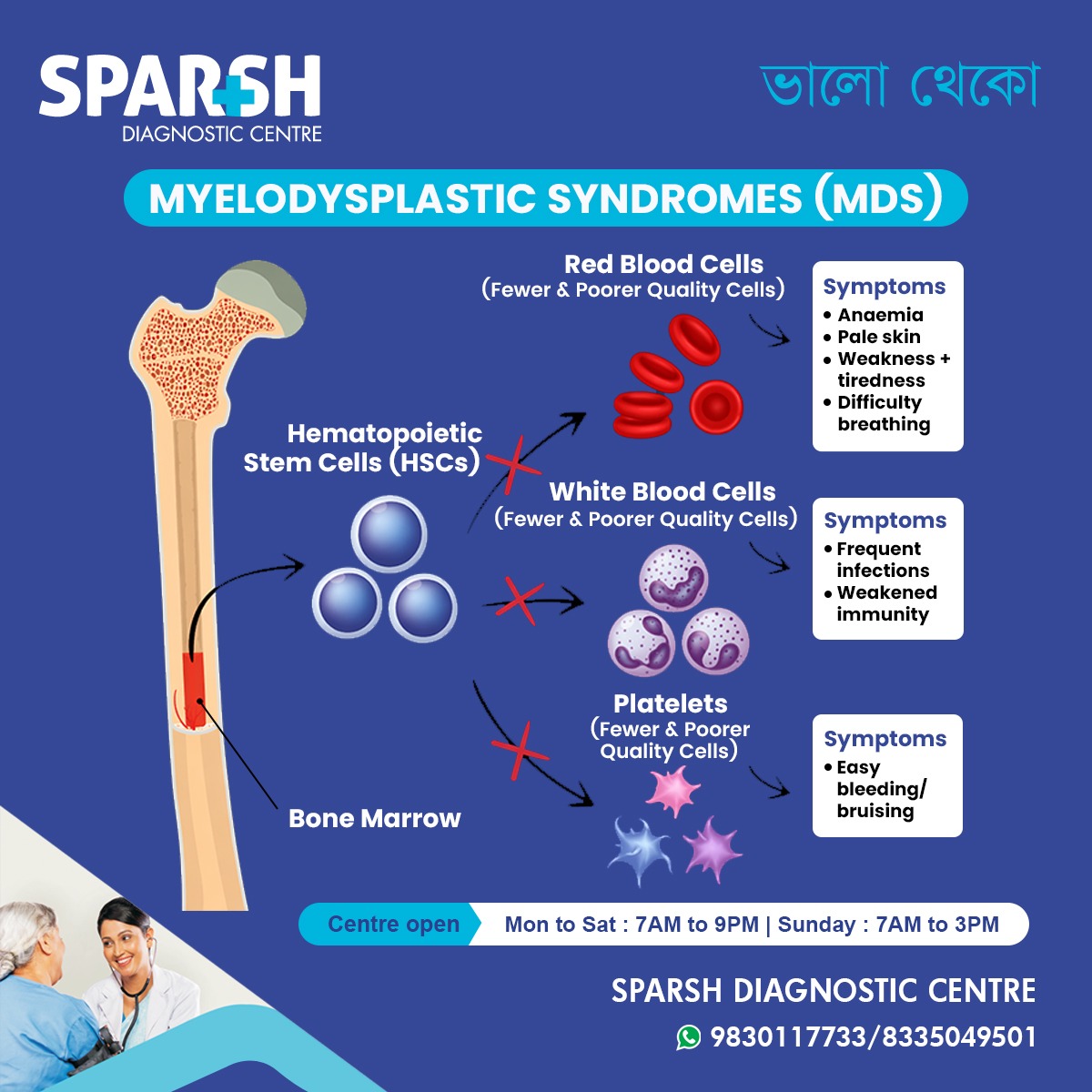
In people with MDS, the bone marrow produces immature or defective blood cells that either die before entering the bloodstream or function poorly once they circulate. As a result, patients develop low blood counts, a condition known as cytopenia.
Over time, some forms of MDS may progress to acute myeloid leukemia (AML), a more aggressive blood cancer.
How Does MDS Affect Blood Cells?
Red Blood Cells
When the bone marrow produces too few healthy red blood cells, anemia develops. This reduces the body’s oxygen supply and leads to symptoms such as:
- Fatigue
- Weakness
- Pale skin
- Dizziness
- Shortness of breath
White Blood Cells
Low white blood cell counts weaken the immune system and increase susceptibility to infections.
Symptoms may include:
- Frequent infections
- Fever
- Slow recovery from illnesses
Platelets
Reduced platelet production affects the blood’s ability to clot properly.
Common symptoms include:
- Easy bruising
- Frequent nosebleeds
- Bleeding gums
- Small red spots under the skin (petechiae)
Types of Myelodysplastic Syndromes
The World Health Organization (WHO) classifies MDS into several subtypes based on specific abnormalities in blood cells and bone marrow.
MDS with Single-Lineage Dysplasia
Only one type of blood cell is affected.
MDS with Multilineage Dysplasia
Multiple blood cell types are abnormal and reduced in number.
MDS with Ring Sideroblasts
The bone marrow contains abnormal red blood cell precursors with excess iron deposits.
MDS with Excess Blasts
The bone marrow contains a high number of immature cells called blasts. This type carries a greater risk of progression to leukemia.
MDS Associated with Isolated Chromosomal Abnormalities
Certain genetic changes, such as deletion of chromosome 5q, may influence prognosis and treatment options.
Causes of Myelodysplastic Syndromes
In many individuals, the exact cause of MDS remains unknown. This is known as primary or de novo MDS.
However, researchers have identified several factors that can increase the risk of developing the disease.
Genetic Mutations
Changes in genes that regulate blood cell production can interfere with normal bone marrow function.
Previous Cancer Treatment
Chemotherapy and radiation therapy can damage bone marrow cells, leading to therapy-related MDS years later.
Exposure to Chemicals
Long-term exposure to certain industrial chemicals may increase risk.
Examples include:
- Benzene
- Pesticides
- Industrial solvents
Smoking
Cigarette smoke contains harmful chemicals that may damage bone marrow and increase the likelihood of blood disorders.
Aging
The risk of developing MDS rises significantly with age due to the gradual accumulation of genetic changes in stem cells.
Risk Factors for Myelodysplastic Syndromes
Several factors can increase your chances of developing MDS:
- Age over 60 years
- Male gender
- History of chemotherapy or radiation
- Exposure to toxic chemicals
- Smoking
- Certain inherited genetic disorders
- Previous bone marrow disorders
Having one or more risk factors does not necessarily mean that someone will develop MDS, but it may increase susceptibility.
Symptoms of Myelodysplastic Syndromes
Many people with early-stage MDS experience few or no symptoms. The condition is often discovered during routine blood tests.
As blood cell counts decline, symptoms gradually appear.
Symptoms of Anemia
- Persistent fatigue
- Weakness
- Shortness of breath
- Pale skin
- Dizziness
- Rapid heartbeat
Symptoms of Low White Blood Cells
- Frequent infections
- Recurrent fever
- Mouth sores
- Prolonged recovery from illness
Symptoms of Low Platelets
- Easy bruising
- Frequent nosebleeds
- Bleeding gums
- Excessive bleeding from minor cuts
- Tiny red spots under the skin
Because these symptoms overlap with many other conditions, medical evaluation is necessary for an accurate diagnosis.
How Is Myelodysplastic Syndrome Diagnosed?
Diagnosing MDS usually involves a combination of clinical evaluation, blood tests, and bone marrow examination.
Medical History and Physical Examination
Your doctor will ask about:
- Symptoms
- Previous illnesses
- Medication history
- Exposure to chemicals
- Family history of blood disorders
Complete Blood Count (CBC)
A CBC measures:
- Red blood cells
- White blood cells
- Platelets
Most individuals with MDS show reductions in one or more blood cell types.
Peripheral Blood Smear
A blood smear allows doctors to examine blood cells under a microscope and identify abnormal shapes and sizes.
Bone Marrow Aspiration and Biopsy
This is the most important test for confirming MDS.
During the procedure:
- A small amount of liquid marrow is removed.
- A tiny sample of bone tissue is collected.
- Samples are analyzed for abnormal cells and blast counts.
Genetic and Cytogenetic Testing
These tests identify chromosomal abnormalities and gene mutations that help determine:
- Disease subtype
- Prognosis
- Treatment planning
Staging and Risk Assessment
Unlike many cancers, MDS is not staged according to tumor size.
Doctors use risk assessment systems such as the Revised International Prognostic Scoring System (IPSS-R), which considers:
- Blood counts
- Bone marrow blast percentage
- Chromosomal abnormalities
Patients are generally classified as:
- Very low risk
- Low risk
- Intermediate risk
- High risk
- Very high risk
Risk classification helps determine treatment strategies and expected outcomes.
Complications of Myelodysplastic Syndromes
Without proper treatment, MDS can lead to serious complications.
Severe Anemia
Chronic anemia can significantly impair daily functioning and reduce quality of life.
Recurrent Infections
Low white blood cell counts may lead to serious bacterial or fungal infections.
Excessive Bleeding
Reduced platelets increase the risk of bleeding complications.
Progression to Acute Myeloid Leukemia
Some forms of MDS can transform into AML, which requires intensive treatment.
Treatment for Myelodysplastic Syndromes
Treatment depends on:
- Age
- Overall health
- MDS subtype
- Risk category
- Severity of symptoms
The main goals are to improve blood counts, reduce symptoms, prevent complications, and delay disease progression.
Supportive Care
Supportive care helps manage symptoms and improve quality of life.
Blood Transfusions
Red blood cell transfusions help treat severe anemia and reduce fatigue.
Platelet transfusions may be required to prevent bleeding.
Antibiotics
Patients with low white blood cell counts may need antibiotics to treat or prevent infections.
Growth Factors
Certain medications stimulate blood cell production.
Examples include:
- Erythropoietin-stimulating agents
- Granulocyte colony-stimulating factor
Drug Therapy
Several medications can help control MDS.
Hypomethylating Agents
These medications help abnormal bone marrow cells mature more normally.
Common examples include:
- Azacitidine
- Decitabine
Immunomodulatory Therapy
Certain medications are particularly effective in specific genetic forms of MDS.
Immunosuppressive Therapy
Some patients benefit from treatments that suppress immune-mediated bone marrow damage.
Stem Cell Transplantation
A stem cell or bone marrow transplant is currently the only potentially curative treatment for MDS.
The procedure involves:
- Destroying diseased bone marrow cells.
- Replacing them with healthy donor stem cells.
Stem cell transplantation may not be suitable for every patient because of its potential risks and complications. It is generally considered for younger and higher-risk patients who are healthy enough to tolerate the procedure.
Living with Myelodysplastic Syndromes
A diagnosis of MDS can be overwhelming, but many people continue to lead active and fulfilling lives with proper treatment and monitoring.
Follow Medical Advice
Attend regular appointments and blood tests.
Prevent Infections
- Wash hands frequently
- Avoid sick individuals
- Stay up to date with recommended vaccinations
Eat a Balanced Diet
A nutritious diet helps support overall health and recovery.
Manage Fatigue
- Prioritize rest
- Engage in gentle physical activity
- Maintain a healthy sleep routine
Seek Emotional Support
Living with a chronic blood disorder can affect emotional well-being. Family support, counseling, and patient support groups can make a significant difference.
Can Myelodysplastic Syndromes Be Prevented?
Because the exact cause remains unclear, complete prevention is not always possible.
However, you can reduce risk by:
- Avoiding smoking
- Limiting exposure to toxic chemicals
- Following workplace safety guidelines
- Attending regular medical checkups
- Seeking prompt evaluation for unexplained fatigue or abnormal blood counts
Prognosis of Myelodysplastic Syndromes
The outlook for MDS varies widely.
Some people live for many years with mild disease and minimal symptoms, while others have aggressive forms that progress rapidly.
Factors affecting prognosis include:
- Age
- Overall health
- Blood cell counts
- Genetic abnormalities
- Bone marrow blast percentage
- Response to treatment
Advances in diagnosis and therapy continue to improve outcomes and quality of life for many patients with MDS.
Frequently Asked Questions (FAQs)
Is Myelodysplastic Syndrome a type of cancer?
Yes. MDS is considered a group of blood cancers that originate in the bone marrow and interfere with normal blood cell production.
Is Myelodysplastic Syndrome hereditary?
Most cases are not inherited. However, certain genetic conditions may increase the risk of developing MDS.
What are the first signs of MDS?
Early symptoms often include fatigue, weakness, frequent infections, easy bruising, and unexplained anemia.
Can Myelodysplastic Syndrome be cured?
A stem cell transplant offers the possibility of a cure in selected patients. Other treatments focus on controlling symptoms and slowing disease progression.
Does MDS always become leukemia?
No. While some forms of MDS progress to acute myeloid leukemia, many patients never develop leukemia.
Is MDS common?
MDS is relatively uncommon but becomes more prevalent with advancing age, particularly in people older than 60 years.
How long can someone live with MDS?
Life expectancy varies significantly depending on disease subtype, risk category, age, and treatment response. Some individuals live many years with low-risk disease.
Myelodysplastic Syndromes are complex bone marrow disorders that disrupt the body’s ability to produce healthy blood cells. The condition can lead to anemia, recurrent infections, and bleeding complications, significantly affecting quality of life.
Early diagnosis, proper risk assessment, and individualized treatment plans are essential for managing the disease effectively. Advances in supportive care, medications, and stem cell transplantation continue to improve outcomes and offer hope to patients living with Myelodysplastic Syndromes.
If you experience persistent fatigue, unexplained bruising, frequent infections, or abnormal blood test results, consult a healthcare professional promptly for evaluation and guidance.
To consult a Doctor or get full body check-up done at Sparsh Diagnostic Centre, call our helpline numbers 9830117733/ 8335049501.
#BhaloTheko
Disclaimer:
No content on this site, regardless of date, should ever be used as a substitute for direct medical advice from your doctor or other qualified clinician.