Losing one or more teeth can affect much more than appearance. It changes the way you chew, speak, smile, and even how confident you feel in daily life. Fortunately, modern dentistry offers highly effective solutions, and two of the most common are Dental implant and Dentures.
If you are trying to decide between dental implants and dentures, the choice often depends on your oral health, budget, age, lifestyle, and long-term expectations. Both options replace missing teeth, but they work in very different ways and offer different benefits.
This guide explains the differences clearly so you can understand which treatment may suit your needs best.
What Are Dental Implants?
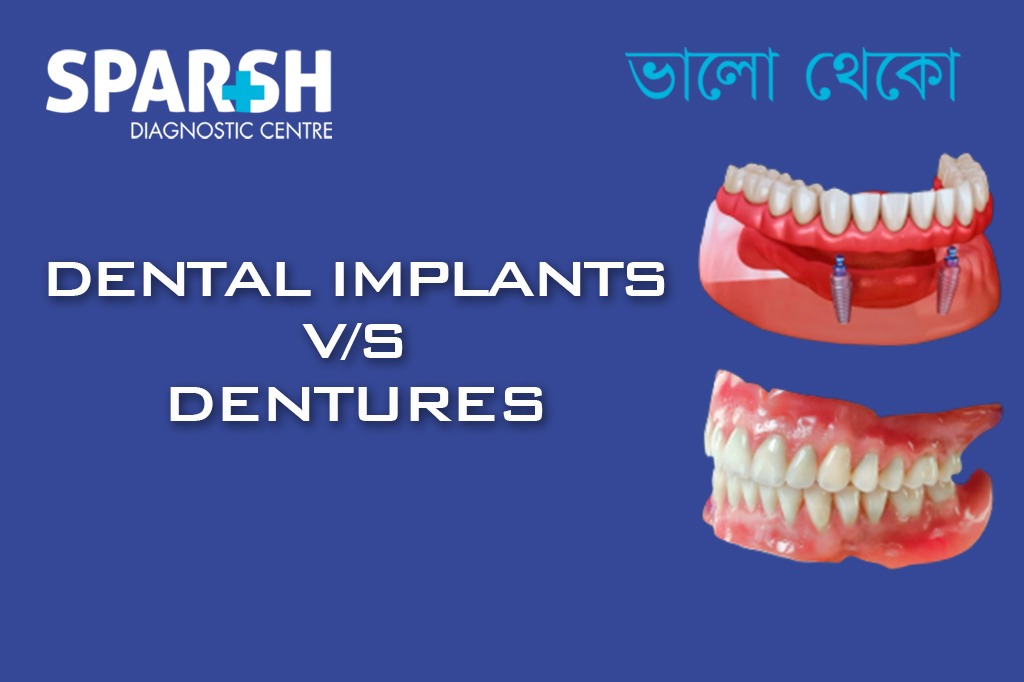
Dental implants are artificial tooth roots, usually made of titanium, that are placed into the jawbone through a minor surgical procedure. Once the implant fuses with the bone, a crown, bridge, or full denture is attached on top.
The biggest advantage of implants is that they function very much like natural teeth. They stay fixed in place, do not move while eating or speaking, and help preserve jawbone strength over time.
A complete implant treatment usually happens in stages:
- Initial consultation and imaging
- Implant placement into the jawbone
- Healing period for bone integration
- Placement of the artificial tooth or prosthetic
Because the implant becomes part of the jaw structure, it offers strong long-term support.
What Are Dentures?
Dentures are removable appliances designed to replace missing teeth and surrounding tissues. They are custom-made to fit the gums and can be full or partial depending on how many teeth are missing.
There are two common types:
- Full dentures for people who have lost all teeth
- Partial dentures for people with some natural teeth remaining
Unlike implants, dentures sit on top of the gums rather than inside the jawbone. Modern dentures look more natural than older versions, but they still require daily removal and cleaning.
Many people choose dentures because they are less invasive and usually more affordable upfront.
Dental Implants vs Dentures: The Main Difference
The biggest difference is stability.
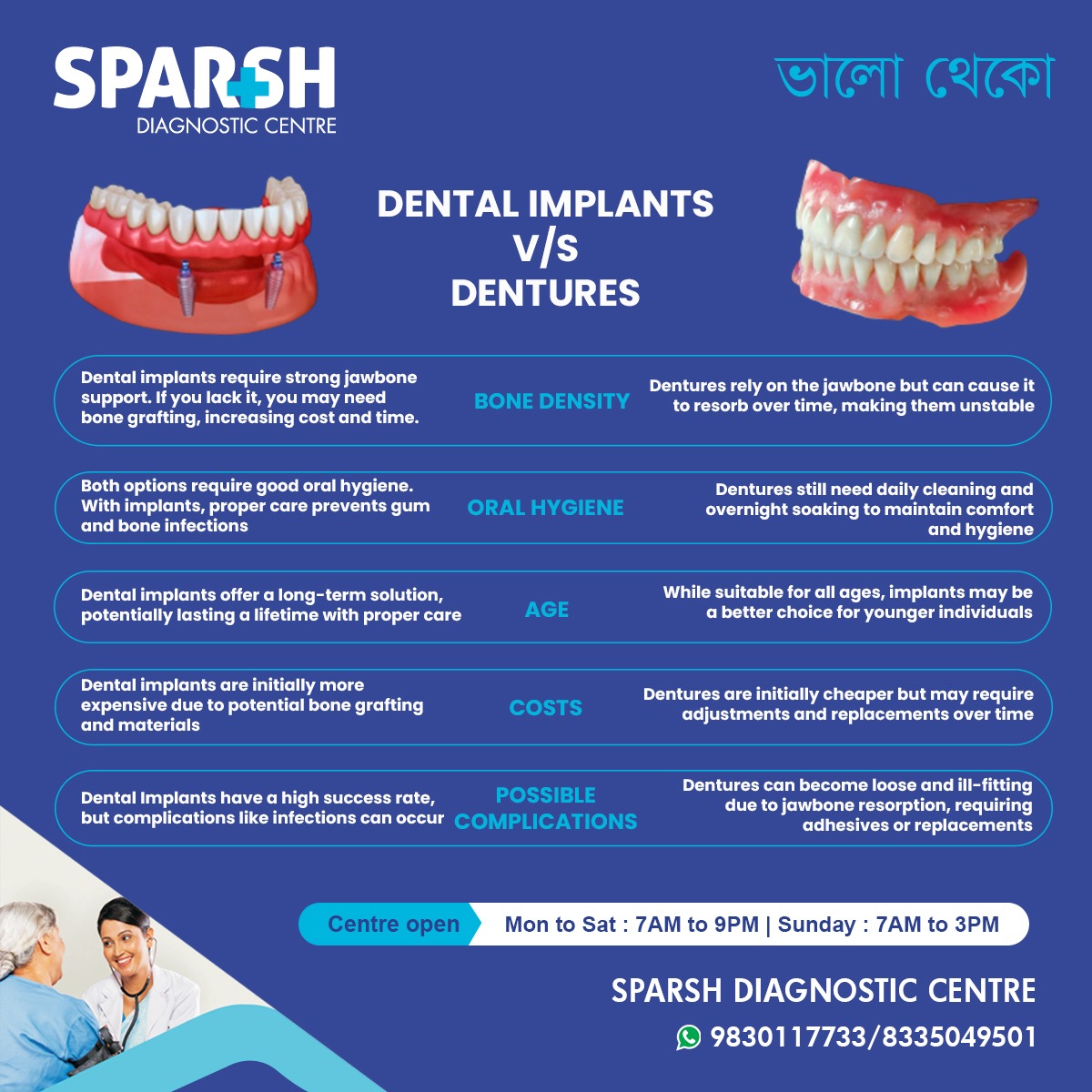
Dental implants are fixed permanently into the jawbone, while dentures are removable.
Implants feel closer to natural teeth because they do not slip or shift. Dentures, on the other hand, may move slightly during eating or speaking, especially if they become loose over time.
Bone Health and Jaw Support
One of the most important long-term differences involves jawbone preservation.
When a tooth is lost, the jawbone beneath it no longer receives stimulation from chewing. Over time, the bone begins to shrink.
Dental implants help prevent this because they act like natural roots and stimulate the bone.
Dentures do not provide that stimulation. In fact, over many years, dentures may contribute to gradual bone loss because the jawbone continues to shrink underneath them.
This is why some denture wearers eventually notice facial changes such as:
- Sunken cheeks
- Reduced lip support
- A more aged facial appearance
For patients with significant bone loss, implants may require bone grafting before placement.
Comfort in Daily Life
Comfort often becomes a deciding factor.
Dental implants usually feel more natural because they stay fixed and do not press against the gums in the same way dentures do.
Dentures can sometimes cause:
- Gum irritation
- Pressure spots
- Soreness
- Difficulty adjusting during the first few weeks
Some people adapt quickly to dentures, while others continue to experience mild discomfort, especially with lower dentures.
Implants generally offer a more secure experience when chewing harder foods.
Eating and Chewing Ability
Food habits change significantly depending on which option you choose.
With dental implants, most people can eat almost everything they enjoyed before tooth loss, including:
- Apples
- Nuts
- Meat
- Corn
- Firm vegetables
Dentures may require more caution.
Certain foods can be difficult, such as:
- Sticky foods
- Hard foods
- Very chewy items
Because dentures can shift, some patients avoid particular foods entirely.
This often affects nutrition over time, especially in older adults.
Speech and Pronunciation
Speech can also be affected differently.
Dental implants stay in place, so pronunciation usually feels natural after healing.
Dentures may initially affect speech because the tongue must adapt to a removable appliance.
Common early complaints include:
- Slight lisp
- Difficulty pronouncing certain words
- Clicking sounds
Most people improve with practice, but adaptation takes time.
Appearance and Natural Look
Both implants and dentures can look attractive when professionally designed.
However, implants often provide a more natural look because they emerge from the gums like real teeth.
Dentures may look excellent too, but full dentures sometimes appear slightly bulkier because of the acrylic base needed for support.
Implants also help preserve facial structure, which contributes to a more youthful appearance over the years.
Longevity: Which Lasts Longer?
Dental implants generally last much longer.
With proper oral hygiene and regular dental visits, implants can last decades and often a lifetime.
The crown placed on top may need replacement after many years, but the implant itself is highly durable.
Dentures usually need adjustment, relining, or replacement every 5 to 10 years because:
- The jaw changes shape
- Materials wear down
- Fit becomes loose
Over time, maintenance costs for dentures can add up.
Cost Comparison
Cost is often one of the biggest deciding factors.
Dental implants usually cost more initially because they involve:
- Surgery
- Implant materials
- Advanced imaging
- Laboratory work
Dentures usually cost less upfront, making them more accessible for many patients.
However, dentures may require future expenses such as:
- Repairs
- Relining
- Adhesives
- Replacement sets
While implants cost more at first, many patients view them as a long-term investment.
Maintenance and Cleaning
Both require daily care, but the methods differ.
Caring for Dental Implants
Implants are cleaned like natural teeth:
- Brush twice daily
- Floss regularly
- Use interdental cleaners
- Visit the dentist routinely
Caring for Dentures
Dentures need more specific handling:
- Remove daily
- Brush gently
- Soak overnight
- Clean gums before reinsertion
If dentures are not cleaned properly, they can lead to:
- Gum infections
- Bad breath
- Fungal infections
Consistency matters greatly for both options.
Who Is a Good Candidate for Dental Implants?
Not everyone qualifies immediately for implants.
Ideal candidates usually have:
- Healthy gums
- Adequate jawbone density
- Good general health
- Controlled medical conditions
Some conditions may affect healing, such as:
Still, many patients once considered unsuitable can now receive implants after additional preparation.
Who May Prefer Dentures?
Dentures may be a practical option for people who:
- Want faster treatment
- Prefer no surgery
- Have significant bone loss
- Need a lower-cost solution
Dentures remain a highly valuable treatment, especially when properly fitted.
Recovery Time
Implants require healing time.
After surgery, bone integration may take several months before the final tooth is placed.
Dentures can often be provided more quickly, though multiple fittings may still be needed.
For someone wanting immediate restoration, dentures often provide faster visible results.
Possible Complications
Every dental treatment has risks.
Possible Implant Complications
- Infection
- Delayed healing
- Implant failure
- Nerve irritation in rare cases
Implant success rates are very high when performed by experienced professionals.
Possible Denture Complications
- Looseness
- Gum irritation
- Difficulty chewing
- Sore spots
Regular dental review helps prevent long-term issues.
Emotional Confidence and Lifestyle
This factor is often underestimated.
Many patients report that implants improve confidence because they do not worry about slipping, clicking, or removing teeth.
Dentures can also restore confidence, but some people feel self-conscious during meals or social interactions.
Lifestyle often influences satisfaction more than expected.
Implant-Supported Dentures: A Middle Option
For some people, the best solution is a combination of both.
Implant-supported dentures use implants to anchor removable dentures more securely.
This provides:
- Better stability
- Less slipping
- Improved chewing
- Lower cost than full implant restoration
This option is increasingly popular.
Which Option Is Better for Older Adults?
Age alone does not rule out implants.
Healthy older adults often do very well with implants.
The decision depends more on:
- Bone condition
- Medical history
- Healing capacity
- Personal preference
Many seniors choose implants specifically because they improve chewing comfort.
Making the Right Choice
There is no single answer that suits everyone.
Dental implants are often best for long-term stability and bone preservation.
Dentures remain practical, effective, and affordable for many patients.
The right decision should always be made after clinical examination, imaging, and discussion with a dental professional.
Frequently Asked Questions
Are dental implants painful?
Most people report mild discomfort rather than severe pain. Local anesthesia is used during the procedure, and recovery is usually manageable with medication.
How long do dental implants last?
With proper care, implants can last for decades and often for life.
Can dentures look natural?
Yes, modern dentures can look very natural when custom-designed properly.
Are implants better than dentures for chewing?
Yes, implants generally provide stronger chewing power and greater stability.
Do dentures damage gums?
Poorly fitted dentures can irritate gums and cause sore spots over time.
Can I switch from dentures to implants later?
Yes, many people start with dentures and later choose implants if bone health allows.
Which is cheaper in the long run?
Dentures cost less initially, but implants may be more economical long-term because they last longer and require fewer replacements.
Are implants safe for older adults?
Yes, many older adults successfully receive implants if overall health is stable.
To consult a Dentist at Sparsh Diagnostic Centre, call our helpline numbers 9830117733/ 8335049501.
#BhaloTheko
Disclaimer:
No content on this site, regardless of date, should ever be used as a substitute for direct medical advice from your doctor or other qualified clinician.