


If you have irritable bowel syndrome (IBS), you may have noticed that certain foods seem to trigger bloating, abdominal pain, gas, constipation or diarrhoea. The frustrating part is that the foods causing trouble are not necessarily “unhealthy” foods. Even nutritious foods can contain carbohydrates that are difficult for some people with IBS to digest.
This is where the low FODMAP diet for IBS can be useful.
FODMAP stands for fermentable oligosaccharides, disaccharides, monosaccharides and polyols. These are short-chain carbohydrates that may be poorly absorbed in the small intestine. They can draw water into the intestine and are fermented by gut bacteria, producing gas and potentially contributing to bloating, pain and altered bowel habits in susceptible people.
A low FODMAP diet is not intended to be a permanent “eat only these foods” diet. It is better understood as a structured process that helps identify which foods and FODMAP groups trigger your individual symptoms.
Research and clinical experience suggest that many people with IBS benefit from this approach, although it does not work for everyone. Monash University describes it as a three-step process: restriction, reintroduction and personalisation.
For Indian families, the good news is that following a low FODMAP approach does not mean giving up rice, idli or many familiar foods. The key is understanding ingredients, portions and preparation methods.
What is the low FODMAP diet for IBS?
The low FODMAP diet temporarily reduces foods that contain higher amounts of certain fermentable carbohydrates.
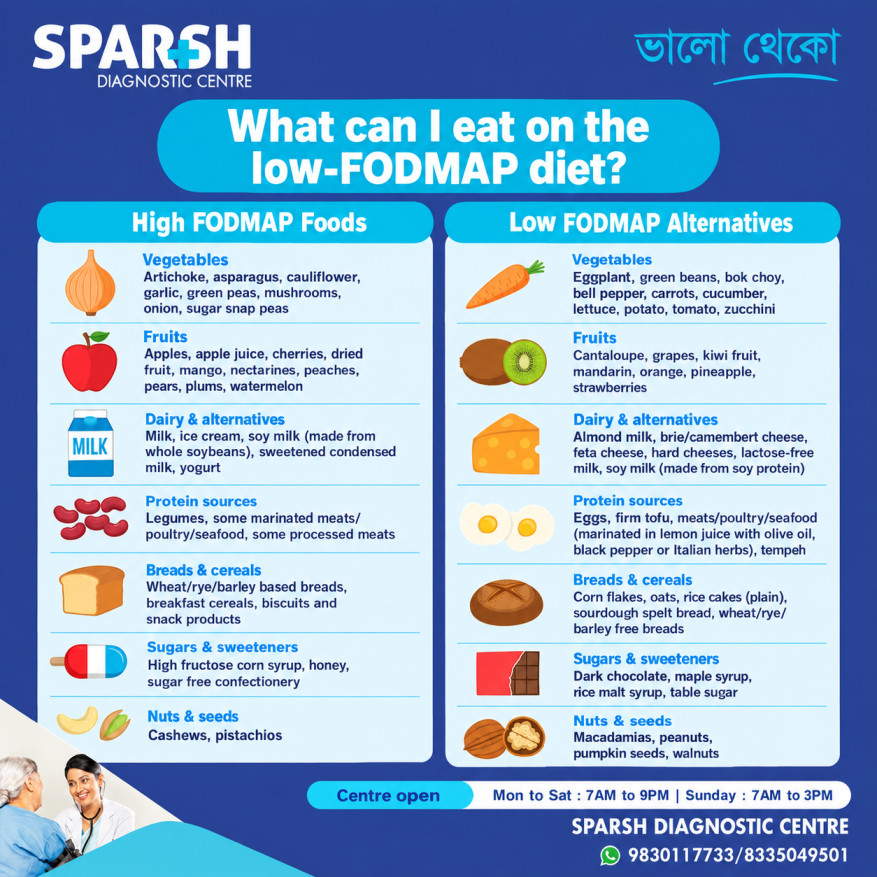
Common high-FODMAP foods include:
- Onion and garlic
- Apples and pears
- Mangoes
- Watermelon
- Some legumes and pulses
- Regular milk and some yoghurt
- Wheat, rye and barley products
- Honey
- Certain sugar-free sweeteners such as sorbitol, mannitol and xylitol
Low-FODMAP alternatives can include:
- Rice
- Oats
- Quinoa
- Carrots
- Cucumber
- Potato
- Eggplant
- Green beans
- Kiwi
- Orange
- Grapes
- Strawberries
- Eggs
- Plain meat, poultry and fish
- Firm tofu
- Lactose-free milk
- Hard cheeses
- Peanuts and walnuts
These are examples rather than a universal “safe food” list because serving size matters. A food that is low FODMAP at one portion may contain more FODMAPs at a larger portion.
How does a low FODMAP diet help IBS?
FODMAP carbohydrates can be fermented by bacteria in the intestine. In people who are sensitive to them, this can contribute to gas, bloating, abdominal discomfort and changes in bowel habits.
Reducing FODMAP intake can therefore reduce the amount of fermentable carbohydrate reaching the lower intestine.
However, the objective is symptom management, not curing IBS. A low FODMAP diet also does not work for every person with IBS. Monash University reports that around three out of four people with IBS may experience symptom improvement, while others may need different approaches.
The three stages of a low FODMAP diet
One of the biggest mistakes people make is treating the low FODMAP diet as a lifelong elimination diet.
It isn’t.
1. Restriction
During the initial stage, high-FODMAP foods are temporarily replaced with suitable alternatives. Monash recommends this stage generally lasts around 2–6 weeks, rather than continuing indefinitely.
2. Reintroduction
Once symptoms have improved, individual FODMAP groups are systematically challenged. This helps determine whether you actually need to restrict lactose, fructans, excess fructose, polyols or other FODMAPs.
3. Personalisation
The ultimate goal is to eat as varied a diet as possible while avoiding or limiting only those foods and quantities that genuinely trigger your symptoms.
This is important because unnecessary long-term restriction can make the diet nutritionally inadequate and unnecessarily difficult to follow.
Ideally, the process should be guided by a doctor or dietitian experienced in IBS and the low FODMAP diet.
What foods are good for IBS on a low FODMAP diet?
A practical low FODMAP IBS diet can include a wide variety of foods.
Vegetables
Good choices can include:
- Carrots
- Cucumber
- Eggplant
- Green beans
- Bok choy
- Lettuce
- Potato
- Capsicum
- Tomato
- Zucchini
Onion, garlic, asparagus, mushrooms, cauliflower and some peas are among the foods that can be problematic during the elimination phase.
Fruits
Suitable options can include:
- Kiwi
- Orange
- Mandarin
- Grapes
- Strawberries
- Blueberries
- Cantaloupe
- Pineapple in an appropriate portion
Apples, pears, mangoes, cherries, peaches, plums and watermelon are examples of fruits that can be higher in FODMAPs.
Protein
Plain protein foods are often straightforward choices:
- Eggs
- Chicken
- Fish
- Meat
- Firm tofu
- Tempeh
The problem may arise from marinades, sauces or spice pastes containing onion, garlic or other high-FODMAP ingredients rather than from the protein itself.
Grains and carbohydrates
Rice is particularly useful for Indian diets because it is naturally low in FODMAPs. Other options include oats, quinoa, corn-based products and suitable rice products.
What are the 5 best foods for IBS?
There is no scientifically established list of five foods that are “best” for every person with IBS. IBS triggers are highly individual.
However, five practical foods that can often form part of a low-FODMAP IBS diet are:
1. Rice: A versatile, naturally low-FODMAP carbohydrate.
2. Eggs: A convenient protein source without FODMAP carbohydrates.
3. Oats: A useful source of soluble fibre, particularly when introduced gradually.
4. Carrots: Nutritious, versatile and generally low FODMAP.
5. Kiwi: A low-FODMAP fruit that can be particularly useful when constipation is an issue.
The best food for you, however, is ultimately the food that provides nutrition without consistently triggering your symptoms.
What are 5 foods to avoid if you have IBS?
If you’re trialling a low FODMAP diet, five common foods to limit or avoid during the initial phase are:
- Onion
- Garlic
- Apples
- Regular milk
- Wheat-based foods in larger portions
These foods are not automatically “bad” for everyone with IBS. They are examples of foods that can contribute significant amounts of FODMAPs.
This distinction matters. You may eventually discover that you can tolerate some of them in smaller quantities.
What are the top 10 worst high-FODMAP foods?
There is no universal ranking of the “worst” FODMAP foods because individual tolerance varies. However, some common high-FODMAP foods that frequently need attention during the elimination phase include:
- Onion
- Garlic
- Apples
- Pears
- Mangoes
- Watermelon
- Regular milk
- Wheat-based breads and cereals
- Large servings of legumes and pulses
- Honey and foods containing certain polyol sweeteners
Monash’s food guide similarly identifies onion, garlic, wheat/rye/barley products, several fruits, dairy products, legumes and certain sweeteners among important high-FODMAP categories.
Remember: portion size matters. It is not simply a matter of putting every high-FODMAP food on a permanent “never eat” list.
Is chapati good for IBS?
It depends on the individual and the quantity.
Traditional chapati is generally made from wheat flour, and wheat contains fructans, a type of FODMAP. During the strict elimination phase of a low FODMAP diet, wheat intake is generally reduced.
This does not necessarily mean you can never eat chapati again.
Some people with IBS may tolerate a small quantity, particularly after their individual tolerance has been established. Others may find that several wheat-based rotis in one meal trigger bloating or discomfort.
If chapati is a staple in your diet, discuss alternatives and appropriate portions with a dietitian rather than eliminating wheat unnecessarily.
Also remember that IBS and coeliac disease are different conditions. A low FODMAP diet does not automatically mean you need a lifelong gluten-free diet.
Is idli low in FODMAP?
Plain idli can fit into a low-FODMAP diet for many people, but preparation and portion size matter.
Idli is primarily rice-based but traditionally contains fermented black gram/urad dal. Rice itself is low FODMAP, and research examining South Asian dietary patterns notes that rice-based foods such as idli are commonly consumed in the region.
Monash has also noted that fermented rice-and-lentil foods such as idli and dosa can be generally well tolerated in appropriate portions because the amount of lentils relative to rice is relatively small.
The bigger issue may actually be what you eat with your idli.
For example, onion- or garlic-heavy sambar or chutney may contribute more FODMAPs than the plain idli itself.
A gentler option can be:
Plain idli + coconut chutney without onion/garlic + a suitable protein or low-FODMAP accompaniment.
Can I eat curd in IBS?
You may be able to, but regular curd is not automatically low FODMAP.
The issue is mainly lactose, the naturally occurring sugar in dairy products. Regular yoghurt/curd can contain significant lactose, although tolerance varies considerably between individuals.
If lactose seems to trigger your symptoms, consider:
- Lactose-free curd/yoghurt
- Smaller portions
- Low-lactose dairy products
- Hard cheeses, which are naturally low in lactose
You do not necessarily need to eliminate all dairy products from your diet. Lactose-free milk and yoghurt can allow you to retain important nutrients such as calcium while reducing lactose exposure.
What is the best breakfast for IBS?
There is no single perfect breakfast, but a simple, moderate-sized, low-FODMAP breakfast is often a good starting point.
Indian-friendly options include:
Option 1: Idli and egg
Plain idli with boiled or scrambled egg and a suitable chutney without onion or garlic.
Option 2: Oatmeal
Oats prepared with lactose-free milk, topped with an appropriate portion of kiwi or strawberries.
Option 3: Poha
Plain poha prepared without onion, garlic or other high-FODMAP ingredients, with suitable vegetables.
Option 4: Rice-based breakfast
Plain rice or a simple rice preparation with egg and low-FODMAP vegetables.
Option 5: Sourdough toast
A suitable sourdough bread with egg and a low-FODMAP topping.
Large, greasy breakfasts, excessive chilli, onion-heavy preparations and large amounts of caffeine may be problematic for some people.
What calms IBS quickly?
Unfortunately, there is no guaranteed instant cure for an IBS flare-up.
If symptoms suddenly appear, some people find it helpful to:
- Eat smaller meals
- Drink water
- Choose simple, familiar low-FODMAP foods
- Avoid foods that have previously triggered symptoms
- Take a gentle walk if comfortable
- Use relaxation or breathing techniques
- Try a warm drink such as ginger tea
- Avoid excess caffeine and alcohol
- Give the digestive system some time to settle
Peppermint can also help some people with IBS symptoms, although peppermint oil products should be discussed with a healthcare professional, particularly if you have reflux.
If symptoms are severe, persistent or significantly different from your usual IBS symptoms, don’t simply assume it is an IBS flare.
What to drink to calm down IBS?
Water is the simplest and most reliable choice.
Other options may include:
- Ginger tea
- Peppermint tea
- Suitable herbal teas
- Lactose-free milk
- Plain water with meals
Some people find that excessive coffee, strong tea, alcohol, carbonated drinks or large amounts of fruit juice worsen their symptoms.
Caffeine can be a trigger for some people, so your own response matters.
What is the biggest trigger for IBS?
There isn’t one universal IBS trigger.
Food is only one part of the picture. Common triggers can include:
- Certain FODMAP-containing foods
- Large meals
- Excess dietary fat
- Caffeine
- Alcohol
- Some types of fibre
- Stress
- Poor sleep
- Changes in routine
- Certain medications
Monash notes that dietary fibre, gluten, caffeine, fat, dairy/lactose and alcohol can all be relevant for some people with IBS, in addition to FODMAPs.
This is why keeping a food and symptom diary can be so useful. Instead of assuming that every digestive symptom is caused by one particular food, you can look for patterns.
What is the best dinner for IBS?
A good IBS-friendly dinner should be satisfying without being excessively large, greasy or loaded with high-FODMAP ingredients.
For example:
Grilled chicken + rice + carrots/green beans + cucumber
or
Grilled fish + potato + sautéed spinach + carrots
or
Rice + egg/tofu + suitable vegetables
If you prefer Indian food, focus on simple preparation. Instead of an onion-and-garlic-heavy curry, use ingredients such as ginger, cumin, coriander, turmeric and suitable herbs and spices, while checking individual tolerance.
The protein itself may not be the problem. The onion, garlic, large quantity of legumes, dairy-based sauce or other ingredients added to the dish may be responsible for symptoms.
A simple low-FODMAP Indian meal plan
Breakfast
2–3 plain idlis with suitable coconut chutney and an egg.
Mid-morning
Kiwi, orange or a suitable portion of grapes.
Lunch
Rice + grilled chicken/fish + carrots and cucumber.
Evening snack
A small portion of suitable nuts or rice cakes with lactose-free yoghurt.
Dinner
Rice or potato + fish/egg/tofu + low-FODMAP vegetables.
Drinks
Water, ginger tea or peppermint tea according to individual tolerance.
This is only a general example, not a personalised medical diet plan. Your requirements may be different depending on whether you have IBS with constipation, IBS with diarrhoea or mixed-type IBS.
Why portion size matters on a low FODMAP diet
One of the most important concepts that is often missed in online IBS diet lists is FODMAP load.
You may eat several foods that are individually tolerated but consume them together in quantities that push the total FODMAP load higher.
For example, eating a large fruit serving alongside several other fermentable foods may produce symptoms even though each food appears acceptable individually.
Monash specifically highlights the importance of serving size when assessing whether a food is low, moderate or high FODMAP.
So don’t simply ask:
“Is this food low FODMAP?”
Also ask:
“How much can I tolerate?”
Low FODMAP does not mean gluten-free
This is another common misconception.
Wheat, rye and barley can contain fructans, which are FODMAPs. But FODMAPs and gluten are not the same thing.
A person with IBS may benefit from reducing certain wheat products because of fructans without having a medical need to avoid gluten.
Conversely, someone with coeliac disease needs a medically appropriate gluten-free diet regardless of whether a food is low FODMAP.
If you suspect coeliac disease, speak to a doctor before eliminating gluten, because testing can be affected by dietary changes.
Common mistakes when starting a low FODMAP diet
Eliminating everything at once
Removing dairy, wheat, fruits, vegetables and pulses simultaneously can make your diet unnecessarily restrictive.
Staying in the elimination phase too long
The low FODMAP elimination phase is designed to be temporary. Reintroduction and personalisation are essential parts of the process.
Ignoring ingredients
A plain chicken dish may be low FODMAP, but a chicken curry containing onion, garlic and a high-FODMAP sauce may not be.
Eating very large portions of “safe” foods
Low FODMAP does not mean unlimited quantities.
Assuming every symptom is caused by food
Stress, sleep, medications and other factors can influence IBS symptoms.
When should you see a doctor for IBS symptoms?
Not every episode of bloating or abdominal discomfort is IBS.
You should speak with a healthcare professional if you have persistent or unexplained digestive symptoms, particularly if you develop:
- Blood in the stool
- Unexplained weight loss
- Persistent or severe abdominal pain
- Fever
- Gastrointestinal bleeding
- Symptoms that wake you repeatedly at night
- A significant change from your usual bowel pattern
A proper diagnosis is important before starting a restrictive diet. Monash University specifically recommends confirming an IBS diagnosis with a healthcare professional before beginning a low FODMAP diet.
Frequently asked questions about the low FODMAP diet for IBS
Can a low FODMAP diet cure IBS?
No. The low FODMAP diet is a tool for managing IBS symptoms and identifying dietary triggers. It does not cure the underlying condition.
How long should I follow a low FODMAP diet?
The initial elimination phase is generally around 2–6 weeks, followed by systematic reintroduction and personalisation.
Can I eat rice if I have IBS?
Yes. Plain rice is naturally low in FODMAPs and is one of the easiest staple carbohydrates to incorporate into an Indian IBS-friendly diet.
Can I eat potatoes with IBS?
Potatoes are generally considered a low-FODMAP option, although preparation matters. A potato dish containing onion, garlic or other high-FODMAP ingredients may still cause symptoms.
Is banana good for IBS?
Banana can be suitable in an IBS diet, but ripeness and portion size can matter. Use a recognised FODMAP food guide to determine the appropriate serving for your diet phase.
Can I drink milk if I have IBS?
If lactose is a trigger, regular milk may cause symptoms. Lactose-free milk is a practical alternative.
Is curd better than milk for IBS?
Not necessarily. Regular curd can still contain lactose. Some people tolerate yoghurt better than milk, while others do not. Lactose-free curd/yoghurt can be a useful option if lactose is a problem.
Can I eat dal on a low FODMAP diet?
Some pulses can be high in FODMAPs, particularly in larger servings. However, this does not mean every pulse needs to be permanently removed. Portions and preparation matter, and individual tolerance should be assessed during reintroduction.
Can stress cause IBS symptoms?
Stress can influence IBS symptoms and is an important part of comprehensive IBS management. Dietary changes alone may not be sufficient for everyone.
What if the low FODMAP diet doesn’t work?
Not everyone with IBS responds to a low FODMAP diet. If symptoms do not improve after a properly conducted trial, speak with your doctor or dietitian rather than making the diet increasingly restrictive. Monash notes that other dietary, lifestyle, psychological or medical treatments may be appropriate.
The bottom line
The low FODMAP diet for IBS can be a valuable way to understand why certain foods trigger bloating, abdominal pain, gas, constipation or diarrhoea. But it should not become a lifelong list of forbidden foods.
For an Indian diet, staples such as rice, suitable portions of idli, eggs, fish, chicken, carrots, cucumber, potatoes and selected fruits can make it possible to eat satisfying and familiar meals while managing symptoms.
Chapati may need to be reduced during the elimination stage because wheat is a source of fructans, while idli can often be incorporated in suitable portions. Regular curd may be problematic if lactose is a trigger, whereas lactose-free curd or yoghurt may be easier to tolerate.
Most importantly, IBS is individual. The food that causes severe bloating for one person may be perfectly comfortable for another. The goal of the low FODMAP approach is therefore not to create the smallest possible diet—it is to create the widest, most nutritious diet that your digestive system can comfortably tolerate.
If you have persistent IBS-like symptoms, consult a gastroenterologist or qualified dietitian before starting a restrictive diet, particularly if you have any warning signs or have not received a confirmed diagnosis.
Content note: This article is for general health education and should not replace individual medical advice or a personalised diet plan.
To consult a Gastroenterologist or a Dietician at Sparsh Diagnostic Centre, call our helpline number 9830117733.
#BhaloTheko
Disclaimer:
No content on this site, regardless of date, should ever be used as a substitute for direct medical advice from your doctor or other qualified clinician.
Additional Reading on the low FODMAP diet:



Nice blog! Simple yet impactful.
[…] Avoid High-FODMAP Foods: These include certain fruits, vegetables, and dairy products that are difficult to digest and can cause gas. […]
[…] Low FODMAP Diet: Reducing fermentable carbohydrates can minimize symptoms by starving the bacteria of their primary food source. […]
[…] Low-FODMAP Diets […]
[…] Adjustments: Some conditions, like IBS or celiac disease, can benefit from specialized diets like low-FODMAP or […]