


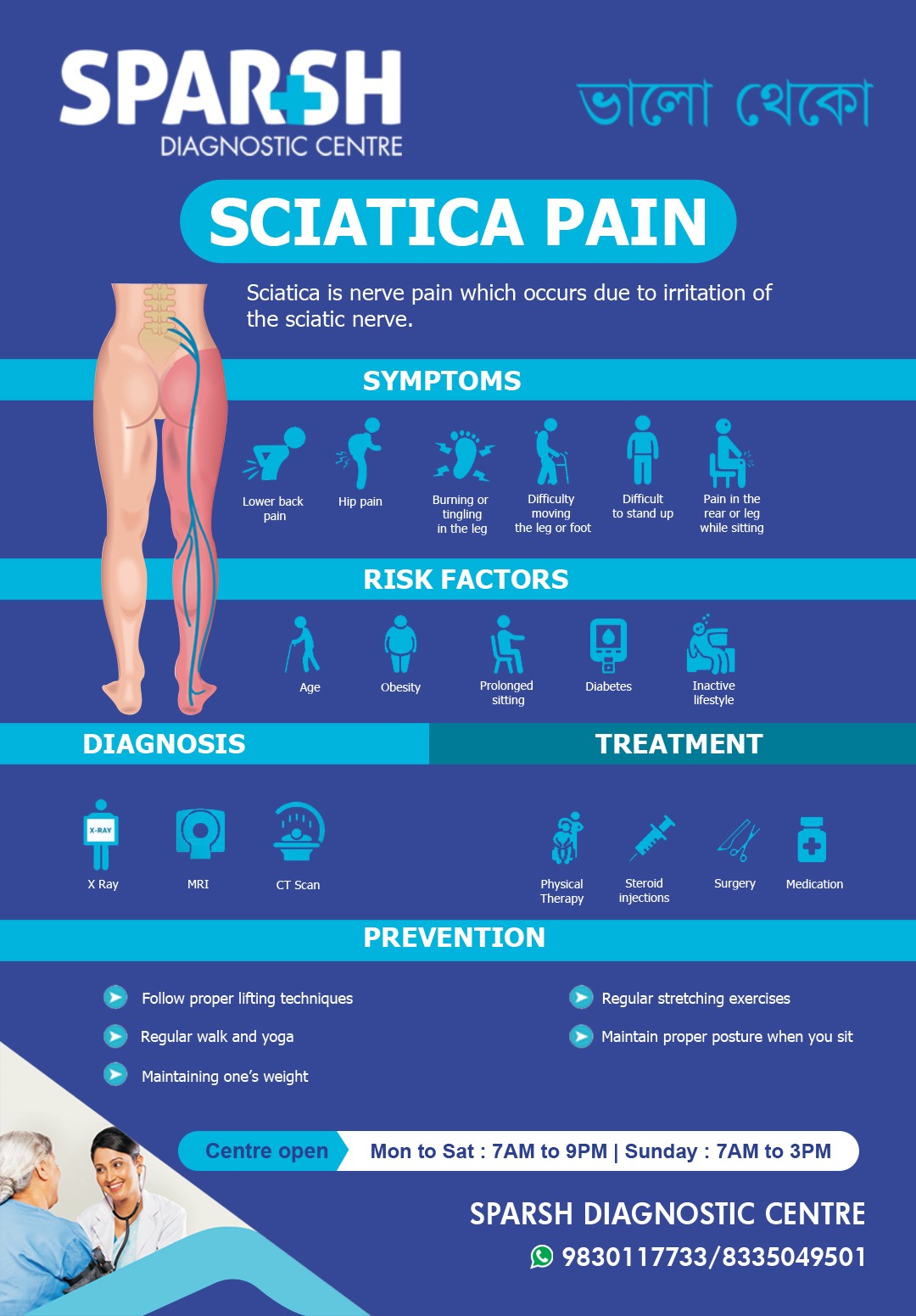
Sciatica is a type of nerve pain that radiates along the path of the sciatic nerve, which branches from the lower back through the hips, buttocks, and down each leg. It commonly affects only one side of the body.
This pain occurs when the sciatic nerve is compressed, irritated, or inflamed, leading to sharp, shooting, or burning sensations. Although the pain can be severe, most cases improve with non-surgical treatment over time.
Understanding the Sciatic Nerve
The sciatic nerve is the longest and thickest nerve in the human body. It originates from the lower spine (L4–S3) and runs through the buttocks and legs. It controls the muscles in the back of the knee and lower leg and provides sensation to the back of the thigh, leg, and sole of the foot.
When any part of this nerve gets pinched or irritated—due to a slipped disc, spinal stenosis, or muscle tightness (like in piriformis syndrome)—it can lead to sciatica.
Common Causes of Sciatica
Several spinal and muscular conditions can trigger sciatica. The most common causes include:
Herniated or Slipped Disc:
When a disc between vertebrae bulges or ruptures, it can press on the sciatic nerve.Spinal Stenosis:
Narrowing of the spinal canal puts pressure on the nerves, leading to pain.Degenerative Disc Disease:
As discs lose cushioning with age, vertebrae may compress nerves.Spondylolisthesis:
A vertebra slips out of position and pinches the sciatic nerve.Piriformis Syndrome:
The piriformis muscle in the buttocks irritates the sciatic nerve due to tightness or spasms.Trauma or Injury:
Accidents, falls, or sports injuries can cause nerve compression or inflammation.Tumors or Infections (Rare):
Occasionally, abnormal growths or infections near the spine can affect nerve function.
Symptoms of Sciatica Pain
Sciatica symptoms vary depending on the location of nerve compression. Common signs include:
Lower back pain
Pain in the hip or buttocks
Burning or tingling sensation in the leg or foot
Difficulty moving the leg or foot
Weakness or numbness in the affected limb
Pain worsening while sitting or after long periods of inactivity
The pain usually starts in the lower back and travels down through the buttock and thigh, sometimes extending below the knee. Some people describe it as an electric shock-like pain, while others experience dull aching or discomfort.
Risk Factors for Developing Sciatica
Certain factors increase the likelihood of developing sciatica, including:
Age: Natural wear and tear on spinal structures increase risk.
Obesity: Excess body weight adds pressure on the spine and nerves.
Prolonged Sitting: Sedentary lifestyles weaken muscles and compress spinal discs.
Diabetes: High blood sugar can damage nerves, making them more vulnerable.
Inactive Lifestyle: Lack of exercise leads to poor posture and muscle stiffness.
Occupation: Jobs involving heavy lifting or long hours of sitting can aggravate the condition.
Diagnosis of Sciatica
Proper diagnosis is crucial for effective treatment. At Sparsh Diagnostic Centre, specialists use advanced imaging and diagnostic techniques to identify the cause and severity of sciatica.
1. Medical History and Physical Examination
A doctor will begin by reviewing symptoms, medical history, and lifestyle habits. During the physical exam, you may be asked to perform simple movements to assess muscle strength, flexibility, and reflexes.
2. Imaging Tests
To confirm the diagnosis and pinpoint nerve compression, the following tests are often recommended:
X-ray: Detects bone spurs or structural issues in the spine.
MRI (Magnetic Resonance Imaging): Provides detailed images of soft tissues, discs, and nerves.
CT Scan: Offers cross-sectional images of the spine to reveal nerve impingements or abnormalities.
These diagnostic tools help doctors customize treatment plans suited to the individual’s condition.
Treatment Options for Sciatica
The treatment of sciatica aims to relieve pain, reduce inflammation, and improve mobility. Depending on the cause and severity, treatment options include:
1. Medications
Pain Relievers: Over-the-counter medicines like ibuprofen or acetaminophen help reduce discomfort.
Muscle Relaxants: Relieve muscle spasms contributing to nerve compression.
Anti-inflammatory Drugs: Reduce swelling around the nerve roots.
Steroid Injections: Corticosteroids are injected near the affected nerve to reduce inflammation.
2. Physical Therapy
Physical therapy focuses on exercises that strengthen core muscles, improve flexibility, and correct posture. Techniques may include:
Stretching exercises
Strength training
Low-impact aerobic exercises
Manual therapy and ergonomic education
A personalized therapy plan can significantly improve recovery and prevent recurrence.
3. Surgery
When conservative methods fail or symptoms worsen (e.g., severe pain, weakness, or loss of bladder control), surgery may be recommended.
Common surgical options include:
Microdiscectomy: Removal of a portion of a herniated disc pressing on the nerve.
Laminectomy: Removal of part of the vertebra to relieve nerve pressure.
4. Alternative Therapies
Some patients find relief through:
Chiropractic adjustments
Acupuncture
Massage therapy
Heat and cold therapy
Always consult a doctor before trying alternative treatments to ensure safety and suitability.
Prevention of Sciatica Pain
While sciatica may not always be preventable, adopting certain habits can reduce risk and recurrence:
Follow Proper Lifting Techniques:
Use your legs instead of your back when lifting heavy objects.Maintain a Healthy Weight:
Excess weight can strain your spine and increase nerve compression.Stay Active:
Regular walking, yoga, and stretching keep muscles flexible and strong.Practice Good Posture:
Sit with your back straight, shoulders relaxed, and both feet flat on the ground.Take Breaks from Sitting:
If your job involves prolonged sitting, stand or stretch every 30 minutes.Use Ergonomic Furniture:
Choose chairs with proper lumbar support and use adjustable desks if possible.Manage Chronic Conditions:
Keeping diabetes or arthritis under control can help prevent nerve complications.
When to See a Doctor
Consult a healthcare professional immediately if you experience:
Persistent pain lasting more than a week
Numbness or weakness in the leg or foot
Difficulty controlling bowel or bladder functions
Severe, shooting pain that disrupts daily activities
Early diagnosis and treatment can prevent complications and promote faster recovery.
Living with Sciatica: Recovery Tips
Recovering from sciatica requires consistency, patience, and lifestyle modifications. Here are a few tips:
Stay consistent with prescribed exercises.
Apply heat or ice packs to reduce inflammation.
Avoid prolonged bed rest; gentle movement aids healing.
Maintain proper posture at work and home.
Monitor pain triggers and modify daily habits accordingly.
With proper care and professional guidance, most individuals recover fully and regain normal mobility within a few weeks to months.
Sciatica Treatment at Sparsh Diagnostic Centre
At Sparsh Diagnostic Centre, we offer comprehensive care for patients suffering from sciatica and other spinal conditions.
Our team provides:
Advanced imaging services
Expert evaluation by experienced doctors
Customized treatment plans including physiotherapy and rehabilitation
Supportive guidance for long-term pain management
Our goal is to help you move freely again—with confidence and comfort.
Frequently Asked Questions (FAQ)
1. What is the fastest way to cure sciatica pain?
Mild sciatica often improves with rest, physical therapy, and anti-inflammatory medication. For faster relief, a doctor may recommend steroid injections or targeted physiotherapy.
2. Can sciatica go away on its own?
Yes. Many cases resolve within 4–6 weeks with conservative care. Persistent or severe pain requires medical evaluation.
3. Is walking good for sciatica?
Yes. Gentle walking helps improve blood circulation, reduce stiffness, and promote healing.
4. What should I avoid if I have sciatica?
Avoid sitting for long hours, lifting heavy weights, or performing sudden twisting movements.
5. Can yoga help relieve sciatica?
Yes, yoga stretches that target the lower back and hips—like the pigeon pose or cobra pose—can reduce pressure on the sciatic nerve.
6. When is surgery needed for sciatica?
Surgery is considered if symptoms persist beyond 3 months or cause significant nerve damage, such as weakness or loss of bladder control.
7. Is sciatica related to age?
Yes. Degenerative changes in the spine due to aging increase the risk of nerve compression and sciatica.
Sciatica pain can significantly affect daily life, but early diagnosis, timely treatment, and healthy lifestyle choices can make a big difference.
If you are experiencing back or leg pain that doesn’t improve, don’t ignore it. Visit Sparsh Diagnostic Centre for advanced diagnostic care and expert guidance.
To consult an Orthopedic Specialist or a Physiotherapist at Sparsh Diagnostic Centre, call our helpline number 9830117733.
#BhaloTheko
Disclaimer:
No content on this site, regardless of date, should ever be used as a substitute for direct medical advice from your doctor or other qualified clinician.

Feel free to share this blog post with others to spread awareness about Sciatica Pain and its management. Always consult a healthcare professional for personalized advice and treatment options.



[…] Sciatica is a symptom of lumbar radiculopathy, specifically involving the sciatic nerve. Radiculopathy can […]
[…] Sharp, radiating pain down the legs (sciatica) […]
[…] Pain radiating down the legs (sciatica) […]
[…] One of the most well-known issues related to the piriformis muscle is piriformis syndrome. This condition occurs when the piriformis muscle spasms and causes pain in the buttocks. It can also irritate the nearby sciatic nerve, causing pain, numbness, and tingling along the back of the leg and into the foot (sciatica). […]
[…] Sciatica: If the herniated disc is in the lower back, it can compress the sciatic nerve, causing pain that radiates down one leg. […]
[…] Sciatica: Pain that radiates down one or both legs, known as sciatica, is a common symptom of lumbar stenosis. […]