Tardive dyskinesia (TD) is a neurological movement disorder that causes repetitive, involuntary movements, most commonly involving the face, tongue, lips, and jaw. It usually develops after prolonged use of certain medications that affect dopamine levels in the brain, particularly antipsychotic drugs.
Although the condition can be distressing, early recognition and appropriate treatment can significantly reduce symptoms and improve quality of life. With newer medications specifically approved for tardive dyskinesia, many people experience meaningful relief.
In this comprehensive guide, you’ll learn about the symptoms, causes, diagnosis, treatment options, prevention strategies, and answers to the most commonly asked questions about tardive dyskinesia.
What Is Tardive Dyskinesia?
Tardive dyskinesia is a movement disorder caused by long-term exposure to medications that block dopamine receptors. The word “tardive” means delayed, while “dyskinesia” refers to abnormal, uncontrolled movements.
The condition often develops months or years after starting dopamine-blocking medications. In some people, symptoms appear even after the medication has been reduced or discontinued.
The abnormal movements are generally:
- Involuntary
- Repetitive
- Irregular
- Difficult or impossible to control
These movements can interfere with speaking, eating, walking, and daily activities.
What Does Tardive Dyskinesia Look Like?
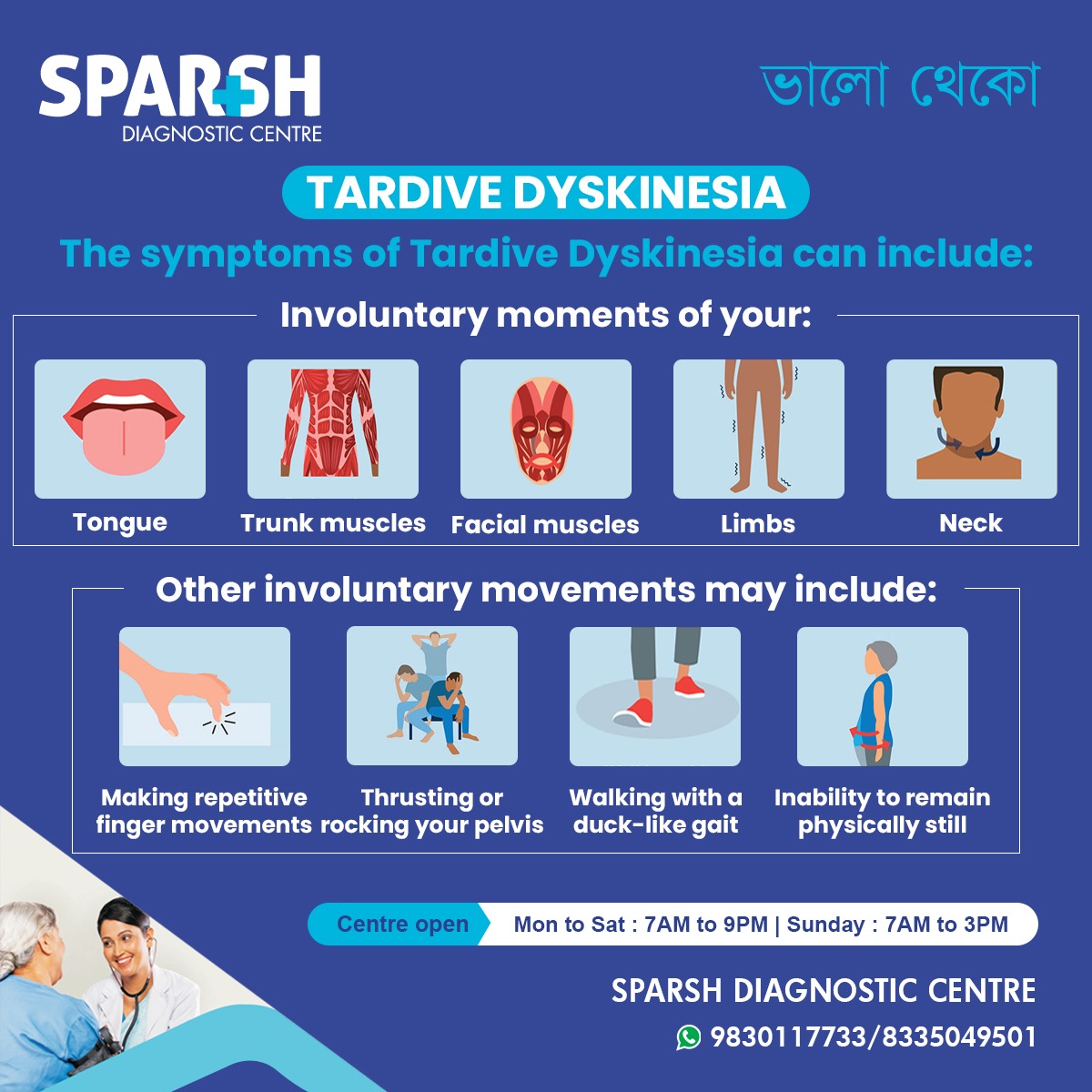
People with tardive dyskinesia often experience repetitive movements involving different parts of the body.
Common examples include:
Facial movements
- Lip smacking
- Lip puckering
- Grimacing
- Chewing motions without food
- Rapid blinking
- Jaw clenching
- Facial twitching
Tongue movements
- Tongue sticking out
- Rolling or writhing tongue movements
- Constant tongue motion inside the mouth
Limb movements
- Finger tapping
- Hand twisting
- Foot tapping
- Leg jerking
Body movements
- Rocking
- Swaying
- Pelvic thrusting
- Shoulder shrugging
- Neck twisting
Symptoms may become more noticeable during emotional stress or excitement and often lessen during sleep.
What Is an Example of Tardive Dyskinesia?
A common example is a person who has taken an antipsychotic medication for several years and begins to develop repeated lip smacking, tongue protrusion, and chewing movements without realizing they are happening.
Another example includes involuntary finger movements that resemble piano playing or constant foot tapping while sitting still.
Causes of Tardive Dyskinesia
The primary cause is prolonged exposure to medications that block dopamine receptors.
These include:
Antipsychotic medications
First-generation (typical) antipsychotics have the highest risk, including:
- Haloperidol
- Chlorpromazine
- Fluphenazine
Second-generation (atypical) antipsychotics carry a lower risk but can still cause TD.
Examples include:
- Risperidone
- Olanzapine
- Quetiapine
- Ziprasidone
Other medications
Some anti-nausea medications can also increase risk:
- Metoclopramide
- Prochlorperazine
Long-term use of these drugs may lead to changes in dopamine receptors that trigger abnormal movements.
What Drugs Most Commonly Cause Tardive Dyskinesia?
The medications most often associated with tardive dyskinesia include:
- Haloperidol
- Fluphenazine
- Chlorpromazine
- Perphenazine
- Risperidone
- Olanzapine
- Ziprasidone
- Metoclopramide
- Prochlorperazine
The risk generally increases with:
- Higher doses
- Longer duration of treatment
- Older age
- Previous neurological conditions
Who Is at Risk for Tardive Dyskinesia?
Anyone taking dopamine-blocking medications can develop TD, but some people are more susceptible.
Risk factors include:
- Age over 55 years
- Female sex
- Long-term antipsychotic use
- High medication doses
- Diabetes
- Mood disorders
- Previous brain injury
- Alcohol misuse
- Smoking
- Parkinsonian symptoms
Older adults have a significantly higher risk than younger individuals.
Early Warning Signs of Tardive Dyskinesia
Recognizing symptoms early allows faster treatment and may improve outcomes.
Early signs include:
- Frequent blinking
- Mild lip smacking
- Subtle tongue movements
- Small facial twitches
- Finger movements
- Restless jaw movements
- Mild chewing motions
- Soft humming or repetitive mouth movements
Symptoms often develop gradually over several months.
What Does Tardive Dyskinesia Look Like on the Face?
Facial symptoms are the hallmark of TD.
Common facial signs include:
- Lip puckering
- Grimacing
- Repetitive chewing
- Tongue protrusion
- Rapid blinking
- Jaw shifting
- Facial twitching
- Wrinkling around the mouth
These movements occur involuntarily and cannot be intentionally stopped for long.
Symptoms Beyond the Face
Although facial symptoms are most common, tardive dyskinesia may also affect:
- Arms
- Hands
- Fingers
- Legs
- Feet
- Neck
- Trunk
- Breathing muscles (rare)
Severe cases can interfere with:
- Speaking
- Eating
- Swallowing
- Walking
- Social interactions
Can Stress Cause Tardive Dyskinesia?
Stress does not cause tardive dyskinesia directly.
However, emotional stress, anxiety, and fatigue often make existing symptoms more noticeable or temporarily worse.
Managing stress through relaxation techniques, adequate sleep, exercise, and counseling may help reduce symptom severity, although it does not eliminate the underlying condition.
Is Tardive Dyskinesia a Form of Parkinson’s?
No.
Although both involve movement problems and can result from dopamine-related medications, they are different conditions.
| Tardive Dyskinesia | Parkinsonism |
|---|---|
| Excessive involuntary movements | Slowed movements |
| Lip smacking | Tremor at rest |
| Tongue protrusion | Muscle stiffness |
| Writhing movements | Shuffling gait |
| Often appears after long-term medication use | May occur as Parkinson’s disease or medication side effect |
Both conditions require evaluation by a neurologist for accurate diagnosis.
What Can Be Mistaken for Tardive Dyskinesia?
Several movement disorders can resemble TD.
These include:
- Parkinson’s disease
- Drug-induced parkinsonism
- Akathisia
- Huntington’s disease
- Dystonia
- Essential tremor
- Tourette syndrome
- Cerebral palsy
- Wilson disease
- Functional movement disorders
Accurate diagnosis is important because treatment differs considerably.
Difference Between Tardive Dyskinesia and Akathisia
These two medication-related movement disorders are often confused.
| Tardive Dyskinesia | Akathisia |
|---|---|
| Involuntary movements | Feeling of inner restlessness |
| Lip smacking | Constant urge to move |
| Tongue movements | Pacing |
| Facial grimacing | Inability to sit still |
| Often delayed onset | Can appear within days or weeks |
Akathisia is primarily an uncomfortable sensation of restlessness, whereas TD involves repetitive involuntary movements.
How Is Tardive Dyskinesia Diagnosed?
Diagnosis is mainly based on:
Medical history
Doctors review:
- Medication history
- Duration of medication use
- Symptom onset
Physical examination
A neurologist or psychiatrist carefully observes abnormal movements.
AIMS assessment
The Abnormal Involuntary Movement Scale (AIMS) is commonly used to:
- Detect TD
- Monitor progression
- Assess treatment response
Additional testing
Imaging such as MRI or CT scans may be ordered to exclude other neurological disorders, although they do not diagnose TD directly.
Can Tardive Dyskinesia Be Cured?
Unfortunately, there is no guaranteed cure.
However:
- Some people improve after stopping the offending medication.
- Others experience persistent symptoms.
- Modern treatments can substantially reduce involuntary movements.
The earlier the condition is recognized, the better the chances of improving symptoms.
Treatment for Tardive Dyskinesia
Treatment depends on symptom severity and the underlying medical condition.
1. Review medications
Doctors may:
- Reduce the medication dose
- Switch to a lower-risk medication
- Discontinue the medication if appropriate
This should never be done without medical supervision.
2. VMAT2 inhibitors
These medications are currently considered the most effective treatments.
Examples include:
- Valbenazine
- Deutetrabenazine
They reduce abnormal dopamine signaling and often improve symptoms significantly.
3. Supportive therapies
Patients may benefit from:
- Physical therapy
- Occupational therapy
- Speech therapy
- Psychological counseling
4. Lifestyle measures
Helpful strategies include:
- Regular exercise
- Adequate sleep
- Stress reduction
- Balanced nutrition
- Avoiding alcohol misuse
Which Drugs Treat Tardive Dyskinesia?
The two FDA-approved medications are:
- Valbenazine
- Deutetrabenazine
In selected cases, doctors may also consider:
- Clonazepam
- Amantadine
- Ginkgo biloba (limited evidence)
Treatment decisions should always be individualized by a specialist.
What Is the First-Line Treatment for Tardive Dyskinesia?
The first step usually involves reviewing the medication responsible for TD.
If symptoms persist, VMAT2 inhibitors, particularly valbenazine or deutetrabenazine, are considered first-line treatments because they have shown the strongest evidence for reducing involuntary movements.
What Is the Most Successful Way to Eliminate Tardive Dyskinesia?
There is no single treatment that completely eliminates TD in every patient.
The best outcomes usually involve:
- Early diagnosis
- Medication review
- Appropriate use of VMAT2 inhibitors
- Regular neurological follow-up
- Supportive rehabilitation
Many patients experience meaningful improvement, although complete resolution is not guaranteed.
How to Prevent Tardive Dyskinesia
Prevention focuses on careful medication management.
Strategies include:
- Using the lowest effective dose of antipsychotic medication
- Avoiding unnecessary long-term dopamine-blocking medications
- Regular monitoring with AIMS examinations
- Reporting new involuntary movements immediately
- Using newer antipsychotics when appropriate
- Attending regular follow-up appointments
Early detection remains one of the most effective prevention strategies.
Living with Tardive Dyskinesia
Many people continue to lead productive and fulfilling lives.
Helpful approaches include:
- Taking medications exactly as prescribed
- Keeping regular neurology appointments
- Participating in physical activity
- Practicing stress management
- Joining support groups
- Educating family members about the condition
Emotional support can be just as important as medical treatment.
How Long Can You Live with Tardive Dyskinesia?
Tardive dyskinesia itself is not considered a life-shortening disease.
Most people have a normal life expectancy. The condition primarily affects quality of life rather than lifespan. Severe cases can occasionally lead to complications with eating, swallowing, or mobility, but appropriate treatment and ongoing care help minimize these risks.
When Should You See a Doctor?
Seek medical evaluation if you notice:
- Repetitive facial movements
- Lip smacking
- Tongue protrusion
- Jaw movements
- Finger twitching
- Difficulty speaking or swallowing
- New involuntary movements after starting psychiatric or anti-nausea medications
Never stop prescribed psychiatric medication without consulting your healthcare provider.
Frequently Asked Questions (FAQs)
1. What is an example of tardive dyskinesia?
A common example is repeated lip smacking, tongue protrusion, facial grimacing, or involuntary chewing movements in someone who has been taking antipsychotic medication for months or years.
2. How to prevent tardive dyskinesia?
Prevention involves using the lowest effective dose of dopamine-blocking medications, avoiding unnecessary long-term use, attending regular medical reviews, and reporting new involuntary movements promptly.
3. Can tardive dyskinesia be cured?
There is no guaranteed cure, but symptoms may improve after medication adjustments. Many people also benefit from targeted treatments such as VMAT2 inhibitors.
4. What is the difference between tardive dyskinesia and akathisia?
Tardive dyskinesia causes involuntary repetitive movements, while akathisia is characterized by an intense inner feeling of restlessness and a constant urge to move.
5. What drugs most commonly cause tardive dyskinesia?
Typical antipsychotics such as haloperidol and chlorpromazine have the highest risk. Some atypical antipsychotics and anti-nausea medications like metoclopramide can also cause TD.
6. What are the early warning signs of tardive dyskinesia?
Early signs include frequent blinking, mild lip smacking, tongue movements, facial twitching, chewing motions, and subtle finger or hand movements.
7. Which drugs treat tardive dyskinesia?
Valbenazine and deutetrabenazine are the primary medications approved to treat tardive dyskinesia and have demonstrated good effectiveness in reducing symptoms.
8. What is the most successful way to eliminate tardive dyskinesia?
There is no universal cure, but the best outcomes come from early diagnosis, reviewing the offending medication, and using appropriate treatments such as VMAT2 inhibitors when indicated.
9. How long can you live with tardive dyskinesia?
People with tardive dyskinesia generally have a normal life expectancy. The condition mainly affects quality of life rather than lifespan.
10. What is the first line of treatment for tardive dyskinesia?
The first step is to reassess the medication causing the symptoms. If treatment is needed, VMAT2 inhibitors are considered first-line therapy.
11. Who is at risk for tardive dyskinesia?
Older adults, women, individuals taking long-term or high-dose antipsychotic medications, and those with diabetes or mood disorders have an increased risk.
12. Can stress cause tardive dyskinesia?
Stress does not cause the disorder, but it can temporarily worsen existing involuntary movements.
13. What can be mistaken for tardive dyskinesia?
Conditions such as Parkinson’s disease, akathisia, dystonia, Huntington’s disease, Tourette syndrome, essential tremor, and functional movement disorders may resemble TD.
14. Is tardive dyskinesia a form of Parkinson’s?
No. Although both involve abnormal movement and may be linked to dopamine-blocking medications, tardive dyskinesia and Parkinson’s disease are separate conditions.
15. How is tardive dyskinesia diagnosed?
Diagnosis is based on a review of medication history, a neurological examination, observation of involuntary movements, and standardized tools such as the Abnormal Involuntary Movement Scale (AIMS).
16. What does tardive dyskinesia look like on the face?
It often appears as lip smacking, tongue protrusion, chewing movements, rapid blinking, facial grimacing, jaw shifting, or repetitive mouth movements.
17. What are the early signs of tardive dyskinesia?
Early symptoms include subtle facial twitching, increased blinking, tongue movements, lip puckering, mild chewing motions, and repetitive finger or hand movements.
Tardive dyskinesia is a challenging but increasingly manageable neurological disorder. While it is most commonly associated with long-term use of dopamine-blocking medications, early recognition, regular monitoring, and advances in treatment have greatly improved outcomes. If you or a loved one notice involuntary facial or body movements after taking antipsychotic or certain anti-nausea medications, seek medical advice promptly. Early diagnosis and personalized treatment can help control symptoms, preserve quality of life, and support long-term well-being.
To consult a Doctor or get full body check-up done at Sparsh Diagnostic Centre, call our helpline numbers 9830117733/ 8335049501.
#BhaloTheko
Disclaimer:
No content on this site, regardless of date, should ever be used as a substitute for direct medical advice from your doctor or other qualified clinician.