Every year, World Multiple Sclerosis Day serves as a powerful reminder of the challenges faced by millions of people living with Multiple Sclerosis (MS) worldwide. Observed annually on May 30, this global awareness day brings together patients, caregivers, healthcare professionals, advocacy groups, and communities to raise awareness, promote understanding, and encourage action toward better care and research.
Multiple Sclerosis is a complex neurological condition that affects the central nervous system and can significantly impact a person’s daily life. Despite advances in treatment and diagnosis, many individuals continue to face barriers in accessing healthcare, support services, and accurate information.
World Multiple Sclerosis Day provides an opportunity to educate people about the disease, reduce stigma, and highlight the importance of early diagnosis and ongoing support. It is also a day to celebrate the resilience and determination of those living with MS.
What Is World Multiple Sclerosis Day?
World Multiple Sclerosis Day is a global awareness campaign coordinated by the Multiple Sclerosis community. The day aims to increase public understanding of MS while advocating for improved healthcare access, research funding, and support systems.
The campaign connects individuals and organizations across different countries through educational events, awareness drives, social media campaigns, fundraising initiatives, and community outreach programs.
Each year, World Multiple Sclerosis Day focuses on a specific theme that addresses critical aspects of living with MS, such as diagnosis, treatment access, quality of life, and community support.
The observance encourages people from all walks of life to learn about MS and contribute toward building a more inclusive and supportive environment for those affected by the condition.
Understanding Multiple Sclerosis
Multiple Sclerosis is a chronic autoimmune disease that affects the brain and spinal cord. In people with MS, the immune system mistakenly attacks the protective covering around nerve fibers known as myelin.
When myelin becomes damaged, communication between the brain and the rest of the body is disrupted. Over time, this can lead to permanent nerve damage and a wide range of neurological symptoms.
MS affects individuals differently. Some people experience mild symptoms that remain stable for years, while others may develop more severe disabilities over time.
Although there is currently no cure for Multiple Sclerosis, modern treatments can help manage symptoms, reduce disease activity, and improve quality of life.
Why World Multiple Sclerosis Day Matters
Awareness plays a crucial role in improving outcomes for people with MS. Many individuals face delays in diagnosis because early symptoms can be mistaken for other conditions.
World Multiple Sclerosis Day helps:
- Increase public awareness about MS
- Encourage early recognition of symptoms
- Promote access to timely diagnosis and treatment
- Support research and innovation
- Reduce stigma and misconceptions
- Empower people living with MS
- Advocate for healthcare equity worldwide
By spreading awareness, communities can help create environments where individuals with MS receive the support and understanding they deserve.
What Causes Multiple Sclerosis?
The exact cause of Multiple Sclerosis remains unknown. Researchers believe that a combination of genetic and environmental factors contributes to the development of the disease.
Several factors associated with MS include:
Genetic Factors
People with a family history of MS may have a slightly increased risk of developing the condition. However, MS is not considered a directly inherited disease.
Immune System Dysfunction
MS is classified as an autoimmune disorder because the immune system attacks healthy tissues within the central nervous system.
Environmental Influences
Factors such as low vitamin D levels, smoking, certain viral infections, and geographic location may increase the risk of developing MS.
Viral Infections
Some studies suggest that infections, particularly the Epstein-Barr virus, may play a role in triggering MS in susceptible individuals.
While these factors may contribute to disease development, no single cause has been identified.
Common Symptoms of Multiple Sclerosis
MS symptoms vary widely depending on the location and extent of nerve damage. Some symptoms may appear suddenly, while others develop gradually.
Common symptoms include:
Fatigue
Persistent fatigue is one of the most common and challenging symptoms experienced by people with MS.
Numbness and Tingling
Many individuals experience sensations of numbness, tingling, or pins and needles in different parts of the body.
Vision Problems
Blurred vision, double vision, eye pain, and temporary vision loss can occur due to inflammation of the optic nerve.
Muscle Weakness
MS can affect muscle strength and coordination, making everyday activities more difficult.
Balance and Mobility Issues
Problems with balance, walking, and coordination are common as the disease progresses.
Cognitive Changes
Some people experience difficulties with memory, concentration, problem-solving, and information processing.
Dizziness
Vertigo and dizziness may result from disruptions in communication within the nervous system.
Bladder and Bowel Problems
MS can affect the nerves responsible for bladder and bowel function, leading to various challenges.
Pain
Chronic pain, nerve pain, and muscle spasms can occur in many individuals living with MS.
Emotional Changes
Depression, anxiety, and mood changes are common and may result from both physical and psychological factors associated with the disease.
Types of Multiple Sclerosis
MS can present in different forms.
Clinically Isolated Syndrome (CIS)
This refers to a first episode of neurological symptoms that may indicate MS but does not yet meet diagnostic criteria.
Relapsing-Remitting MS (RRMS)
The most common form of MS, characterized by periods of symptom flare-ups followed by partial or complete recovery.
Secondary Progressive MS (SPMS)
Some individuals with RRMS eventually transition to SPMS, where symptoms progressively worsen over time.
Primary Progressive MS (PPMS)
This form involves a gradual worsening of symptoms from the onset without distinct relapses or remissions.
Understanding the type of MS helps healthcare providers determine the most appropriate treatment strategy.
How Is Multiple Sclerosis Diagnosed?
Diagnosing MS can be challenging because its symptoms often resemble those of other neurological conditions.
Healthcare professionals typically use a combination of tests, including:
Medical History and Neurological Examination
A detailed assessment helps identify patterns consistent with MS.
Magnetic Resonance Imaging (MRI)
MRI scans can detect lesions or areas of damage in the brain and spinal cord.
Lumbar Puncture
Analysis of cerebrospinal fluid may reveal markers associated with MS.
Evoked Potential Tests
These tests measure electrical activity in response to sensory stimulation and can identify nerve pathway abnormalities.
Early diagnosis allows treatment to begin sooner, helping reduce disease progression and improve long-term outcomes.
Treatment Options for Multiple Sclerosis
Although MS cannot currently be cured, significant advances in treatment have improved disease management.
Disease-Modifying Therapies (DMTs)
These medications help reduce the frequency and severity of relapses while slowing disease progression.
Corticosteroids
Steroids may be used during relapses to reduce inflammation and shorten recovery time.
Symptom Management
Various medications and therapies can help address symptoms such as pain, fatigue, muscle stiffness, and bladder dysfunction.
Physical Therapy
Physical therapy supports mobility, balance, strength, and overall function.
Occupational Therapy
Occupational therapists help individuals adapt to daily activities and maintain independence.
Mental Health Support
Counseling, support groups, and psychological therapies can help individuals cope with emotional challenges associated with MS.
Treatment plans are highly individualized and should be developed in consultation with healthcare professionals.
Living Well with Multiple Sclerosis
Many people with MS lead active, fulfilling lives by adopting healthy lifestyle habits and working closely with their healthcare teams.
Helpful strategies include:
- Maintaining regular physical activity
- Eating a balanced and nutritious diet
- Managing stress effectively
- Getting adequate sleep
- Avoiding smoking
- Limiting excessive alcohol consumption
- Staying connected with support networks
- Following treatment recommendations
Lifestyle modifications can improve overall well-being and help manage symptoms more effectively.
The Emotional Impact of Multiple Sclerosis
Receiving an MS diagnosis can be overwhelming. Many individuals experience uncertainty about the future, changes in relationships, and concerns about employment or independence.
Support from family members, friends, healthcare providers, and patient communities can make a significant difference.
World Multiple Sclerosis Day encourages open conversations about mental health and emphasizes the importance of compassionate care.
Recognizing emotional well-being as part of overall health helps people with MS build resilience and maintain a positive outlook.
How can you support World Multiple Sclerosis Day
Everyone can contribute to raising awareness and supporting the MS community.
Here are some ways to get involved:
Share Information
Use social media platforms to educate others about MS and the importance of early diagnosis.
Participate in Awareness Events
Join local or virtual events dedicated to MS awareness and advocacy.
Support Research
Contribute to organizations working to improve treatments and find a cure.
Volunteer
Offer your time and skills to support MS-related initiatives and community programs.
Listen and Learn
Take time to understand the experiences of people living with MS and become an advocate for inclusion and accessibility.
Small actions can create meaningful change and help build a more supportive world for those affected by Multiple Sclerosis.
The Future of Multiple Sclerosis Care
Research into MS continues to advance rapidly. Scientists are exploring new therapies aimed at slowing disease progression, repairing nerve damage, and ultimately finding a cure.
Innovations in diagnostic tools, personalized medicine, and rehabilitation techniques offer hope for improved outcomes and enhanced quality of life.
World Multiple Sclerosis Day serves as a reminder that progress is possible when healthcare providers, researchers, policymakers, patients, and communities work together.
Continued awareness and advocacy remain essential in ensuring that everyone affected by MS receives the care, support, and opportunities they need to thrive.
World Multiple Sclerosis Day is more than an awareness campaign—it is a global movement dedicated to understanding, compassion, and action. By educating ourselves about Multiple Sclerosis, supporting those affected, and advocating for better healthcare and research, we can help create a future where people living with MS have access to the resources and opportunities they deserve.
Whether you are a healthcare professional, caregiver, family member, friend, or someone living with MS, your voice matters. Together, we can raise awareness, break down barriers, and inspire hope for millions around the world.
Frequently Asked Questions (FAQs)
1. When is World Multiple Sclerosis Day observed?
World Multiple Sclerosis Day is observed every year on May 30 to raise awareness about Multiple Sclerosis and support the global MS community.
2. What is Multiple Sclerosis?
Multiple Sclerosis is a chronic autoimmune disease that affects the brain and spinal cord by damaging the protective covering of nerve fibers.
3. What are the early signs of Multiple Sclerosis?
Early symptoms may include fatigue, vision problems, numbness, tingling, muscle weakness, dizziness, and balance difficulties.
4. Is Multiple Sclerosis curable?
Currently, there is no cure for MS. However, available treatments can help manage symptoms, reduce relapses, and slow disease progression.
5. Who is most likely to develop Multiple Sclerosis?
MS can affect anyone, but it is more commonly diagnosed in young adults and is more frequent in women than men.
6. How is Multiple Sclerosis diagnosed?
Diagnosis typically involves neurological examinations, MRI scans, cerebrospinal fluid analysis, and other specialized tests.
7. Why is World Multiple Sclerosis Day important?
The day helps increase awareness, promote early diagnosis, reduce stigma, encourage research, and improve support for people living with MS.
8. How can I participate in World Multiple Sclerosis Day?
You can participate by sharing educational content, attending awareness events, supporting MS organizations, volunteering, and advocating for better healthcare access.
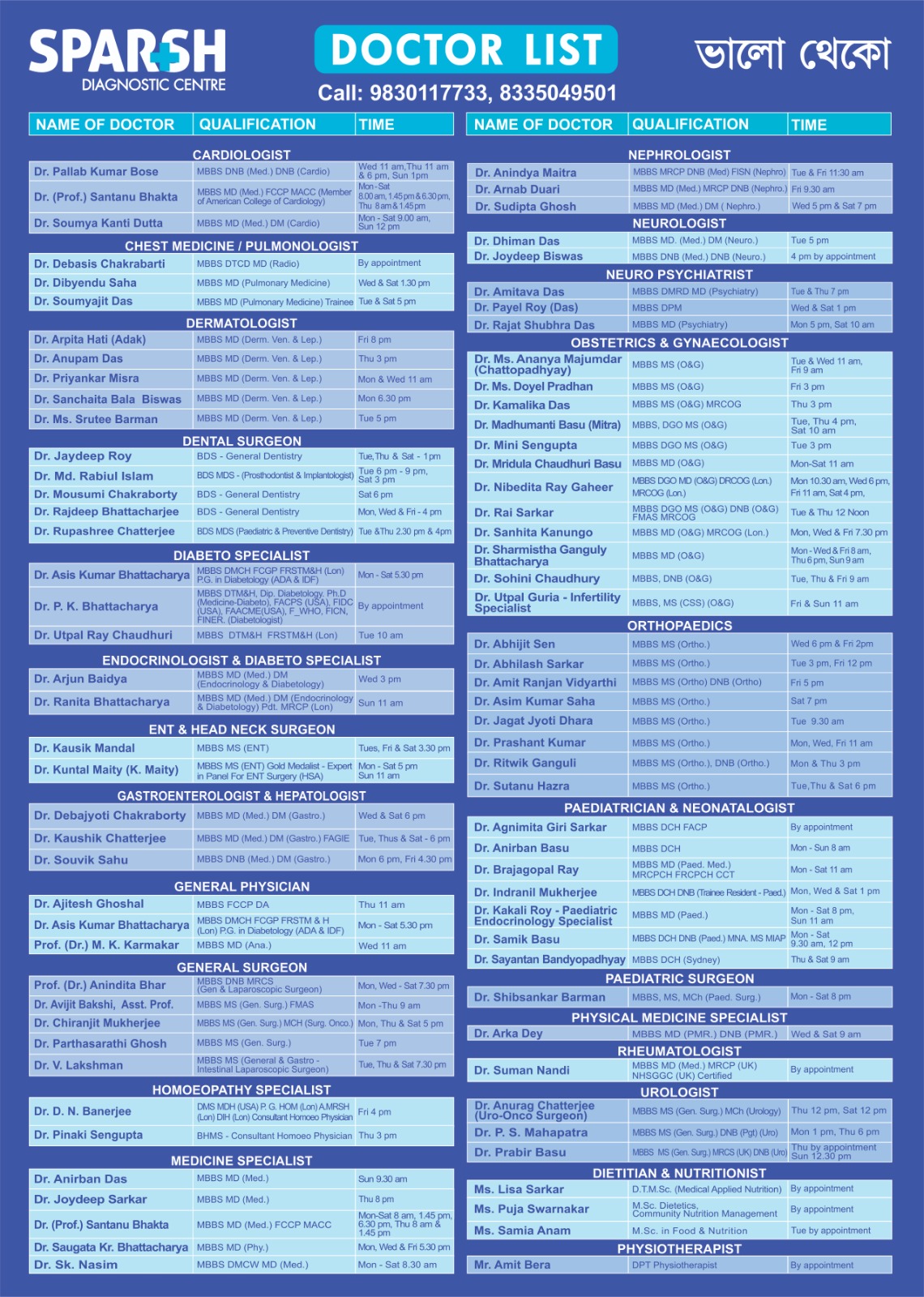
To consult a Doctor at Sparsh Diagnostic Centre, call our helpline numbers 9830117733/ 8335049501.
#BhaloTheko
Disclaimer:
No content on this site, regardless of date, should ever be used as a substitute for direct medical advice from your doctor or other qualified clinician.