Autoimmune diseases are rarely straightforward. Sometimes, the body shows clear signs that something is wrong — joint pain, fatigue, rashes, abnormal blood tests — but the pattern doesn’t fully match a specific diagnosis like Systemic Lupus Erythematosus or Rheumatoid Arthritis.
When that happens, doctors may use a term called Undifferentiated Connective Tissue Disease (UCTD).
If you’ve recently heard this diagnosis, you’re not alone in feeling confused. The name itself sounds vague. But UCTD is a very real condition — and in many cases, it can be mild, manageable, and stable for years.
Let’s break it down clearly and calmly.
What Is Undifferentiated Connective Tissue Disease?
Undifferentiated Connective Tissue Disease (UCTD) is an autoimmune condition in which a person shows symptoms and blood test findings suggestive of a connective tissue disease — but does not meet the full classification criteria for a defined disorder.
In simple terms:
The immune system is misbehaving.
Symptoms resemble diseases like lupus, scleroderma, or Sjögren’s.
But the full picture doesn’t fit neatly into one specific category.
It’s not a “temporary label” or a mistake. It’s a recognized clinical diagnosis used in rheumatology.
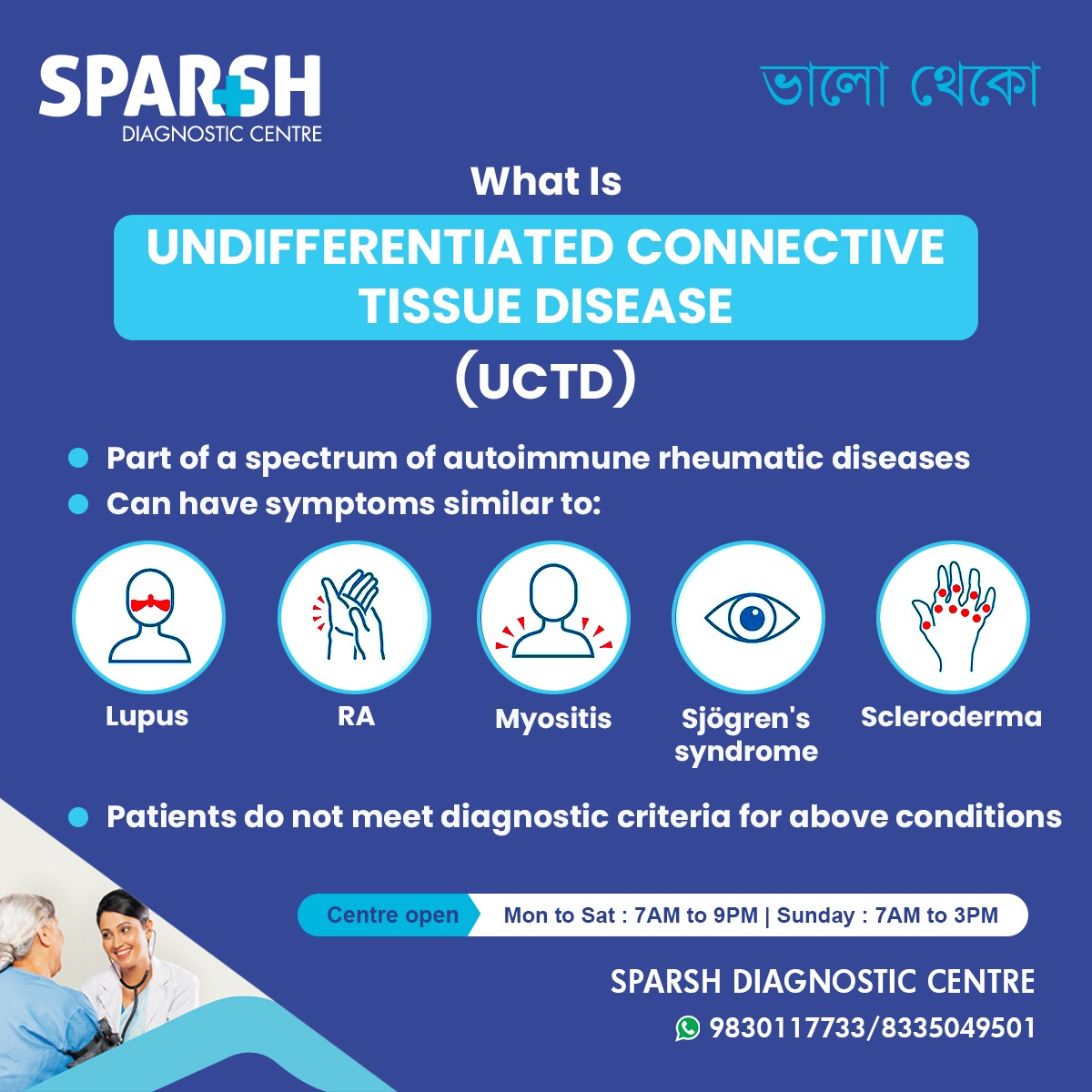
What Are Connective Tissue Diseases?
Connective tissue diseases (CTDs) are autoimmune disorders that affect tissues supporting the body’s structure — joints, skin, blood vessels, organs, and muscles.
Examples include:
In UCTD, patients may have features overlapping with one or more of these conditions — but not enough to confirm any single one.
Why Does UCTD Happen?
Like other autoimmune diseases, UCTD develops when the immune system mistakenly attacks healthy tissues.
The exact cause isn’t fully understood, but contributing factors likely include:
Environmental triggers (infections, stress, UV exposure)
Hormonal influences (more common in women)
Immune dysregulation
Most patients diagnosed with UCTD are women between 20 and 50 years of age.
Common Symptoms of UCTD
Symptoms vary widely. Some people have mild issues, while others experience more persistent discomfort.
Here are the most common symptoms:
1. Joint Pain and Stiffness
Achy, swollen joints are very common. The pattern may resemble early rheumatoid arthritis but often without severe joint damage.
2. Fatigue
Persistent tiredness is one of the most frustrating symptoms. It may feel disproportionate to activity level.
3. Raynaud’s Phenomenon
Fingers or toes turning white or blue in cold temperatures due to blood vessel spasms.
4. Mild Skin Rashes
Some patients develop rashes similar to lupus but not meeting diagnostic criteria.
5. Dry Eyes or Dry Mouth
Symptoms resembling Sjögren’s syndrome can occur.
6. Low-Grade Fever
Occasional unexplained mild fever.
7. Hair Thinning
Not as dramatic as lupus-related hair loss, but noticeable.
8. Muscle Pain
Generalized body aches may accompany joint symptoms.
Importantly, organ-threatening complications are uncommon in stable UCTD.
How Is UCTD Diagnosed?
There is no single test for UCTD. Diagnosis is clinical — meaning it’s based on symptoms, physical examination, and lab findings.
Key Diagnostic Features
Symptoms suggestive of connective tissue disease
Positive autoimmune blood tests (often ANA positive)
No fulfillment of criteria for a specific CTD
Symptoms persisting for at least 3 years (in many definitions)
Blood Tests Commonly Seen in UCTD
Positive ANA (Antinuclear Antibody)
Mildly elevated inflammatory markers
Sometimes anti-Ro/SSA or anti-RNP antibodies
However, antibody profiles don’t fully meet defined disease patterns.
Is UCTD an Early Stage of Lupus?
This is one of the most common fears.
The answer: Sometimes — but often not.
About:
60–70% of patients remain stable with UCTD long term
20–30% may eventually evolve into a defined connective tissue disease
10–20% may experience symptom remission
If progression occurs, it usually happens within the first 5 years.
Careful monitoring by a rheumatologist is key.
UCTD vs Lupus: What’s the Difference?
While UCTD can resemble Systemic Lupus Erythematosus, there are differences:
| Feature | UCTD | Lupus |
|---|---|---|
| Organ Damage | Rare | Can affect kidneys, brain, heart |
| Antibody Pattern | Incomplete | Specific lupus antibodies |
| Severity | Often mild | Can range from mild to severe |
| Disease Criteria | Not fulfilled | Fully met |
This distinction matters because prognosis and treatment intensity differ.
Treatment Options for UCTD
Treatment depends on symptom severity. Many patients require only mild therapy.
1. NSAIDs
For joint pain and inflammation.
2. Hydroxychloroquine
Commonly prescribed. Helps control joint symptoms, fatigue, and rash. Also may reduce progression risk.
3. Low-Dose Steroids
Used short term during flares.
4. Immunosuppressants
Rarely needed unless symptoms become severe or disease evolves.
5. Lifestyle Management
Regular gentle exercise
Stress reduction
Adequate sleep
Sun protection (if photosensitive)
Treatment is highly individualized.
Can UCTD Be Cured?
There is no cure for autoimmune diseases at present.
However:
Many people experience long periods of stability.
Some go into remission.
Severe complications are uncommon.
With proper monitoring, most patients lead normal, active lives.
Prognosis of Undifferentiated Connective Tissue Disease
The overall outlook is generally favorable.
Key points:
Most cases remain mild
Serious organ damage is uncommon
Quality of life can be maintained with proper care
Early treatment improves symptom control
Regular follow-up every 6–12 months is usually recommended.
When to See a Doctor Urgently
Although UCTD is often mild, seek immediate medical care if you develop:
Severe chest pain
Shortness of breath
Persistent high fever
Swelling in legs
Severe headaches
Sudden neurological symptoms
These may indicate disease evolution or complications.
Living With UCTD: Practical Advice
Build a Long-Term Relationship with a Rheumatologist
Consistency matters more than frequent hospital visits.
Track Symptoms
Keep a simple journal noting:
Joint pain patterns
Fatigue levels
New symptoms
Prioritize Energy Management
Autoimmune fatigue is real. Plan activities accordingly.
Protect Mental Health
Chronic illness uncertainty can cause anxiety. Counseling or support groups may help.
Frequently Asked Questions (FAQ)
1. Is Undifferentiated Connective Tissue Disease serious?
In most cases, it is mild and stable. Serious organ damage is uncommon, especially compared to defined diseases like lupus or scleroderma.
2. Does UCTD always turn into lupus?
No. The majority of patients never progress to Systemic Lupus Erythematosus. Only a minority develop a defined connective tissue disease.
3. How long can someone live with UCTD?
Life expectancy is typically normal, especially when the disease remains mild and well-managed.
4. What is the main blood test seen in UCTD?
A positive ANA (Antinuclear Antibody) is common, but it is not specific to UCTD.
5. Can UCTD go away on its own?
Some patients experience remission. Symptoms may decrease significantly over time.
6. Is pregnancy safe with UCTD?
Many women with stable UCTD have successful pregnancies. However, pre-pregnancy counseling with a rheumatologist is important.
7. What triggers UCTD flare-ups?
Possible triggers include:
Stress
Infections
Lack of sleep
Sun exposure
Hormonal changes
8. Is UCTD the same as mixed connective tissue disease?
No. Mixed Connective Tissue Disease (MCTD) has specific antibody patterns and defined diagnostic criteria. UCTD does not meet those criteria.
9. Can diet help UCTD?
While no specific diet cures UCTD, an anti-inflammatory diet rich in:
Fruits
Vegetables
Whole grains
may help reduce systemic inflammation.
10. Should UCTD patients avoid exercise?
No. Gentle, regular exercise improves joint flexibility, reduces fatigue, and enhances mood. Low-impact activities like walking, yoga, and swimming are ideal.
Undifferentiated Connective Tissue Disease can sound unsettling at first — especially because of the word “undifferentiated.” But in reality, it often represents a mild, stable autoimmune condition that simply doesn’t fit neatly into traditional categories.
The key is monitoring, symptom management, and balanced lifestyle choices.
If you’ve been diagnosed with UCTD, remember:
It does not automatically mean severe disease.
It does not always progress.
With proper care, most people live full, active lives.
Uncertainty can be uncomfortable — but it does not equal danger.
And in the world of autoimmune medicine, stability is often a very good sign.
To consult a Rheumatologist at Sparsh Diagnostic Centre, call our helpline numbers 9830117733/ 8335049501.
#BhaloTheko
Disclaimer:
No content on this site, regardless of date, should ever be used as a substitute for direct medical advice from your doctor or other qualified clinician.