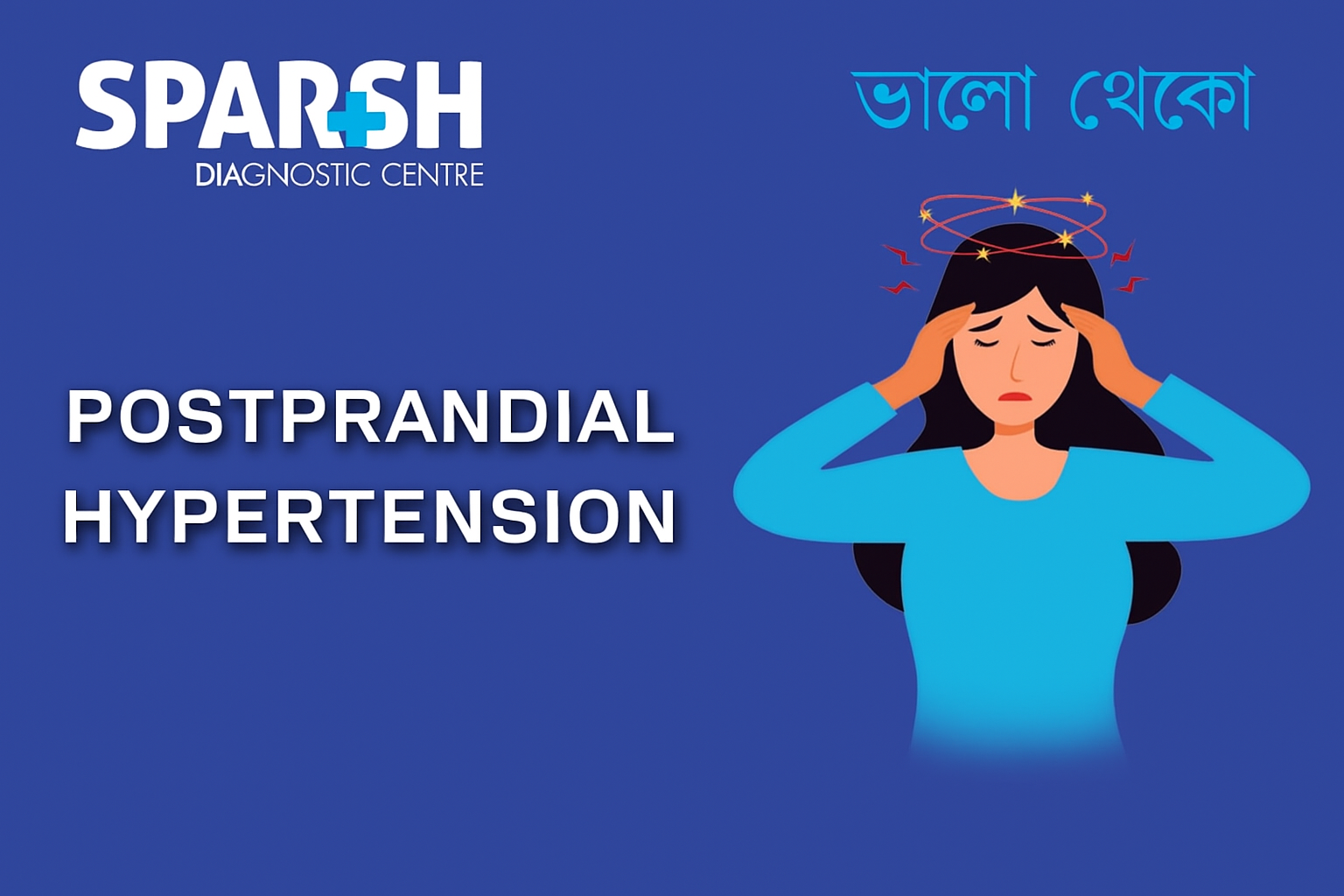
Have you ever checked your blood pressure after a meal and noticed that it is considerably higher than usual? It can be concerning, particularly if you already have hypertension.
Blood pressure does not remain exactly the same throughout the day. It naturally changes with activity, stress, sleep, posture, caffeine, exercise and food intake. Eating can also produce temporary changes in blood flow, heart rate, blood vessel tone and hormones.
In most people, these changes are relatively modest. Some research, however, has identified a pattern in which blood pressure rises rather than falls after eating. This has been described as postprandial hypertension or a postprandial increase in blood pressure.
Understanding why this happens is important because a single high reading after a meal does not necessarily mean that you have developed hypertension. What matters is the pattern, how high the readings are, whether they occur repeatedly and what your blood pressure looks like at other times of the day.
What is postprandial hypertension?
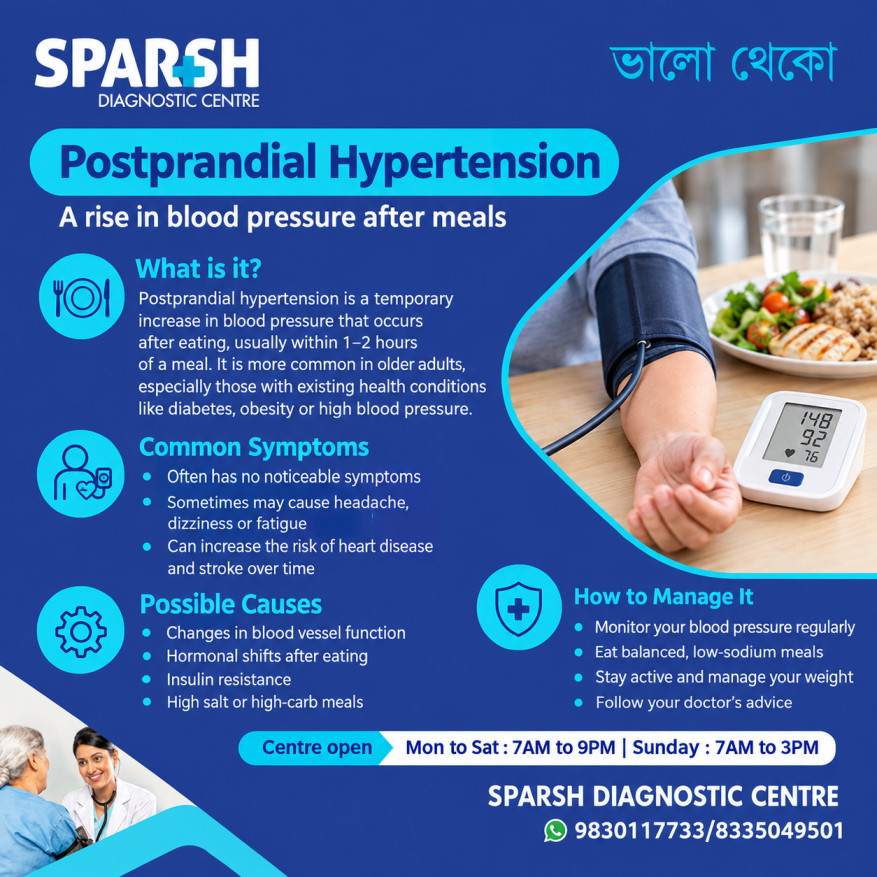
Postprandial means after eating. Therefore, postprandial hypertension refers to a measurable increase in blood pressure during the period following a meal.
Unlike conventional hypertension, which is diagnosed from repeated blood pressure measurements over time, there is no universally accepted clinical definition that establishes a specific post-meal blood pressure increase as a separate hypertension diagnosis.
This distinction is important.
A person’s blood pressure can temporarily rise after eating without meaning that they have postprandial hypertension or chronic hypertension.
Interestingly, the more commonly recognised meal-related blood pressure disorder is the opposite condition: postprandial hypotension. In that condition, blood pressure falls after eating, sometimes substantially. Cleveland Clinic describes postprandial hypotension as a significant blood pressure decrease occurring up to two hours after a meal.
Research has nevertheless shown that some people experience a post-meal increase in blood pressure. In a study of 1,339 apparently healthy middle-aged and older adults, 9.6% had a systolic blood pressure increase of more than 10 mmHg 30 minutes after lunch. The researchers also found associations between postprandial BP increases, insulin resistance and measures of arterial stiffness.
This does not prove that every temporary rise in blood pressure after eating causes artery disease. Rather, it suggests that an exaggerated or repeated postprandial blood pressure response may be worth discussing with a healthcare professional.
Why does blood pressure change after eating?
Eating triggers several physiological processes at the same time.
After food enters the digestive system, blood flow to the stomach and intestines increases to support digestion and absorption. The heart and blood vessels normally adjust to this change by modifying heart rate, cardiac output and vascular tone.
Hormones released after eating can also influence blood vessels and metabolism.
For most people, these adjustments keep blood pressure relatively stable. Research shows that the exact response can vary depending on the meal, age, underlying health conditions and the individual’s cardiovascular and autonomic nervous system function.
In some people, the balance between these systems may result in a temporary rise in blood pressure.
What are the causes of postprandial hypertension?
There is no single cause of a rise in blood pressure after eating. Several factors may contribute.
Large meals
A very large meal places a greater demand on the digestive system. It can produce more pronounced changes in blood flow, heart rate and metabolism than a smaller meal.
If you consistently notice that your BP is much higher after large meals, meal size may be one factor worth considering.
High-sodium meals
Salt can increase fluid retention and contribute to higher blood pressure, particularly in people who are salt-sensitive or already have hypertension.
Restaurant meals, processed foods, pickles, papad, packaged snacks, sauces and other salty foods can sometimes contain considerably more sodium than expected.
High-carbohydrate meals
Carbohydrate-rich meals produce significant metabolic changes, including increases in blood glucose and insulin.
Research has demonstrated that insulin and other post-meal metabolic responses can influence vascular function and blood pressure. However, the relationship is complex, and carbohydrate intake does not automatically cause postprandial hypertension in everyone.
Existing hypertension
People who already have high blood pressure may notice greater fluctuations in their readings throughout the day.
If your baseline BP is already elevated, even a relatively small post-meal increase may push the reading into a higher range.
Insulin resistance and metabolic health
Insulin resistance is another factor that deserves attention.
The 2012 study specifically investigating postprandial hypertension found that post-meal BP increases were independently associated with insulin resistance and measures of arterial stiffness.
This does not mean that everyone with a post-meal BP rise has insulin resistance. It does, however, provide a reason to consider the broader metabolic picture when the pattern occurs repeatedly.
Stress and emotional factors
Stress, anxiety and strong emotions can temporarily increase blood pressure.
Sometimes what appears to be a food-related BP rise is actually influenced by what happens around the meal—for example, rushing to eat, having a stressful conversation, checking BP repeatedly or feeling anxious about the reading.
Caffeine
Tea, coffee, energy drinks and other caffeinated beverages can temporarily raise blood pressure in some people.
If you measure your BP soon after a caffeinated drink and a meal, it can be difficult to determine which factor contributed to the increase.
Alcohol
Alcohol can influence blood pressure and cardiovascular function. Its effects vary with the amount consumed and individual factors.
For people monitoring hypertension, alcohol intake should be discussed with their healthcare professional.
Medications and timing
Some medicines can affect blood pressure, and the timing of medication relative to meals may also matter.
Never change the timing or dose of prescribed blood pressure medication simply because your BP is higher or lower after eating. Medication adjustments should be made with your doctor.
Why do I get hypertension after eating?
If your blood pressure repeatedly increases after meals, several explanations are possible.
It may simply reflect normal short-term variation. It could also be related to the size or composition of the meal, sodium intake, caffeine, stress, existing hypertension or metabolic factors.
Another possibility is measurement technique.
For example, taking your BP immediately after walking around, talking, eating, climbing stairs or sitting in an uncomfortable position can produce a higher reading that has little to do with the meal itself.
The American Heart Association recommends sitting quietly for at least five minutes before measuring BP, keeping the arm supported at heart level and taking two readings about one minute apart.
That makes it easier to distinguish a genuine pattern from an isolated reading.
Why does my blood pressure increase so much after I eat?
A substantial rise deserves more attention than a small fluctuation, especially if it happens regularly.
First, make sure the measurement is reliable. Use a validated upper-arm monitor with the correct cuff size. Sit quietly, keep your back supported and feet flat on the floor, support your arm at heart level and avoid talking during the measurement.
It is also useful to record:
- Your BP before the meal
- What you ate
- The amount of food you consumed
- Caffeine or alcohol intake
- Your BP 30, 60 and possibly 120 minutes afterward
- Any symptoms
- Your medication timing
Keeping a record over several days can reveal whether the increase is consistent.
One high reading should not be used to diagnose hypertension. The American Heart Association notes that a single high reading is not necessarily cause for alarm and recommends repeating the measurement and recording the results.
What are the symptoms of postprandial hypertension?
One of the challenges is that high blood pressure often causes no symptoms at all.
Therefore, you cannot reliably determine whether your BP has increased simply by how you feel.
When blood pressure rises substantially, some people may experience:
- Headache
- A feeling of pressure or discomfort
- Dizziness
- Palpitations
- Flushing
- Feeling unwell
- Shortness of breath in some circumstances
However, these symptoms are nonspecific. They can have many other causes and do not prove that blood pressure has increased.
This is why measuring BP properly is more useful than relying on symptoms alone.
It is also worth remembering that dizziness, weakness, nausea and fainting after meals can occur with postprandial hypotension, where BP falls rather than rises. Cleveland Clinic and MSD Manual both identify dizziness, light-headedness, weakness, fatigue and fainting among possible symptoms of postprandial hypotension.
How long does postprandial hypertension last?
There is no single duration that applies to everyone.
The timing and duration of post-meal BP changes depend on the meal, the person’s cardiovascular and metabolic health, medications and other factors.
Some blood pressure changes can occur relatively soon after eating and then settle as digestion progresses. Research into normal postprandial haemodynamic responses has shown that cardiovascular changes can occur rapidly after a meal and evolve over several hours.
The 2012 study on postprandial hypertension measured BP 30 minutes after lunch, so it provides evidence for an early post-meal increase but does not establish that every episode lasts for a particular number of hours.
This is an important difference from postprandial hypotension, for which the medical literature commonly describes BP falls occurring within the first one to two hours after eating.
If your BP remains unusually high for several hours after meals, or if elevated readings occur even when you have not eaten, it is better to investigate the overall blood pressure pattern rather than assuming food is the only cause.
How is postprandial hypertension evaluated?
If you regularly notice high BP after eating, your doctor may ask you to keep a blood pressure diary.
A useful record can include:
Before eating:
Measure BP after resting quietly.
After eating:
Measure again at consistent intervals, such as 30, 60 and 120 minutes, if your healthcare professional recommends this.
Record additional information:
Note the meal, caffeine, activity, symptoms and medication timing.
Your doctor may also recommend 24-hour ambulatory blood pressure monitoring. This can provide a much broader picture of how your BP behaves during daytime activities, meals and sleep.
Depending on your history, evaluation may also include tests for diabetes or insulin resistance, kidney disease, cholesterol abnormalities and other cardiovascular risk factors.
How can you manage high blood pressure after eating?
The most useful approach is usually to identify and address the factors contributing to your overall blood pressure.
Choose balanced meals
Focus on vegetables, whole grains, legumes, fruits in appropriate portions, nuts and other minimally processed foods.
A balanced diet can help support healthier blood pressure and metabolic function.
Limit excess sodium
Reducing highly salty and processed foods can be particularly helpful if you have hypertension or are salt-sensitive.
Avoid very large meals
If you consistently notice a large BP change after heavy meals, smaller portions may be worth trying.
Watch caffeine
If you suspect coffee or strong tea is contributing to your readings, discuss this with your healthcare professional and consider tracking BP in relation to caffeine intake.
Stay physically active
Regular physical activity is an important part of long-term blood pressure management.
However, avoid measuring BP immediately after exercise and interpreting that reading as your resting BP.
Maintain a healthy weight
Excess body weight is associated with hypertension and metabolic abnormalities. Improving overall metabolic health may also help reduce blood pressure variability.
Take prescribed medication correctly
If you have been prescribed antihypertensive medication, take it according to your doctor’s instructions.
Do not skip, double or move doses based on an isolated post-meal reading.
Is postprandial hypertension dangerous?
A temporary rise after eating is not automatically dangerous.
What matters is the size, frequency and context of the increase, as well as your overall cardiovascular risk.
The 2012 observational study found that postprandial BP increases were associated with markers of arteriosclerosis and insulin resistance. However, this was an observational study, so the findings do not establish that the post-meal BP rise itself caused arterial disease.
Repeated high readings should therefore be viewed as a reason to assess your overall cardiovascular health rather than as proof of a specific disease.
When should you seek urgent medical attention?
If your blood pressure is higher than 180/120 mmHg, wait at least one minute and measure it again.
If it remains that high, contact a healthcare professional promptly. If a reading above 180/120 mmHg is accompanied by symptoms such as chest pain, shortness of breath, weakness or numbness, difficulty speaking, back pain or changes in vision, emergency medical care is required.
Do not assume that a very high reading is simply because you have just eaten.
Frequently asked questions about postprandial hypertension
What are the causes of postprandial hypertension?
Possible contributors include large meals, high-sodium or certain carbohydrate-rich meals, existing hypertension, metabolic abnormalities such as insulin resistance, stress, caffeine and individual differences in cardiovascular regulation. However, there is no single established cause, and postprandial hypertension is less well defined clinically than postprandial hypotension.
Why do I get hypertension after eating?
Blood pressure naturally fluctuates throughout the day, and eating triggers changes in blood flow, heart rate, hormones and metabolism. In some people, these changes may temporarily produce a rise in BP. Meal composition, portion size, caffeine, stress and existing hypertension can also contribute.
How long does postprandial hypertension last?
There is no universally established duration. The response varies between individuals and meals. A temporary rise may settle as digestion progresses. If your BP remains high for several hours or repeatedly rises after meals, discuss the pattern with a healthcare professional.
What are the symptoms of postprandial hypertension?
Often, there are no symptoms. Some people may report headache, dizziness, palpitations, flushing or feeling unwell, but these symptoms are not specific to postprandial hypertension. The only reliable way to know whether your BP has risen is to measure it correctly.
Why does my blood pressure increase so much after I eat?
A large post-meal increase may be influenced by the meal itself, sodium or caffeine intake, stress, existing hypertension, metabolic factors or measurement technique. Repeated substantial increases should be documented and discussed with a healthcare professional rather than attributed to food alone.
Is high blood pressure after eating normal?
Blood pressure can fluctuate after meals, and a modest temporary change does not necessarily indicate disease. However, consistently high or markedly elevated readings deserve evaluation.
Is postprandial hypertension the same as postprandial hypotension?
No. They describe opposite changes. Postprandial hypertension refers to a rise in BP after eating, whereas postprandial hypotension refers to a fall in BP after eating. Postprandial hypotension is much more extensively recognised and studied as a clinical condition.
Should I check my blood pressure immediately after eating?
If you are investigating a possible post-meal BP pattern, your healthcare professional may recommend specific timing. For routine home BP monitoring, measurements should be taken using proper technique and under consistent conditions. The American Heart Association recommends resting quietly for at least five minutes and taking two readings one minute apart.
Can high blood pressure after meals mean I have hypertension?
Not necessarily. Hypertension is diagnosed from a pattern of appropriately measured readings rather than one isolated post-meal measurement. If your readings are repeatedly elevated, whether before or after meals, speak with your healthcare professional.
Can diabetics develop postprandial hypertension?
Yes, particularly those with diabetic autonomic neuropathy, making them more susceptible.
The bottom line
Blood pressure changes after eating are real, but they are not identical in everyone. While most medical literature focuses on postprandial hypotension, research has also documented postprandial increases in blood pressure, particularly among some middle-aged and older adults.
If you repeatedly notice that your BP rises significantly after meals, don’t rely on symptoms alone. Measure it correctly, keep a record of your readings and meals, and discuss the pattern with your doctor.
Most importantly, don’t change your blood pressure medication based on a single reading. And if your BP is repeatedly above 180/120 mmHg, particularly with symptoms such as chest pain, breathing difficulty, weakness, vision changes or difficulty speaking, seek emergency medical care.
Need help monitoring your blood pressure trends?
Visit Sparsh Diagnostic Centre for ambulatory BP monitoring, autonomic testing, and expert consultation with our physicians.
#BhaloTheko
Disclaimer:
No content on this site, regardless of date, should ever be used as a substitute for direct medical advice from your doctor or other qualified clinician.