


Luteinizing hormone (LH) is an important reproductive hormone that helps regulate ovulation, menstrual cycles, testosterone production and fertility. If you have recently had an LH blood test, you may be wondering whether your result is normal, what high or low levels mean, or whether your hormone levels could affect your chances of getting pregnant.
Because LH influences several reproductive processes, measuring its level can help doctors investigate irregular periods, fertility difficulties, low testosterone and certain hormonal disorders.
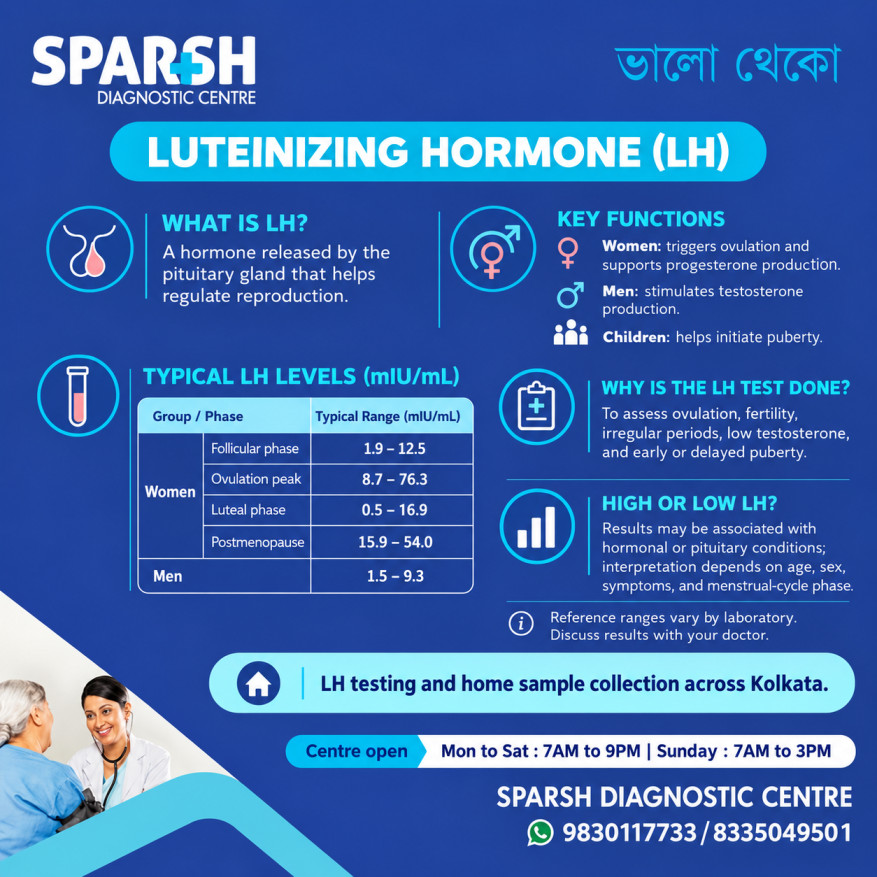
What are the main functions of LH?
LH supports reproductive health throughout different stages of life.
In women:
- Supports ovarian function: LH helps regulate the activity of ovarian follicles and the production of reproductive hormones.
- Triggers ovulation: A sudden rise in LH, called the LH surge, triggers the release of a mature egg from an ovarian follicle.
- Supports progesterone production: After ovulation, LH helps the corpus luteum, the structure formed from the emptied follicle, produce progesterone. This hormone prepares the uterine lining for a possible pregnancy.
In men:
- Stimulates testosterone production: LH acts on Leydig cells in the testes, encouraging them to produce testosterone.
- Supports reproductive function: Testosterone is essential for male sexual development and contributes to the hormonal environment needed for sperm production.
In children:
LH contributes to the hormonal changes that initiate puberty. Testing may help investigate puberty that begins unusually early or is delayed.
What is the normal level of LH?
Normal luteinizing hormone levels depend on age, sex, reproductive status and, in women, the stage of the menstrual cycle. The laboratory performing the test may also use a different reference range depending on its testing method.
The following table provides typical adult reference ranges that may be used as a general guide.
| Group or menstrual phase | Typical LH range (mIU/mL) |
|---|---|
| Women – follicular phase | 1.9–12.5 |
| Women – ovulation peak | 8.7–76.3 |
| Women – luteal phase | 0.5–16.9 |
| Women – after menopause | 15.9–54.0 |
| Men – adult range | 1.5–9.3 |
These are illustrative reference ranges. Your laboratory’s report may show different values. Always use the range printed on your report and seek medical interpretation when necessary.
Understanding LH levels during the menstrual cycle
LH levels change naturally throughout the menstrual cycle.
Follicular phase: This phase begins on the first day of menstruation. LH helps support ovarian follicle development and hormone production.
Ovulation: Around the middle of the cycle, a sharp rise in LH triggers the release of a mature egg. This is known as the LH surge. Its timing varies, especially in women with irregular cycles.
Luteal phase: After ovulation, LH levels generally fall. The corpus luteum produces progesterone to support the uterine lining.
After menopause: LH levels generally increase because the ovaries produce less oestrogen, reducing the feedback signals that normally help regulate pituitary hormone production.
These changes explain why the timing of an LH test is particularly important when investigating ovulation or fertility.
What is an LH blood test?
An LH blood test measures the amount of luteinizing hormone circulating in your blood. It is usually performed by collecting a blood sample from a vein in your arm.
Your doctor may recommend the test to investigate:
- Irregular, absent or unusually infrequent menstrual periods.
- Difficulty becoming pregnant or suspected ovulation problems.
- Symptoms associated with early menopause or reduced ovarian function.
- Low testosterone levels in men.
- Possible pituitary or hypothalamic disorders.
- Early or delayed puberty in children and adolescents.
LH testing is frequently performed alongside FSH testing because these hormones work together. Depending on your symptoms, your doctor may also request oestradiol, progesterone, testosterone, prolactin, thyroid tests or other investigations.
How should you prepare for an LH test?
Most people do not need extensive preparation for an LH blood test, but your doctor may give specific instructions.
If the test is being performed to assess ovulation or fertility, you may be asked to have it on a particular day of your menstrual cycle. For other investigations, the timing may be different.
Tell your doctor about any hormonal medicines, fertility treatments, contraceptives or other medications you take. Do not stop prescribed medication without medical advice.
An LH blood test and a urine ovulation test are not the same. A blood test measures LH in the bloodstream, while an ovulation predictor kit detects the rise in LH in urine to help estimate when ovulation may occur.
What happens if LH is high?
High LH levels can be normal or may indicate an underlying hormonal problem, depending on the circumstances.
In women of reproductive age, a high LH result may simply reflect the natural surge that occurs before ovulation. However, persistently elevated LH outside the expected phase of the menstrual cycle may warrant further investigation.
Possible causes include:
- Menopause: LH commonly rises as ovarian hormone production declines.
- Reduced ovarian function: When the ovaries produce less oestrogen, the pituitary gland may release more LH in response.
- Polycystic ovary syndrome (PCOS): Some women with PCOS have altered LH secretion, although LH is not consistently elevated in everyone with the condition.
- Certain genetic conditions: Conditions affecting ovarian or testicular function may be associated with elevated LH.
- Testicular dysfunction in men: If the testes produce insufficient testosterone, LH may rise as the body attempts to stimulate them.
Symptoms depend on the underlying cause. They may include irregular periods, difficulty conceiving, reduced testosterone, changes in sexual function or symptoms associated with menopause.
An elevated LH result alone cannot establish a diagnosis. Your doctor will interpret it alongside your symptoms, other hormone measurements and medical history.
What if LH is low in females?
Low LH levels in women may indicate that the pituitary gland or hypothalamus is not providing sufficient hormonal stimulation to the ovaries. This can interfere with follicle development and ovulation.
Possible causes include:
- Hypothalamic dysfunction: Physical or emotional stress, inadequate nutrition, significant weight loss or excessive exercise can disrupt the hormonal signals that regulate menstruation.
- Pituitary disorders: Certain conditions affecting the pituitary gland may reduce LH production.
- Some medications or hormonal treatments: These can suppress the normal release of reproductive hormones.
- Pregnancy: Reproductive hormone patterns change during pregnancy, and LH is generally suppressed.
- Other hormonal disorders: The cause may become clearer when LH is assessed alongside FSH, oestradiol and other tests.
Low LH may be associated with irregular or absent periods, lack of ovulation and difficulty becoming pregnant. However, a single low result does not necessarily mean there is a medical problem. LH is normally low during certain phases of the menstrual cycle.
If your LH result is low and you have missed periods or are trying to conceive, consult a gynaecologist or endocrinologist for an appropriate assessment.
Is a luteinizing hormone level of 0.7 normal?
An LH level of 0.7 mIU/mL is below the typical reference range shown for many adult women during the follicular phase and for adult men. However, whether it is abnormal depends on the laboratory range, the person’s circumstances and why the test was ordered.
For example, LH may be suppressed by certain hormonal medicines or fertility treatments. It may also be low in some conditions affecting the hypothalamus or pituitary gland.
A value of 0.7 should not be interpreted in isolation. Your doctor may consider your age, menstrual cycle day, symptoms, medication use and accompanying FSH or sex hormone results before deciding whether further testing is necessary.
If the result is unexpectedly low, do not try to increase LH with supplements or medication on your own. The appropriate approach is to identify the reason for the result.
When should LH be high?
LH should rise naturally just before ovulation in women who have regular ovulatory menstrual cycles. This temporary increase is essential for triggering the release of a mature egg.
In a typical 28-day cycle, the LH surge may occur around day 14, but not everyone ovulates on day 14. The timing varies according to cycle length and individual hormonal patterns.
An LH surge detected by a urine ovulation kit usually suggests that ovulation may occur within approximately the next one to two days. However, an LH surge does not guarantee that an egg will be released.
LH can also be elevated after menopause. In other situations, persistently high levels may indicate reduced ovarian or testicular function or another hormonal condition.
The key distinction is between a temporary, expected rise and a persistently elevated result that does not fit the person’s reproductive stage.
Can I get pregnant with high LH?
Yes, pregnancy is possible with high LH levels, but the reason for the elevation matters.
If your LH is high because of the normal ovulatory surge, this is a useful sign that your fertile window may be approaching. Having sex during the days leading up to ovulation and around ovulation can improve the chances of conception.
However, persistently high LH associated with PCOS or impaired ovarian function may indicate that ovulation is irregular or does not occur consistently. In these circumstances, becoming pregnant may be more difficult, although many women with PCOS conceive naturally or with appropriate treatment.
Remember that LH is only one part of fertility. Age, egg quality, fallopian tube function, sperm health, timing of intercourse and other medical factors also influence the likelihood of pregnancy.
If you have irregular periods, have been trying to conceive without success or have repeatedly abnormal hormone results, a fertility assessment can help identify the next steps.
Can LH be high for two days?
Yes. An LH surge can remain elevated for around two days in some women, although its duration and intensity vary. Some surges are shorter, while others last longer or have a more gradual pattern.
This is one reason urine ovulation predictor kits may show a positive result on consecutive days. A positive result indicates that LH has risen above the test’s detection threshold; it does not necessarily mean that ovulation has already occurred.
Women with PCOS may also experience elevated baseline LH or repeated rises that make ovulation predictor kits more difficult to interpret.
If you are tracking ovulation, follow the instructions supplied with your test kit. If your cycles are irregular or the results repeatedly suggest an LH surge without a clear pattern, your doctor may recommend additional monitoring, such as ultrasound follicular tracking or appropriately timed progesterone testing.
What are the signs of strong ovulation?
Ovulation is the release of a mature egg from an ovary. Some women notice clear physical signs around this time, while others experience very few noticeable changes.
Common signs associated with ovulation include:
- Clear, stretchy cervical mucus: Vaginal discharge may become slippery and resemble raw egg white, making it easier for sperm to move through the reproductive tract.
- A positive ovulation predictor test: A urine test may detect the LH surge that usually precedes ovulation.
- Mild pelvic discomfort: Some women experience a brief ache or twinge on one side of the lower abdomen, known as mittelschmerz.
- Increased sexual desire: Some women notice a temporary increase in libido around their fertile window.
- A slight rise in basal body temperature: Body temperature generally rises slightly after ovulation because of progesterone. This is more useful for identifying ovulation retrospectively than predicting it in advance.
- Breast tenderness or bloating: Hormonal changes may cause these symptoms, although they are not specific to ovulation.
It is important to understand that the term “strong ovulation” is not a formal medical diagnosis. The presence of these signs does not prove that an egg has been released or that the egg is of good quality.
If confirmation is needed, a doctor may recommend ultrasound monitoring or a progesterone blood test at the appropriate time in the menstrual cycle.
How can I reduce my LH levels?
The right way to reduce high LH levels depends on why they are elevated. In some situations, such as the natural LH surge before ovulation, lowering LH is neither necessary nor desirable.
If your LH remains high outside the expected phase of your menstrual cycle, your doctor may investigate the underlying cause before recommending treatment.
Possible approaches include:
1. Treat the underlying hormonal condition
If PCOS is contributing to irregular cycles, treatment may focus on menstrual regularity, metabolic health, acne, excess hair growth or fertility, depending on your needs. Treatment is individualised rather than aimed solely at lowering LH.
2. Review your medications
Some hormonal medicines and fertility treatments influence LH levels. Your doctor can determine whether medication is contributing to your result and whether any adjustment is appropriate.
3. Support overall hormonal health
Adequate nutrition, regular physical activity, sufficient sleep and stress management can support general reproductive health. If low energy intake, significant weight loss or excessive exercise is disrupting your menstrual cycle, correcting these factors may help restore normal hormonal signalling.
4. Investigate ovarian or pituitary problems
If elevated LH is associated with reduced ovarian function or another endocrine condition, additional evaluation and condition-specific management may be necessary.
Do not take birth control pills, hormone supplements or fertility medicines simply to lower an LH result. The treatment that is appropriate for one person may be unsuitable for another, particularly if pregnancy is a goal.
LH and PCOS: what is the connection?
Polycystic ovary syndrome (PCOS) is a hormonal condition that can affect menstrual cycles, ovulation, skin and fertility.
Some women with PCOS have altered LH secretion or a higher LH-to-FSH ratio. This may contribute to changes in ovarian hormone production. However, neither a high LH level nor an elevated LH-to-FSH ratio is sufficient to diagnose PCOS.
Diagnosis generally involves assessing menstrual patterns, signs or laboratory evidence of excess androgen hormones, and sometimes ultrasound findings, while excluding other possible causes.
Women with PCOS do not all have the same LH levels. A normal LH result does not rule out PCOS, and a high result does not confirm it.
If you have irregular periods, acne, excess facial hair or difficulty conceiving, speak with a gynaecologist about whether further evaluation is appropriate.
How are abnormal LH levels treated?
Treatment depends on the diagnosis, symptoms and reproductive goals.
For women experiencing irregular ovulation, management may involve addressing an underlying hormonal condition or using fertility treatment when pregnancy is desired. Women approaching menopause may need an assessment of symptoms and overall health rather than treatment to lower LH itself.
For men with low testosterone and abnormal LH levels, doctors may assess testicular function, pituitary function and other possible causes before recommending treatment. Fertility goals are particularly important because some testosterone treatments can suppress sperm production.
In children, unusually high or low LH may require specialist assessment to investigate early or delayed puberty.
In every case, the aim is to manage the underlying problem rather than simply bring a laboratory value into a reference range.
When should you consult a doctor about your LH level?
Consider seeking medical advice if you have:
- Periods that are persistently irregular or absent.
- Difficulty becoming pregnant or suspected problems with ovulation.
- Symptoms suggesting reduced testosterone, such as reduced libido.
- Unexpectedly high or low LH results, particularly when other hormone tests are abnormal.
- Signs of puberty that begin unusually early or appear significantly delayed.
Your doctor may repeat the test, recommend testing at a particular point in the menstrual cycle or order additional investigations.
An isolated abnormal result does not necessarily indicate infertility or a serious illness. Interpreting LH alongside other findings is the most useful way to understand what it means for your health.
Frequently asked questions about luteinizing hormone
What is a normal level of LH?
Normal LH levels vary with age, sex, reproductive status and menstrual cycle phase. Typical adult ranges include 1.9–12.5 mIU/mL during the follicular phase, 8.7–76.3 mIU/mL around the ovulation peak, 0.5–16.9 mIU/mL during the luteal phase and 1.5–9.3 mIU/mL in adult men. These are illustrative ranges; your laboratory’s reference values should take priority.
What happens if LH is high?
High LH can be a normal finding during the ovulatory surge or after menopause. Persistently elevated levels may be associated with PCOS, reduced ovarian function or testicular dysfunction. The significance depends on the timing of the test and the person’s clinical history.
What if LH is low in females?
Low LH may occur naturally during certain phases of the menstrual cycle or because of hormonal medicines. It can also indicate reduced signalling from the hypothalamus or pituitary gland. If associated with absent periods or difficulty conceiving, further evaluation may be needed.
Is a luteinizing hormone level of 0.7 normal?
An LH level of 0.7 mIU/mL is below many typical adult reference ranges, but its significance depends on the laboratory, menstrual cycle phase, medication use and clinical context. Your doctor can determine whether repeat testing or further investigation is necessary.
How can I reduce my LH levels?
You should not try to lower LH without understanding why it is elevated. A normal ovulatory surge does not require treatment. If LH is persistently high, management may involve treating an underlying condition, reviewing medication or investigating ovarian or testicular function.
When should LH be high?
In women with ovulatory cycles, LH rises sharply before ovulation, often around the middle of the cycle. The timing varies from person to person. LH may also remain elevated after menopause or in certain hormonal conditions.
Can I get pregnant with high LH?
Yes, particularly when the elevation represents the normal LH surge before ovulation. However, persistently high LH associated with conditions that disrupt ovulation may make conception more difficult. A fertility assessment can help identify the cause.
Can LH be high for two days?
Yes. An LH surge can last around two days in some women, although the duration varies. Consecutive positive ovulation predictor tests can be normal. Repeated or prolonged positive results may need further interpretation if cycles are irregular.
What are the signs of strong ovulation?
Clear, stretchy cervical mucus, a positive ovulation predictor test, mild one-sided pelvic discomfort and a slight rise in basal body temperature can be associated with ovulation. These signs do not confirm egg release or egg quality; ultrasound monitoring or appropriately timed progesterone testing may provide additional information.
Does an LH blood test require fasting?
Fasting is not routinely required for an LH blood test alone. However, follow the instructions given by your doctor or laboratory, particularly if other tests are being performed at the same time.
Is LH testing useful for fertility?
Yes. LH testing can help assess hormonal function and identify the surge that usually precedes ovulation. However, LH alone cannot establish whether a person is fertile or guarantee that ovulation has occurred.
Luteinizing hormone plays a vital role in reproductive health, from triggering ovulation to stimulating testosterone production. Both high and low LH levels can be meaningful, but neither should be interpreted without considering age, symptoms, menstrual cycle timing and other hormone results.
If you have an abnormal LH result or concerns about irregular periods, ovulation or fertility, discuss the findings with your doctor. The right interpretation can help determine whether further testing is necessary and guide appropriate care.
At Sparsh Diagnostic Centre, LH testing can form part of a doctor’s evaluation of reproductive and hormonal health. Speak with your healthcare provider about the appropriate timing of your test and the next steps based on your results.
🧪 Need to Check Your LH Levels?
At Sparsh Diagnostic Centre, we offer:
Accurate LH, FSH, and hormonal tests
Home sample collection across Kolkata
Expert analysis and consultation
Fast and reliable reports
👉 Book your LH test today:
https://www.sparshdiagnostica.com
#BhaloTheko
Disclaimer:
No content on this site, regardless of date, should ever be used as a substitute for direct medical advice from your doctor or other qualified clinician.

Sources and further reading
The following authoritative medical resources informed this article and can be consulted for additional information:
- Cleveland Clinic – Luteinizing hormone (LH): levels, function and testing.
https://my.clevelandclinic.org/health/body/22255-luteinizing-hormone - MedlinePlus, U.S. National Library of Medicine – Luteinizing hormone (LH) levels test.
https://medlineplus.gov/lab-tests/luteinizing-hormone-lh-levels-test/ - Society for Endocrinology: You and Your Hormones – Luteinising hormone.
https://www.yourhormones.info/hormones/luteinising-hormone/ - MedlinePlus Medical Encyclopedia – Luteinizing hormone (LH) blood test.
https://medlineplus.gov/ency/article/003708.htm - Unipath – Understanding the luteinizing hormone (LH) levels test: what you need to know.
https://unipath.in/blogs/understanding-the-luteinizing-hormone-lh-levels-test-what-you-need-to-know - Cloudnine – Luteinising hormone (LH) levels.
https://www.cloudninecare.com/blog/luteinising-hormone-lh-levels
Medical disclaimer: This article is intended for general educational purposes and is not a substitute for professional medical advice, diagnosis or treatment. LH reference ranges vary by laboratory, and test results should be interpreted by a qualified healthcare professional.


[…] check hormone levels, including FSH, LH, prolactin, thyroid hormones, and […]
[…] include LH, FSH, estrogen, testosterone, and cortisol levels to assess overall pituitary […]
[…] 2. Luteinizing Hormone (LH) […]
[…] tests – To check hormone levels (androgens, insulin, LH, […]
[…] LH and FSH […]
[…] Tests (LH, FSH, estrogen, TSH, […]
[…] LH/FSH […]
[…] Luteinizing Hormone (LH) and Follicle-Stimulating Hormone (FSH): Control reproductive functions. […]
[…] Tests: Measure hormone levels, including testosterone, estrogen, luteinizing hormone (LH), and follicle-stimulating hormone […]
[…] Imbalances: Women with PCOS tend to have higher-than-normal levels of androgens (male hormones) and luteinizing hormone (LH), which can prevent the ovaries from releasing eggs properly and lead to many of the symptoms […]
[…] imbalances in both men and women, such as thyroid function, follicle-stimulating hormone (FSH), luteinizing hormone (LH), and testosterone […]
[…] (Around Day 14): A surge in luteinizing hormone (LH) causes the dominant follicle to release a mature […]
[…] works closely with another hormone, Luteinizing Hormone (LH), to regulate reproductive […]