


Have you ever experienced a stuffy nose, facial pain, or a constant feeling of pressure around your eyes or forehead? You may have been dealing with sinusitis. Sinusitis, commonly known as a sinus infection, is a condition where the tissues lining the sinuses become inflamed or swollen, leading to nasal congestion, headaches, and difficulty breathing.
While sinusitis is a common problem, persistent or recurrent infections can affect your daily life and overall health. Let’s understand everything about sinusitis — from its types and causes to modern diagnostic and treatment options.
What is Sinusitis?
Sinuses are air-filled cavities located within the bones of your face and skull — particularly around the nose, cheeks, and eyes. Under normal circumstances, these sinuses are lined with a thin layer of mucus that helps keep the nasal passages moist and free from bacteria or dust.
However, when these sinuses become inflamed due to infection, allergies, or other irritants, the mucus cannot drain properly. This leads to blockage, congestion, and pain, resulting in a condition known as sinusitis.
Types of Sinusitis
Sinusitis can be classified based on how long the symptoms last and how often they occur.
Acute Sinusitis
Duration: Up to 4 weeks
Cause: Usually triggered by a viral infection such as the common cold
Symptoms: Stuffy nose, facial pain, and thick nasal discharge
Subacute Sinusitis
Duration: 4 to 12 weeks
Cause: Bacterial infection or untreated acute sinusitis
Chronic Sinusitis
Duration: More than 12 weeks
Cause: Often linked to allergies, nasal polyps, or structural problems in the nasal cavity
Symptoms: Persistent congestion, reduced sense of smell, nasal blockage
Recurrent Sinusitis
Definition: Four or more episodes of sinusitis in one year
Cause: Underlying allergies or immune deficiencies
Common Causes of Sinusitis
Sinusitis can be caused by a variety of factors, including infections, allergies, and structural nasal problems.
Viral Infections:
The most common cause, often following a cold or upper respiratory infection.Bacterial Infections:
If symptoms last for more than 10 days or worsen after initial improvement, bacteria might be responsible.Allergies:
Allergic reactions cause swelling and mucus buildup, which block the sinus passages.Nasal Polyps:
These are noncancerous growths in the nasal passages that obstruct sinus drainage.Deviated Nasal Septum:
A deviated septum can restrict airflow and lead to frequent sinus infections.Fungal Infections:
Rare but possible, especially in people with weakened immune systems.Environmental Factors:
Pollution, cigarette smoke, or dry air can irritate nasal passages and trigger sinus inflammation.
Common Symptoms of Sinusitis
Symptoms may vary depending on the type and severity of the sinus infection, but most patients experience some or all of the following:
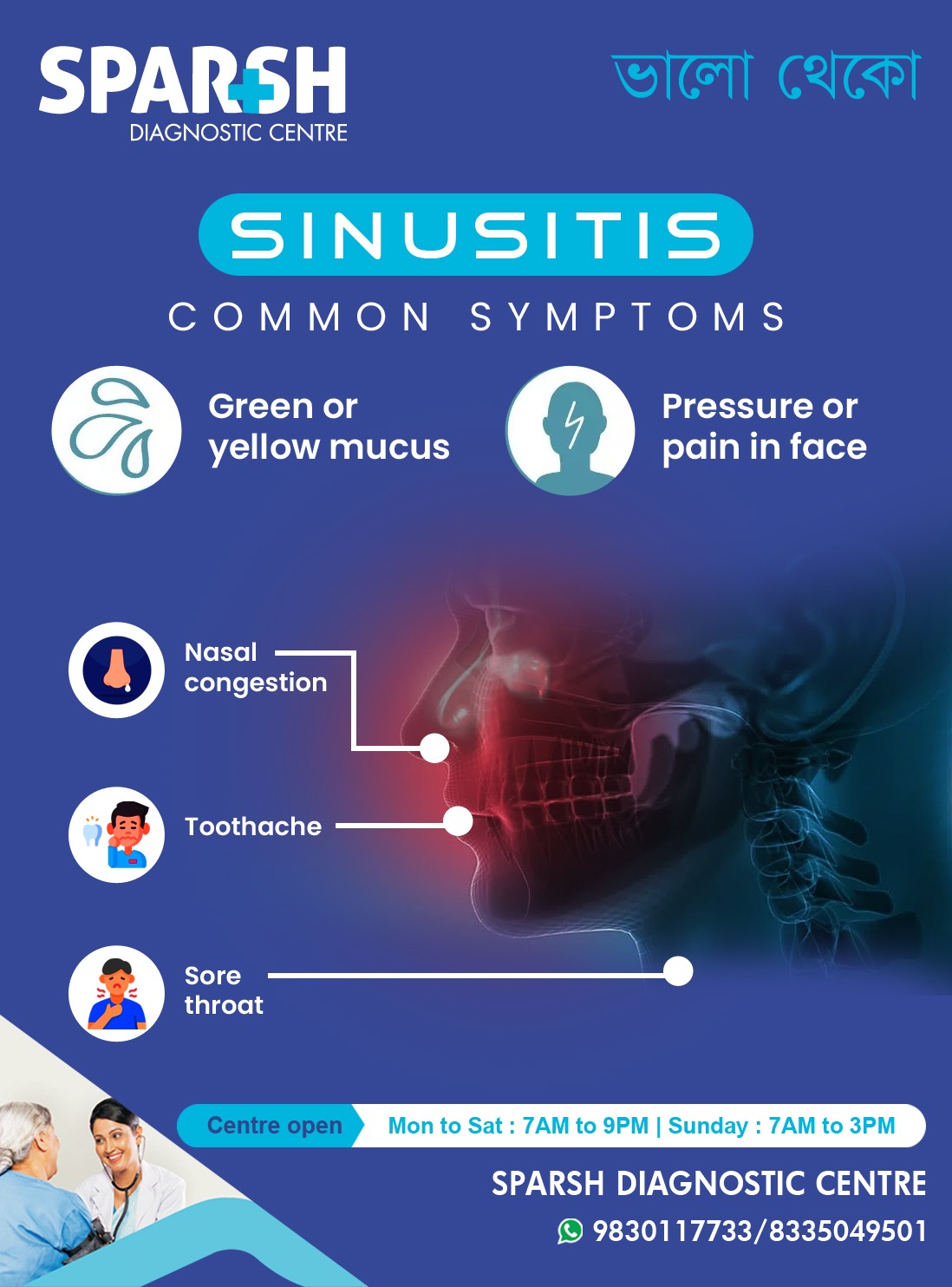
Green or yellow mucus discharge
Nasal congestion or blockage
Pressure or pain in the face (especially around the eyes, cheeks, and forehead)
Toothache (due to sinus pressure on upper jaw nerves)
Headache or heaviness in the head
Cough, especially at night
Reduced sense of smell and taste
If these symptoms persist for more than a week or keep recurring, it’s important to consult a specialist for evaluation.
How is Sinusitis Diagnosed?
At Sparsh Diagnostic Centre, accurate diagnosis is the first step toward effective treatment. The following tests and evaluations may be conducted:
Physical Examination:
The doctor examines your nose, throat, and facial areas for tenderness or swelling.Nasal Endoscopy:
A thin, flexible tube with a light and camera is inserted into the nose to check for blockages, polyps, or inflammation.Imaging Tests (CT or MRI):
These scans provide detailed images of the sinuses, helping identify deep-seated infections or structural abnormalities.Allergy Testing:
Conducted if chronic sinusitis is suspected to be linked with allergies.Culture Test:
A mucus sample may be tested to determine the exact type of bacteria or fungus causing the infection.
Treatment Options for Sinusitis
Treatment depends on the cause, duration, and severity of the infection. Here are the most common approaches:
1. Medical Treatment
Decongestants: Help relieve nasal blockage and improve airflow.
Saline Nasal Sprays: Keep the nasal passages moist and clear mucus.
Antibiotics: Prescribed only when a bacterial infection is confirmed.
Steroid Nasal Sprays: Reduce inflammation and swelling inside the nasal cavity.
Antihistamines: Useful for patients whose sinusitis is allergy-related.
2. Home Remedies and Lifestyle Management
Steam Inhalation: Helps loosen mucus and ease breathing.
Warm Compress: Relieves facial pain and pressure.
Stay Hydrated: Drinking water helps thin the mucus.
Humidifier Use: Adds moisture to indoor air and reduces nasal dryness.
Avoid Irritants: Stay away from cigarette smoke, dust, and strong odours.
3. Surgical Treatment
If medications and lifestyle changes do not provide relief, surgery may be recommended.
Functional Endoscopic Sinus Surgery (FESS): The most common procedure used to remove blockages, polyps, or correct structural issues such as a deviated septum.
At Sparsh Diagnostic Centre, sinus-related imaging and diagnostic tests are performed with precision to ensure effective treatment planning.
Complications of Untreated Sinusitis
While most cases of sinusitis resolve with timely treatment, ignoring persistent symptoms can lead to serious complications such as:
Chronic sinus infections
Formation of nasal polyps
Spread of infection to nearby structures (eyes, bones, or brain)
Reduced sense of smell or taste
Persistent fatigue and headaches
Prevention Tips for Sinusitis
Preventing sinusitis is easier than treating chronic episodes. Here are some effective preventive tips:
Maintain good nasal hygiene by using saline sprays.
Stay hydrated to keep mucus thin and easy to drain.
Manage allergies with prescribed medications.
Avoid exposure to pollutants and cigarette smoke.
Use a humidifier in dry weather.
Wash hands frequently to prevent viral infections.
Treat nasal congestion or cold promptly.
When to See a Doctor
You should seek medical attention if you experience:
Symptoms lasting more than 10 days
Severe facial pain or swelling
Recurrent sinus infections throughout the year
Vision problems or high fever accompanying sinus symptoms
Timely diagnosis and treatment can prevent chronic sinus problems and improve your quality of life.
Sinusitis in Children
Children are more prone to sinus infections due to smaller nasal passages and frequent colds. Symptoms in children may include:
Persistent cough
Nasal blockage and discharge
Irritability or tiredness
Bad breath
Swelling around the eyes
Parents should consult a pediatric ENT specialist if these symptoms persist beyond a week.
Diagnosis and care at Sparsh Diagnostic Centre
At Sparsh Diagnostic Centre, Kolkata, our expert team provides comprehensive sinusitis evaluation through advanced diagnostic tools and our specialists design personalized treatment plans — combining medication, lifestyle modification, and advanced diagnostic support to help you breathe freely again.
FAQs on Sinusitis
1. What is the fastest way to relieve sinusitis symptoms?
Steam inhalation, warm compresses, and saline sprays offer quick relief. For bacterial sinusitis, antibiotics may be needed.
2. Can sinusitis go away on its own?
Mild viral sinusitis often resolves on its own in 7–10 days. However, bacterial or chronic cases need medical treatment.
3. How can I tell if my sinus infection is viral or bacterial?
If symptoms persist beyond 10 days or worsen after initial improvement, it may indicate a bacterial infection.
4. Can allergies cause sinusitis?
Yes, allergic reactions can cause nasal inflammation and mucus buildup, leading to sinus infections.
5. What foods help with sinusitis?
Foods rich in vitamin C, spicy foods, and warm fluids like soups help relieve congestion and boost immunity.
6. Is sinusitis contagious?
Sinusitis itself isn’t contagious, but the viral infections that cause it can spread through droplets.
7. How long does chronic sinusitis last?
Chronic sinusitis lasts for more than 12 weeks and may require specialized treatment or minor surgery.
Sinusitis is a common yet treatable condition that can cause discomfort if ignored. Whether your symptoms are mild or chronic, early diagnosis and proper treatment are key to lasting relief.
If you experience recurring nasal congestion, facial pain, or persistent headaches, consult the experts at Sparsh Diagnostic Centre. With state-of-the-art diagnostic facilities and a patient-first approach, we ensure accurate evaluation and effective management of sinusitis and other ENT conditions.
To consult an ENT specialist at Sparsh Diagnostic Centre, call our helpline number 9830117733.
#BhaloTheko
Disclaimer:
No content on this site, regardless of date, should ever be used as a substitute for direct medical advice from your doctor or other qualified clinician.



[…] Chronic sinusitis […]
[…] 3. Sinuses (Sinusitis) […]
[…] Sinusitis: Inflammation or infection of the sinuses can occur if mucus builds up. […]
[…] infection or another health issue. Prolonged congestion, cough, or fatigue could be due to chronic sinusitis, allergies, or a more persistent viral infection. It’s essential to speak with a Doctor if […]
[…] Sinus infections: Chronic sinusitis is common in CF patients due to mucus blockages in the sinuses. […]
[…] are often associated with other medical conditions such as sinusitis and otitis media. These conditions can directly affect the ear and can increase the risk of […]