Good oral hygiene in children is one of the most important foundations for lifelong health. Healthy baby teeth do much more than help children smile confidently—they support speech development, proper chewing, jaw growth, and create the space needed for permanent teeth to erupt correctly. Yet many parents assume that because baby teeth eventually fall out, dental care can wait. In reality, neglecting early oral care can lead to cavities, pain, infections, and dental anxiety later in life.
Children are especially vulnerable to dental problems because their enamel is thinner than that of adults, making teeth more likely to decay. Sugary snacks, irregular brushing habits, and delayed dental visits can quickly turn minor issues into serious concerns. The good news is that strong oral hygiene habits started early are simple to maintain and highly effective.
This guide explains everything parents need to know about oral hygiene in children—from brushing routines and flossing to food choices, dental checkups, and common mistakes to avoid.
Why does Oral Hygiene Matter in Childhood
Children’s oral health affects more than just their teeth. Poor dental hygiene can interfere with eating, sleeping, speaking, and concentration in school. Tooth pain caused by cavities often leads to irritability, poor appetite, and even missed school days.
Healthy baby teeth also act as placeholders for permanent teeth. If a baby tooth is lost too early because of decay, nearby teeth may shift into the empty space, causing alignment issues later.
In addition, bacteria that build up in the mouth can influence overall health. Gum inflammation and untreated oral infections may contribute to broader health concerns over time.
Teaching children to care for their teeth early also helps them develop routines that often continue into adulthood.
When to Start Oral Care for Children
Oral hygiene should begin before the first tooth appears. Even infants need gum care because bacteria can collect inside the mouth.
Parents can gently wipe a baby’s gums with a soft clean cloth after feeding. Once the first tooth erupts, brushing should begin immediately using a small soft-bristled toothbrush.
The first tooth usually appears around six months of age, although timing varies from child to child.
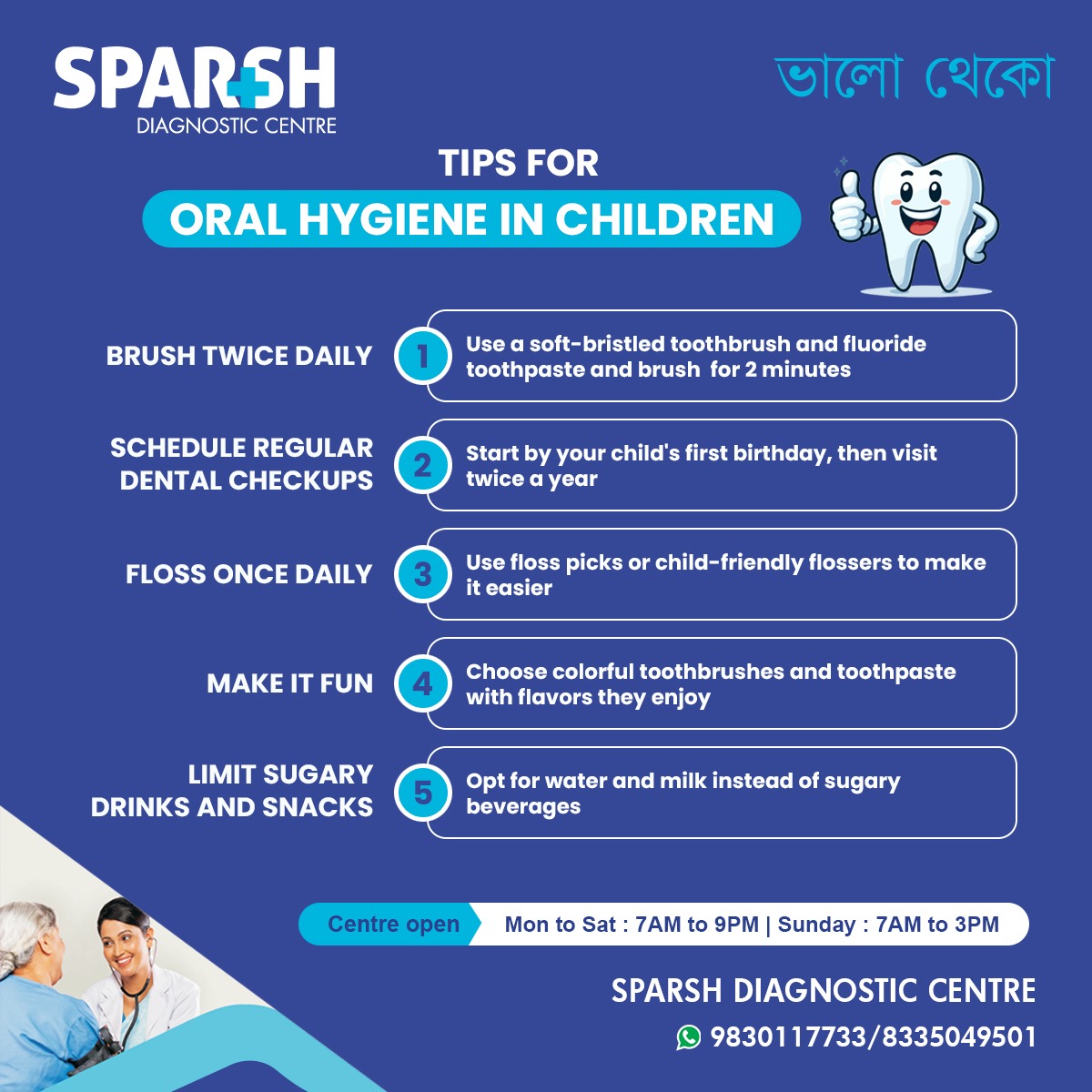
Experts recommend scheduling the first dental visit by the child’s first birthday or within six months of the first tooth erupting.
Brushing Techniques for Children
Brushing correctly is one of the most important parts of oral hygiene in children.
For Infants and Toddlers
Use a soft infant toothbrush with a tiny smear of fluoride toothpaste, about the size of a grain of rice.
Brush gently twice daily, especially before bedtime.
For Children Aged 3 to 6 Years
Increase toothpaste to a pea-sized amount. Encourage spitting after brushing, but avoid rinsing excessively so fluoride remains on the teeth.
For Older Children
By age six or seven, children can start brushing more independently, but supervision is still important because many children miss key areas.
Brush for two full minutes, covering:
- Front surfaces
- Back surfaces
- Chewing surfaces
- Along the gum line
Circular gentle motions work better than harsh scrubbing.
Choosing the Right Toothbrush and Toothpaste
The toothbrush should fit comfortably in a child’s mouth and have soft bristles.
Replace toothbrushes every three months or sooner if bristles become frayed.
Many children enjoy colorful toothbrushes, cartoon characters, or electric toothbrushes, which can make brushing more appealing.
When selecting toothpaste:
- Use fluoride toothpaste unless advised otherwise by a dentist
- Avoid highly abrasive products
- Choose child-friendly flavors if mint feels too strong
Fluoride is important because it strengthens enamel and helps prevent cavities.
How to Make Brushing Fun for Children
One of the biggest challenges for parents is consistency.
Children often resist brushing unless it becomes part of a positive routine.
Try these ideas:
- Use songs or two-minute timers
- Let children choose their toothbrush
- Brush together as a family
- Create a reward chart
- Tell stories during brushing time
Turning oral care into a playful daily ritual often works better than forcing compliance.
The Importance of Flossing in Children
Many parents focus only on brushing, but flossing matters once teeth begin touching each other.
Food particles trapped between teeth can lead to cavities where toothbrush bristles cannot reach.
Start flossing when two teeth contact each other.
Child-friendly floss picks often make this easier.
Parents usually need to help floss until the child develops enough hand control, often around age eight to ten.
Best Foods for Strong Teeth
Diet plays a major role in oral hygiene in children.
Certain foods naturally support healthy teeth and gums.
Tooth-Friendly Foods
- Milk and yogurt
- Cheese
- Leafy greens
- Apples
- Carrots
- Cucumbers
- Eggs
- Nuts (age appropriate)
These foods provide calcium, phosphorus, and vitamins that strengthen enamel.
Crunchy fruits and vegetables also stimulate saliva, which helps wash away bacteria.
Foods That Increase the Risk of Cavities
Some foods are more damaging because they stick to teeth or contain high sugar.
Limit:
- Sticky candies
- Toffees
- Sugary cereals
- Sweetened juices
- Soft drinks
- Packaged snacks with hidden sugars
Frequent snacking can be more harmful than occasional sweets because teeth remain exposed to acids repeatedly throughout the day.
Why Sugary Drinks Are Especially Harmful
Sugary drinks deserve special attention because they are a major cause of tooth decay in children.
Even fruit juices labeled healthy may contain enough sugar to damage enamel.
Encourage:
- Water
- Milk
- Unsweetened homemade drinks
Avoid letting children sleep with milk bottles containing sweetened liquids.
Bottle feeding at bedtime with sugary liquids is strongly linked to early childhood cavities.
Fluoride and Its Role in Children’s Dental Health
Fluoride protects teeth by strengthening enamel and reversing early decay.
Children usually get fluoride from toothpaste and sometimes drinking water.
Dentists may recommend fluoride varnish treatments for children at higher risk of cavities.
Used properly, fluoride is safe and highly beneficial.
The key is using only the recommended toothpaste amount.
Dental Checkups: How Often Should Children Visit the Dentist?
Routine dental visits help catch problems early.
Most children should see a dentist every six months.
Regular visits allow:
- Professional cleaning
- Fluoride application
- Monitoring tooth eruption
- Early cavity detection
- Guidance on brushing habits
Children who visit the dentist regularly often become less fearful over time.
Common Dental Problems in Children
Several oral health issues commonly affect children.
Tooth Decay
The most common childhood dental issue.
Gum Inflammation
Usually caused by poor brushing near the gums.
Tooth Sensitivity
May result from enamel wear or cavities.
Misaligned Teeth
Sometimes detected early during routine visits.
Thumb Sucking Effects
Long-term thumb sucking may affect bite alignment.
Thumb Sucking and Oral Development
Thumb sucking is common in infants and toddlers.
Most children naturally stop by age four.
If the habit continues beyond this age, it may affect jaw growth and tooth alignment.
Gentle encouragement usually works better than punishment.
A dentist can suggest strategies if needed.
Mouth Breathing and Oral Health
Chronic mouth breathing can dry the mouth and reduce saliva protection.
Saliva naturally protects teeth from bacteria.
Children who breathe through the mouth often have:
- Dry lips
- Bad breath
- Increased cavity risk
Underlying causes such as allergies or nasal blockage may need evaluation.
Dental Care During Teething
Teething often causes discomfort, drooling, and gum irritation.
Parents can soothe teething with:
- Chilled teething rings
- Gentle gum massage
- Cold clean cloth
Avoid sugary teething biscuits that may promote decay.
Once teeth erupt, cleaning should begin immediately.
Protecting Teeth During Sports
Children involved in sports need dental protection.
Mouthguards reduce the risk of broken teeth and jaw injuries.
This is especially important in:
- Football
- Cricket
- Basketball
- Cycling
- Martial arts
A properly fitted mouthguard offers the best protection.
Signs Your Child May Have a Dental Problem
Parents should watch for early warning signs:
- Tooth pain
- Sensitivity to cold or sweets
- Bad breath
- Swollen gums
- White or brown spots on teeth
- Difficulty chewing
Early treatment prevents larger problems later.
Building Lifelong Habits at Home
Children learn by watching adults.
When parents prioritize oral care, children usually follow naturally.
Helpful habits include:
- Fixed brushing times
- Family brushing routine
- Healthy snack planning
- Limiting late-night sweets
- Positive dental language
Consistency matters more than perfection.
Oral Hygiene and Overall Child Health
Good oral health supports overall wellbeing.
Untreated dental infections may affect appetite, sleep, school performance, and self-confidence.
A healthy mouth also supports:
- Better nutrition
- Clear speech
- Social confidence
- Healthy growth
Oral hygiene should be viewed as part of full child wellness, not just dental appearance.
When Orthodontic Evaluation Becomes Important
By age seven, many children benefit from early orthodontic evaluation.
This does not always mean braces are needed immediately.
Dentists may detect:
- Crowding
- Bite issues
- Jaw growth problems
Early guidance sometimes reduces future treatment complexity.
Final Thoughts
Oral hygiene in children is not complicated, but it requires consistency, patience, and early attention. Small daily habits—brushing twice a day, flossing, limiting sugar, and attending dental checkups—can prevent most common childhood dental problems.
A child who grows up understanding that oral care is normal, positive, and important is more likely to maintain healthy teeth for life.
Parents do not need perfection. What matters most is creating a steady routine that children can trust and follow every day.
FAQ Section
At what age should children start brushing their teeth?
Brushing should begin as soon as the first tooth appears, usually around six months of age.
How much toothpaste should a child use?
Children under three years need a smear the size of a grain of rice. Children over three years need a pea-sized amount.
When should children start flossing?
Flossing should begin when two teeth touch each other.
How often should a child visit the dentist?
Most children should have dental checkups every six months.
Are baby teeth really important if they fall out later?
Yes, baby teeth guide permanent teeth, help speech development, and support proper chewing.
Can children use electric toothbrushes?
Yes, electric toothbrushes can be effective and often make brushing more enjoyable.
Is fruit juice harmful for teeth?
Frequent fruit juice intake can increase cavity risk because of natural sugars and acids.
What causes bad breath in children?
Poor brushing, dry mouth, cavities, or gum problems may cause bad breath.
To consult a Dentist at Sparsh Diagnostic Centre, call our helpline numbers 9830117733/ 8335049501.
#BhaloTheko
Medically Reviewed By
This article has been medically reviewed by Dr. Jaydeep Roy, BDS, Dental Surgeon at Sparsh Diagnostic Centre.
The content has been reviewed for medical accuracy, clinical relevance and clarity to ensure that the information about root canal treatment, its procedure, recovery, benefits and potential risks is consistent with current dental practice and patient-care guidance.
Medical Reviewer: Dr. Jaydeep Roy, BDS
Speciality: Dentistry
Medical Review Date: 3rd September 2026
This article is intended for general health information and educational purposes only. It should not be used as a substitute for professional dental advice, diagnosis or treatment.
Disclaimer:
No content on this site, regardless of date, should ever be used as a substitute for direct medical advice from your doctor or other qualified clinician.