Laser physiotherapy, also known as low-level laser therapy (LLLT) or cold laser therapy, is an advanced, non-invasive treatment modality widely used in modern physiotherapy and rehabilitation medicine. It utilizes specific wavelengths of light to stimulate tissue repair, reduce pain, and accelerate healing at a cellular level.
Over the past decade, laser physiotherapy has gained popularity for managing musculoskeletal pain, sports injuries, post-surgical recovery, and chronic inflammatory conditions. This blog provides a comprehensive overview of laser physiotherapy, including how it works, its benefits, clinical applications, safety profile, and frequently asked questions.
What Is Laser Physiotherapy?
Laser physiotherapy is a therapeutic technique that uses low-intensity laser light to penetrate the skin and underlying tissues. Unlike surgical lasers that cut or cauterize tissue, therapeutic lasers do not produce heat or cause tissue damage. Instead, they trigger photobiomodulation, a process that enhances cellular function and tissue regeneration.
The therapy is painless, drug-free, and suitable for patients across various age groups when used appropriately under professional guidance.
How Does Laser Physiotherapy Work?
Laser physiotherapy works by delivering light energy at specific wavelengths (usually between 600–1000 nm) into the affected tissues. This light energy is absorbed by the mitochondria inside cells, leading to:
Increased production of adenosine triphosphate (ATP)
Enhanced cellular metabolism
Improved blood circulation
Reduced inflammatory mediators
Faster tissue repair and regeneration
At a physiological level, laser therapy helps normalize damaged cells rather than overstimulating them, making it effective for both acute and chronic conditions.
Types of Laser Used in Physiotherapy
1. Low-Level Laser Therapy (LLLT)
Also called cold laser therapy
Most commonly used in physiotherapy
Ideal for pain relief, inflammation, and tissue healing
2. High-Intensity Laser Therapy (HILT)
Delivers higher power over shorter durations
Used for deeper tissue penetration
Often applied in severe musculoskeletal conditions
Conditions Treated with Laser Physiotherapy
Laser physiotherapy is versatile and can be used to manage a wide range of conditions, including:
Musculoskeletal Disorders
Shoulder pain (rotator cuff injuries, frozen shoulder)
Sports Injuries
Muscle strains and tears
Ligament injuries
Overuse injuries
Neurological Conditions
Nerve compression syndromes
Post-Surgical and Post-Traumatic Recovery
Accelerates wound healing
Reduces post-operative pain and swelling
Improves scar tissue remodeling
Chronic Pain Conditions
Myofascial pain syndrome
Chronic joint inflammation
Benefits of Laser Physiotherapy
Laser physiotherapy offers multiple clinical benefits, making it a preferred option in rehabilitation and pain management.
1. Pain Reduction
Laser therapy helps block pain signals and reduces nerve sensitivity, providing effective relief without medications.
2. Reduced Inflammation
It decreases inflammatory chemicals and improves lymphatic drainage, helping control swelling and stiffness.
3. Faster Healing
By stimulating cellular repair, laser therapy accelerates healing of muscles, ligaments, tendons, and skin.
4. Improved Blood Circulation
Enhanced microcirculation delivers more oxygen and nutrients to damaged tissues.
5. Non-Invasive and Painless
The procedure does not involve injections, incisions, or anesthesia.
6. Minimal Side Effects
When applied correctly, laser physiotherapy has an excellent safety profile.
Laser Physiotherapy vs Traditional Physiotherapy
| Aspect | Laser Physiotherapy | Traditional Physiotherapy |
|---|---|---|
| Pain | Painless | May cause mild discomfort |
| Technique | Light-based | Manual therapy & exercises |
| Recovery Time | Faster in many cases | Gradual improvement |
| Invasiveness | Non-invasive | Non-invasive |
| Combination | Used as adjunct | Standalone or combined |
Laser physiotherapy is often used alongside conventional physiotherapy, exercise therapy, and manual techniques for optimal outcomes.
What Happens During a Laser Physiotherapy Session?
A typical laser physiotherapy session involves the following steps:
Clinical assessment by a physiotherapist
Identification of treatment area and appropriate laser settings
Application of the laser probe over the affected area
The device emits light for a few seconds to several minutes
The session ends without any downtime
Each session usually lasts 5–20 minutes, depending on the condition and area being treated.
How Many Sessions Are Required?
The number of sessions varies based on:
Nature and severity of the condition
Acute vs chronic pain
Patient’s response to therapy
Typically:
Acute injuries: 5–8 sessions
Chronic conditions: 10–15 sessions or more
Your physiotherapist will design a personalized treatment plan.
Is Laser Physiotherapy Safe?
Yes, laser physiotherapy is considered safe when performed by trained professionals. The lasers used are approved for therapeutic use and are carefully calibrated to avoid tissue damage.
Safety Considerations
Protective eyewear is used during treatment
Avoid direct exposure to eyes
Proper dosage and wavelength selection is essential
Contraindications of Laser Physiotherapy
Laser physiotherapy may not be suitable in certain situations, including:
Active cancer at the treatment site
Pregnancy (over the abdomen or lower back)
Direct application over the thyroid gland
Active infections or bleeding disorders (relative contraindication)
Always inform your therapist about your medical history before starting therapy.
Laser Physiotherapy for Sports and Athletes
Athletes benefit significantly from laser physiotherapy due to its ability to:
Speed up injury recovery
Reduce muscle fatigue
Minimize downtime
Improve tissue resilience
It is commonly used in sports medicine clinics as part of injury prevention and rehabilitation programs.
Laser Physiotherapy in Chronic Pain Management
For patients suffering from long-standing pain conditions, laser physiotherapy offers a non-pharmacological option to manage symptoms and improve quality of life. Regular sessions can help reduce dependency on painkillers and improve functional mobility.
Recovery and Aftercare
Laser physiotherapy requires no special recovery period. Patients can usually return to daily activities immediately after the session.
Aftercare tips may include:
Gentle stretching or prescribed exercises
Adequate hydration
Avoiding excessive strain on treated areas
Future of Laser Physiotherapy
With ongoing research and technological advancements, laser physiotherapy continues to evolve. Newer devices offer deeper penetration, better precision, and enhanced therapeutic outcomes, making it an integral part of modern rehabilitation medicine.
Frequently Asked Questions (FAQs)
1. Is laser physiotherapy painful?
No, laser physiotherapy is completely painless. Most patients feel no sensation or a mild warmth during treatment.
2. How soon can I see results?
Some patients experience relief after the first few sessions, while others may notice gradual improvement over multiple sessions.
3. Can laser physiotherapy replace surgery?
Laser physiotherapy cannot replace surgery in all cases but may help delay or avoid surgery in certain musculoskeletal conditions.
4. Is laser physiotherapy safe for elderly patients?
Yes, it is safe and commonly used in elderly patients for arthritis, joint pain, and mobility issues.
5. Can laser physiotherapy be combined with other treatments?
Yes, it is often combined with exercise therapy, manual therapy, ultrasound, and electrotherapy.
6. Are there any side effects?
Side effects are rare when therapy is performed correctly. Mild temporary soreness may occur in some cases.
7. Is laser physiotherapy suitable for children?
Yes, under proper medical supervision, laser therapy can be safely used in pediatric patients.
8. Does laser physiotherapy work for nerve pain?
Yes, it can help reduce inflammation and improve nerve healing in certain neuropathic conditions.
Laser physiotherapy is a scientifically supported, non-invasive treatment option that plays a vital role in pain management, injury recovery, and rehabilitation. By stimulating the body’s natural healing processes at a cellular level, it offers faster recovery, reduced pain, and improved function without medications or surgery.
Whether you are dealing with chronic pain, a sports injury, or post-surgical recovery, laser physiotherapy can be an effective component of a comprehensive treatment plan when guided by a qualified healthcare professional.
To consult a Physiotherapist at Sparsh Diagnostic Centre, call our helpline number 9830117733.
#BhaloTheko
Disclaimer:
No content on this site, regardless of date, should ever be used as a substitute for direct medical advice from your doctor or other qualified clinician.
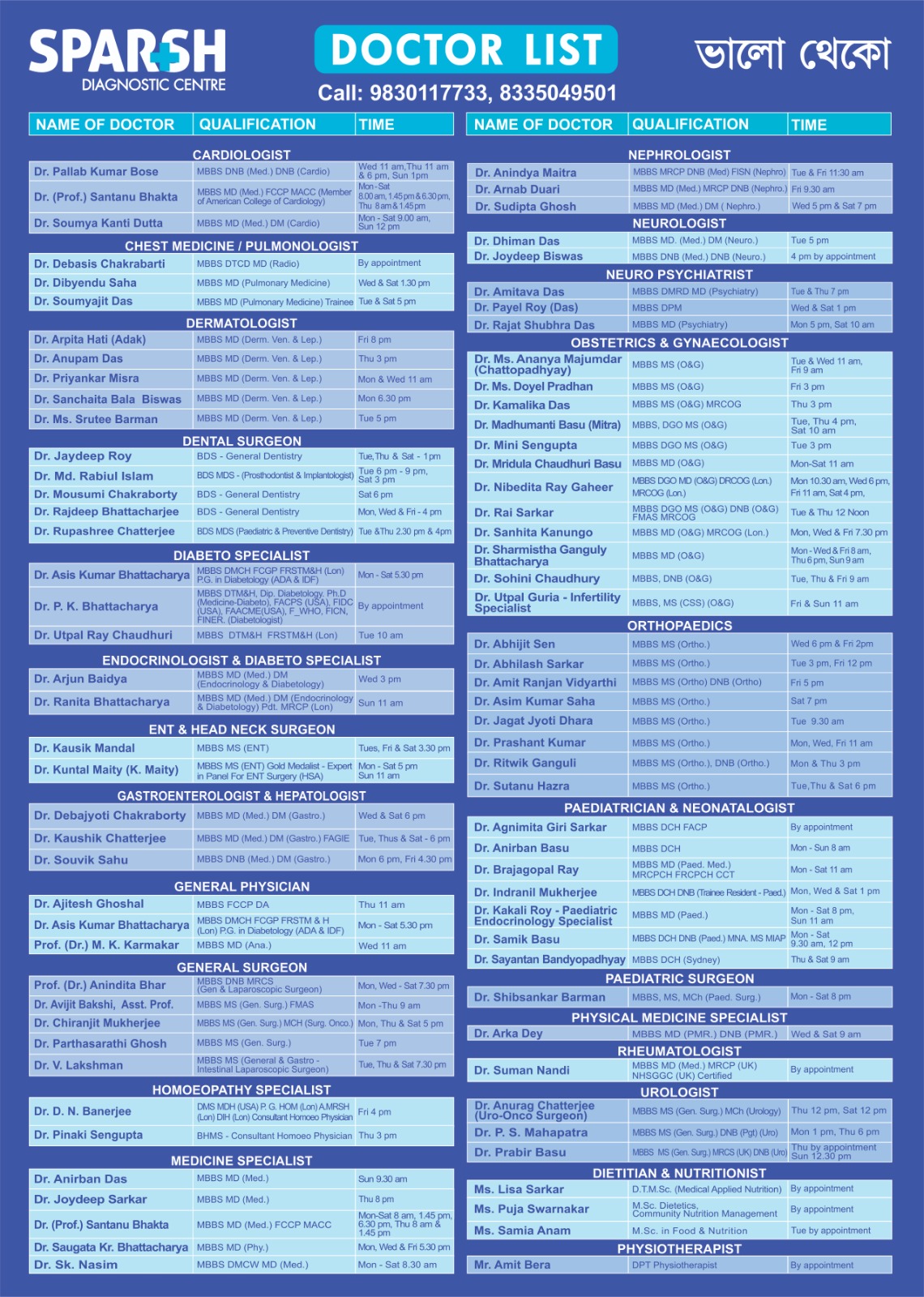
Sparsh Doctor List