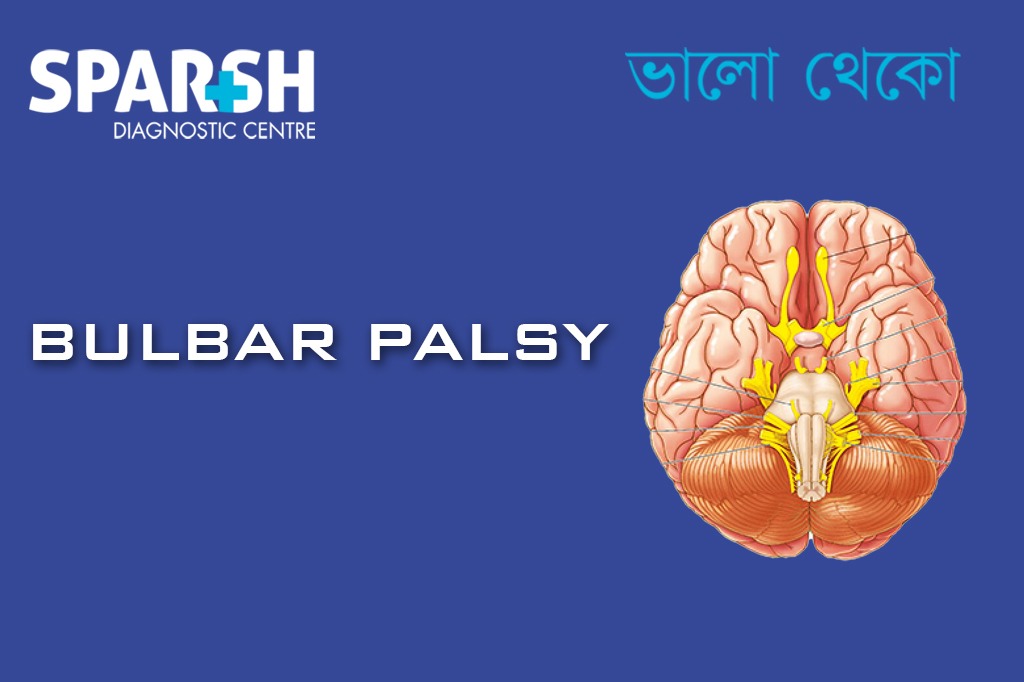
Bulbar palsy is a serious neurological disorder that affects essential functions such as speech, swallowing, chewing, and breathing. It occurs due to damage to the lower cranial nerves that originate from the brainstem (medulla oblongata). These nerves control muscles of the face, tongue, throat, and larynx, making bulbar palsy a potentially life-threatening condition if not managed appropriately.
Although bulbar palsy itself is not a disease, it is a clinical syndrome often associated with underlying neurological conditions such as stroke, amyotrophic lateral sclerosis (ALS), Guillain-Barré syndrome, tumors, or degenerative disorders.
This comprehensive guide explains what bulbar palsy is, its causes, symptoms, diagnosis, treatment options, prognosis, and frequently asked questions — helping patients, caregivers, and healthcare professionals understand the condition better.
What Is Bulbar Palsy?
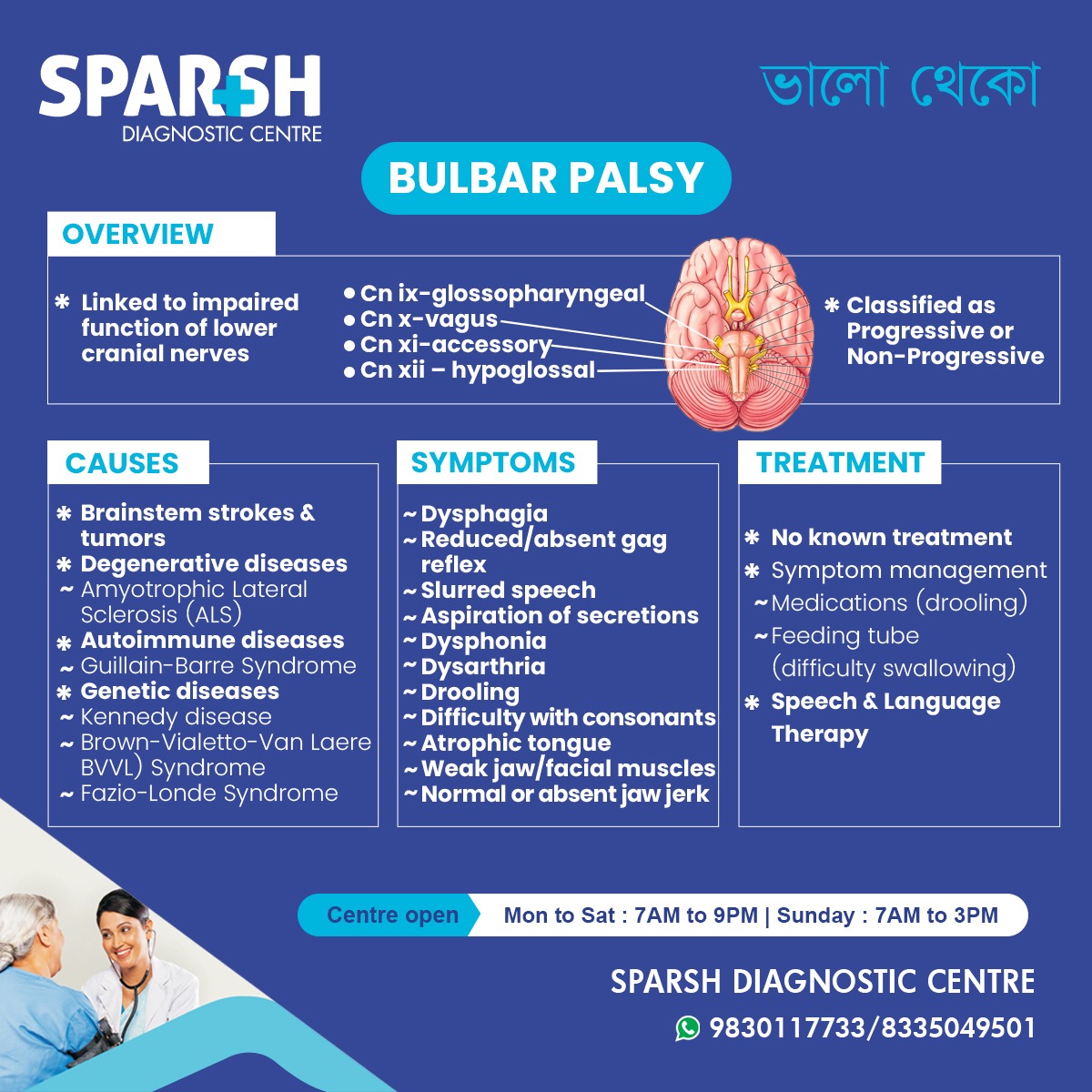
It refers to weakness or paralysis of muscles supplied by the lower cranial nerves, specifically:
Cranial Nerve IX – Glossopharyngeal
Cranial Nerve X – Vagus
Cranial Nerve XI – Accessory
Cranial Nerve XII – Hypoglossal
These nerves are collectively responsible for:
Swallowing (deglutition)
Speech articulation
Voice production
Gag reflex
Tongue movement
Facial and jaw muscle coordination
Damage to these nerves results in impaired communication between the brain and muscles, leading to classic bulbar symptoms.
Types of Bulbar Palsy
Bulbar palsy can be broadly classified into:
1. Progressive
Gradually worsening condition
Commonly associated with motor neuron diseases, especially ALS
Leads to increasing muscle weakness and loss of function
2. Non-Progressive
Caused by acute conditions like stroke or infection
Symptoms may stabilize or improve with treatment
Causes of Bulbar Palsy
It is usually secondary to an underlying neurological or systemic condition. Common causes include:
1. Brainstem Disorders
Brainstem strokes
Brainstem tumors
Multiple sclerosis affecting the medulla
2. Degenerative Neurological Diseases
Parkinson-plus syndromes
Progressive bulbar palsy (variant of MND)
3. Autoimmune Conditions
Chronic inflammatory demyelinating polyneuropathy (CIDP)
4. Genetic Disorders
Kennedy disease (Spinal and bulbar muscular atrophy)
Brown-Vialetto-Van Laere (BVVL) syndrome
Fazio-Londe syndrome
5. Infections and Toxins
Botulism
6. Trauma
Head or neck injuries affecting cranial nerves
Symptoms of Bulbar Palsy
The symptoms depend on the severity and cause but typically involve speech and swallowing difficulties.
Common Symptoms Include:
Slurred or nasal speech
Dysarthria (impaired articulation)
Dysphonia (weak or hoarse voice)
Reduced or absent gag reflex
Drooling of saliva
Aspiration of food or secretions
Difficulty pronouncing consonants
Atrophy and fasciculations of the tongue
Weak jaw and facial muscles
Normal or absent jaw jerk reflex
Choking episodes
Unintentional weight loss
⚠️ Aspiration pneumonia is a major complication and a leading cause of morbidity in bulbar palsy patients.
How is Bulbar Palsy diagnosed?
Diagnosis involves a combination of clinical evaluation, imaging, and laboratory tests.
1. Clinical Examination
Assessment of speech, swallowing, gag reflex
Tongue movement and muscle wasting
Cranial nerve examination
2. Imaging Studies
3. Electrophysiological Tests
4. Blood Tests
Autoimmune markers
Genetic testing (if hereditary disease suspected)
Infection markers
5. Swallowing Assessment
Video fluoroscopic swallowing study (VFSS)
Fiberoptic endoscopic evaluation of swallowing (FEES)
Treatment of Bulbar Palsy
Currently, there is no definitive cure for bulbar palsy, especially in progressive forms. Treatment focuses on managing symptoms, preventing complications, and improving quality of life.
1. Treating the Underlying Cause
Stroke management
Immunotherapy for autoimmune diseases
Antibiotics for infections
Tumor treatment (surgery, radiotherapy)
2. Symptom Management
Speech and Swallowing Support
Speech and language therapy
Swallowing exercises
Modified diet (soft or pureed foods)
Nutritional Support
Nasogastric feeding
Percutaneous endoscopic gastrostomy (PEG tube) for severe dysphagia
Medications
Anticholinergic drugs for drooling
Muscle relaxants if needed
Medications for associated conditions (e.g., ALS)
Respiratory Care
Aspiration prevention
Chest physiotherapy
Non-invasive ventilation in advanced cases
Complications of Bulbar Palsy
If not managed properly, it can lead to:
Severe communication difficulties
Reduced life expectancy (in progressive cases)
Prognosis
The prognosis depends entirely on the underlying cause:
Non-progressive bulbar palsy: May improve or stabilize
Progressive bulbar palsy / ALS: Gradual deterioration
Early diagnosis and multidisciplinary care significantly improve outcomes and quality of life
Living With Bulbar Palsy
Managing the condition requires a team approach, involving:
Neurologists
Speech therapists
Dietitians
Pulmonologists
Caregivers and family support
Psychological counseling is also essential to help patients cope with communication difficulties and emotional stress.
Frequently Asked Questions (FAQs)
1. Is it a disease?
No, bulbar palsy is a syndrome caused by damage to lower cranial nerves due to various underlying conditions.
2. Is it the same as ALS?
No. Bulbar palsy can occur independently, but it is also a common manifestation of ALS.
3. Can it be cured?
There is no permanent cure, but symptoms can be managed effectively with appropriate treatment.
4. Is it life-threatening?
It can be, especially if it leads to aspiration pneumonia or respiratory failure.
5. How is it different from pseudobulbar palsy?
Bulbar palsy involves lower motor neuron lesions, while pseudobulbar palsy involves upper motor neuron lesions.
6. Can speech improve in bulbar palsy?
Speech therapy can significantly improve communication and swallowing safety, especially in non-progressive cases.
7. What tests confirm it?
Clinical examination, MRI brainstem, EMG, and swallowing studies are commonly used.
8. Is feeding tube necessary for all patients?
No, only in cases with severe swallowing difficulty or aspiration risk.
Bulbar palsy is a complex neurological condition that significantly affects daily life by impairing speech, swallowing, and facial muscle function. While it may not be curable, early diagnosis, targeted treatment, and supportive care can dramatically improve patient comfort and safety.
If you or a loved one experiences persistent difficulty in speaking or swallowing, prompt neurological evaluation is crucial. Sparsh Diagnostic centre can play a vital role in early detection and ongoing management, helping patients maintain dignity and quality of life.
To consult a Neurologist at Sparsh Diagnostic Centre, call our helpline number 9830117733.
#BhaloTheko
Disclaimer:
No content on this site, regardless of date, should ever be used as a substitute for direct medical advice from your doctor or other qualified clinician.
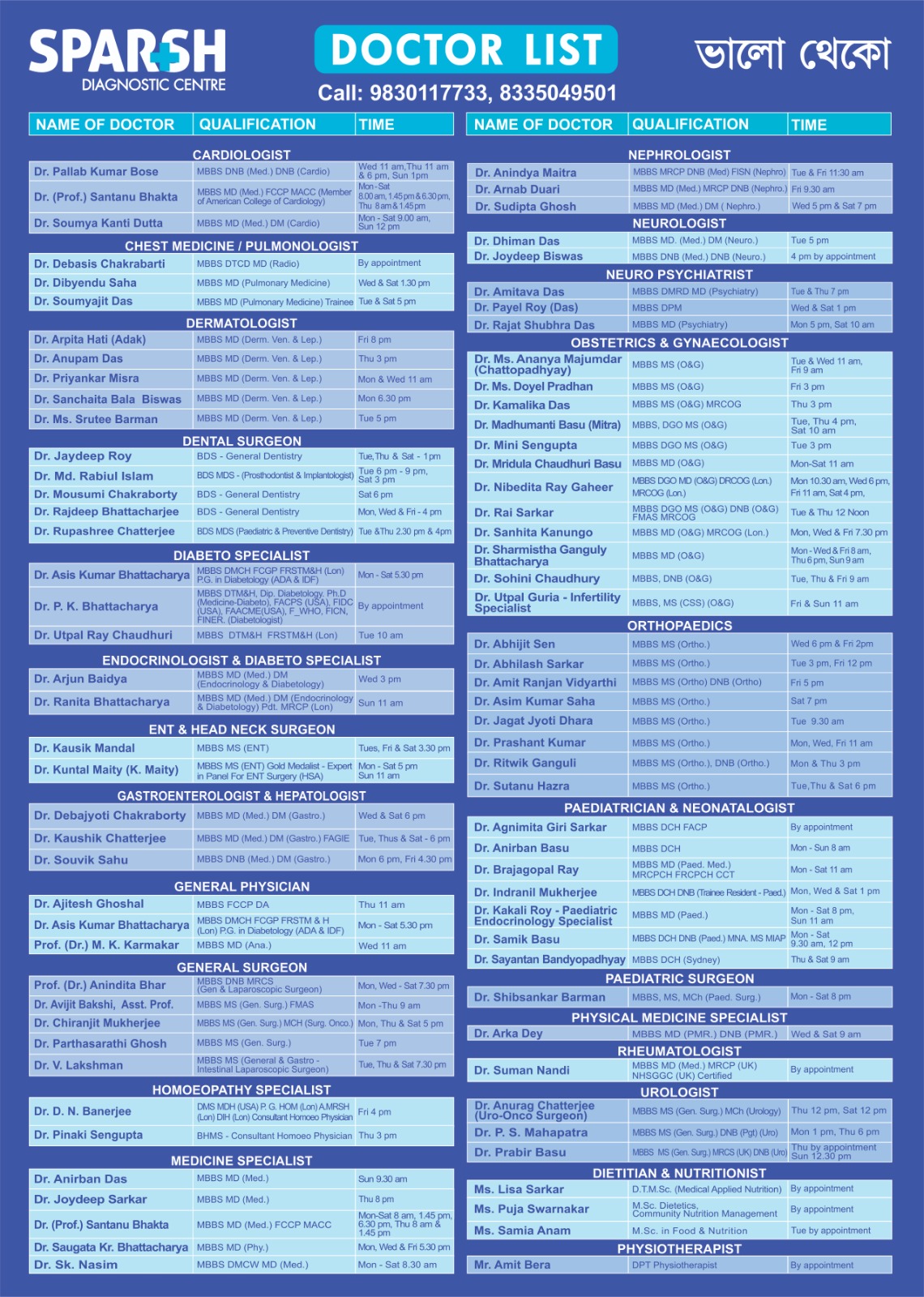
Sparsh Diagnostic Centre Doctor List