

An adrenal crisis is a life-threatening medical emergency that occurs when the body does not have enough cortisol to manage stress, blood pressure, blood sugar, and electrolyte balance. Without urgent treatment, adrenal crisis can quickly lead to shock, organ failure, and even death.
This condition most often affects people with known adrenal insufficiency, such as Addison’s disease or long-term steroid use, but it can also be the first presenting sign of an undiagnosed adrenal disorder.
Understanding adrenal crisis—its symptoms, triggers, diagnosis, and prevention—can save lives.
What is an Adrenal Crisis?
Adrenal crisis (also called acute adrenal insufficiency) happens when the adrenal glands fail to produce adequate amounts of cortisol, and in many cases aldosterone, during times of stress such as infection, trauma, surgery, or severe illness.
Cortisol is vital for:
Maintaining blood pressure
Regulating blood sugar
Controlling inflammation
Supporting the body’s response to physical stress
When cortisol levels drop suddenly, the body cannot cope with stress, leading to rapid clinical deterioration.
Role of the Adrenal Glands
The adrenal glands sit on top of each kidney and produce essential hormones, including:
Cortisol – regulates stress response, metabolism, and blood pressure
Aldosterone – controls sodium and potassium balance
Adrenaline and noradrenaline – help the body respond to danger
In adrenal crisis, cortisol deficiency is the primary problem, often compounded by aldosterone deficiency, resulting in severe dehydration and electrolyte imbalance.
Causes of Adrenal Crisis
Adrenal crisis usually occurs in individuals with existing adrenal insufficiency, but several scenarios can trigger it.
Primary Adrenal Insufficiency (Addison’s Disease)
Autoimmune destruction of adrenal glands
Tuberculosis or infections affecting adrenal tissue
Adrenal hemorrhage
Genetic adrenal disorders
Secondary Adrenal Insufficiency
Long-term corticosteroid therapy that is stopped suddenly
Pituitary gland disorders
Suppression of the hypothalamic-pituitary-adrenal (HPA) axis
Common Triggers
Severe infections (especially gastroenteritis or sepsis)
Surgery or physical trauma
Missed or reduced steroid doses
Risk Factors
You may be at higher risk of adrenal crisis if you:
Are on long-term steroid therapy
Have pituitary or hypothalamic disorders
Have recently stopped steroids abruptly
Have poorly managed adrenal insufficiency
Symptoms of Adrenal Crisis
Symptoms may develop rapidly and worsen within hours. Early recognition is critical.
Early Symptoms
Advanced and Severe Symptoms
Severe vomiting and dehydration
Joint and muscle pain
Confusion, delirium, or psychosis
Loss of consciousness or collapse
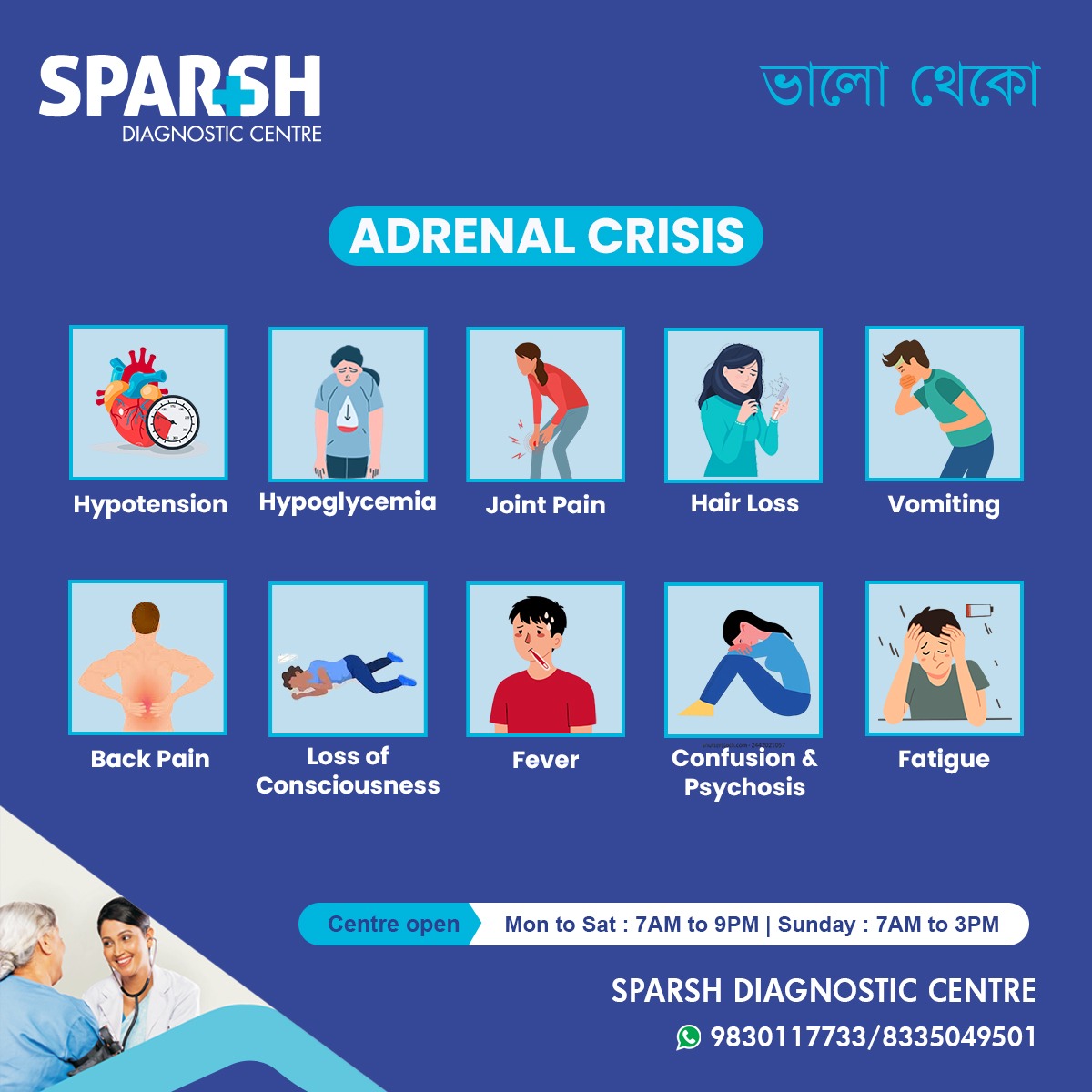
Hair loss, fatigue, and chronic weakness may be seen in underlying adrenal insufficiency but become more pronounced during crisis.
Why Adrenal Crisis Is a Medical Emergency
Without immediate treatment, adrenal crisis can progress to:
Prompt administration of intravenous hydrocortisone and fluids can be life-saving.
Diagnosis of Adrenal Crisis
Diagnosis is often clinical, as treatment should not be delayed for confirmatory tests.
Immediate Clinical Clues
History of adrenal insufficiency
Sudden hypotension unresponsive to fluids
Hypoglycemia
Electrolyte abnormalities
Laboratory Investigations
Once the patient is stabilised, tests may include:
Serum cortisol levels
ACTH (adrenocorticotropic hormone) test
Serum sodium and potassium
Blood glucose levels
Renal function tests
Importantly, treatment is started immediately if adrenal crisis is suspected—waiting for test results can be fatal.
Treatment of Adrenal Crisis
Emergency Management
The cornerstone of treatment includes:
Intravenous hydrocortisone (high-dose)
Rapid IV fluids (normal saline)
Correction of hypoglycemia with IV glucose
Monitoring and correction of electrolytes
Supportive Care
Blood pressure monitoring
Oxygen support if needed
Treatment of underlying triggers such as infection
Intensive care monitoring in severe cases
Most patients improve dramatically within 24–48 hours if treated promptly.
Recovery and Long-Term Management
After stabilisation, treatment transitions to:
Oral corticosteroid replacement
Gradual dose adjustment
Education on stress dosing
Regular endocrinology follow-up
Patients are advised never to stop steroid medication abruptly without medical guidance.
Preventing an Adrenal Crisis
Prevention plays a critical role in reducing morbidity and mortality.
Medication Adherence
Take prescribed steroid replacement exactly as directed
Never skip or suddenly discontinue doses
Stress Dosing
During illness, surgery, or stress:
Increase steroid dose as advised by your doctor
Follow “sick day rules” strictly
Emergency Preparedness
Carry a medical alert card or bracelet
Keep an injectable hydrocortisone emergency kit
Educate family members on emergency injections
Regular Monitoring
Routine blood tests
Periodic dose adjustments
Early treatment of infections
Adrenal Crisis in Children
Children with congenital adrenal hyperplasia or adrenal insufficiency are at high risk. Symptoms may include:
Poor feeding
Lethargy
Vomiting
Low blood sugar
Parents must be trained in emergency steroid injection and stress dosing.
When to Seek Immediate Medical Help
Seek emergency care if someone with adrenal insufficiency experiences:
Persistent vomiting
Severe weakness
Sudden confusion
Fainting or collapse
High fever with inability to take oral medication
Early intervention saves lives.
Living With Adrenal Insufficiency
With proper management, individuals with adrenal insufficiency can lead normal, active lives. Awareness, education, and planning are key to preventing adrenal crises.
Frequently Asked Questions (FAQs)
What is the main cause of adrenal crisis?
The most common cause is untreated or poorly managed adrenal insufficiency, especially during physical stress like infection or surgery.
Can adrenal crisis occur without prior diagnosis?
Yes, adrenal crisis can be the first sign of undiagnosed adrenal insufficiency.
Is adrenal crisis fatal?
It can be fatal if not treated promptly, but outcomes are excellent with early medical intervention.
How fast does adrenal crisis develop?
Symptoms can worsen within hours, particularly after infection, injury, or missed medication.
What is the first-line treatment for adrenal crisis?
Immediate intravenous hydrocortisone and fluids.
Can adrenal crisis be prevented?
Yes, with proper medication adherence, stress dosing, and emergency preparedness.
Is adrenal crisis the same as Addisonian crisis?
Yes, Addisonian crisis is a type of adrenal crisis seen in primary adrenal insufficiency.
Do all steroid users risk adrenal crisis?
Long-term steroid users who stop medication abruptly are at risk due to adrenal suppression.
Adrenal crisis is a medical emergency that requires swift recognition and immediate treatment. While it is a serious condition, it is largely preventable with education, regular follow-up, medication compliance, and preparedness during illness or stress.
If you or a loved one has adrenal insufficiency, proactive management and awareness can make the difference between a crisis and a controlled condition.
If you have adrenal insufficiency, proactive management saves lives. Consult an Endocrinologist at Sparsh Diagnostic Centre for guidance and regular monitoring.
#BhaloTheko
Disclaimer:
No content on this site, regardless of date, should ever be used as a substitute for direct medical advice from your doctor or other qualified clinician.

Sparsh Doctor List


