


Typhoid fever is a bacterial infection that can become serious if it is not diagnosed and treated promptly. It is caused by Salmonella Typhi, a bacterium that spreads mainly through contaminated food and water. Typhoid remains an important health concern in many parts of South Asia, including India, particularly in areas where sanitation and access to safe drinking water are inadequate.
The good news is that typhoid can usually be cured with appropriate antibiotic treatment. However, treatment should not be delayed or replaced with home remedies. Antibiotic resistance is becoming an increasing concern, so the choice of antibiotic should be guided by a doctor and, where possible, laboratory testing.
This guide explains the symptoms, causes, transmission, diagnosis, treatment, diet, recovery and complications of typhoid, along with answers to common questions patients and families often ask.
What is typhoid?
Typhoid fever is a systemic bacterial infection caused by Salmonella Typhi. Unlike ordinary food poisoning, typhoid does not remain limited to the digestive tract. After the bacteria enter the body through contaminated food or water, they can pass through the intestinal tract and enter the bloodstream, allowing the infection to affect different parts of the body.
The illness often develops gradually rather than suddenly. Fever may increase over several days and can reach around 39–40°C (102–104°F). Other symptoms can include weakness, headache, abdominal pain, loss of appetite, constipation or diarrhoea, nausea and sometimes a cough or rash.
Typhoid should not be confused with typhus. They are different infections caused by different bacteria and spread in different ways.
How is typhoid transmitted?
Typhoid is primarily transmitted through the faecal-oral route. This means Salmonella Typhi from the faeces of an infected person or carrier can contaminate food, drinking water or surfaces and eventually enter another person’s mouth.
Transmission can occur when:
- Drinking contaminated water
- Eating food washed with contaminated water
- Eating food prepared by someone who did not wash their hands properly after using the toilet
- Eating raw foods contaminated during preparation
- Using inadequately treated water or ice
- Poor sanitation allows sewage to contaminate water supplies
A person can continue to carry and shed the bacteria even after feeling better. A small percentage of people become chronic carriers, which is why completing treatment and following medical advice about follow-up testing can be important.
What are the symptoms of typhoid fever?
Typhoid symptoms can vary from person to person. Common symptoms include:
- Persistent or gradually increasing fever
- Headache
- Weakness and fatigue
- Chills
- Muscle aches
- Abdominal pain
- Loss of appetite
- Nausea or vomiting
- Constipation or diarrhea
- Cough
- Occasionally, rose-coloured spots on the trunk
The fever is often the most prominent symptom. According to the CDC, typhoid fever commonly produces a fever lasting more than three days and may become very high.
Symptoms alone cannot reliably confirm typhoid because several other infections can produce similar symptoms. A doctor may recommend blood cultures and other laboratory investigations depending on the clinical situation.

Which organ is affected by typhoid?
Typhoid initially enters the body through the intestinal tract, particularly the small intestine, but it is not simply an intestinal infection. Salmonella Typhi can invade the bloodstream and cause a systemic infection affecting multiple organs.
The intestine can develop inflammation and ulcers, and severe disease can cause intestinal bleeding or perforation. The liver, spleen and gallbladder may also be involved. The gallbladder is particularly important because some people who recover can continue carrying the bacteria there and shed them in their stool.
So, when people ask which organ is “damaged” by typhoid, there is no single answer. The intestine is a major site of disease, while severe typhoid can have systemic effects.
How is typhoid diagnosed?
Typhoid cannot be reliably diagnosed simply by looking at symptoms. A healthcare professional may consider your symptoms, medical history, travel or exposure history and laboratory test results.
Blood culture is the preferred diagnostic method for typhoid because the bacteria commonly circulate in the bloodstream. However, one blood culture does not detect every case, so doctors may sometimes recommend additional testing.
It is important not to start, stop or change antibiotics without medical advice. Incorrect antibiotic use can contribute to resistance and may make future treatment more difficult.
What is the main treatment for typhoid?
The main treatment for typhoid is appropriate antibiotics prescribed by a doctor. Antibiotics help eliminate the bacteria, shorten the illness and reduce the risk of serious complications and death.
The exact antibiotic depends on factors such as local antibiotic resistance, the patient’s condition, previous antibiotic exposure and, when available, laboratory susceptibility results. Commonly used treatment options can include drugs such as azithromycin or ceftriaxone, but the appropriate choice must be made by a healthcare professional.
Supportive treatment may also include:
- Adequate fluids
- Oral rehydration solution when there is diarrhoea or dehydration
- Nutritious, easily tolerated meals
- Rest
- Treatment for fever or other symptoms as advised by a doctor
Most importantly, complete the entire prescribed antibiotic course, even if the fever disappears and you start feeling better.
Can typhoid be cured?
Yes. Typhoid can be cured, particularly when it is diagnosed early and treated with an appropriate antibiotic.
However, “cured” does not mean that symptoms will disappear immediately. Fever can continue for several days after treatment begins, and recovery may take time. The NHS notes that people may continue to have a high temperature for around five days after starting treatment.
Relapse can also occur in some people, particularly after inadequate treatment. This is another reason to complete the prescribed course and seek medical advice if symptoms return.
Can typhoid recover in 3 days?
Usually, no. Typhoid is generally not an infection that should be expected to disappear completely within three days.
The fever itself commonly lasts longer than three days, and untreated typhoid can persist for weeks. With appropriate antibiotics, symptoms generally begin improving, but complete recovery takes longer and varies from person to person.
If someone has a high fever for several days, especially with abdominal symptoms or significant weakness, they should be medically evaluated rather than waiting for it to resolve on its own.
What is the bad stage of typhoid?
There is no universally recognised “bad stage” or formal “end stage” of typhoid used in modern medical practice. However, severe or complicated typhoid can develop when the infection is untreated or inadequately treated.
Serious complications typically occur after around two to three weeks of illness and can include:
- Intestinal bleeding
- Intestinal perforation
- Encephalopathy or altered mental status
- Severe dehydration
- Sepsis or shock
- Other systemic complications
These complications can be life-threatening and require urgent hospital treatment.
What is end-stage typhoid?
“End-stage typhoid” is not a precise medical diagnosis. People sometimes use this phrase to describe extremely severe, untreated disease involving complications such as intestinal perforation, severe bleeding, altered consciousness, shock or multiple organ dysfunction.
If someone with suspected or confirmed typhoid develops severe abdominal pain, black or bloody stools, vomiting blood, confusion, fainting, severe weakness or difficulty staying awake, emergency medical care is required.
What should you eat during typhoid?
Food cannot kill the bacteria, but an appropriate diet can support hydration, energy and recovery.
During the illness, many people tolerate smaller and more frequent meals better than large meals. Options can include:
- Rice, soft khichdi or other easily digested carbohydrates
- Bananas and other well-washed or peeled fruits
- Cooked vegetables
- Soups and broths
- Eggs or other suitable protein sources
- Low-fat dairy products if tolerated
- Toast or other light foods
Your appetite may be reduced, so focus on adequate fluids and foods you can comfortably tolerate rather than forcing large meals.
If diarrhoea or vomiting is present, oral rehydration solution can help replace lost fluids and electrolytes.
Which drink is best for typhoid?
There is no single drink that cures typhoid. Safe water and oral rehydration solution (ORS) are particularly useful when fever, diarrhoea or vomiting increases the risk of dehydration.
Other suitable fluids may include clear soups and other safe, non-irritating drinks that the person can tolerate.
The most important point is that drinking water should be safe. If the safety of the water supply is uncertain, properly boiling water can make it safer for drinking. WHO specifically recommends boiling questionable drinking water when necessary.
Can typhoid be killed by boiling water?
Yes. Properly boiling contaminated water can kill disease-causing microorganisms, including Salmonella Typhi.
WHO recommends boiling water when the safety of drinking water is questionable.
However, boiling water does not make contaminated food safe in every situation. Food preparation, storage, hand hygiene and sanitation are equally important.
Can I drink cold water during typhoid?
Cold water does not make Salmonella Typhi multiply inside your body or make the infection worse simply because it is cold.
If cold water feels comfortable and is from a safe source, it is generally fine to drink. However, if it causes stomach discomfort, choose water at a temperature you tolerate better.
The priority during typhoid is hydration and safe drinking water, not whether the water is hot or cold.
Can I shower during typhoid?
Yes, a person with typhoid can generally shower or bathe.
A shower may help you feel more comfortable, but it does not treat the infection. If you are weak, dizzy or dehydrated, avoid bathing alone because of the risk of falling. Use comfortably warm or room-temperature water rather than very hot water if you are feeling unwell.
Rest, hydration and prescribed treatment remain much more important than bathing itself.
Can typhoid spread by using the same washroom?
Yes, indirectly. Typhoid is not normally spread simply because two people use the same toilet. The concern is contamination of hands, toilet surfaces or other objects with infected faecal material, followed by transfer of bacteria to the mouth.
Someone with typhoid should:
- Wash their hands thoroughly with soap and water after using the toilet
- Keep the toilet and frequently touched surfaces clean
- Avoid preparing food for others while infectious
- Avoid sharing food or drinks
- Follow any additional infection-control advice from their doctor
Handwashing is one of the most important ways to reduce transmission.
Can we touch a typhoid patient?
Yes. Normal physical contact does not automatically transmit typhoid.
Typhoid is mainly transmitted when Salmonella Typhi is swallowed after contamination with infected faecal material. Therefore, simply touching, sitting beside or caring for someone with typhoid does not mean you will become infected.
Good hand hygiene is essential, particularly after helping the person use the bathroom or handling potentially contaminated laundry or surfaces.
Can I kiss a person who has typhoid?
Kissing is not the usual route of typhoid transmission. Typhoid primarily spreads through ingestion of food or water contaminated with faecal material.
However, while a person is acutely ill and potentially infectious, it is sensible to avoid close intimate contact and focus on hygiene until treatment has started and the treating doctor confirms that the person is no longer considered infectious. Most importantly, do not share food or drinks and wash your hands frequently.
How to control typhoid at home?
Mild cases may sometimes be managed at home under medical supervision, but typhoid should not be self-treated.
At home:
- Take antibiotics exactly as prescribed.
- Drink enough safe fluids.
- Use ORS if advised or if diarrhoea and dehydration are present.
- Eat small, nutritious meals as tolerated.
- Get adequate rest.
- Wash your hands thoroughly after using the toilet.
- Do not prepare food for other people while you may still be infectious.
- Keep bathrooms and frequently touched surfaces clean.
- Monitor fever and general condition.
- Contact your doctor if symptoms worsen or return.
Antibiotics should never be selected simply because they worked for someone else. Antibiotic resistance can make some strains of typhoid more difficult to treat.


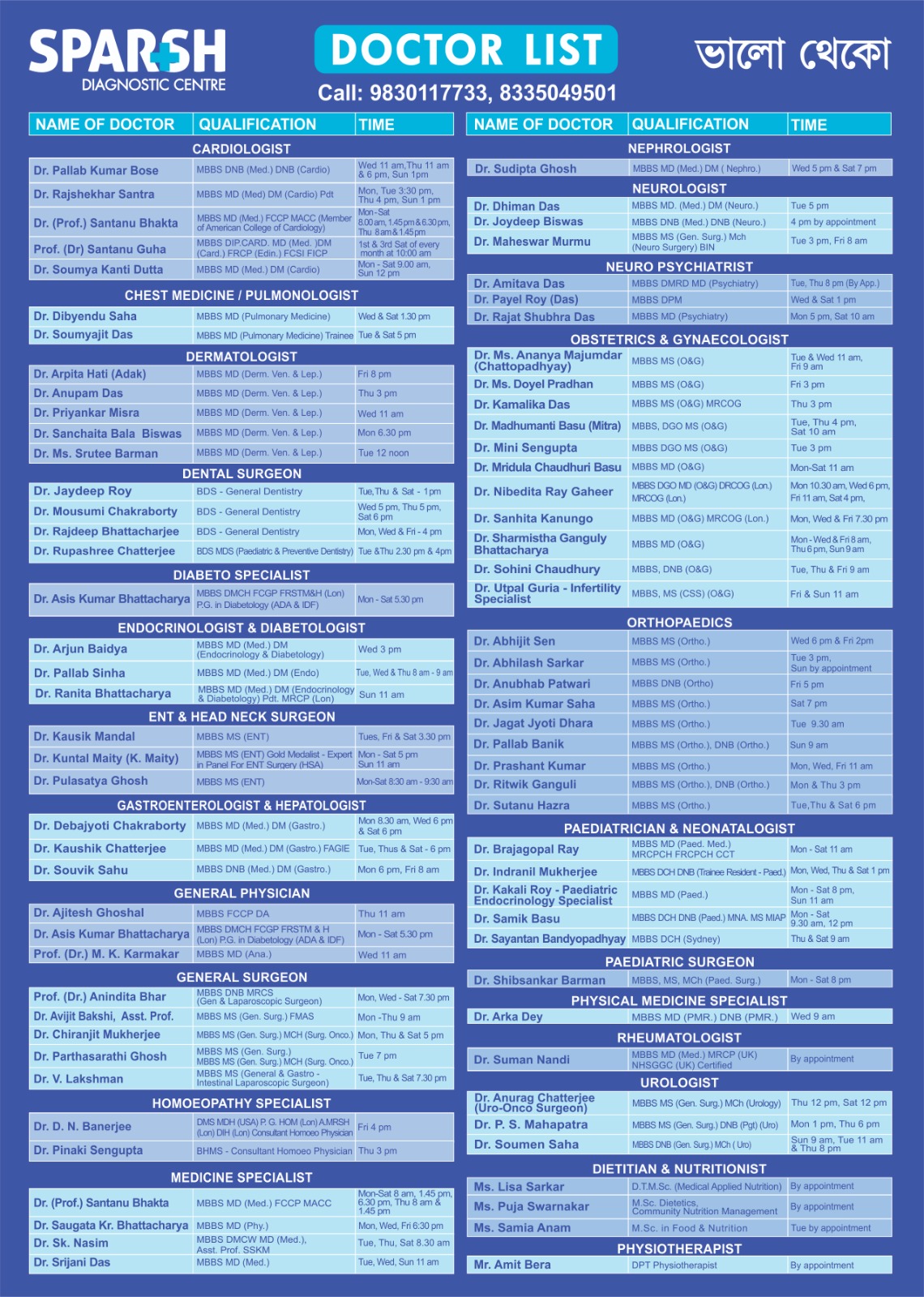
To consult a Doctor or get full body check-up done at Sparsh Diagnostic Centre, call our helpline numbers 9830117733/ 8335049501.
#BhaloTheko
Disclaimer:
No content on this site, regardless of date, should ever be used as a substitute for direct medical advice from your doctor or other qualified clinician.
#BhaloTheko
Disclaimer:
No content on this site, regardless of date, should ever be used as a substitute for direct medical advice from your doctor or other qualified clinician.



[…] 3. Typhoid Fever […]
[…] Typhoid […]
[…] What Is Typhoid Fever? […]
[…] Typhoid/Cholera […]
[…] What Is Typhoid? […]
[…] Understanding Typhoid Fever […]
[…] Endometriosis: Endometriosis is another condition that can cause fallopian tube obstruction. In women with endometriosis, tissue similar to the uterine lining grows outside the uterus, causing inflammation and scarring in the reproductive organs, including the fallopian tubes. This can prevent the egg from traveling through the tube or impede sperm from reaching the egg. […]
[…] Contaminated water and food can lead to typhoid, which causes high fever, stomach ache, headache and general […]
Very nicely researched article