
Pregnancy brings many exciting moments, along with questions about your baby’s growth and development. An anomaly scan is an important ultrasound examination performed during the second trimester to assess your baby’s developing organs and identify certain structural abnormalities.
Also known as a fetal anomaly scan, Level II scan or 20-week pregnancy scan, this examination provides detailed information about your baby’s anatomy. At Sparsh Diagnostic Centre, we understand how important this stage of pregnancy is and encourage expectant parents to follow their obstetrician’s advice regarding prenatal scans.
What is an anomaly scan during pregnancy?
An anomaly scan is a detailed ultrasound examination usually performed between 18 and 22 weeks of pregnancy. It uses high-frequency sound waves to produce images of the developing baby without using ionising radiation.
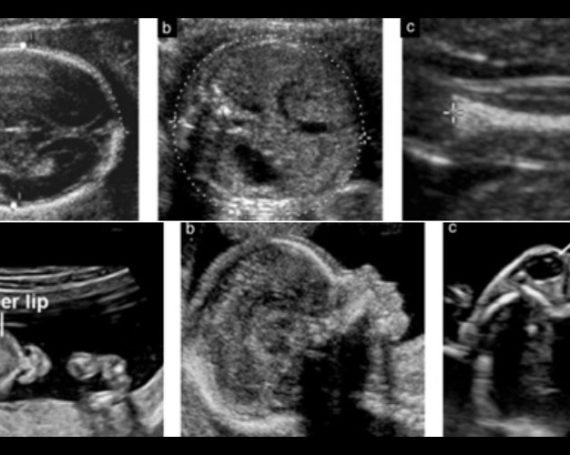
What does a foetal anomaly scan check?
Brain and head: Assesses the developing brain structures and skull.
Face: Checks visible facial structures, including the upper lip.

Spine: Evaluates spinal alignment and certain structural abnormalities.
Heart: Examines the heart's structure and views that can be obtained during the scan.

Abdomen: Assesses the stomach, abdominal wall and other visible structures.

Kidneys and bladder: Checks their appearance and whether the bladder is visible.
Arms and legs: Examines the developing limbs and visible bones.

Placenta and amniotic fluid: Assesses placental position and the amount of fluid around the baby.
The scan may identify findings that require additional investigations. A normal result is reassuring, but it does not guarantee that every developmental or health condition has been ruled out.
18 - 22 weeks
When should you get an anomaly scan?
The recommended window for a routine anomaly scan is 18–22 weeks of pregnancy, with the precise timing guided by your obstetrician.
Booking within this period allows the sonologist to examine the baby’s developing anatomy in detail. If your appointment is approaching, speak to your doctor about the most appropriate date rather than delaying the examination unnecessarily.
Your doctor may recommend additional scans or specialist assessment depending on your medical history, previous reports or findings during the examination.
How is an anomaly scan performed?
The procedure is straightforward and non-invasive.
01
You will be asked to lie comfortably on the examination couch.
02
A small amount of ultrasound gel is applied to your abdomen.
03
The sonologist moves an ultrasound probe across your abdomen to obtain images of the baby
04
Different anatomical structures are examined and measurements are recorded.
05
You will be asked to lie comfortably on the examination couch.
How to prepare for an anomaly scan
Carry your pregnancy records, previous ultrasound reports and doctor's prescription, if available.
Wear comfortable clothing that allows easy access to your abdomen.
Follow the diagnostic centre's instructions regarding bladder preparation, as requirements can vary.
Allow sufficient time for the examination, particularly if the baby needs to change position.
Contact the centre before your appointment if you are unsure about preparation instructions.
Is an anomaly scan safe for the baby?
The examination should be conducted according to appropriate medical guidelines, using the necessary imaging time to obtain diagnostic information.
What happens if the scan identifies an abnormality?
Your obstetrician will explain the report and recommend the appropriate next steps. Further assessment depends on the specific finding and the overall pregnancy history.
Book an anomaly scan in Kolkata at Sparsh Diagnostic Centre
Choosing the right time for your pregnancy scan is important. If you are looking for an anomaly scan in Kolkata, Sparsh Diagnostic Centre offers diagnostic services, including ultrasonography, to support your healthcare needs.
Before booking, confirm appointment availability, preparation instructions, reporting arrangements and the applicable scan charges with our team. Visit Sparsh Diagnostic Centre to learn more about our services and enquire about scheduling your scan.
FAQs
Frequently Asked Questions About Fetal Echocardiography
An anomaly scan is generally performed between 18 and 22 weeks of pregnancy. Your obstetrician can advise you on the ideal appointment date.
Yes. The terms anomaly scan, foetal anatomy scan and Level II scan are commonly used to describe the detailed second-trimester ultrasound examination.
It commonly takes around 30–45 minutes, depending on the baby’s position and the views required.
An anomaly scan may identify certain structural findings or soft markers associated with chromosomal conditions, but it cannot diagnose or rule out Down syndrome. Your doctor may recommend appropriate screening or diagnostic tests when indicated.
The cost varies between diagnostic centres and may depend on the type of examination and whether additional assessment is required. Contact Sparsh Diagnostic Centre for current pricing and appointment details.
It is routinely recommended as part of antenatal care, but your obstetrician can discuss its benefits, limitations and suitability for your individual circumstances.