Anaphylactic shock is one of the most serious medical emergencies linked to allergies. It can develop within minutes and quickly become life-threatening if not treated immediately. While many people associate allergies with sneezing, itching, or mild skin rashes, anaphylactic shock is far more severe and demands urgent medical attention.
Understanding the warning signs, causes, and emergency response steps can save lives. Whether you are someone living with allergies, a caregiver, or simply looking to stay informed, knowing what to do during an anaphylactic emergency is essential.
What Is Anaphylactic Shock?
Anaphylactic shock is the most severe form of anaphylaxis, a sudden and intense allergic reaction that affects the whole body. During this reaction, the immune system overreacts to a trigger and releases large amounts of chemicals such as histamine into the bloodstream.
These chemicals can cause:
- Sudden narrowing of the airways
- Swelling of the throat and tongue
- A sharp drop in blood pressure
- Difficulty breathing
- Loss of consciousness
Without immediate treatment, anaphylactic shock can become fatal within a short time.
How Common Is Anaphylactic Shock?
Anaphylaxis is more common than many people realize. Food allergies, insect stings, medications, and latex are among the leading triggers worldwide. Cases have increased over the years, especially among children and young adults.
Fortunately, with early recognition and rapid treatment using adrenaline (epinephrine), most people recover fully.
What Causes Anaphylactic Shock?
Anaphylactic shock occurs when the body mistakenly identifies a harmless substance as dangerous and launches an aggressive immune response.
Common Triggers of Anaphylactic Shock
1. Food Allergies
Food is one of the most frequent causes, especially in children.
Common food triggers include:
- Peanuts
- Tree nuts
- Milk
- Eggs
- Shellfish
- Fish
- Soy
- Wheat
Even a tiny amount of the allergen can trigger a severe reaction in sensitive individuals.
2. Medications
Certain medicines can cause anaphylaxis, including:
- Antibiotics such as penicillin
- Pain relievers
- Anesthesia drugs
- Contrast dyes used in scans
3. Insect Stings
Bee, wasp, hornet, and fire ant stings are common triggers in adults.
4. Latex Allergy
Latex found in gloves, balloons, or medical equipment may cause severe reactions in some people.
5. Exercise-Induced Anaphylaxis
In rare cases, intense physical activity can trigger anaphylaxis, especially when combined with certain foods or medications.
Risk Factors for Anaphylactic Shock
Some people are more likely to experience severe allergic reactions.
Risk factors include:
- Previous anaphylactic episodes
- Asthma
- Family history of allergies
- Multiple allergies
- Mast cell disorders
A person who has experienced anaphylaxis once is at higher risk of having another episode in the future.
Signs and Symptoms of Anaphylactic Shock
Symptoms usually appear within seconds or minutes after exposure to the allergen, although some reactions can take longer.
Early Symptoms
Initial signs may seem mild at first, including:
- Itching
- Skin rash or hives
- Redness
- Swelling of the lips or face
- Tingling sensation
- Anxiety or feeling of doom
Severe Symptoms
As the reaction worsens, symptoms can rapidly become life-threatening.
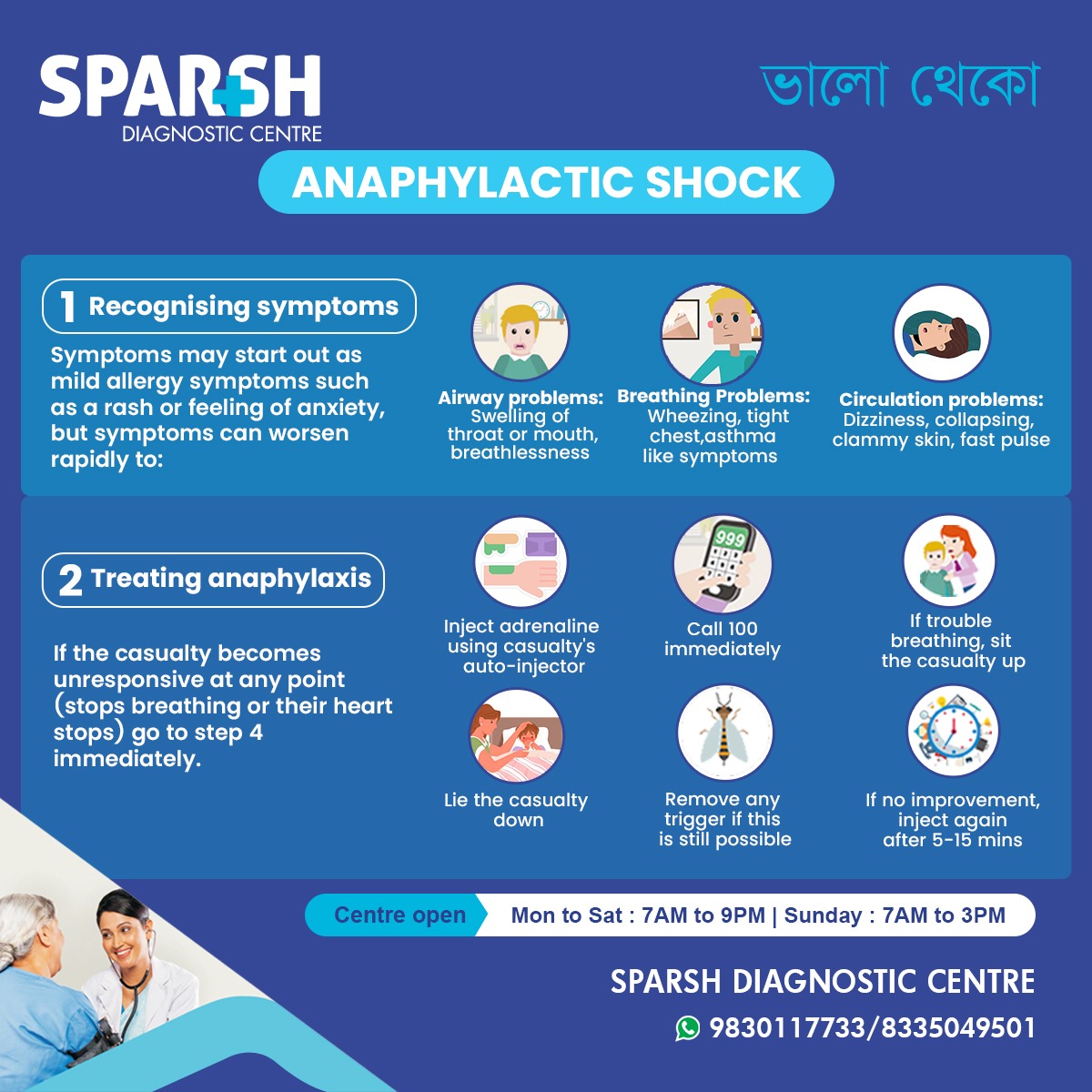
Airway Problems
- Swelling of the throat or tongue
- Hoarseness
- Trouble swallowing
- Tightness in the throat
Breathing Problems
- Wheezing
- Shortness of breath
- Rapid breathing
- Chest tightness
Circulation Problems
- Dizziness
- Weak pulse
- Low blood pressure
- Fainting
- Collapse
Gastrointestinal Symptoms
Some people may also experience:
Why Anaphylactic Shock Is Dangerous
Anaphylactic shock can block the airway and severely reduce blood flow to vital organs. The drop in blood pressure may lead to shock, organ damage, or cardiac arrest.
The reaction can progress very quickly, which is why immediate medical intervention is critical.
How Is Anaphylactic Shock Diagnosed?
Doctors usually diagnose anaphylaxis based on symptoms and recent exposure to an allergen.
Medical Evaluation May Include:
- Physical examination
- Blood pressure monitoring
- Oxygen level checks
- Allergy testing
- Blood tests for immune markers
Identifying the trigger is important to prevent future reactions.
Emergency Treatment for Anaphylactic Shock
Anaphylactic shock should always be treated as a medical emergency.
Step 1: Use Adrenaline Immediately
The first and most important treatment is an adrenaline injection, commonly delivered through an auto-injector such as an EpiPen.
Adrenaline works by:
- Opening the airways
- Raising blood pressure
- Reducing swelling
- Improving breathing
The injection is usually given into the outer thigh.
Step 2: Call Emergency Services
Even if symptoms improve after the injection, emergency medical help is still necessary because symptoms can return.
Step 3: Position the Person Properly
- Lay the person flat if possible
- Raise their legs slightly
- If breathing is difficult, allow them to sit upright
- Avoid sudden standing or walking
Step 4: Remove the Trigger
If possible:
- Remove an insect stinger
- Stop the medication
- Move away from the allergen source
Step 5: Give a Second Dose if Needed
If symptoms do not improve within 5 to 15 minutes, a second adrenaline injection may be required.
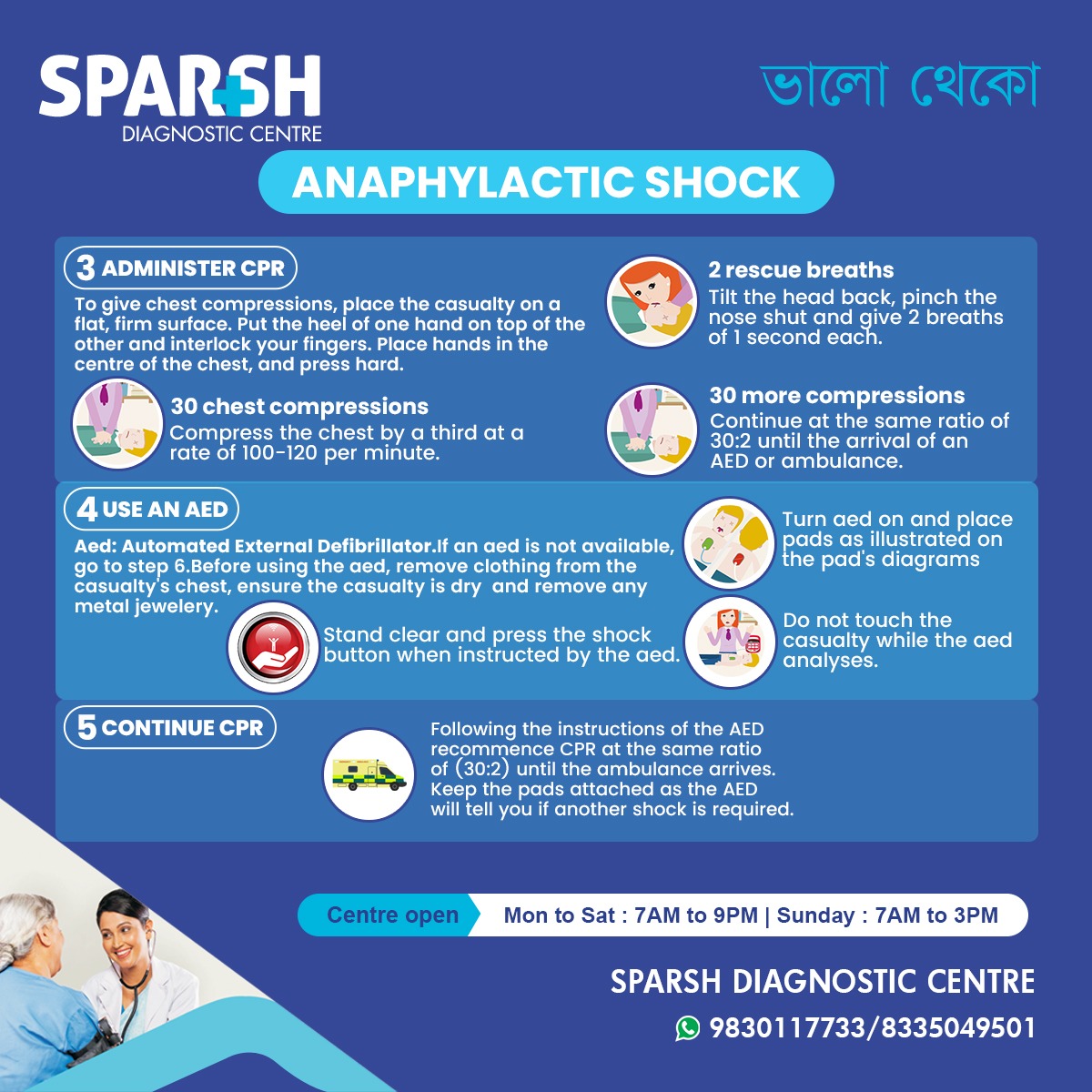
CPR and AED Use During Severe Anaphylaxis
In severe cases, the person may stop breathing or lose consciousness.
CPR Basics
If the person becomes unresponsive:
- Start chest compressions immediately
- Give rescue breaths if trained
- Continue until emergency help arrives
Using an AED
An Automated External Defibrillator (AED) may be used if the heart stops. AED devices provide voice instructions and are designed for public use.
Hospital Treatment for Anaphylactic Shock
After emergency stabilization, doctors may provide additional treatment, including:
- Oxygen therapy
- Intravenous fluids
- Antihistamines
- Steroids
- Bronchodilators for wheezing
Patients are usually observed for several hours because symptoms can recur later, a condition known as biphasic anaphylaxis.
What Is Biphasic Anaphylaxis?
Biphasic anaphylaxis occurs when symptoms return after the initial reaction has improved.
This second wave may happen within hours and can sometimes be just as severe as the first reaction.
That is why medical observation after treatment is extremely important.
Long-Term Management of Severe Allergies
Living with severe allergies requires preparation and awareness.
Always Carry an Auto-Injector
People at risk should carry at least one adrenaline auto-injector at all times.
Wear Medical Identification
Medical alert bracelets or cards can help others respond quickly during emergencies.
Learn to Read Labels
For food allergies, carefully checking ingredients is essential.
Inform Family and Friends
People close to you should know:
- Your triggers
- Warning symptoms
- How to use an auto-injector
Create an Allergy Action Plan
Having a written emergency plan can make a major difference during a crisis.
Preventing Anaphylactic Shock
While not all allergic reactions can be prevented, reducing exposure to triggers significantly lowers the risk.
Prevention Tips
- Avoid known allergens
- Carry emergency medication
- Inform healthcare providers about allergies
- Be cautious when eating outside
- Keep emergency contacts accessible
Parents of children with allergies should also inform schools, caregivers, and activity organizers.
Anaphylactic Shock in Children
Children can develop anaphylaxis suddenly, often from foods like peanuts, milk, or eggs.
Warning Signs in Children
- Sudden coughing
- Wheezing
- Swollen lips
- Vomiting after eating
- Extreme sleepiness
- Pale or bluish skin
Young children may not clearly explain their symptoms, so adults must act quickly if something seems wrong.
Anaphylactic Shock in Adults
Adults commonly experience reactions from medications and insect stings.
Older adults may have a higher risk of complications because of underlying heart or lung conditions.
Emotional Impact of Severe Allergies
Living with the fear of a sudden severe reaction can be stressful. Many people experience anxiety around food, travel, or social gatherings.
Support groups, counseling, and proper medical guidance can help individuals manage these concerns confidently.
Myths About Anaphylactic Shock
Myth 1: Mild Symptoms Mean It Is Not Serious
Symptoms can worsen rapidly within minutes.
Myth 2: Antihistamines Are Enough
Antihistamines may help itching or rash but cannot replace adrenaline during anaphylaxis.
Myth 3: You Only Need One Injection Ever
People with severe allergies may require repeated prescriptions and ongoing preparedness.
Myth 4: Anaphylaxis Always Happens Immediately
Although most reactions are rapid, some symptoms may appear later.
When to See a Doctor
Seek medical attention if you:
- Have experienced any severe allergic reaction
- Develop unexplained swelling or breathing problems
- Need evaluation for possible allergies
- Want guidance on emergency preparedness
An allergist can help identify triggers and create a personalized treatment plan.
Living Safely With Severe Allergies
With awareness and preparation, many people with severe allergies lead healthy, active lives. The key is recognizing symptoms early and acting fast.
Quick use of adrenaline, emergency medical care, and proper follow-up treatment can save lives during anaphylactic shock.
Frequently Asked Questions (FAQs)
What is the difference between anaphylaxis and anaphylactic shock?
Anaphylaxis refers to a severe allergic reaction, while anaphylactic shock specifically involves a dangerous drop in blood pressure and circulatory collapse.
How fast can anaphylactic shock happen?
Symptoms may develop within seconds or minutes after exposure to an allergen.
Can anaphylactic shock be fatal?
Yes. Without immediate treatment, it can become life-threatening very quickly.
What is the first treatment for anaphylactic shock?
An adrenaline injection is the first-line emergency treatment.
Can antihistamines treat anaphylactic shock?
No. Antihistamines may help mild allergy symptoms but cannot stop severe anaphylaxis.
Should I go to the hospital after using an EpiPen?
Yes. Emergency medical evaluation is necessary even if symptoms improve.
Can anaphylaxis happen more than once?
Yes. People with severe allergies remain at risk for future reactions.
What foods most commonly trigger anaphylaxis?
Peanuts, tree nuts, shellfish, milk, eggs, soy, and wheat are common triggers.
Is asthma linked to severe anaphylaxis?
Yes. People with asthma may have a higher risk of severe breathing complications during anaphylaxis.
Can children outgrow severe allergies?
Some children outgrow allergies such as milk or egg allergies, but others may persist into adulthood.
To consult a Doctor at Sparsh Diagnostic Centre, call our helpline numbers 9830117733/ 8335049501.
#BhaloTheko
Disclaimer:
No content on this site, regardless of date, should ever be used as a substitute for direct medical advice from your doctor or other qualified clinician.