

Dystonia is a neurological movement disorder that causes muscles to contract involuntarily. These contractions can lead to twisting movements, repetitive motions, abnormal postures, or painful muscle spasms. For some people, dystonia affects just one body part, while for others it may involve several areas of the body.
Although dystonia is not as widely discussed as conditions like Parkinson’s disease, it is actually one of the most common movement disorders worldwide. The symptoms can range from mild discomfort to severe physical disability, depending on the type and severity of the condition.
Living with dystonia can be frustrating, especially because symptoms often interfere with daily activities such as writing, walking, speaking, blinking, or even holding the head upright. However, early diagnosis and proper treatment can help many people manage symptoms effectively and improve their quality of life.
In this guide, we’ll explore everything you need to know about dystonia, including its causes, symptoms, classifications, diagnosis, treatment options, and frequently asked questions.
What Is Dystonia?
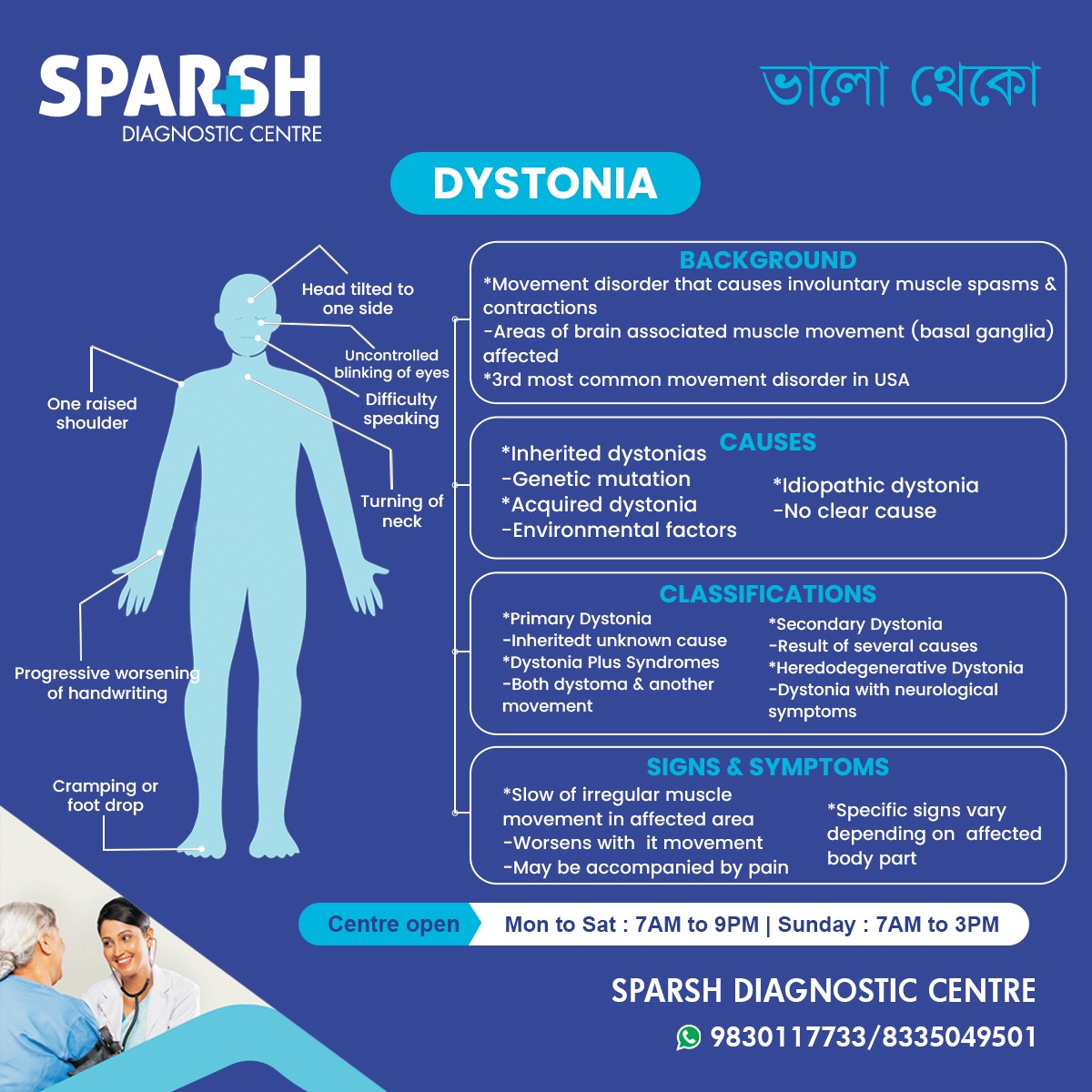
Dystonia is a disorder of movement caused by abnormal signaling between the brain and muscles. It mainly affects areas of the brain called the basal ganglia, which help control voluntary muscle movements.
When these signals become disrupted, muscles contract uncontrollably. This can cause:
- Twisting or repetitive movements
- Abnormal body postures
- Tremors
- Muscle stiffness
- Painful spasms
The condition may develop gradually or appear suddenly, depending on the underlying cause.
Some people experience dystonia only during specific tasks, such as writing or playing an instrument. Others may have symptoms continuously throughout the day.
How Common Is Dystonia?
Dystonia is considered the third most common movement disorder after essential tremor and Parkinson’s disease. It can affect people of all ages, including children and older adults.
The disorder may begin in:
- Childhood
- Adolescence
- Early adulthood
- Later stages of life
The age at onset often influences how the condition progresses.
Types of Dystonia
Dystonia can be classified in several ways depending on the body part involved, the cause, or the age of onset.
1. Focal Dystonia
Focal dystonia affects a single body part.
Common examples include:
a) Cervical
Also called spasmodic torticollis, this type affects the neck muscles and causes the head to twist or tilt involuntarily.
b) Blepharospasm
This affects the muscles around the eyes and causes excessive blinking or involuntary eye closure.
c) Writer’s Cramp
A task-specific dystonia that affects the hand during writing.
d) Oromandibular
Affects the jaw, tongue, and facial muscles, making speaking or eating difficult.
2. Segmental Dystonia
This involves two or more connected body regions. For example, dystonia affecting both the neck and shoulder.
3. Generalized Dystonia
Generalized dystonia affects multiple body parts and often begins in childhood. It may spread from one limb to the entire body over time.
4. Multifocal Dystonia
This type affects two or more unrelated body regions.
5. Hemidystonia
Hemidystonia affects one side of the body and is often linked to brain injury or stroke.
Causes of Dystonia
The exact causes are not always clear. In many cases, it results from abnormal functioning in the brain’s movement control centers.
The causes are generally divided into three categories.
Primary Dystonia
Primary dystonia occurs when dystonia itself is the main neurological problem. There may or may not be a genetic component.
In some people, inherited gene mutations contribute to the condition.
Secondary Dystonia
Secondary dystonia develops due to another underlying condition or external factor.
Possible causes include:
- Stroke
- Brain injury
- Parkinson’s disease
- Huntington’s disease
- Cerebral palsy
- Brain tumors
- Infections affecting the brain
- Exposure to toxins
- Certain medications
Drugs that affect dopamine signaling, especially some psychiatric medications, may trigger dystonia in susceptible individuals.
Idiopathic Dystonia
Idiopathic dystonia means the exact cause remains unknown. This is quite common, especially in adults with focal dystonia.
Risk Factors
Certain factors may increase the risk of developing dystonia:
- Family history of dystonia
- Neurological disorders
- Head trauma
- Exposure to certain medications
- Childhood onset movement disorders
Symptoms of Dystonia
Dystonia symptoms can vary widely from person to person.
Common signs include:
- Muscle spasms
- Twisting movements
- Tremors
- Cramping
- Abnormal posture
- Difficulty speaking
- Excessive blinking
- Neck turning
- Foot dragging
- Shoulder elevation
- Pain in affected muscles
Symptoms often worsen with:
In some cases, symptoms improve temporarily with rest or relaxation.
Early Signs of Dystonia
The condition may begin subtly. Early symptoms can include:
- Frequent blinking
- Mild neck stiffness
- Hand cramping while writing
- Foot turning inward
- Voice changes
- Muscle fatigue
Because the symptoms develop gradually, dystonia is sometimes mistaken for stress, muscle strain, or orthopedic problems.
Dystonia in Children
Childhood dystonia often starts in the legs or arms and may gradually spread to other body parts.
Children may experience:
- Difficulty walking
- Abnormal gait
- Twisted limbs
- Poor coordination
- Muscle tightness
Early diagnosis is especially important in children because some forms respond very well to treatment.
How is Dystonia diagnosed
There is no single test that confirms dystonia. Diagnosis is usually based on symptoms, medical history, and neurological examination.
A doctor may recommend:
Physical and Neurological Examination
The doctor evaluates posture, muscle tone, movement patterns, and coordination.
Blood Tests
These help identify metabolic or genetic causes.
MRI or CT Scan
Brain imaging can detect stroke, tumors, or structural abnormalities.
Genetic Testing
Useful when inherited dystonia is suspected.
Electromyography (EMG)
EMG measures electrical activity in muscles and may help evaluate abnormal contractions.
Treatment for Dystonia
There is currently no permanent cure, but several treatments can significantly reduce symptoms.
Treatment depends on:
- Type of dystonia
- Severity
- Underlying cause
- Age of the patient
Medications for Dystonia
Doctors may prescribe medications that relax muscles or improve brain signaling.
Common medications include:
Anticholinergic Drugs
These help reduce abnormal muscle contractions.
Muscle Relaxants
Used to reduce stiffness and spasms.
Dopamine-Related Medications
Certain dystonias respond to dopamine-based therapy.
Botulinum Toxin Injections
Botox injections are one of the most effective treatments for focal dystonia.
The injections temporarily weaken overactive muscles and may provide relief for several months.
Botulinum toxin is commonly used for:
- Cervical dystonia
- Blepharospasm
- Writer’s cramp
- Facial dystonia
Physical Therapy
Physical therapy can improve posture, flexibility, muscle control, and mobility.
Therapists may recommend:
- Stretching exercises
- Strength training
- Balance training
- Relaxation techniques
Regular therapy may help reduce pain and improve daily function.
Speech and Occupational Therapy
Speech therapy can help people with voice or speech difficulties.
Occupational therapy teaches strategies to make everyday activities easier, especially for people with hand or arm dystonia.
Deep Brain Stimulation (DBS)
Deep brain stimulation is a surgical treatment used for severe dystonia that does not respond well to medication.
During DBS:
- Electrodes are implanted in specific brain areas
- A small device sends electrical signals to regulate abnormal movement patterns
Many patients experience substantial improvement after DBS surgery.
Lifestyle Changes That May Help
While lifestyle changes alone cannot cure dystonia, they may help manage symptoms.
Helpful strategies include:
- Getting enough sleep
- Reducing stress
- Staying physically active
- Avoiding triggers
- Practicing relaxation techniques
- Maintaining regular medical follow-ups
Yoga, meditation, and breathing exercises may help some individuals cope with muscle tension and anxiety.
Living With Dystonia
Living with dystonia can be physically and emotionally challenging. Chronic pain, visible symptoms, and movement difficulties may affect confidence, work, and social life.
Support from healthcare professionals, family, and support groups can make a major difference.
Many people with dystonia continue to lead active and fulfilling lives with proper treatment and symptom management.
Can Dystonia Be Prevented?
Most forms of dystonia cannot be completely prevented, especially inherited types.
However, reducing the risk of head injuries, managing neurological conditions properly, and using medications cautiously under medical supervision may help lower the risk of secondary dystonia.
Complications of Dystonia
If left untreated, dystonia may lead to:
- Chronic pain
- Joint problems
- Difficulty walking
- Speech difficulties
- Swallowing issues
- Depression or anxiety
- Social isolation
Early intervention can help reduce these complications.
When to See a Doctor
You should consult a doctor if you experience:
- Persistent muscle spasms
- Unexplained twisting movements
- Frequent blinking
- Neck turning
- Difficulty speaking
- Hand cramping during tasks
- Abnormal posture
Early diagnosis often leads to better symptom control and improved quality of life.
Outlook for People With Dystonia
The outlook varies depending on the type and severity of the condition.
Some people experience mild symptoms that remain stable for years, while others may develop progressive movement difficulties.
With modern treatments such as botulinum toxin injections, physical therapy, and deep brain stimulation, many patients achieve significant improvement.
Research into dystonia continues to advance, offering hope for better therapies in the future.
FAQ About Dystonia
Is it a neurological disorder?
Yes, dystonia is a neurological movement disorder caused by abnormal brain signaling that affects muscle control.
Is it painful?
It can be. Many people experience muscle pain, cramping, or discomfort due to constant contractions and abnormal postures.
Can stress make it worse?
Yes, stress and anxiety often worsen dystonia symptoms in many individuals.
Is it hereditary?
Some forms of dystonia are inherited and linked to genetic mutations, while others occur without a family history.
Can it go away on its own?
In rare cases, symptoms may improve temporarily, but dystonia usually requires medical management.
What is the best treatment for it?
Treatment depends on the type and severity. Botulinum toxin injections, medications, physical therapy, and deep brain stimulation are among the most effective options.
Is it related to Parkinson’s disease?
Dystonia can occur in people with Parkinson’s disease, but the two conditions are different neurological disorders.
Can children develop it?
Yes, dystonia can affect children, especially inherited or generalized forms.
Does exercise help it?
Gentle exercise and physical therapy may help improve flexibility, posture, and muscle control.
Is it life-threatening?
Dystonia itself is usually not life-threatening, but severe cases can significantly affect quality of life and daily functioning.
Dystonia is a complex movement disorder that affects muscle control and posture. Although the symptoms can be challenging, modern treatment options offer real hope for symptom relief and improved daily living.
Understanding the early signs of dystonia is important because timely diagnosis often leads to better outcomes. Whether symptoms are mild or severe, a combination of medical treatment, therapy, and lifestyle support can help individuals manage the condition more effectively.
If you or a loved one experiences unusual muscle spasms, twisting movements, or posture changes, seeking medical advice early can make a significant difference.
To consult a Doctor at Sparsh Diagnostic Centre, call our helpline numbers 9830117733/ 8335049501.
#BhaloTheko
Disclaimer:
No content on this site, regardless of date, should ever be used as a substitute for direct medical advice from your doctor or other qualified clinician.


I didn’t realize dystonia could affect so many different parts of the body. Very informative article!