
Progressive supranuclear palsy (PSP) is a rare neurological disorder that affects movement, balance, vision, speech, and swallowing. Because its early symptoms often resemble Parkinson’s disease, many people initially receive the wrong diagnosis. Over time, however, PSP develops its own distinct pattern, especially problems with eye movement, repeated falls, and stiffness.
Living with PSP can be physically and emotionally challenging, both for patients and caregivers. Understanding the condition early can help families prepare for treatment, rehabilitation, and long-term care needs.
In this guide, we’ll explore everything you need to know about progressive supranuclear palsy, including symptoms, causes, diagnosis, stages, treatment options, life expectancy, and practical tips for improving quality of life.
What Is Progressive Supranuclear Palsy (PSP)?
Progressive supranuclear palsy is a degenerative brain disorder caused by damage to nerve cells in areas of the brain that control body movement, coordination, eye movements, thinking, and swallowing.
The term can be broken down into three parts:
- Progressive – the condition gradually worsens over time
- Supranuclear – it affects areas above the nerve centers controlling eye movement
- Palsy – refers to weakness or difficulty controlling muscles
PSP belongs to a group of disorders known as atypical parkinsonian syndromes. Although it shares some similarities with Parkinson’s disease, PSP progresses differently and responds less effectively to Parkinson’s medications.
How Common Is PSP?
PSP is considered rare. It usually develops after the age of 60, although symptoms can occasionally appear earlier. Men are slightly more likely to develop PSP than women.
Because PSP is often mistaken for Parkinson’s disease, stroke, or Alzheimer’s disease in the early stages, the condition may be underdiagnosed.
Causes of Progressive Supranuclear Palsy
The exact cause of PSP is still not fully understood. Researchers believe the disease is linked to the abnormal buildup of a protein called tau in brain cells.
Tau proteins normally help stabilize nerve cells. In PSP, these proteins become abnormal and clump together, damaging brain cells over time.
Possible Risk Factors
Several factors may increase the risk of PSP:
- Increasing age
- Genetic susceptibility
- Abnormal tau protein accumulation
- Environmental influences
- Cellular inflammation in the brain
Unlike some neurological disorders, PSP is usually not inherited directly from parents.
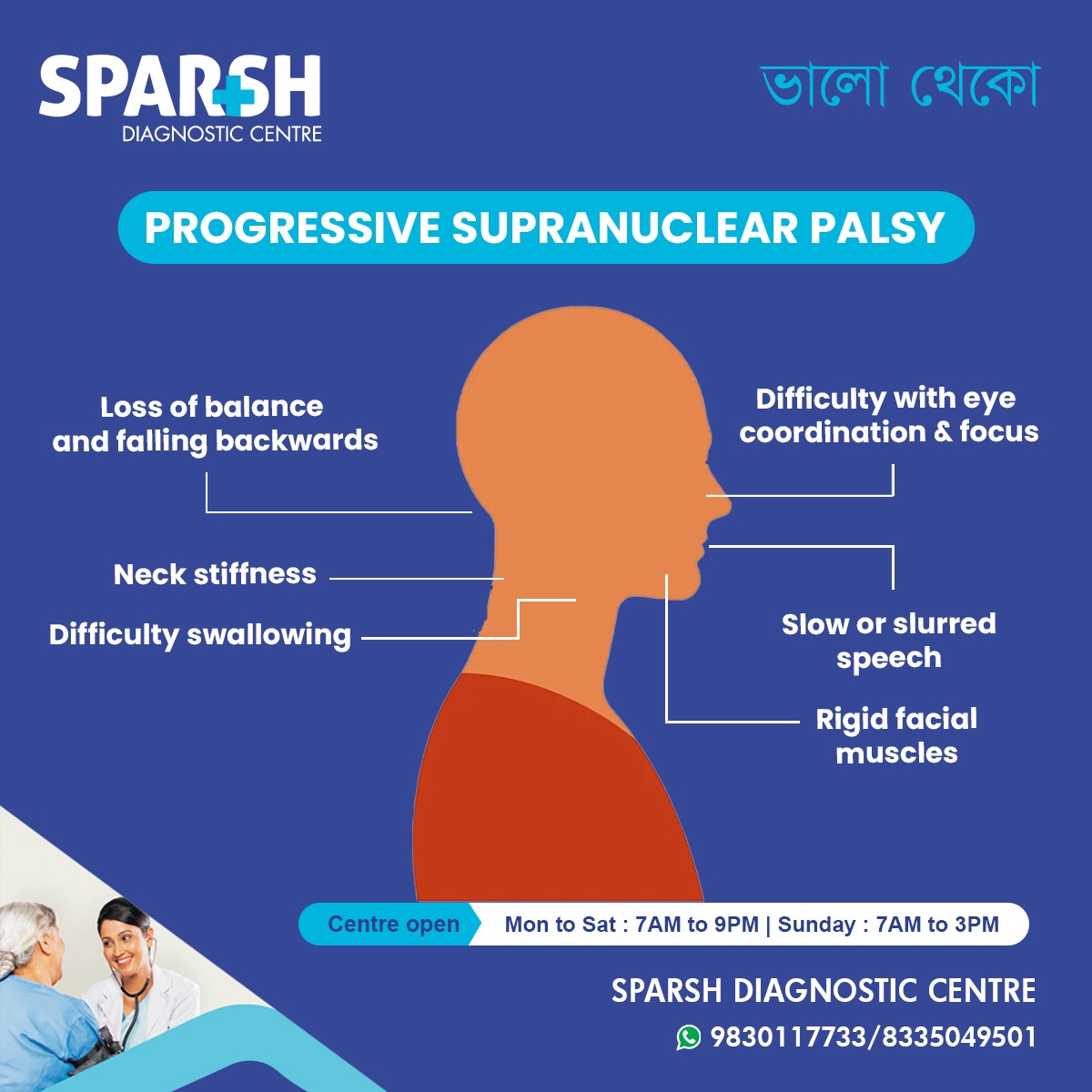
Symptoms of Progressive Supranuclear Palsy
Symptoms of PSP tend to appear gradually and worsen over time. Early signs are often subtle, which can delay diagnosis.
Common Early Symptoms
Loss of Balance and Frequent Falls
One of the hallmark symptoms of PSP is falling backward unexpectedly. Many people experience repeated falls early in the disease.
Eye Movement Problems
People with PSP commonly develop difficulty moving their eyes, especially when looking downward. This can make activities like reading, eating, or walking downstairs difficult.
Symptoms may include:
- Blurred vision
- Double vision
- Trouble focusing
- Difficulty making eye contact
- Slow eye movements
Stiffness and Movement Problems
PSP can cause:
- Muscle rigidity
- Slow movements
- Neck stiffness
- Awkward walking
- Poor coordination
Unlike Parkinson’s disease, tremors are less common in PSP.
Speech and Swallowing Difficulties
As the condition progresses, muscles involved in speaking and swallowing become affected.
Symptoms may include:
- Slurred speech
- Slow speech
- Difficulty swallowing food or liquids
- Choking episodes
Changes in Mood and Thinking
PSP may also affect behavior and cognition.
Some individuals experience:
- Depression
- Irritability
- Emotional outbursts
- Memory problems
- Difficulty concentrating
- Reduced motivation
Stages of Progressive Supranuclear Palsy
PSP progresses differently in each person, but the disease generally follows several stages.
Early Stage
- Mild balance problems
- Occasional falls
- Eye movement issues
- Subtle personality changes
Middle Stage
- Frequent falls
- Difficulty walking
- Speech problems
- Swallowing difficulties
- Increased muscle stiffness
Advanced Stage
- Severe mobility limitations
- Dependence on caregivers
- Significant swallowing problems
- Communication difficulties
- Cognitive decline
Difference Between PSP and Parkinson’s Disease
PSP and Parkinson’s disease share several symptoms, but there are important differences.
| Feature | PSP | Parkinson’s Disease |
|---|---|---|
| Falls | Early and frequent | Usually later |
| Eye movement problems | Common | Rare |
| Tremors | Less common | Common |
| Response to levodopa | Limited | Usually good |
| Posture | Upright or backward leaning | Stooped posture |
| Speech and swallowing problems | Earlier | Later |
Recognizing these differences helps doctors make a more accurate diagnosis.
How Is Progressive Supranuclear Palsy Diagnosed?
There is currently no single test that confirms PSP. Diagnosis is based on symptoms, neurological examination, and imaging studies.
Medical History and Physical Examination
Doctors assess:
- Walking pattern
- Balance
- Eye movements
- Muscle tone
- Reflexes
- Speech and swallowing ability
Brain Imaging
MRI scans may help rule out other neurological disorders and sometimes reveal characteristic brain changes associated with PSP.
Eye Movement Testing
Since PSP strongly affects eye control, specialists often evaluate how well the eyes move vertically.
Swallowing Assessment
Speech and swallowing evaluations help determine the severity of swallowing problems.
Treatment for Progressive Supranuclear Palsy
Currently, there is no cure for PSP. Treatment focuses on managing symptoms, improving mobility, and maintaining quality of life.
A multidisciplinary approach often provides the best results.
Medications for PSP
Parkinson’s Medications
Some patients may experience temporary improvement with medications like levodopa, although the benefits are often limited.
Antidepressants
Doctors may prescribe antidepressants to help with mood changes, emotional symptoms, or sleep problems.
Muscle Relaxants
These medications may reduce stiffness and muscle discomfort.
Physical Therapy for PSP
Physical therapy plays a major role in managing PSP.
Therapists help patients:
- Improve balance
- Maintain flexibility
- Reduce fall risk
- Strengthen muscles
- Practice safer walking techniques
Assistive devices such as walkers may also improve mobility and safety.
Speech and Swallowing Therapy
Speech-language therapists help individuals manage communication and swallowing challenges.
Therapy may include:
- Speech exercises
- Swallowing techniques
- Dietary adjustments
- Communication aids
In severe cases, feeding tubes may become necessary to ensure adequate nutrition.
Occupational Therapy
Occupational therapists help people remain as independent as possible by teaching safer ways to perform daily activities.
They may recommend:
- Home modifications
- Bathroom safety equipment
- Adaptive utensils
- Mobility aids
Nutrition and PSP
Difficulty swallowing can increase the risk of weight loss, choking, and aspiration pneumonia.
Helpful dietary strategies include:
- Eating softer foods
- Taking smaller bites
- Thickening liquids
- Sitting upright while eating
- Eating slowly
A nutritionist can help create a safe meal plan tailored to the patient’s needs.
Complications of Progressive Supranuclear Palsy
PSP can lead to several serious complications, including:
- Frequent falls and fractures
- Aspiration pneumonia
- Malnutrition
- Dehydration
- Breathing difficulties
- Severe mobility impairment
Early intervention and supportive care can help reduce these risks.
Life Expectancy With PSP
Progressive supranuclear palsy is a serious condition that gradually worsens over time. Average survival after diagnosis is often around 6 to 10 years, although this varies widely from person to person.
Complications such as infections, pneumonia, and injuries from falls are common causes of hospitalization.
While PSP affects lifespan, supportive care and rehabilitation can significantly improve comfort and daily functioning.
Caring for Someone With PSP
Caregiving for someone with PSP can be demanding. Physical limitations, communication problems, and emotional changes often require constant support.
Tips for Caregivers
- Keep walkways clear to prevent falls
- Use grab bars and mobility aids
- Encourage regular therapy sessions
- Offer emotional support
- Monitor swallowing difficulties carefully
- Schedule regular medical follow-ups
Caregivers should also prioritize their own physical and emotional well-being.
Living With Progressive Supranuclear Palsy
Although PSP presents major challenges, many individuals continue to enjoy meaningful activities and social connections with the right support.
Helpful lifestyle adjustments may include:
- Regular exercise
- Fall prevention strategies
- Balanced nutrition
- Speech therapy
- Mental stimulation
- Social interaction
Support groups can also provide encouragement and practical advice for patients and families.
Research and Future Treatments
Researchers continue exploring better treatments for PSP, especially therapies targeting abnormal tau protein buildup.
Current areas of research include:
- Tau-targeting medications
- Gene therapy
- Stem cell therapy
- Neuroprotective treatments
Although no breakthrough cure exists yet, ongoing research offers hope for improved future therapies.
When to See a Doctor
Seek medical attention if you or a loved one experiences:
- Unexplained frequent falls
- Difficulty moving the eyes
- Persistent balance problems
- Slurred speech
- Swallowing difficulty
- Increasing stiffness or mobility problems
Early diagnosis helps patients access therapies and support sooner.
Frequently Asked Questions (FAQ)
Is progressive supranuclear palsy the same as Parkinson’s disease?
No. Although PSP and Parkinson’s disease share some symptoms, PSP is a distinct neurological disorder with different progression patterns and treatment responses.
What is usually the first symptom of PSP?
Frequent unexplained falls, especially backward falls, are often one of the earliest symptoms of PSP.
Can PSP be cured?
Currently, there is no cure for progressive supranuclear palsy. Treatment focuses on symptom management and improving quality of life.
Is PSP hereditary?
Most cases of PSP are not directly inherited, although certain genetic factors may slightly increase risk.
Does PSP affect memory?
Yes. Some individuals with PSP develop cognitive changes, including difficulty concentrating, slowed thinking, and memory problems.
Can people with PSP still walk?
Many people can walk during the early stages, but mobility gradually declines over time. Physical therapy and mobility aids may help maintain independence longer.
What causes death in PSP?
Complications such as pneumonia, infections, choking, and injuries from falls are common causes of serious illness in advanced PSP.
How fast does PSP progress?
The progression rate varies, but symptoms generally worsen gradually over several years.
Progressive supranuclear palsy is a complex neurological disorder that affects movement, balance, vision, speech, and swallowing. Because its symptoms can resemble Parkinson’s disease, obtaining an accurate diagnosis may take time.
While there is currently no cure, treatments such as physical therapy, speech therapy, medications, and supportive care can help patients maintain comfort and independence for as long as possible.
Awareness of early warning signs — especially frequent backward falls and eye movement problems — is crucial for timely diagnosis and management. With proper medical care, emotional support, and rehabilitation, individuals living with PSP can continue to experience meaningful moments and improved quality of life.
To consult a Doctor at Sparsh Diagnostic Centre, call our helpline numbers 9830117733/ 8335049501.
#BhaloTheko
Disclaimer:
No content on this site, regardless of date, should ever be used as a substitute for direct medical advice from your doctor or other qualified clinician.