If you’ve ever experienced relentless itching that gets worse at night, you know how frustrating skin conditions can be. One such condition that often causes intense discomfort is scabies. While it’s common, it’s also widely misunderstood — and that misunderstanding can delay proper treatment.
Scabies isn’t a reflection of poor hygiene. It’s not rare. And it’s certainly not something to feel embarrassed about. The good news? It’s completely treatable.
In this detailed guide, we’ll walk through everything you need to know about scabies — what causes it, how to recognise the symptoms, how it spreads, the best treatment options, and practical steps to prevent reinfection.
What Is Scabies?
Scabies is a highly contagious skin condition caused by a microscopic mite called Sarcoptes scabiei. These tiny parasites burrow into the upper layer of the skin, where they live, feed, and lay eggs. The body reacts to their presence with intense itching and a characteristic rash.
Because the mites are invisible to the naked eye, you won’t see them crawling on the skin. What you’ll notice instead is the itching, irritation, and sometimes small raised bumps or burrow marks.
Scabies can affect anyone — children, adults, elderly individuals — regardless of cleanliness, lifestyle, or socioeconomic background.
What Causes Scabies?
Scabies develops when the female mite burrows into the skin to lay eggs. Within days, the eggs hatch and new mites continue the cycle. The itching isn’t directly caused by the mites moving around — it’s actually your immune system reacting to the mites, their eggs, and their waste.
This immune response is what leads to:
Severe itching
Red or bumpy rash
Skin irritation
Burrow tracks
The first time someone gets scabies, symptoms may take 2–6 weeks to appear. But if you’ve had scabies before, your body recognises it faster, and symptoms may begin within just a few days.
Common Symptoms of Scabies
Scabies symptoms can vary slightly depending on age and immune status, but the classic signs include:
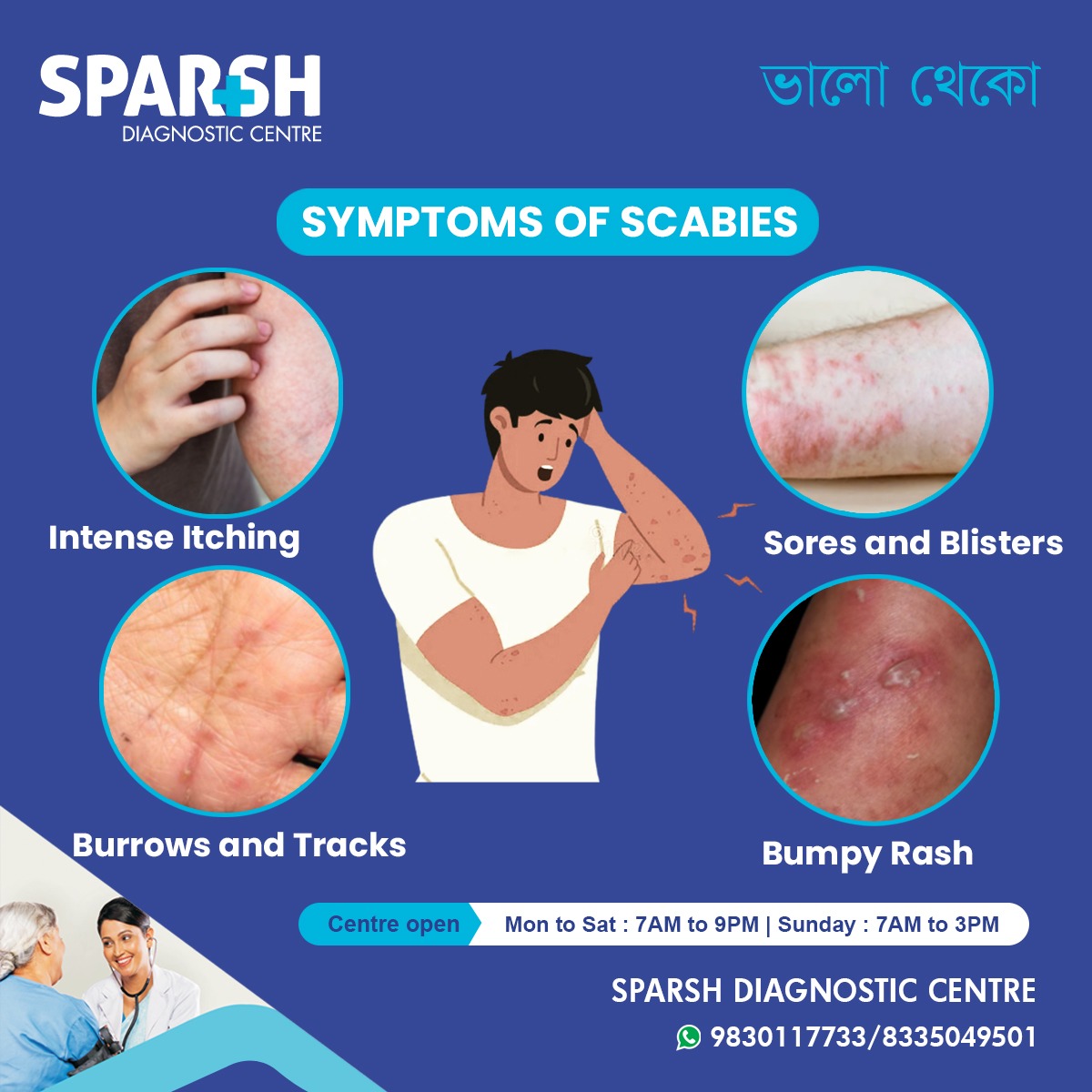
1. Intense Itching (Especially at Night)
The hallmark symptom is severe itching that worsens at night. The warmth of your bed can increase irritation, making sleep difficult.
2. Bumpy Rash
Small red bumps or pimple-like lesions may appear on the skin. In some cases, these bumps may form crusts or scabs due to scratching.
3. Burrows or Tracks
One of the most distinctive features of scabies is thin, wavy, greyish or skin-coloured lines on the skin. These are the tunnels created by the mites.
4. Sores and Blisters
Excessive scratching can break the skin, leading to sores or secondary bacterial infections.
Where Does Scabies Appear on the Body?
Scabies tends to affect specific areas, especially where the skin is thinner. Common sites include:
Between the fingers
Wrists
Elbows
Armpits
Waistline
Around the nipples
Genital area
Buttocks
In infants and young children, scabies may also affect:
Scalp
Face
Neck
Palms and soles
How Does Scabies Spread?
Scabies spreads through prolonged skin-to-skin contact. It doesn’t usually spread from a quick handshake or brief hug. Instead, it commonly spreads through:
Living in the same household
Sexual contact
Sharing bedding or clothing
Crowded environments like hostels, nursing homes, and dormitories
Because symptoms take time to develop, people can unknowingly spread scabies before realising they’re infected.
Is Scabies a Sign of Poor Hygiene?
Absolutely not.
Scabies can affect anyone. While overcrowding increases transmission risk, personal cleanliness does not prevent infestation. Even individuals who bathe regularly can get scabies if exposed to an infected person.
This misconception often causes unnecessary stigma. It’s important to treat scabies like any other contagious condition — medically, not socially.
Types of Scabies
While most cases are straightforward, there are variations worth knowing about.
Classic Scabies
This is the most common type. It involves intense itching and a typical rash pattern with burrows.
Crusted (Norwegian) Scabies
A more severe form that occurs mainly in people with weakened immune systems. It causes thick crusts on the skin that contain thousands of mites. Unlike classic scabies, itching may be mild or absent.
Crusted scabies is highly contagious and requires urgent treatment.
How Is Scabies Diagnosed?
Doctors usually diagnose scabies based on:
Symptoms
Physical examination
Appearance of burrows or rash
In some cases, a small skin scraping may be examined under a microscope to confirm the presence of mites or eggs.
Because scabies can resemble eczema, allergic reactions, or fungal infections, professional evaluation is important.
Scabies Treatment: What Works?
The good news is that scabies is treatable with prescription medication.
1. Topical Scabicides
The most common treatment is a medicated cream or lotion applied to the entire body from the neck down (and sometimes the scalp in children). These medications kill the mites and eggs.
Application typically involves:
Applying at night
Leaving on for 8–14 hours
Washing off the next morning
Repeating after 7 days if advised
2. Oral Medication
In certain cases — such as crusted scabies or outbreaks — doctors may prescribe oral medication.
3. Treat Close Contacts
All household members and close contacts should be treated at the same time, even if they have no symptoms. This prevents reinfection.
Why Does Itching Continue After Treatment?
Many people worry when itching persists after treatment. This is normal.
Even after the mites are killed, the body can continue reacting to the dead mites and debris for up to 2–4 weeks. This is called post-scabetic itch.
Doctors may recommend:
Antihistamines
Mild steroid creams
Moisturisers
However, if new burrows or fresh bumps appear, you should consult your doctor.
Cleaning the Home: Do You Need to Disinfect Everything?
Scabies mites cannot survive more than 2–3 days away from human skin. Still, proper cleaning helps prevent reinfestation.
Here’s what to do:
Wash clothing, bedding, and towels used in the last 3 days in hot water
Dry on high heat
Seal non-washable items in plastic bags for 72 hours
Vacuum furniture and mattresses
There’s no need for fumigation or extreme chemical cleaning.
Complications of Scabies
If left untreated, scabies can lead to:
Secondary bacterial infections
Skin thickening
Severe crusted scabies
Sleep disturbance due to itching
In rare cases, untreated skin infections can lead to more serious health problems.
When Should You See a Doctor?
Seek medical attention if:
Itching is severe and persistent
Rash spreads rapidly
Family members develop similar symptoms
Skin shows signs of infection (pus, warmth, swelling)
You have a weakened immune system
Early treatment prevents complications and stops transmission.
Scabies in Children and Infants
Children may show slightly different symptoms. They might develop:
Blisters on palms and soles
Irritability due to itching
Widespread rash
Because children scratch more aggressively, secondary infections are common. Prompt diagnosis and treatment are especially important.
Scabies During Pregnancy
Most topical treatments are considered safe during pregnancy when prescribed by a doctor. If you suspect scabies while pregnant, consult your healthcare provider before using any medication.
Preventing Scabies
Prevention focuses on avoiding prolonged contact with infected individuals and treating cases promptly.
Helpful steps include:
Avoid sharing bedding and clothing
Treat all close contacts simultaneously
Educate family members
Maintain personal hygiene (though it won’t prevent exposure, it helps overall skin health)
In crowded settings like hostels or care homes, early detection is key.
How Long Does Scabies Last?
Without treatment, scabies can persist for months or even years because mites continue reproducing.
With proper treatment:
Mites die within days
Itching improves gradually
Skin heals over several weeks
Consistency and full-course treatment are crucial.
Frequently Asked Questions (FAQs)
1. Is scabies contagious?
Yes. Scabies spreads through prolonged skin-to-skin contact and sometimes through shared bedding or clothing.
2. Can I get scabies from pets?
No. Human scabies mites are different from animal mites. Pets do not transmit human scabies.
3. How soon do symptoms appear?
First-time infections may take 2–6 weeks to show symptoms. Re-infections can cause symptoms within days.
4. Can over-the-counter creams cure scabies?
No. Scabies requires prescription medication. Regular anti-itch creams will not eliminate the mites.
5. Why is itching worse at night?
Warmth increases skin sensitivity and immune response, making itching more intense at bedtime.
6. Can scabies go away on its own?
No. Without treatment, mites continue to multiply and symptoms persist.
7. Should I stay home from work or school?
You can usually return 24 hours after starting treatment, but follow your doctor’s advice.
8. What is crusted scabies?
A severe form involving thick crusts of skin and thousands of mites, typically affecting immunocompromised individuals.
9. Can I get scabies again?
Yes. Previous infection does not guarantee lifelong immunity.
10. How do I know if treatment worked?
If no new burrows or lesions appear after 2–4 weeks and itching gradually decreases, treatment is likely successful.
Scabies can be uncomfortable and distressing, but it’s completely treatable. The key is early diagnosis, proper medication, and treating all close contacts at the same time.
If you’re dealing with persistent itching that worsens at night, don’t ignore it. A simple medical consultation can bring relief and prevent spread to others.
Skin conditions often carry unnecessary stigma — but scabies is simply a medical issue, not a personal failing. With the right care, recovery is straightforward.
To consult a Doctor at Sparsh Diagnostic Centre, call our helpline numbers 9830117733/ 8335049501.
#BhaloTheko
Disclaimer:
No content on this site, regardless of date, should ever be used as a substitute for direct medical advice from your doctor or other qualified clinician.