

Minerals play a vital role in maintaining overall health and ensuring the smooth functioning of the body. From building strong bones and teeth to regulating nerve impulses, muscle contraction, immunity, and hormone production, minerals are essential micronutrients required in adequate amounts. When the body does not receive sufficient minerals through diet or absorption, mineral deficiencies can develop, leading to a wide range of health problems.
In today’s fast-paced lifestyle, poor dietary choices, chronic illnesses, digestive disorders, and increased nutritional demands make mineral deficiencies increasingly common. Many symptoms are subtle and often overlooked until they begin affecting daily life. Understanding mineral deficiencies, their warning signs, and how they are diagnosed is crucial for early intervention and long-term health.
What Are Mineral Deficiencies?
Mineral deficiencies occur when the body lacks essential inorganic elements required for normal physiological functions. Unlike vitamins, minerals are not produced by the body and must be obtained through food, water, or supplements.
Minerals are broadly classified into:
Macrominerals – required in larger amounts (e.g., calcium, magnesium, potassium, sodium)
Trace minerals – required in smaller quantities (e.g., iron, zinc, iodine, selenium, copper, manganese)
Even small imbalances in these minerals can disrupt metabolic processes and lead to health complications.
Common Causes of Mineral Deficiencies
Mineral deficiencies may result from a combination of dietary, medical, and lifestyle factors, including:
1. Poor Dietary Intake
Diets low in fruits, vegetables, whole grains, nuts, seeds, and lean proteins often lack essential minerals.
2. Malabsorption Disorders
Conditions such as celiac disease, inflammatory bowel disease, chronic diarrhea, or gastric surgery can impair mineral absorption.
3. Increased Nutritional Needs
Pregnancy, lactation, childhood growth, intense physical activity, and recovery from illness increase mineral requirements.
4. Chronic Medical Conditions
Kidney disease, thyroid disorders, anemia, and endocrine disorders can affect mineral balance.
5. Medications
Diuretics, antacids, steroids, and certain antibiotics may interfere with mineral absorption or increase excretion.
Common Mineral Deficiencies and Their Symptoms
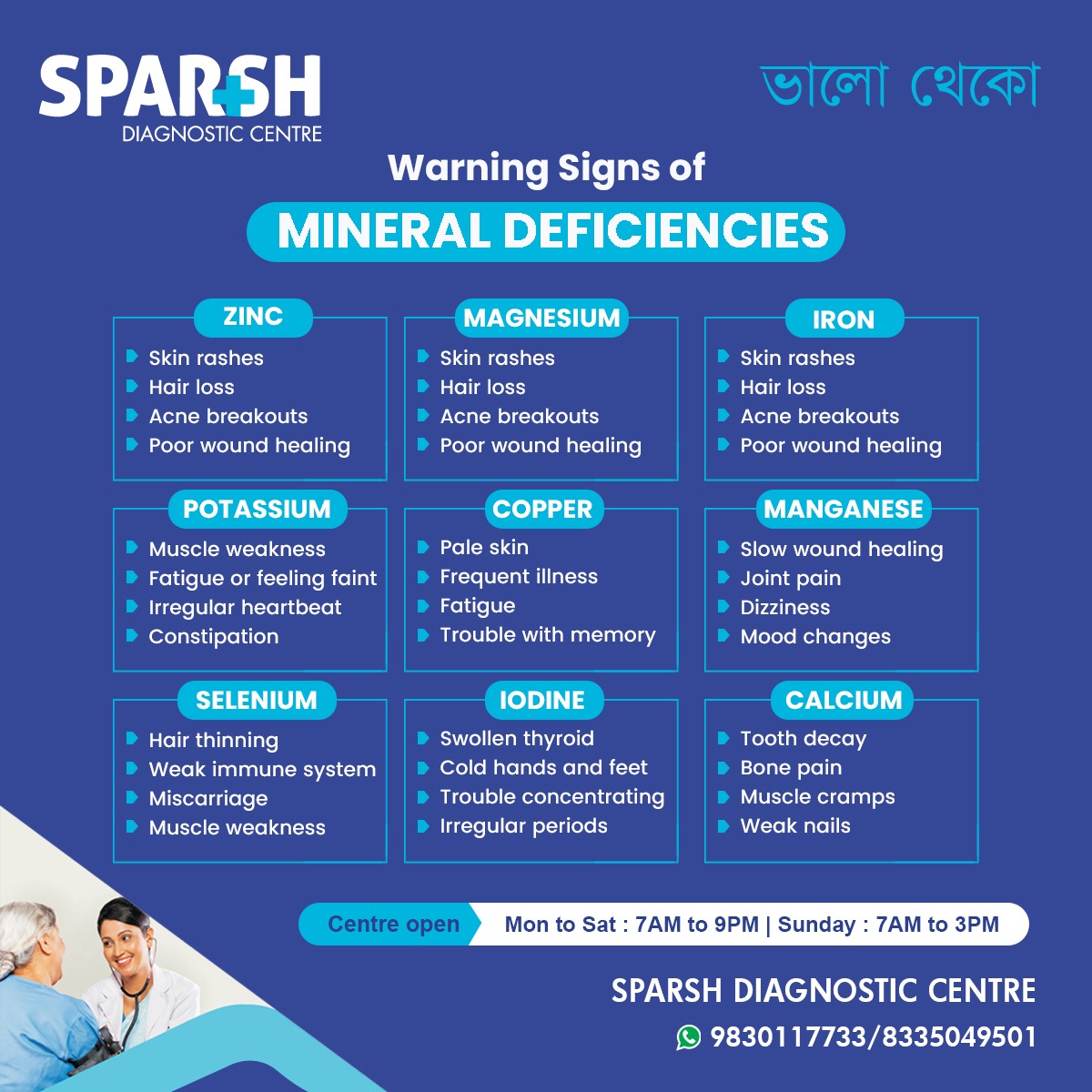
Zinc Deficiency
Zinc is crucial for immune function, wound healing, and skin health.
Warning signs include:
Hair loss
Poor wound healing
Frequent infections
Reduced sense of taste or smell
Magnesium Deficiency
Magnesium supports muscle function, nerve signaling, and energy production.
Symptoms may include:
Muscle cramps or spasms
Weakness
Irritability
Sleep disturbances
Iron Deficiency
Iron is essential for oxygen transport through hemoglobin.
Common symptoms include:
Pale skin
Hair loss
Brittle nails
Iron deficiency is one of the most common nutritional deficiencies, especially among women and children.
Potassium Deficiency
Potassium plays a key role in heart rhythm, muscle contraction, and nerve function.
Symptoms may include:
Fatigue or feeling faint
Muscle cramps
Severe potassium deficiency can be life-threatening and requires urgent medical attention.
Copper Deficiency
Copper helps in iron metabolism, immune health, and nervous system function.
Warning signs include:
Pale skin
Frequent infections
Fatigue
Memory problems
Manganese Deficiency
Manganese is important for bone formation, metabolism, and antioxidant defense.
Symptoms may include:
Slow wound healing
Dizziness
Mood changes
Bone weakness
Selenium Deficiency
Selenium supports thyroid function and immunity.
Signs of deficiency include:
Hair thinning
Muscle weakness
Weakened immune system
Fertility problems
Increased risk of infections
Iodine Deficiency
Iodine is essential for thyroid hormone production.
Symptoms may include:
Swollen thyroid (goiter)
Cold hands and feet
Weight gain
Fatigue
Trouble concentrating
Calcium Deficiency
Calcium is vital for bone health, muscle contraction, and nerve transmission.
Warning signs include:
Bone pain
Muscle cramps
Brittle or weak nails
Increased risk of fractures
Long-term calcium deficiency can lead to osteoporosis.
Health Risks of Untreated Mineral Deficiencies
If left untreated, mineral deficiencies can result in serious health complications such as:
Cardiac rhythm abnormalities
Impaired immunity
Growth and developmental delays in children
Neurological disorders
Early diagnosis and treatment significantly reduce these risks.
How Are Mineral Deficiencies Diagnosed?
Mineral deficiencies are diagnosed through a combination of clinical evaluation and laboratory testing.
Diagnostic Tests May Include:
Blood tests for minerals such as iron, calcium, magnesium, potassium, zinc, and selenium
Thyroid function tests for iodine imbalance
Specialized tests based on symptoms and medical history
Accurate testing helps determine the severity of deficiency and guides appropriate treatment.
Treatment of Mineral Deficiencies
Treatment depends on the specific mineral deficiency, its cause, and severity.
Common Treatment Approaches:
Dietary modifications to include mineral-rich foods
Oral mineral supplements
Injectable supplements in severe cases
Treating underlying medical conditions
Regular monitoring through follow-up tests
Self-medication with supplements should be avoided, as excess minerals can be harmful.
Preventing Mineral Deficiencies
Prevention focuses on maintaining a balanced diet and healthy lifestyle.
Tips for Prevention:
Eat a variety of fruits, vegetables, whole grains, dairy, lean meats, and nuts
Stay hydrated
Limit processed foods
Address digestive issues early
Get routine health check-ups
Follow medical advice during pregnancy or chronic illness
When Should You See a Doctor?
You should consult a healthcare professional if you experience:
Persistent fatigue or weakness
Hair loss or skin problems
Muscle cramps or irregular heartbeat
Bone pain or frequent fractures
Recurrent infections
Thyroid-related symptoms
Early evaluation helps prevent complications.
Frequently Asked Questions (FAQ)
What are the most common mineral deficiencies?
Iron, calcium, magnesium, potassium, zinc, and iodine deficiencies are among the most common worldwide.
Can mineral deficiencies occur even with a normal diet?
Yes. Absorption issues, chronic diseases, medications, and increased bodily demands can cause deficiencies despite adequate intake.
Are mineral supplements safe?
Supplements should only be taken under medical supervision. Excess intake can lead to toxicity.
How often should mineral levels be tested?
Testing frequency depends on age, health status, pregnancy, and existing medical conditions. Your doctor will advise accordingly.
Can mineral deficiencies cause hair loss?
Yes. Deficiencies in iron, zinc, selenium, and iodine are commonly associated with hair thinning and hair loss.
Are children at risk of mineral deficiencies?
Yes. Growing children require adequate minerals for development. Poor nutrition can affect growth and immunity.
Can mineral deficiencies affect mental health?
Yes. Deficiencies in magnesium, iron, and manganese may contribute to mood changes, irritability, and cognitive issues.
Mineral deficiencies are common yet often overlooked contributors to poor health. Recognizing early warning signs and seeking timely diagnostic testing can prevent serious complications. A balanced diet, healthy lifestyle, and regular medical check-ups are key to maintaining optimal mineral levels and overall well-being.
If you suspect a mineral deficiency, professional evaluation and laboratory testing are essential for accurate diagnosis and effective treatment.
#BhaloTheko
Disclaimer:
No content on this site, regardless of date, should ever be used as a substitute for direct medical advice from your doctor or other qualified clinician.

Sparsh Doctor List


[…] Signs of vitamin and mineral deficiencies […]