

Tuberculosis (TB) is one of the oldest known infectious diseases, yet it continues to be a major public health challenge across the world, especially in developing countries. Caused by the bacterium Mycobacterium tuberculosis, TB primarily affects the lungs but can also spread to other parts of the body, such as the kidneys, spine, and brain.
Despite being curable and preventable, TB remains one of the top 10 causes of death worldwide. According to the World Health Organization (WHO), millions of people fall ill with TB each year, many of whom go undiagnosed or untreated due to lack of awareness.
This blog explores the symptoms, causes, diagnosis, treatment, and prevention of tuberculosis, along with answers to common questions about the disease.
What is Tuberculosis (TB)?
Tuberculosis is a contagious bacterial infection that spreads through the air when an infected person coughs, sneezes, or spits. When a person with active TB of the lungs exhales tiny droplets containing the bacteria, these can be inhaled by others nearby.
Not everyone infected with TB bacteria becomes sick. There are two TB-related conditions:
Latent TB Infection:
The bacteria remain in the body in an inactive state and cause no symptoms. However, they can become active later.Active TB Disease:
The bacteria are active and multiply, causing symptoms and making the person contagious.
Types of Tuberculosis
While pulmonary TB (affecting the lungs) is the most common, TB can also occur in other organs. These include:
Extrapulmonary TB: Affects parts of the body other than the lungs, such as the lymph nodes, bones, joints, kidneys, and brain.
Miliary TB: A severe form that spreads throughout the body via the bloodstream.
Drug-Resistant TB: Caused by bacteria resistant to standard anti-TB medications, making treatment more complex.
Symptoms of Tuberculosis
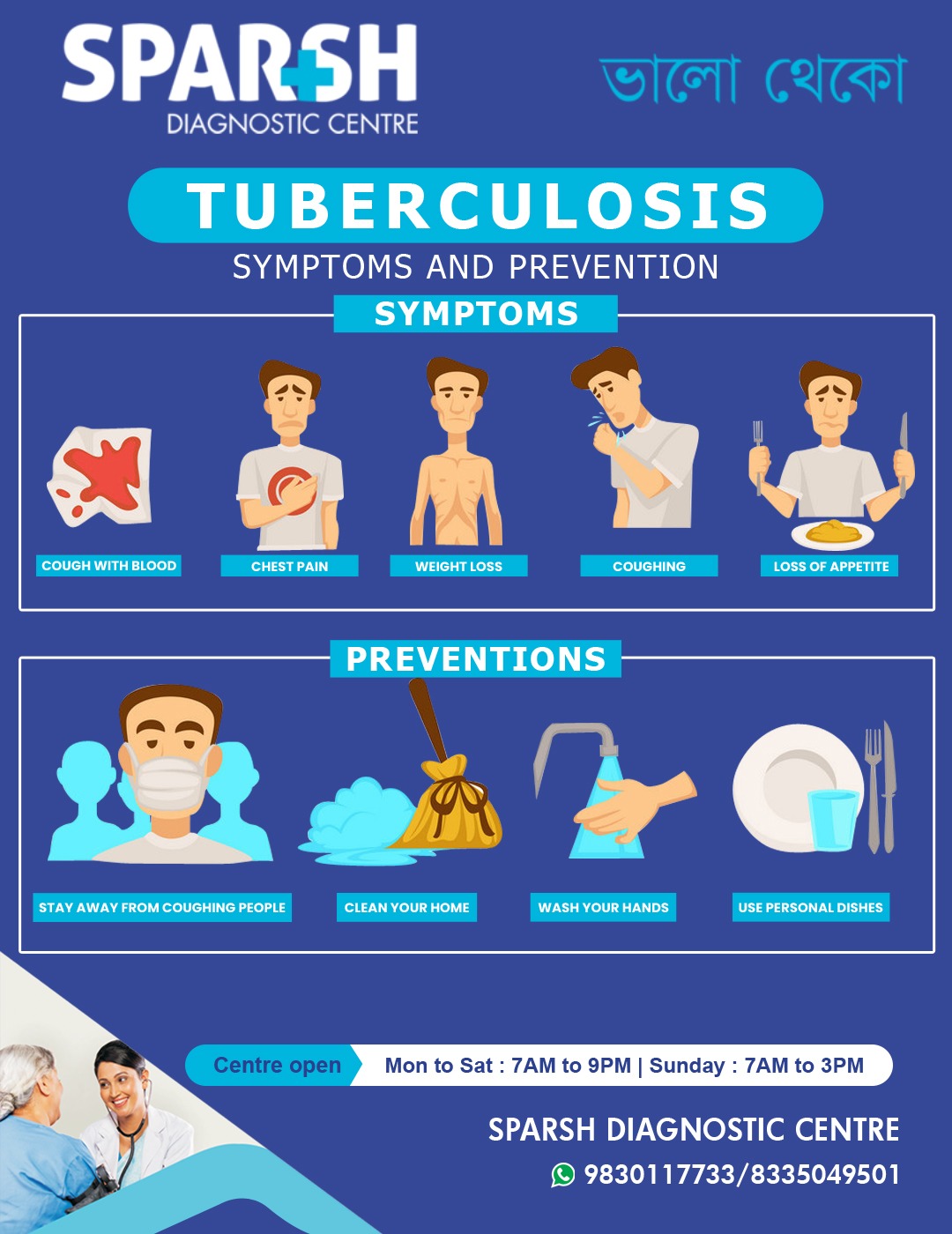
The symptoms of active TB disease vary depending on the organ affected, but the most common form is pulmonary tuberculosis. Key symptoms include:
1. Persistent Cough
A cough lasting more than three weeks is one of the earliest and most common symptoms.
2. Coughing up Blood (Hemoptysis)
In severe cases, patients may cough up blood or blood-stained mucus.
3. Chest Pain
Pain in the chest while breathing or coughing can occur due to lung inflammation.
4. Weight Loss
Unexplained and rapid weight loss is often seen in TB patients.
5. Loss of Appetite
A decreased desire to eat contributes to fatigue and nutritional deficiencies.
6. Fever and Night Sweats
Low-grade fever, especially at night, along with sweating, are hallmark signs.
7. Fatigue and Weakness
Continuous tiredness, weakness, and lethargy are common in active TB.
Causes and Risk Factors of Tuberculosis
Causes
TB is caused by the bacterium Mycobacterium tuberculosis, which spreads through the air when a person with active TB disease coughs, sneezes, or talks. Inhaling even a few of these bacteria can cause infection.
Risk Factors
Certain conditions increase the risk of developing active TB, including:
Smoking or alcohol abuse
Living in overcrowded or unsanitary conditions
Close contact with an infected person
Use of immunosuppressive drugs
How Tuberculosis Spreads
TB spreads through airborne droplets, not by touch or sharing utensils. When an infected person coughs or sneezes, bacteria are released into the air. Others can inhale these bacteria and become infected.
However, TB does not spread through:
Handshakes or hugs
Sharing food or drink
Touching bed linens or toilet seats
Diagnosis of Tuberculosis
Early and accurate diagnosis is critical to prevent complications and transmission. At Sparsh Diagnostic Centre, modern tests are available for detecting TB quickly and precisely.
Common Diagnostic Tests Include:
Tuberculin Skin Test (Mantoux Test)
A small amount of tuberculin is injected under the skin. After 48–72 hours, the site is examined for a reaction.Blood Tests (Interferon-Gamma Release Assays – IGRA)
Measures the immune system’s response to TB bacteria.Chest X-ray
Helps detect lung damage or abnormalities caused by TB.Sputum Test
Examination of sputum under a microscope to identify TB bacteria.CT Scan or MRI
Used to detect TB in organs other than the lungs.GeneXpert Test (CBNAAT)
A rapid molecular test that identifies TB bacteria and checks for drug resistance.
Treatment of Tuberculosis
TB is curable with timely and complete treatment. The standard treatment includes a combination of antibiotics taken for several months.
1. First-Line Anti-TB Drugs
Commonly used medications include:
Isoniazid
Rifampicin
Pyrazinamide
Ethambutol
2. Duration of Treatment
Treatment usually lasts 6 to 9 months, depending on the type and severity of TB.
3. Drug-Resistant TB
For multi-drug resistant TB (MDR-TB), second-line drugs and longer treatment durations are required.
4. Directly Observed Treatment (DOT)
Under the DOT strategy, healthcare workers monitor patients to ensure they complete their medication regimen properly.
Prevention of Tuberculosis
Prevention plays a vital role in controlling TB transmission.
Here are key preventive measures:
Avoid Close Contact with TB Patients
Keep distance from people who are coughing or diagnosed with TB.Ensure Proper Ventilation
TB bacteria thrive in closed, stuffy environments. Keep rooms well-aired.Maintain Good Hygiene
Wash your hands regularly and avoid touching your face unnecessarily.Use Personal Dishes and Utensils
Avoid sharing eating utensils, cups, or plates with infected individuals.Clean Your Surroundings
Regular cleaning and sunlight exposure can help reduce bacteria in the environment.Vaccination (BCG Vaccine)
The Bacillus Calmette–Guérin (BCG) vaccine provides protection against severe forms of TB in children.
Complications of Untreated Tuberculosis
If left untreated, TB can lead to severe health issues such as:
Lung damage or respiratory failure
Spread of infection to other organs
Spinal TB leading to deformities
Meningitis (infection of brain membranes)
Death in advanced cases
Living with Tuberculosis
TB treatment requires discipline and patience. Here are some lifestyle tips to recover faster:
Take medications exactly as prescribed.
Eat a nutritious diet rich in protein and vitamins.
Avoid smoking and alcohol.
Get adequate rest.
Follow up regularly with your doctor.
When to See a Doctor
Consult a doctor immediately if you have:
Persistent cough for more than 3 weeks
Coughing up blood
Unexplained weight loss or fever
Chest pain while breathing or coughing
Early diagnosis can prevent complications and stop TB from spreading to others.
Tuberculosis in India: The Current Scenario
India bears the highest burden of tuberculosis globally. The government has launched the National TB Elimination Programme (NTEP) to eradicate TB by 2025. Public awareness, early testing, and complete treatment adherence are the keys to achieving this goal.
Why Choose Sparsh Diagnostic Centre for TB Diagnosis
At Sparsh Diagnostic Centre, we offer:
Advanced diagnostic facilities for quick and accurate detection
Experienced medical professionals
Comprehensive support and counseling
Affordable and patient-friendly services
Your health and safety are our top priorities. Early testing and treatment can save lives.
Frequently Asked Questions (FAQ)
1. What causes tuberculosis?
TB is caused by the bacterium Mycobacterium tuberculosis, which spreads through the air when an infected person coughs or sneezes.
2. Is tuberculosis curable?
Yes. TB can be completely cured with proper medical treatment and adherence to prescribed medication.
3. How long does TB treatment take?
Treatment usually lasts between 6 to 9 months, depending on the type and severity of infection.
4. Is TB contagious?
Yes. TB of the lungs is contagious and spreads through air droplets. However, TB in other parts of the body is generally not contagious.
5. Can TB come back after treatment?
If treatment is not completed properly, TB can relapse. Always finish the full course of medicine as prescribed.
6. How can I prevent TB?
Avoid close contact with infected individuals, maintain hygiene, keep your surroundings clean, and ensure good ventilation.
7. What is MDR-TB?
MDR-TB (Multi-Drug Resistant TB) is a type of tuberculosis resistant to two or more first-line drugs, making treatment more challenging.
8. What is the role of the BCG vaccine?
The BCG vaccine provides protection against severe forms of TB, especially in children.
Tuberculosis is a serious but preventable and curable disease. Awareness, early detection, and proper treatment are key to controlling its spread. By maintaining hygiene, following preventive measures, and getting tested promptly at trusted centres like Sparsh Diagnostic Centre, you can safeguard yourself and your loved ones.

If you have any personal experiences or questions about tuberculosis, feel free to share in the comments below. Your stories and inquiries can provide valuable insights and support to others facing similar challenges.


[…] Tuberculosis in rare cases (TB peritonitis) […]
[…] Infections and Diseases: Chronic infections, including tuberculosis, HIV/AIDS, and parasitic infections, can increase nutrient requirements, leading to […]
[…] infections: e.g., tuberculosis, […]
[…] venous system results in spleen congestion, enlargement, and overactivity. Infections like malaria, tuberculosis, and mononucleosis, as well as hematological conditions such as thalassemia and sickle cell […]
[…] itself but usually a sign of an underlying health problem, such as heart failure, pneumonia, tuberculosis, liver disease, kidney disease, or cancer. Understanding its causes, symptoms, diagnostic methods, […]
[…] Tuberculosis […]
[…] Tuberculosis […]
[…] without trauma, often due to ruptured blood vessels or underlying lung disease such as tuberculosis or […]
[…] such as tuberculosis, HIV/AIDS, and parasitic infestations can cause weight loss, fever, fatigue, and other […]
[…] infections (tuberculosis, pneumonia, urinary tract […]
[…] Lymphadenitis: Persistent, often linked to long-term conditions like tuberculosis or autoimmune […]
[…] 2. Tuberculosis (TB) […]
[…] due to chronic inflammatory conditions like rheumatoid arthritis, tuberculosis, or Crohn’s […]
[…] Tuberculosis (TB) is most commonly associated with the lungs, but it can also affect other parts of the body—a form known as extrapulmonary TB. One such serious manifestation is abdominal tuberculosis, which primarily impacts the gastrointestinal tract, peritoneum, lymph nodes, or solid abdominal organs like the liver and spleen. […]
[…] Tuberculosis […]
[…] Chronic infections (e.g., HIV/AIDS, tuberculosis) […]
[…] tuberculosis, or hemochromatosis affecting the pituitary […]
[…] less common, bacterial infections like Lyme disease and tuberculosis can cause encephalitis. Fungal infections, such as cryptococcal meningitis, can also lead to brain […]
[…] infections can lead to uveitis, including toxoplasmosis, syphilis, tuberculosis, herpes simplex virus, and […]
[…] Tuberculosis (TB) – common in developing countries […]
[…] the immune system, making individuals more susceptible to infections like respiratory illnesses, tuberculosis, and even COVID-19. Studies have shown that adequate vitamin D levels may help reduce the severity […]
[…] in sleep hyperhidrosis. These include viral illnesses like the flu, bacterial infections such as tuberculosis, and even some fungal infections. The body often responds to infections with elevated body […]
[…] Tuberculosis (rarely, in chronic cases) […]
[…] infections, such as tuberculosis or certain viral infections, can cause lung damage over time, leading to […]
[…] Tuberculosis (TB): A bacterial infection that primarily affects the lungs and can spread to other parts of the body. […]
[…] rare cases, bacterial infections like syphilis, Lyme disease, and tuberculosis can also cause the […]
[…] Tuberculosis: Though less common, tuberculosis can spread to the epididymis from other parts of the body, particularly in areas where TB is more […]
[…] Tuberculosis (TB) is a bacterial infection caused by Mycobacterium tuberculosis. It primarily affects the lungs, but it can also affect other parts of the body, such as the kidneys, spine, and brain. TB is one of the 10 leading causes of death worldwide and remains a major public health problem. […]
[…] 4. Respiratory Diseases: Bronchial cytology is conducted using FNA to analyze bronchial wall tissue samples suspected of containing lung cancer, chronic obstructive pulmonary disease, or infections like tuberculosis. […]
[…] Infections: Less frequently, bacterial infections like tuberculosis can lead to […]